zarezadeh
‘US complicity’: Hezbollah says Israel used American intel, missiles to assassinate Nasrallah
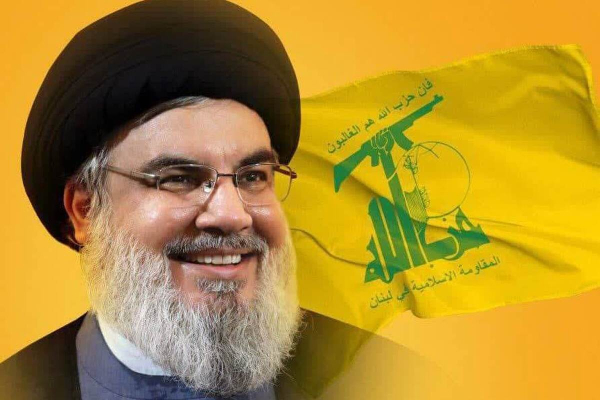
A senior Hezbollah official says the United States was directly involved in the aggression against Lebanon and Sayyed Hassan Nasrallah’s assassination, stressing that Washington has ramped up intelligence operations against Hezbollah tenfold over the past 25 years but the resistance movement remain resolute and remains capable of striking occupiers.
Head of Hezbollah’s Resources and Borders File, Nawaf al-Moussawi, made the remarks in an interview with Lebanon’s al-Mayadeen television network on Monday, emphasizing that the US had a role in the decision and execution of the assassination of Nasrallah, Hezbollah’s secretary general who was killed in an Israeli missile attack in Beirut on September 27 last year.
Moussawi stressed that the types of missiles used to strike the headquarters of Nasrallah in Beirut’s Dahiyeh neighborhood “were not part of Israel’s arsenal and were brought in specifically for this targeted attack.”
The Hezbollah official also noted that the US intelligence operations against Hezbollah since 2000 have increased tenfold compared to those of Israel, stressing that American intelligence program “serves Israeli interests.”
Elsewhere in his remarks, Moussawi said that Hezbollah had “suffered heavy blows” in its confrontation with the Tel Aviv regime, but stressed that the movement “is not over, nor is the Resistance front.”
The Resistance inflicted significant losses on the Israeli occupation “at the height of the war” and scored achievements during it, he emphasized, citing, as an example, the Caesarea operation, in which a Hezbollah drone reached the residence of Israeli prime minister Benjamin Netanyahu.
Hezbollah “is capable of delivering strikes to the Israeli occupation if it compensates for its shortcomings,” Moussawi stressed, highlighting that “the amount of shortcomings and gaps is significant.”
The Hezbollah official noted that while the occupying entity claims that it has achieved “success,” there is no evidence for its so-called achievements against the movement.
Moussawi also said that Hezbollah is currently conducting an internal investigation into all security and military events that took place during Israel’s latest war on Lebanon.
Since the onset of the escalation in October 2023, around 4,000 Lebanese, many of them civilians have been killed, and over one million people displaced.
The Israeli escalation featured assassination of several high-ranking Hezbollah leaders, including Nasrallah, and Sayyed Hashem Safieddine, who had been Hezbollah’s Executive Council chief, as well as commanders and fighters.
Nasrallah and Sefieddine were laid to rest in the capital Beirut on February 23 and 24, respectively, amid myriads of mourning Lebanese and foreign supporters.
The Lebanese resistance movement, however, stood up to the aggression with all at its disposal, conducting numerous retaliatory strikes against sensitive and strategic Israeli targets.
Hezbollah has vowed to continue its resistance against Israeli occupation and aggression, despite the losses, which, the movement asserts, only further reinvigorate its resolve to fend off Israeli atrocities.
Press TV’s website
Does praying affect the body?
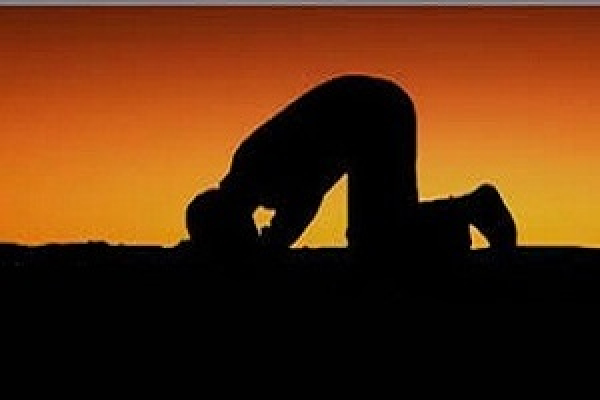
Yes
Praying and its scientific effects on pain reduction have been proven.
Stress reduction: By creating mental peace, prayer can reduce stress and mental tension that lead to pain.
Physical movements: Prayer movements such as bowing and prostration help improve blood circulation and reduce muscle and joint pain.
Increased endorphins: Spiritual practices such as prayer may increase levels of endorphins, the body's natural painkillers.
Source: The Book of Modern Sciences in Islam
Israeli restrictions on al-Aqsa Mosque during Ramadan
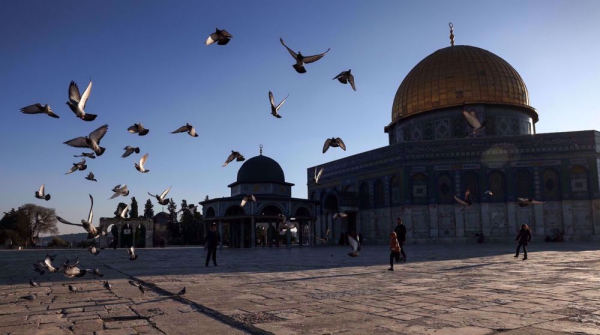
In a statement published on the Palestinian resistance group's Telegram channel on Saturday, senior Hamas member Abdul Rahman Shadid issued a call to action, urging Palestinians to converge on the courtyard of the sacred site throughout the Muslim fasting month.
He emphasized that Palestinians “must not surrender to the restrictions of the occupiers. We must confront them with all our strength and adhere to our historical and religious right to the blessed mosque.”
Shadid called for “roaring crowds” to protect the al-Aqsa Mosque compound all through Ramadan.
Earlier, Hamas condemned in the strongest terms the Israeli police’s measures to “restrict worshippers’ access to al-Aqsa Mosque during Ramadan, allowing only 10,000 worshippers to attend Friday prayers.”
The Gaza-based movement described these steps as “a new escalation against the Palestinian people and their holy sites, a dangerous precedent that undermines freedom of worship at al-Aqsa Mosque, a blatant violation of all conventions and religious laws, and a direct provocation to Muslim sentiments.”
The movement also considered it “a desperate attempt to impose alleged control over the mosque.”
Hamas affirmed that “the Zionist entity’s crimes and aggressive plans against al-Aqsa Mosque – Islam’s third holiest site and a symbol of Palestinian identity – will not succeed in erasing its identity or altering its history.”
The movement stressed that “Al-Aqsa will remain an exclusive Islamic endowment, with no place for the occupation. Our people and our nation will defend it with their lives until it is fully liberated from occupation.”
Hamas warned the occupying Israeli regime against “proceeding with such measures,” holding it fully responsible for any escalation that may happen.
The movement called on the Organization of Islamic Cooperation (OIC) and the international community to “take serious action to stop the crimes and violations of the occupation against al-Aqsa Mosque and to ensure that the Palestinian people can freely practice their religious rituals there.”
Hamas finally urged Palestinians across the West Bank, al-Quds and elsewhere in the occupied territories to “intensify their presence at al-Aqsa Mosque, engage in worship and seclusion there during Ramadan, and confront all attempts by the occupation and extremists to desecrate or impose control over the mosque.”
Press TV’s website
Israeli bulldozers demolish homes in West Bank; Hamas urges UN to stop 'war crimes'
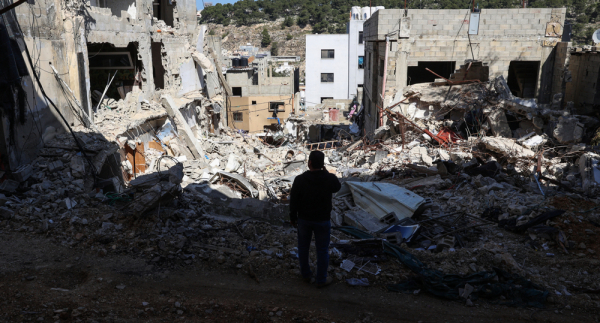
Israeli bulldozers demolish homes in West Bank; Hamas urges UN to stop 'war crimes'
A man looks at destroyed buildings at the Nur Shams camp for Palestinian refugees near Tulkarem, in the occupied West Bank on February 26, 2025. (AFP)
Hamas says Israel has once again committed war crimes by the demolition of homes of Palestinians on the first day of the holy month of Ramadan in the occupied West Bank's Nur Shams refugee camp.
Israel’s large-scale onslaught on Tulkarm, its refugee camps rages as more Palestinians uprooted in West Bank
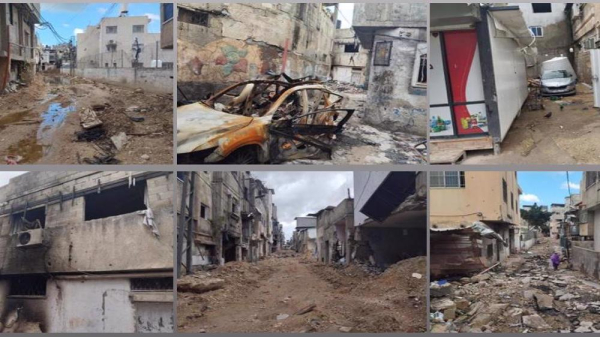
he Israeli military is pressing ahead with its intensified acts of aggression and destruction across the occupied West Bank, causing several injuries and forcing numerous Palestinians out of their homes.
Reports coming out of the occupied Palestinian territory pointed to continuation of the indiscriminate assaults across many cities and towns, including the northern cities of Jenin and Tulkarm, and the central city of Salfit’s vicinity.
The reports came amid warnings by various Palestinian and international groups and personalities about the regime’s intentions to annex the territory and turn it into another Gaza Strip, where more than 15 months of a genocidal Israeli war claimed the lives of over 48,300 Palestinians, mostly women and children.
Reports said Israeli occupation troopers deployed after midnight additional military reinforcements to Tulkarm and Nur Shams camps. Troops fired live ammunition intensively, while explosions were heard in the Jabal al-Nasr area of Nur Shams camp.
According to the official Palestinian Wafa news agency, the regime forces seized residential buildings, particularly those facing Tulkarm camp, converting them into military outposts while deploying military vehicles and bulldozers in the area.
The Israeli siege on Tulkarm and Nur Shams refugee camps remains in place, with Israeli forces enforcing a complete lockdown.
The most recent bouts of Israeli aggression saw a three-month-old infant suffocate from tear gas fired by Israeli forces at the entrance of the Jenin refugee camp in the city of Jenin in the northern West Bank.
The Palestine Red Crescent Society reported that its medical teams had transported the victim to the hospital after she was exposed to the toxic materials.
The Israeli regime has continued its military onslaught on Jenin and its refugee camp for the 41st consecutive day, resulting in the killing of 27 Palestinians, along with dozens of injuries and detentions.
The ongoing aggression has also led to the forced displacement of residents and widespread destruction of infrastructure and homes, with around 120 houses completely destroyed and dozens more partially damaged.
Earlier this week, the Gaza Strip-based resistance movement Hamas said the regime had once again committed war crimes with its demolition of homes of Palestinians on the first day of the holy month of Ramadan at the Nur Shams camp.
Press TV’s website
Israeli forces kill Palestinian during Jenin raid as UN ‘alarmed’ by West Bank onslaught
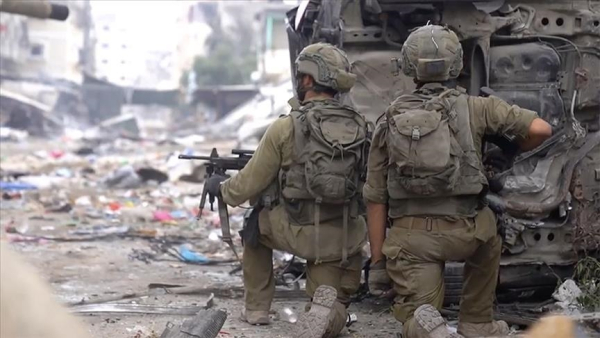
Israeli forces kill a Palestinian in their raid on Jenin as the Tel Aviv regime presses ahead with a large-scale onslaught against the occupied West Bank.
Israeli forces on Tuesday handed the body of a Palestinian they had shot dead in the eastern neighborhood of Jenin to the Palestine Red Crescent Society, Al Jazeera said in a report, without giving further details.
Earlier, armored Israeli military vehicles stormed Jenin as part of the current massive raid on the city.
The Jenin refugee camp in the northern West Bank is bearing the heavy brunt of the occupying entity’s ongoing aggression.
Separately, Israeli forces also shot and wounded at least four other Palestinians near Nablus, including a 13-year-old who was hit in the chest by live fire.
Now in its 43rd day, the large-scale onslaught by the occupying regime's forces has claimed the lives of at least 27 Palestinians in Jenin and its refugee camp.
The ongoing aggression has also led to the forced displacement of residents and widespread destruction of infrastructure and homes, with around 120 houses completely destroyed and dozens more partially damaged.
On Monday, The United Nations High Commissioner for Human Rights Volker Türk sounded the alarm over Tel Aviv’s military aggression in the occupied West Bank.
“In the West Bank, I am alarmed by the use of military weapons and tactics, including tanks and airstrikes, against Palestinians; the destruction and emptying of refugee camps; the expansion of illegal settlements; the severe restrictions on movement; and the displacement of tens of thousands of people,” he said before the 58th session of the Human Rights Council in Geneva, Switzerland.
Türk also stressed that “Israel’s unilateral actions and threats of annexation in the West Bank, in violation of international law, must stop.”
Meanwhile the Settlement Resistance Commission, a Palestinian governmental body dedicated to opposing Israeli settlement expansion and the construction of the so-called separation wall in the occupied Palestinian territories, said in a new report that Israeli forces and settlers carried out 1,705 attacks in February.
Muayyed Shaaban, head of the commission, said that Israeli forces conducted 1,475 of these attacks, while settlers carried out 230, the official Palestinian Wafa news agency reported.
He added that the majority of these attacks were concentrated in Nablus, which saw 300 attacks, followed by al-Khalil with 267 and Ramallah with 263.
According to the report, Israeli forces also carried out 79 demolition operations against Palestinians in February, affecting 156 structures, including 109 inhabited homes.
Press TV’s website
Why is Iran fighting Israel and its allies and not compromising?
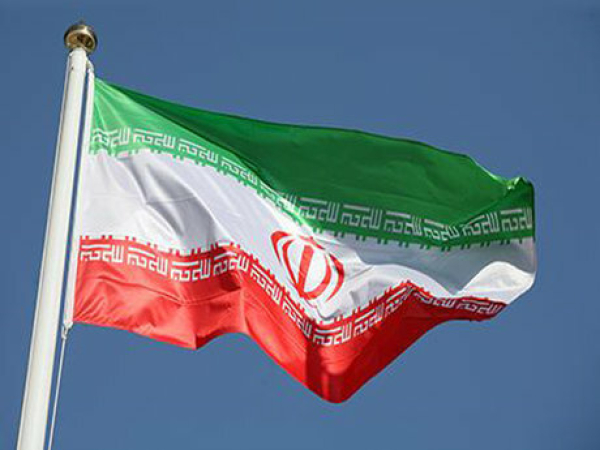
Iran does not intend to incite a fire in our region; but the important and fundamental point that must be taken into account is that if any action is to be taken against the positions, interests, soil and people of Iran, the Islamic Republic will undoubtedly respond without any indulgence or appeasement and take its revenge. In addition, it is worth mentioning that the Islamic Republic has announced its support for the axis of resistance from the beginning without any hesitation and without any shortcomings and shortcomings and is pursuing this issue. Basically, it must be considered that the Islamic Republic has supported the axis of resistance in other ways without directly entering the recent war and has engaged in confrontation with the Zionist regime. However, it is the Zionist regime that has committed aggression without adhering to red lines and international rules and forced the Islamic Republic of Iran to directly enter the field to contain it.
If international bodies such as the United Nations and the Hague Tribunal were to make a decision against Israel, they would be virtually invalid and we would find that they would not be very strict against it. Now, the fundamental issue is that in such circumstances, where no one is stopping Israel and its numerous crimes, we must stand up to it and take action.
Why do Muslims accept the miracle of the birth of Christ, but do not consider him the Son of God?

First, if the meaning of being the Son of God is a true meaning, in accordance with the Muslim belief in God, who is inconceivable in terms of any defects, flaws, combinations, needs, limitations, and issues of this kind, it cannot be plural.
Second, if we consider this term metaphorically - such as becoming divine and purifying the soul - then it will not be specific to Prophet Jesus (peace be upon him) and will include many believers.
Third, if the description of Prophet Jesus (peace be upon him) with this title is due to the special creation of Prophet Jesus (peace be upon him), this title is much more suitable for Prophet Adam (peace be upon him).
Are there different types of charity?

The Prophet Muhammad (peace and blessings of Allah be upon him) said in a hadith: “Charity is of five kinds.” These five kinds include the following:
1. Charity that is rewarded tenfold: This charity is the money that we set aside as charity in the early morning, without knowing who it will reach.
2. Charity that is multiplied seventyfold: This charity is given to those who are helpless and disabled and cannot earn an income.
3. Charity that is multiplied seven hundredfold: This charity is given to respectable and needy relatives and neighbors, and should also be given as a gift to maintain one’s honor.
4. Charity that is multiplied seven millionfold: This type of charity is for spreading the teachings of God’s religion and building schools, hospitals, and mosques, which has greater social benefits.
5. The charity that has the greatest reward: This charity is given to deceased parents and those with rights.
Hajj; A Journey to the Heart of Resurrection and a Return to the Pure Truth of Humanity
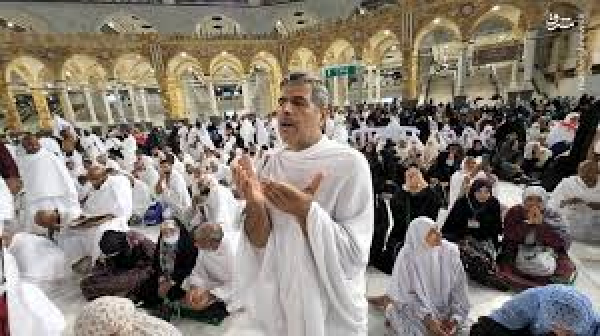
Hajj is not only a religious duty, but also a spiritual experience in which the Resurrection is clearly and fully demonstrated. This spiritual journey not only brings everyone together in one physical place, but also creates a deep inner alignment among humans. Here, racial, linguistic, and social differences fade away and everyone comes together in front of the one truth that is God. Hajj is the Resurrection embodied; an experience in which a person realizes the return to his origin and truth and goes to the heart of the earth to meet the Resurrection.
Hajj is the Resurrection embodied, not only in the sense that the individual sees his body at that moment alongside other humans in a holy land, but also because the Hajj has the depth and meaning of the Resurrection in its heart. Amidst the endless whirlwind of people heading towards the House of God, what attracts the eye most is the presence of a truth. A truth that is evident in every moment of this worship; people, with all their apparent differences, respond to a sacred purpose.
This scene is as if it were an objective experience of the Day of Judgment. In the Hajj, just as on the Day of Resurrection, all people gather in a single line to answer the call of God, in this land too, everyone finds themselves on a single path and a single will with one intention and in response to the divine call. At that moment when hearts are connected to one point, all worldly attachments collapse and what remains is only the truth of humanity and connection with God.
In the Hajj, a person is not only physically placed alongside others, but also spiritually placed in a deep alignment with others. This is one of the most beautiful and delightful aspects of Hajj; everyone is immersed in a spiritual flow, without asking each other questions about identity, race, color or social status. There is only one truth here, and that is the truth of servitude. The truth that says that no human being will be anything but servitude and submission to God.
Hajj is, in fact, an experience that reminds man that life is nothing but a journey towards truth. On this journey, humans, unaware of all worldly divisions and labels, search for that pure truth in the heart of the earth. At this moment, it is as if all humanity unites at one point and bows down before God.
This deep and experiential spirituality in Hajj is actually more than a religious duty. It is a return to the origin, a return to the truth that lies within every human being. In this journey, a person reaches a point where nothing has any real meaning in the face of divine love and a truth greater than their own. What happens in the Hajj is a person’s realization of oneness and connection to all of existence.
And perhaps one of the greatest messages of the Hajj for humans is this: that ultimately, in the sight of God, there is no difference. In the sight of Him, all humans are one truth, without any boundaries or distances. Everyone will return to Him, regardless of their background or what they have had in this world. What remains is the only truth that flows in the hearts of humans, and on that great day, before God, all humans will march in a line, hand in hand, toward the truth.
The Hajj, this embodied resurrection, shows us that life is full of different tests and experiences, but in the end, everything will come to one point. At that moment, only the truth will remain, and we will know that this truth, just as it will be on the Day of Judgment, is present in every soul, in every moment of life, and in every experience that a person has on the path of God. This is the "return to God" that the Hajj takes us to; a journey that begins in the heart of the earth and reaches the infinite truth in the heavens.