zarezadeh
What does Mahdism mean, and why is it important in Shiite thought?

Mahdism refers to the belief in the reappearance of Imam Mahdi (AJ) as the savior of the end times, who will fill the world with justice after it has been overwhelmed by oppression. This belief holds a central place in Shiite thought because it connects faith with hope for the future and represents God’s promise for the salvation of humanity.
What is the relationship between Mahdist expectation and socio-political responsibility during the occultation?

In Shiite thought, Mahdist expectation does not imply withdrawal from social and political responsibilities. True anticipation involves striving for justice, opposing oppression, and actively participating in societal reform. Preparing for the Imam’s reappearance requires responsible engagement rather than passive waiting.
How are the signs of Imam Mahdi’s (AJ) appearance analyzed according to traditions?

The signs of the Mahdi’s appearance in traditions are divided into definite and indefinite categories. These signs are primarily intended to provide guidance, alertness, and awareness of the conditions of the end times rather than to predict the exact timing of the Imam’s return. Scholars caution against literal or premature interpretations.
How has the concept of the “Major Occultation” influenced the system of Shiite religious authority and jurisprudence?

The Major Occultation led to the development of the Shiite marjaʿiyya (religious authority) and the institution of ijtihad (independent reasoning). During this period, qualified jurists act as the general representatives of Imam Mahdi (AJ), guiding the religious affairs of the community and ensuring the continuity and vitality of Shiite jurisprudence.
What is the difference between Shiite and Sunni perspectives on Mahdism?

Although the belief in the appearance of the Mahdi is shared by both Shiites and Sunnis, the main difference lies in the identity and characteristics of the Imam. Shiites believe that Imam Mahdi (AJ) is the son of Imam Hasan al-Askari (AS) and is a living, occulted Imam, whereas Sunnis generally view him as a future-born figure who will appear at the end of times.
What is the status of belief in Imam Mahdi (AJ) in authentic Shiite sources?

Belief in Imam Mahdi (AJ) has deep roots in the Quran, the traditions of the Prophet Muhammad (PBUH), and the sayings of the Ahl al-Bayt (AS). Authoritative Shiite sources such as Kamal al-Din, Al-Ghaybah (by Sheikh Tusi and Al-Nu‘mani), and Bihar al-Anwar extensively discuss Mahdism and present it as a fundamental tenet of faith.
14 Iranian successes that went down in history
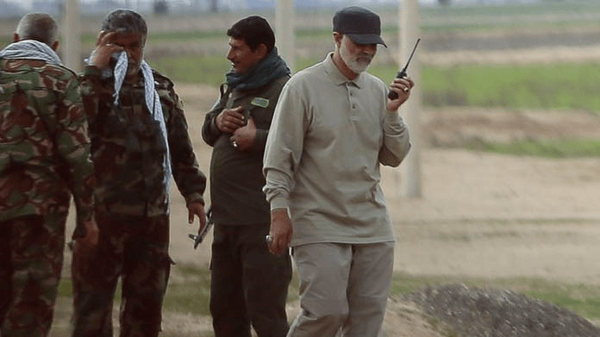
A review of various historical events in the last five decades paints a clear picture of the decline of America’s hard and soft power in the face of the Islamic Republic of Iran. From the day Carter confidently spoke of the “Island of Stability” to today, when commanders refer to Iran’s missile and drone capabilities as a “nightmare,” the power equation has completely changed.
West Watch Group: Ever since former US President Jimmy Carter called Pahlavi-dominated Iran an “Island of Stability” in January 1977, until today, when the power equations in the Persian Gulf and West Asia have changed, America has always sought to contain Iran. In these five decades, the Islamic Republic of Iran was able to disrupt America’s complex calculations and deal lasting blows to the hegemony of this superpower.
1) The Fall of the Pahlavi Regime
The first and biggest blow was the collapse of the regional gendarme. America stood fully behind Mohammad Reza Pahlavi; in the days leading up to the revolution, it even sent General Heiser to Tehran to organize a possible coup or to protect the army. But the storm of the Islamic Revolution not only swept over Carter's "island of stability" but also took America's largest strategic base in West Asia from their grasp. This victory was the first blow to Washington's credibility in the region.
2) Seizing the spy den
The seizure of the US embassy in Tehran was a blow to its reputation, which Imam Khomeini (RA) called the "second revolution." For the first time in modern history, America's diplomatic and intelligence majesty collapsed. The 444-day hostage-taking of embassy staff not only brought the Carter administration to its knees, but the leaked documents from this center revealed Washington's spy networks and extensive interference in Iran's internal affairs.
3) Failure of Operation Eagle Claw in Tabas
To compensate for the humiliation caused by the embassy capture, the US designed the most sophisticated hostage rescue operation. But the sandstorm in the Tabas deserts turned the most advanced aviation equipment of the US army into scrap metal. The humiliating defeat in Tabas was not only a military failure, but also, according to many analysts, the end of the Carter presidency and a sign of unseen relief for the Iranian nation.
) Failure of the Nojeh Coup
Just a few months after the Tabas incident, a complex plan was designed to overthrow the fledgling regime by infiltrating the Shahid Nojeh Air Base in Hamedan. This coup, which was accompanied by direct intelligence and financial support from the West, was exposed before it was carried out and its agents were arrested. The neutralization of this plot showed that Iran's security structure, despite its infancy, is highly impenetrable.
5) Resistance in the 8-year imposed war
The imposed war was a major test to prove Iran's independence. While Saddam, with the full support of the United States, NATO, the Eastern Bloc, and the region’s petrodollars, was yearning for a one-week conquest of Tehran, the Iranian nation resisted for eight years. This was the only war in Iran’s 200-year history that did not allow even a single inch of its territory to fall into foreign hands. The United States, which had directly entered the conflict in the Persian Gulf at the end of the war, ultimately witnessed the failure of the project to collapse Iran through classical warfare.
6) Containing the 1999 sedition and the failure of the velvet coup
The “color revolutions” model, which had been successful in the four countries of Yugoslavia, Georgia, Ukraine, and Kyrgyzstan, was rewritten in 1999 for implementation in Iran. Michael Ledin and other American theorists were openly predicting the occurrence of a velvet coup. But the wisdom of the wise leader of the revolution and the epic presence of the people on January 9 th.
7) Hunting advanced drones; RQ-170 and Global Hawk
The technological battle in the sky was another area of Iran's thumbs-up. In 2011, Iran was able to land the RQ-170 (Kandahar Beast) super-spy drone safely and reverse engineer it. Years later, in July 2019, the downing of the giant and expensive Global Hawk drone by the indigenous "Som Khordad" system showed that America's air superiority in the region had ended.
8) The battle with ISIS and the failure of the New Middle East project
9) The arrest of American marines in the Persian Gulf
10) The missile barrage at Ain al-Assad base
11) The 12-day imposed war and the targeting of Al-Udeid base
One of the biggest and brightest symbols of the defeat of America's hegemony in recent years is an event that occurred during the 12-day battle (1404). Al-Udeid Air Base in Qatar, known as the beating heart and headquarters of CENTCOM in the region, was blinded in a daring and combined operation.
In June 2015, Donald Trump had spoken with foolish pride of Operation Midnight Hammer against Iran, but Iran’s decisive response brought the hammer down on their own heads. While American fighters thought the skies over Iran were quiet, a rain of pinpoint missiles and Iranian suicide drones descended on Al-Udeid. Operation Bashar al-Fath was not a simple response, but a “strategic shock” that reduced the advanced radars and command and control centers of the United States to a pile of ashes. The Foreign Policy newspaper, admitting this defeat, wrote: “Al-Udeid is no longer safe; Iran has proven that it can destroy America’s military vision in West Asia at any moment.”
12) The enemy's defeat in the 1401 riots
13) Authority in the open waters; seizure of oil tankers and maritime diplomacy
14) Neutralizing the January 1404 sedition; a shot of liberation to chaos
The last desperate attempt to disrupt Iran's internal security was designed in January 1404 as a complement to the 12-day war. The enemy intended to draw the concentration of the armed forces from the borders to the cities by creating blind street insecurity. However, the wisdom of the leadership and the vigilance of the security apparatus and the unparalleled support of the people nipped this sedition in the bud. This victory in 1404 was, in fact, a shot of liberation to decades of American conspiracies and showed that the bond between the nation and the sovereignty in Iran is stronger than any weapon or sanction.
‘No American will be safe’: Top general warns Iranian armed forces fully ready for retaliation
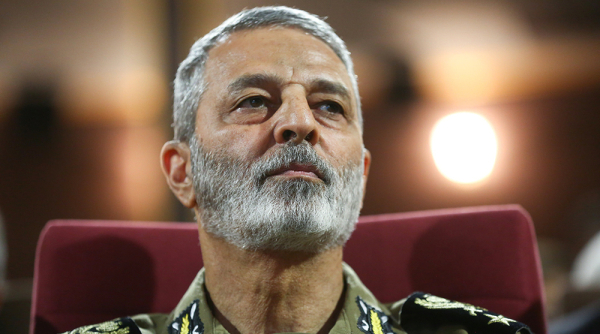
Iran’s top military official warns that any miscalculation by the Islamic Republic’s enemies would trigger a forceful response, saying the country is fully prepared for confrontation and retaliation.
Chief of Staff of the Iranian Armed Forces Major General Abdolrahim Mousavi made the remarks on Monday, saying the servicemen were prepared to respond decisively to threats. “We think only of victory. We have no fear of the enemy’s superficial might, and we are fully ready for confrontation and to deliver a retaliatory slap,” he stated.
The Iranian nation has long stood firm against the arrogant and aggressive nature of the United States, forcing it into “repeated defeats,” including in the recent “complex, multidimensional, and terrorist war,” which disrupted enemy calculations.
The official was referring to the US- and Israeli-backed terrorist riots that had sought to divert economic protests towards unrest, but were faced with counteraction on the part of Iranian intelligence and security forces.
Over the past 47 years, he added – pointing to the time that has passed since the victory of Iran’s 1979 Islamic Revolution – Iranians have proven that the country “is not something that can be swallowed,” warning that an “obstinate, reckless adversary who refuses to learn will ultimately be suffocated.”
Iran warns any aggression will have grave consequences for entire region
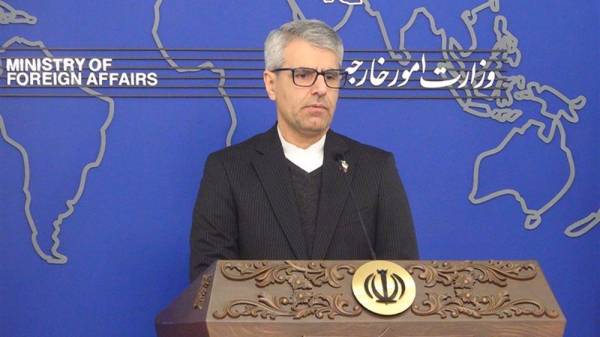
Iran says regional countries are making collective efforts to prevent war as they are well aware that any act of adventurism against Tehran will have grave consequences for the entire region.
"We believe that regional countries are well aware that insecurity in the region and any threat against Iran will have effects and repercussions” that will affect others as well, Iranian Foreign Ministry spokesman Esmaeil Baghaei told reporters at his weekly press conference in Tehran on Monday.
He added that regional countries are making collective efforts to prevent the escalation of tension as they have a consensus on the dangers of any adventurism against Iran.
He urged all countries to remain vigilant in the face of media speculation and the third parties’ abuse of regional issues.
He pointed to contacts and interactions between Iran and regional countries, particularly Saudi Arabia, and called on all regional countries to pay attention to the situation in the region.
Baghaei’s remarks come amid significant American military buildup across the West Asia region, including the Persian Gulf, which has run in tandem with repeated threats by US President Donald Trump of fresh military action targeting the Islamic Republic.
Iranian officials have vowed that any act of aggression against the country will be met with a swift and powerful response.
On Sunday, Leader of the Islamic Revolution Ayatollah Seyyed Ali Khamenei warned that any attack would trigger a “regional war.”
“They should know that if they start a war this time, it will be a regional war,” Ayatollah Khamenei stated.
Why is knowing Imam Mahdi (p) important?
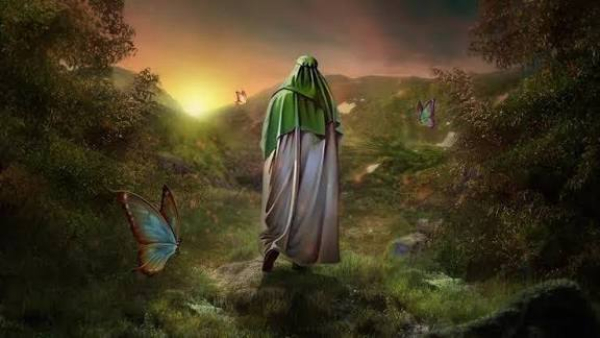
In conclusion, understanding Imam Mahdi (p) is essential for every Muslim, as he symbolizes ultimate guidance and justice in Islam. Signs of his reappearance, such as devastating wars, global chaos, and a divine call, remind us to stay alert and spiritually prepared. By reforming ourselves and living with strong faith and devotion, we can aim to be part of Imam Mahdi’s (p) army, helping him bring justice and peace to the world. As we await his arrival, we must remain strong in our beliefs and be ready to serve the Imam of our time when the time comes.