zarezadeh
The Difference Between a “Juristic School” and a “Theological School” in Islam
In Islamic studies, the term madhhab is used in two main contexts: one related to practice and law, and the other related to belief and theology. Understanding the distinction between these two is essential for properly grasping differences within Islam.
---
1. What Is a Juristic School (Fiqh Madhhab)?
A juristic school refers to a systematic body of opinions and methodologies used to derive practical Islamic rulings, such as prayer, fasting, pilgrimage, transactions, and other legal matters.
Key features:
Focus: Practical religious acts and laws
Sources: The Qur’an, Sunnah, consensus (ijmāʿ), and reason (with methodological differences)
Differences mainly occur in secondary rulings (furūʿ al-dīn)
Following a juristic school is necessary for correct religious practice
Examples:
Jaʿfarī
Ḥanafī
Shāfiʿī
Mālikī
Ḥanbalī
---
2. What Is a Theological School (Creedal Madhhab)?
A theological school refers to a structured set of beliefs concerning the fundamental principles of faith, such as monotheism (tawḥīd), prophethood, resurrection, divine justice, and leadership (imamate or caliphate).
Key features:
Focus: Beliefs and doctrines
Sources: The Qur’an, Sunnah, and rational theology
Differences occur in core doctrinal principles
Blind imitation (taqlīd) is not acceptable; belief must be based on conviction
Examples:
Twelver Shiʿism (Imāmī)
Ashʿarism
Māturīdism
Muʿtazilism
---
3. Key Differences at a Glance
Aspect Juristic School Theological School
Domain Practice Belief
Subject Legal rulings Doctrines
Nature of differences Secondary issues Foundational beliefs
Taqlīd (imitation) Permissible and required Not permissible
Goal Correct practice Correct belief
---
4. Conclusion
Differences between juristic and theological schools do not indicate division in Islam, but rather reflect diversity in interpreting and explaining the religion. All Islamic schools share the core principles of Islam, while differences lie mainly in methodology and interpretation.
The Emergence of Islamic Schools of Thought and Their Historical Factors
Islamic schools of thought (madhāhib) gradually emerged during the first centuries of Islam, after the passing of the Prophet Muhammad ﷺ. Their formation does not represent اختلاف in the core of Islam, but rather reflects differences in interpretation, legal methodology, and historical circumstances within the shared framework of the Qur’an and Sunnah.
Major Historical Factors Behind Their Emergence:
Rapid Expansion of the Islamic World
As Islam spread across vast regions, new legal and social issues arose, requiring scholarly reasoning (ijtihād).
Unequal Access to Prophetic Traditions
Different regions—such as Madinah, Kufa, and Syria—had access to different collections of hadith, leading to varying legal opinions.
Differences in Legal Methodology
Some scholars relied primarily on hadith (e.g., the Madinan school), while others emphasized rational methods such as analogy (qiyās), particularly in Iraq.
Political and Social Conditions
Changes in political authority and governing systems influenced which scholarly approaches flourished or declined.
Role of Students and Systematic Codification
The efforts of students in recording, teaching, and organizing the views of leading jurists played a crucial role in establishing and preserving distinct schools.
Conclusion:
Islamic schools of thought are the result of scholarly ijtihād grounded in the Qur’an and Sunnah, with differences mainly in secondary legal rulings rather than in the fundamentals of faith.
Suggested Academic Sources
Murtadha Motahhari, An Introduction to Islamic Sciences (Fiqh)
Rasul Ja‘fariyan, History of Shi‘ism in Islam
Ibn Khaldun, al-Muqaddimah
Wahbah al-Zuhayli, Islamic Jurisprudence and Its Evidences
Following Satan; and moving towards Hell
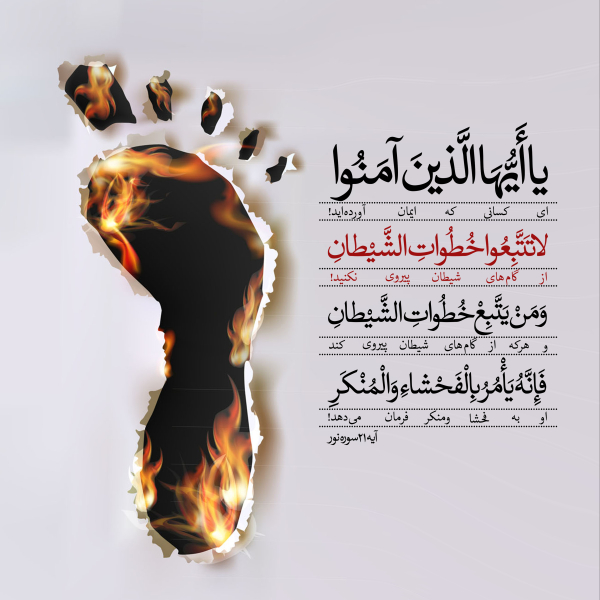
O you who have believed! Do not follow the footsteps of Satan! Whoever follows the footsteps of Satan, he commands indecency and evil!
(An-Nur: 21)
The word “steps” is the plural of خطوات meaning “step” and means the distance between the two feet of a person while walking.
Following the footsteps of Satan means walking on the path that Satan shows.
In the Holy Quran, Satan is introduced as the enemy of God and the enemy of man. It is very strange to trust the sworn enemy!!! And to move in the path that he shows!!!
The connection of this noble verse with the previous verses shows that one of Satan's important plans to drag human societies into the mud is the spread of immoral acts and to eliminate their ugliness. Let us be careful!!!
Every path except the right path is the path of Satan and ends in the displeasure of the Merciful God. Let us be careful!!!
Tafsir Ahlul Bayt (a.s.) Vol. 1, p. 788
A Joint Fatwa on the Obligation of Hajj
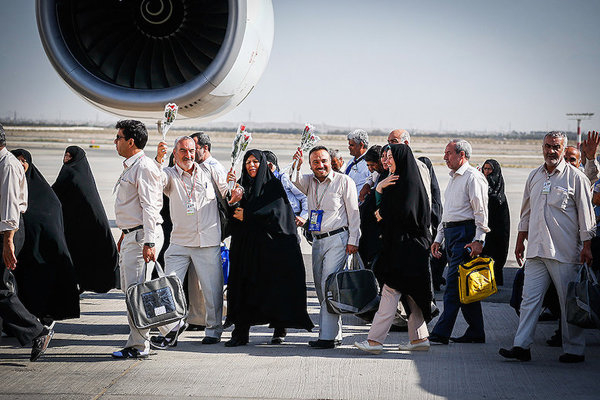
The Obligation of Performing Hajj Once in a Lifetime for Every Eligible Muslim
Text of the Fatwa
Based on the consensus (ijmāʿ) of all Islamic schools of jurisprudence—both Sunni and Shiʿa,
Hajj is an individual and obligatory duty (farḍ ʿayn) upon every Muslim who is adult, sane, and financially and physically capable (mustatīʿ), and it must be performed once in a lifetime.
Delaying it without a valid شرعی (legal) excuse is not permissible.
Qur’anic Evidence (Agreed Upon by All Schools)
Clear Qur’anic Verse
“And due to Allah from the people is a pilgrimage to the House—for whoever is able to find a way to it.”
(Qur’an 3:97)
This verse is the primary and undisputed foundation for the obligation of Hajj in all Islamic jurisprudence.
Hadith Evidence (Sunni and Shiʿa Sources)
1. Prophetic Hadith (Sunni Sources)
The Messenger of Allah ﷺ said:
“O people, Allah has made Hajj obligatory upon you, so perform Hajj.”
Source:
Ṣaḥīḥ Muslim, Book of Hajj
2. Narration from Imam ʿAlī (Shiʿa Sources)
Imam ʿAlī (peace be upon him) said:
“Allah has made obligatory upon you the pilgrimage to His Sacred House.”
Source:
Nahj al-Balāghah, Sermon 1
Juristic Consensus (Joint Ruling)
Scholars of the following schools unanimously agree on the obligation of Hajj:
Jaʿfarī (Shiʿa Imami)
Ḥanafī
Shāfiʿī
Mālikī
Ḥanbalī
This unanimous agreement is known in Islamic jurisprudence as Ijmaʿ al-Muslimīn (the consensus of Muslims).
Summary of the Joint Fatwa
Hajj is:
A definitive divine obligation
Individually obligatory (farḍ ʿayn)
Required once in a lifetime
Conditional upon financial ability, physical capability, and safety of travel
Final Juristic Conclusion:
Every Muslim who meets the conditions of ability is religiously obligated to perform Hajj, and abandoning it without a valid excuse is considered sinful.
Intercession in Islam: A Qur’anic and Hadith-Based
Abstract
Intercession (Shafāʿah) is one of the fundamental concepts in Islamic theology and has long been a subject of debate and misunderstanding. While some view it as contradictory to divine justice or pure monotheism, others recognize it as a manifestation of God’s vast mercy. This article reexamines intercession through the Qur’an and authentic prophetic traditions, demonstrating that Shafāʿah is neither irrational nor anti-tawḥīd, but rather an integral part of the divine system grounded in God’s absolute sovereignty, wisdom, and mercy.
1. Defining Intercession and Distinguishing It from Misconceptions
Linguistically, Shafāʿah means “to join one thing to another in order to reach a goal.”
In Qur’anic terminology, intercession refers to:
The mediation of divinely honored servants—by Allah’s permission—to convey mercy, forgiveness, or elevation in rank to other servants.
Key clarifications:
Intercession is not a replacement for divine justice
Nor does it imply independent power for anyone besides Allah
Rather, it is entirely dependent on Allah’s will and permission
2. Intercession in the Qur’an: Negation of Independence, Not of Reality
2.1 Verses That Negate Independent or False Intercession
The Qur’an states:
“So the intercession of intercessors will not benefit them.”
(Qur’an 74:48)
And:
“A Day when no soul shall avail another, nor will intercession be accepted from it.”
(Qur’an 2:48)
These verses address:
Disbelievers
Or the belief in intercession without Allah’s permission
They do not negate intercession altogether.
2.2 Verses That Explicitly Affirm Authorized Intercession
In contrast, the Qur’an clearly affirms conditional intercession:
“Who is it that can intercede with Him except by His permission?”
(Qur’an 2:255)
And:
“They do not intercede except for one whom He approves.”
(Qur’an 21:28)
These verses establish that:
Intercession is real
It is regulated, purposeful, and divinely sanctioned
3. Intercession in the Prophetic Traditions and the Teachings of Ahl al-Bayt
3.1 The Intercession of the Prophet Muhammad ﷺ
The Prophet ﷺ said:
“I was granted intercession, and I have saved it for my Ummah.”
(Ṣaḥīḥ Muslim)
This narration shows that:
Intercession is a divine gift
The Prophet ﷺ is authorized, not independent, in exercising it
3.2 The Intercession of Ahl al-Bayt (the Prophet’s Family)
Imam Jaʿfar al-Ṣādiq (peace be upon him) said:
“We are the intercessors on the Day of Resurrection.”
(al-Kāfī)
The intercession of Ahl al-Bayt:
Is not a justification for sin
But a means of salvation for those who maintain faith and spiritual connection
4. A Contemporary Analytical Perspective: Intercession as a Moral and Educational System
A common perception limits intercession to a purely eschatological phenomenon.
However, a deeper reading of the Qur’an and Hadith reveals that:
Intercession functions as a moral and spiritual system, not a blind privilege.
This is evident because:
Intercession is restricted to “those whom He approves”
It encourages attachment to righteous role models
It preserves hope without eliminating moral responsibility
Thus, intercession:
Complements repentance (tawbah)
Prevents despair (ya’s)
Strengthens ethical accountability
5. Addressing the Alleged Conflict Between Intercession and Divine Justice
Justice means:
Placing everything in its proper position.
Intercession:
Is not a violation of justice
It is part of divine law itself
Just as:
Forgiveness does not negate justice
Legal leniency under specific conditions is not injustice
Intercession represents:
Justice integrated with mercy, not justice denied.
6. Conclusion
Based on the Qur’anic verses and authentic narrations examined above, it is evident that:
✔ Intercession:
Has deep roots in the Qur’an
Is firmly established in the Sunnah of the Prophet ﷺ and the teachings of Ahl al-Bayt
Is strictly conditional upon Allah’s permission
Is fully compatible with tawḥīd and divine justice
Final Conclusion:
Intercession is not an escape from responsibility, but a path back to divine mercy;
not a weakening of monotheism, but a profound expression of Allah’s absolute sovereignty over the order of existence.
Do the Dead Hear? (According to the Qur’an and Sunnah)
1. The Islamic Position: Death Is Not Annihilation
In Islam, death is not non-existence, but a transition from one realm to another (from dunya to barzakh).
The soul remains alive, conscious, and aware by Allah’s permission.
2. Qur’anic Verses Often Misunderstood
Some cite verses such as:
“You cannot make the dead hear.”
(Qur’an 27:80; 30:52; 35:22)
Correct Interpretation
Classical scholars agree that these verses are metaphorical, not literal.
They compare disbelievers to the dead:
Just as a dead body does not respond,
Disbelievers do not respond to guidance.
These verses are not denying hearing in the barzakh.
Major scholars who affirmed this interpretation:
Ibn Kathīr
al-Qurṭubī
al-Ṭabarī
3. Explicit Hadith: The Dead Do Hear
a) The People of Badr (Ṣaḥīḥ al-Bukhārī)
After the Battle of Badr, the Prophet ﷺ stood over the bodies of slain Quraysh leaders and said:
“Have you found what your Lord promised to be true?”
ʿUmar ibn al-Khaṭṭāb said:
“O Messenger of Allah, how do you speak to bodies without souls?”
The Prophet ﷺ replied:
“By Him in Whose Hand is my soul, you do not hear what I say better than they do.”
Ṣaḥīḥ al-Bukhārī, Book of Funerals
Ṣaḥīḥ Muslim
This is an explicit, authentic statement that the dead can hear.
b) Hearing Footsteps After Burial
The Prophet ﷺ said:
“When a servant is placed in his grave and his companions leave, he hears the sound of their footsteps.”
Ṣaḥīḥ al-Bukhārī
Ṣaḥīḥ Muslim
This hadith proves:
Consciousness
Perception
Hearing immediately after death
4. The Prophets Are Alive in Their Graves
The Prophet ﷺ said:
“The Prophets are alive in their graves, praying.”
Reported by al-Bayhaqī
Classified authentic by many scholars
If ordinary believers hear, then the Prophets hearing is beyond doubt.
5. Sending Salām to the Prophet ﷺ
The Prophet ﷺ said:
“There is no one who sends peace upon me except that Allah returns my soul to me so that I may respond to his salām.”
Sunan Abī Dāwūd
Musnad Aḥmad
This proves:
The Prophet ﷺ hears salām
He responds, by Allah’s permission
6. Scholarly Consensus on Limited Hearing
Ahl al-Sunnah and Shiʿa scholars agree:
✔ The dead can hear,
✔ but not independently,
✔ only when Allah allows.
Ibn Taymiyyah himself stated:
“The dead can hear in certain situations, as established in authentic hadith.”
(Majmūʿ al-Fatāwā)
7. Logical Conclusion
If the dead hear footsteps,
hear speech at Badr,
hear salām sent from anywhere in the world,
then hearing duʿāʾ, salām, or words of Tawassul is not strange or impossible.
8. Final Conclusion
✔ The dead do hear, by Allah’s permission
✔ This is proven by explicit, authentic hadith
✔ Qur’anic verses denying hearing are metaphorical, not literal
✔ The Prophets and righteous are more aware, not less
Therefore:
Belief in the hearing of the dead—especially the Prophets and righteous—is firmly established in the Qur’an, Sunnah, and classical Islamic scholarship.
The Permissibility of Tawassul to Allah Through the Righteous After Their Death
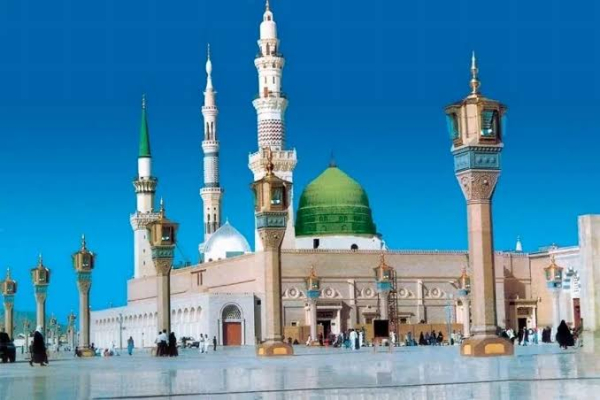
1. The Core Principle: Tawassul Is Directed to Allah, Not to the Dead
The fundamental point is that in Tawassul—even after a person’s death—
? the request is made to Allah alone,
? while the Prophet or righteous person is only a means (wasīlah) and a servant honored by Allah.
Thus, the issue is not “asking the dead for help,”
but rather calling upon Allah by virtue of the status of His righteous servants.
2. Qur’anic Evidence: The Living State of the Righteous After Death
a) The Life of the Martyrs (and by extension, the Prophets and Saints)
Allah says:
“Do not think of those who are killed in the way of Allah as dead. Rather, they are alive with their Lord, receiving provision.”
(Qur’an 3:169)
If martyrs are alive after death, then the Prophets, Imams, and righteous saints are even more deserving of this living, conscious state.
b) The Prophet’s Awareness of Deeds After His Death
Allah says:
“And say: ‘Act, for Allah will see your deeds, and His Messenger and the believers as well.’”
(Qur’an 9:105)
According to many narrations from both Shiʿa and Sunni sources:
“the believers” refers to the righteous servants of Allah
Seeing deeds requires awareness and perception, even after death
3. Explicit Hadith Evidence for Tawassul After the Prophet’s Death
a) The Hadith of the Blind Man Applied After the Prophet’s Passing
The Companion ʿUthmān ibn Ḥunayf narrates:
A man had a need that was not fulfilled during the caliphate of ʿUthmān ibn ʿAffān.
ʿUthmān ibn Ḥunayf taught him the supplication:
“O Allah, I ask You and turn to You through Your Prophet Muhammad…”
Key points:
This incident occurred after the death of the Prophet ﷺ
A Companion taught the same form of Tawassul
The man’s need was fulfilled
Sunni sources:
al-Ṭabarānī, al-Muʿjam al-Kabīr
al-Bayhaqī
Ibn Ḥajar al-Haytamī (Shāfiʿī scholar)
b) Tawassul at the Grave of the Prophet ﷺ by the Companions
Mālik al-Dār, the treasurer of ʿUmar ibn al-Khaṭṭāb, narrates:
During a drought, a man came to the grave of the Prophet ﷺ and said:
“O Messenger of Allah, ask Allah to grant rain to your الأمة (community).”
The Prophet ﷺ then appeared to him in a dream and informed him that rain would come.
This narration is recorded in:
al-Muṣannaf of Ibn Abī Shaybah
Major Sunni scholars such as Ibn Ḥajar al-ʿAsqalānī graded it as authentic.
4. Do the Dead Hear? Qur’an and Sunnah
a) Qur’anic Verses About “Not Hearing the Dead”
Allah says:
“You cannot make the dead hear.”
(Qur’an 27:80)
Scholars explain that this verse is metaphorical, comparing disbelievers to the dead.
b) Authentic Hadith: The Dead Do Hear
The Prophet ﷺ said regarding the slain disbelievers at Badr:
“You do not hear what I say better than they do.”
Ṣaḥīḥ al-Bukhārī, Book of Funerals
This clearly proves that the dead are capable of hearing, by Allah’s permission.
5. Rational Argument
Death is not annihilation, but a transition
The soul remains alive
If praying for the dead is permissible, then seeking nearness to Allah through a righteous soul is even more reasonable
Tawassul is simply supplication combined with honoring those close to Allah
6. Final Conclusion
✔ Seeking Tawassul to Allah through righteous servants after their death:
Is consistent with the Qur’an (life after death)
Is established through authentic Sunnah and the practice of the Companions
Is in harmony with sound reason
Does not constitute shirk in any way
Conclusion:
Tawassul to Allah through righteous believers after their death is not only permissible, but firmly rooted in the Qur’an and Sunnah.
Tawassul: A Qur’anic, Prophetic, and Rational Belief

1. The Meaning of Tawassul
Tawassul literally means “seeking a means” or “using a الوسيلة (means) to reach a goal.”
In Islamic theology, Tawassul refers to seeking closeness to Allah through His chosen and righteous servants, such as the Prophets and the divinely guided ones.
In Shiʿa belief:
Allah alone is the independent actor, and the righteous are only means and channels of His grace.
2. Tawassul in the Holy Qur’an
a) A Clear Qur’anic Command to Seek a Means
Allah says:
“O you who believe! Fear Allah and seek a means of nearness (wasīlah) to Him.”
(Qur’an 5:35)
This verse clearly commands believers to seek a means to Allah.
The verse does not restrict this means to a specific action; according to many Shiʿa and Sunni commentators, the most evident examples of wasīlah are the prophets and the righteous servants of Allah.
b) Tawassul through the Prophet during His Lifetime
Allah says:
“If they had come to you when they wronged themselves, and asked Allah for forgiveness, and the Messenger had asked forgiveness for them, they would have found Allah Accepting of repentance, Most Merciful.”
(Qur’an 4:64)
This verse explicitly approves seeking forgiveness through the Prophet (peace be upon him).
c) Tawassul in Previous Nations
The brothers of Prophet Joseph (Yusuf) said to their father:
“O our father, ask forgiveness for our sins for us.”
(Qur’an 12:97)
Prophet Jacob (Yaʿqub) did not reject their request, which proves that asking a righteous servant to pray on one’s behalf is Qur’anic.
3. Tawassul in the Prophetic Tradition (Sunnah)
The Hadith of the Blind Man
A blind man came to the Prophet (peace be upon him) and asked for healing.
The Prophet taught him to supplicate, saying:
“O Allah, I ask You and turn to You through Your Prophet Muhammad…”
This hadith is narrated in authentic Sunni sources such as Sunan al-Tirmidhi and Sunan al-Nasa’i, and it is one of the clearest proofs for the permissibility of Tawassul through the Prophet.
4. Is Tawassul Shirk (Polytheism)?
Shirk means attributing independent power to other than Allah.
Tawassul, according to Shiʿa belief, means:
Asking Allah by the rank and closeness of His chosen servants — not considering them independent from Him.
A rational example:
• When a sick person goes to a doctor, he does not believe the doctor is God.
• The doctor is a means, not an independent source of healing.
If Tawassul were shirk:
• The Qur’an would not command it
• The Prophet would not teach it
• The righteous generations would not practice it
5. Tawassul from the Perspective of Reason
Reason tells us:
• Allah has established the world based on causes and means
• Just as we use means in material matters, using means in spiritual matters is logical
• Tawassul respects the wise system Allah has placed in creation
6. Conclusion
✔ Tawassul:
• Is rooted in the Qur’an
• Is established in the Sunnah of the Prophet
• Is consistent with sound reason
• Does not contradict pure monotheism (Tawḥīd)
Therefore, according to Shiʿa Islam:
Tawassul is a completely logical, Qur’anic, Prophetic, and monotheistic belief.
Settlement construction plans in al-Quds violate international law: Hamas
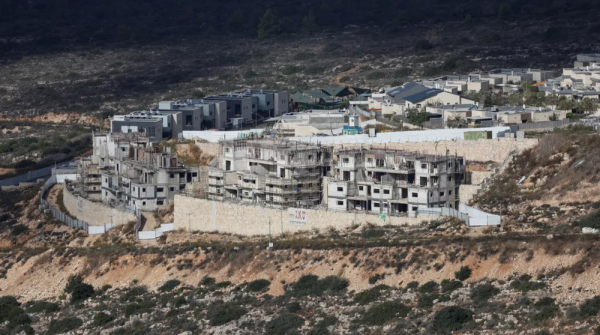
Hamas has strongly criticized the decision by the Israeli regime to approve a plan for a new settlement east of occupied al-Quds, calling the move a dangerous escalation in the settlement and annexation agenda, and another crime added to Israel's already extensive record of international law violations.
The Palestinian resistance movement said in a statement that the settlement plan approved by Israeli Finance Minister Bezalel Smotrich, which comprises thousands of housing units, is part of a deliberate policy designed to Judaize al-Quds, separate it from its Palestinian environment, and transform its character and identity.
The statement emphasized that the plan constitutes a direct attack on the rights of the Palestinian people, their territory, and their sacred sites, while also ignoring the will of the international community and its consistent warnings.
Hamas underlined that ongoing settlement activities act as a catalyst for tension and instability, placing full responsibility on the occupying Israeli regime for the repercussions of these colonial actions on the ground.
The movement urged the international community, the United Nations, and relevant legal and human rights organizations to fulfill their obligations and take immediate action to stop settlement projects and enforce measures to deter Israel.
It also called on the Palestinian people to reinforce their resilience and unity in facing efforts of Judaization and displacement.
After the launch of Israel's genocidal war in Gaza on October 7, 2023, Israeli authorities examined around 355 master plans for the development of 37,415 settlement units across 38,551 dunams (39 square kilometers) of Palestinian land. Among these, approval has been granted for 18,801 units, while the remaining 18,614 are still undergoing review.
Over 700,000 Israeli settlers currently live in more than 230 settlements established following the 1967 occupation of the West Bank and East al-Quds.
The international community views these settlements as a violation of international law and the Geneva Conventions because they are built on occupied Palestinian territories.
The UN General Assembly and the UN Security Council have consistently denounced Israel's settlement activities through various resolutions.
Press TV’s website
‘Israel deliberately targeting civilians’: Hamas condemns deadly attack on Gaza school
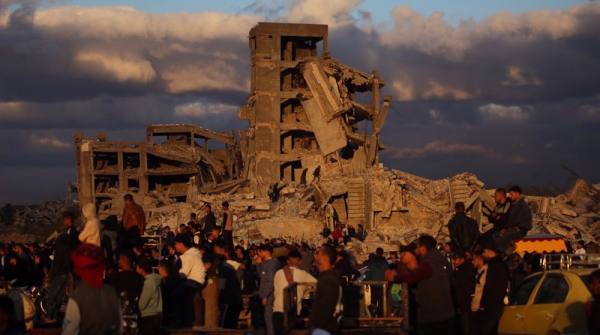
Hamas has condemned the “brutal” Israeli shelling of a school in Gaza City on Friday, which killed several Palestinians, calling it another “deliberate” war crime and a blatant violation of the ceasefire.
In a statement on Saturday, the Gaza-based resistance group also called out the “international silence and failure” to stop these crimes.
“The artillery strike carried out by the fascist Israeli occupation army on a school sheltering displaced civilians in the Al-Tuffah neighborhood, east of Gaza City, which resulted in the killings of several citizens, most of them children, is a brutal crime against innocent civilians and a flagrant, repeated violation of the ceasefire agreement,” read the statement.
The terrorist Israeli regime, it added, “continues its violations of the ceasefire by deliberately and continuously targeting civilians in the Gaza Strip, leaving more than 400 martyrs since the agreement was announced over two months ago, amid an international silence and failure to act against these crimes.”
Hamas emphasized that the occupation does not stop at targeting civilians, but deepens the humanitarian catastrophe by preventing ambulances and medical teams from reaching the sites of attacks to rescue and treat the wounded.
The resistance group warned that the criminal behavior “amounts to compounded war crimes and a blatant violation of international humanitarian law.”
Hamas also urged the mediators guaranteeing the agreement and the US administration to fulfill their responsibilities regarding these violations and to intervene immediately to halt the attempts of Prime Minister Benjamin Netanyahu’s war-criminal cabinet to impose equations that contradict and clearly undermine the agreement.
Israel’s Friday attack on a school-turned-shelter near Mohammad al-Durra Hospital, east of the al-Tuffah neighborhood, killed at least seven Palestinians and wounded several others.
Some bodies were recovered in pieces, eyewitnesses told local news sources.
Since the ceasefire took effect on October 10, Israel has violated the ceasefire at least 738 times, the Gaza Government Media Office said.
It said Israel shot at civilians 205 times, raided residential areas beyond the yellow line 37 times, bombed and shelled Gaza 358 times, and demolished people’s properties on 138 occasions.
The Palestinian Health Ministry in Gaza said at least 394 Palestinians have been killed in Israeli attacks since October 11, the first full day of the ceasefire. Another 1,075 people have been wounded.
Hamas leader Ghazi Hamas said on Tuesday that Israel had committed more than 813 ceasefire violations.
He added that since the ceasefire agreement came into force, about 400 people have been killed, noting that more than 95% of the dead are civilians.
The latest figures from the Palestinian Health Ministry, tracking the casualties from October 7, 2023, confirm that over 70,600 Palestinians, including more than 20,150 children, have been killed during the Israeli genocide against Gaza.
Press TV’s website