zarezadeh
The Benefits of Sending Ṣalawāt

The Benefits of Sending Ṣalawāt (Blessings) upon the Prophet ﷺ and His Family
(Based on the Qur’an and Islamic Narrations)
1. Obedience to a Direct Divine Command
> “Indeed Allah and His angels send blessings upon the Prophet…”
(Qur’an 33:56)
Sending ṣalawāt is direct obedience to Allah’s command.
---
2. Acceptance and Elevation of Supplication
The Prophet ﷺ said:
“Supplication remains suspended between heaven and earth until ṣalawāt is sent upon the Prophet.”
? Sunan al-Tirmidhī, vol. 5, p. 485
---
3. Forgiveness of Sins
The Prophet ﷺ said:
“Whoever sends one ṣalawāt upon me, Allah forgives ten of his sins.”
? Ṣaḥīḥ Muslim, vol. 1, p. 306
---
4. Increase in Good Deeds (Ḥasanāt)
The Prophet ﷺ said:
“For every ṣalawāt, ten good deeds are recorded for him.”
? Sunan al-Nasāʾī, vol. 3, p. 50
---
5. Elevation of Rank and Status
The Prophet ﷺ said:
“With every ṣalawāt, Allah raises the servant ten درجات (levels).”
? Musnad Aḥmad, vol. 4, p. 164
---
6. Faster Acceptance of Supplication
Imam al-Ṣādiq (a) said:
“Ṣalawāt is the key to the acceptance of supplication.”
? al-Kāfī, vol. 2, p. 493
---
7. Removal of Grief, Anxiety, and Sorrow
The Prophet ﷺ said:
“Ṣalawāt removes grief.”
? Biḥār al-Anwār, vol. 91, p. 63
---
8. Relief from Poverty and Hardship
Imam ʿAlī (a) said:
“Ṣalawāt removes poverty.”
? Biḥār al-Anwār, vol. 91, p. 63
---
9. Illumination of the Heart and Purification of the Soul
Imam al-Bāqir (a) said:
“Ṣalawāt purifies hearts.”
? Biḥār al-Anwār, vol. 91, p. 65
---
10. Protection from Hypocrisy
The Prophet ﷺ said:
“Frequent ṣalawāt removes hypocrisy from the heart.”
? Kanz al-ʿUmmāl, hadith 39680
---
11. Nearness to the Prophet on the Day of Judgment
The Prophet ﷺ said:
“The closest people to me on the Day of Judgment are those who send the most ṣalawāt upon me.”
? Sunan al-Tirmidhī, vol. 5, p. 551
---
12. Expiation for Gatherings
The Prophet ﷺ said:
“When ṣalawāt is sent in a gathering, it becomes an expiation for that gathering.”
? Sunan al-Tirmidhī, vol. 5, p. 553
---
13. Protection from the Punishment of the Grave
Imam al-Ṣādiq (a) said:
“Ṣalawāt prevents the punishment of the grave.”
? Thawāb al-Aʿmāl, Shaykh al-Ṣadūq, p. 140
---
14. Acceptance of Deeds
Imam al-Riḍā (a) said:
“Ṣalawāt elevates deeds.”
? ʿUyūn Akhbār al-Riḍā, vol. 2, p. 265
---
15. Companionship of the Angels
The Prophet ﷺ said:
“The angels send blessings upon the one who sends ṣalawāt.”
? Musnad Aḥmad, vol. 3, p. 456
---
16. Protection from Regret on the Day of Judgment
The Prophet ﷺ said:
“Whoever hears my name mentioned in a gathering and does not send ṣalawāt will regret it on the Day of Judgment.”
? Sunan al-Tirmidhī, vol. 5, p. 551
---
17. Fulfillment of Worldly and Hereafter Needs
Imam al-Ṣādiq (a) said:
“Ṣalawāt is a means for fulfilling needs.”
? Biḥār al-Anwār, vol. 91, p. 66
---
Brief Summary
Ṣalawāt is worship, supplication, remembrance, and a means of closeness to Allah
It brings benefits in both this world and the Hereafter
It is the easiest remembrance with the greatest impact
> The best short dhikr:
Allāhumma ṣalli ʿalā Muḥammad wa Āli Muḥammad
How Can Our Supplications Be Answered More Quickly? (Based on Hadith)
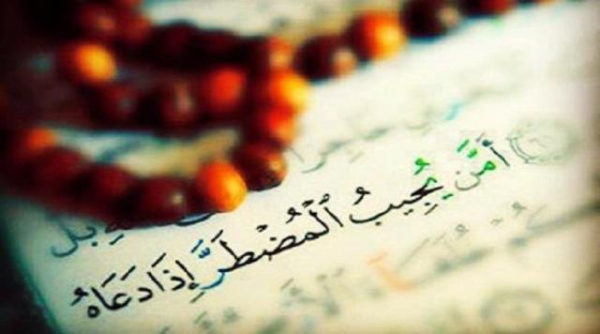
1️⃣ Begin with Praise of Allah and Ṣalawāt
Imam al-Ṣādiq (a):
“Any supplication that is not preceded by ṣalawāt is veiled.”
? al-Kāfī, vol. 2, p. 493
2️⃣ Confess Sins and Repent
Imam ʿAlī (a):
“Sin delays the acceptance of supplication.”
? Ghurar al-Ḥikam, hadith 3465
3️⃣ Pray for Others Before Yourself
The Prophet ﷺ said:
“The supplication of a believer for another believer in his absence is answered.”
? al-Kāfī, vol. 2, p. 509
4️⃣ Persist and Be Consistent in Supplication
Imam al-Bāqir (a):
“Allah loves a servant who persists in supplication.”
? al-Kāfī, vol. 2, p. 473
5️⃣ Choose Special Times
The Prophet ﷺ said:
“A supplication made between the adhān and the iqāmah is not rejected.”
? Sunan al-Tirmidhī, vol. 1, p. 212
6️⃣ Consume Lawful (Ḥalāl) Sustenance
The Prophet ﷺ said:
“Whoever consumes lawful food, his supplication will be answered.”
? Biḥār al-Anwār, vol. 93, p. 374
Intercession (Shafāʿah) in Islam

Intercession (Shafāʿah) in Islam: A Qur’anic and Hadith-Based Analysis and Response to Objections
Introduction
Intercession (shafāʿah) is one of the established Islamic beliefs with deep roots in the Qur’an and the Prophetic tradition, and it is widely accepted among Muslims, particularly within Shiʿa theology. Nevertheless, some groups consider intercession contrary to pure monotheism or restrict it solely to the Day of Judgment. This article briefly explains the reality of intercession through Qur’anic verses and authentic narrations and addresses common objections.
---
1. The Principle of Intercession in the Qur’an
The Qur’an clearly affirms intercession while making it strictly dependent on Allah’s permission:
> “Who is it that can intercede with Him except by His permission?”
(Qur’an 2:255)
Allah also says:
> “They do not intercede except for one whom He approves.”
(Qur’an 21:28)
These verses demonstrate that intercession is not denied; rather, it is recognized as a divinely regulated reality.
---
2. Response to the Claim: “Intercession Is Polytheism (Shirk)”
Shirk occurs only when independence in influence is attributed to other than Allah. However, the Qur’an explicitly states that all intercession belongs entirely to Allah:
> “Say: To Allah belongs all intercession.”
(Qur’an 39:44)
Thus, intercessors act solely by Allah’s authorization and will; they possess no independent power.
---
3. The Prophet’s Intercession in Authentic Hadith
Numerous authentic narrations in both Sunni and Shiʿa sources confirm the intercession of the Prophet Muhammad ﷺ.
The Prophet said:
> “I have been granted intercession.”
(Saḥīḥ Muslim, vol. 1, p. 190)
He also stated:
> “My intercession is for the major sinners among my community.”
(Sunan al-Tirmidhī, vol. 4, p. 610; Musnad Aḥmad, vol. 3, p. 213)
These narrations clearly indicate that the Prophet’s intercession extends even to sinful believers.
---
4. Response to the Claim: “Intercession Encourages Sin”
The Qur’an restricts intercession to those who are approved by Allah:
> “They do not intercede except for one whom He approves.”
(Qur’an 21:28)
Therefore:
Intercession does not apply to disbelievers or obstinate rejecters
Faith, repentance, and attachment to divine guidance are prerequisites for benefiting from intercession
As a result, intercession does not promote sin; rather, it serves as a moral and spiritual incentive for repentance and reform.
---
Conclusion
Intercession is a definitive Qur’anic reality
It occurs solely by Allah’s permission and will
Belief in intercession does not contradict monotheism
Denial of intercession contradicts explicit Qur’anic verses and authentic Sunnah
Accordingly, intercession represents a manifestation of Allah’s vast mercy and is a fundamental component of authentic Islamic belief.
Tawassul in Islam: A Qur’anic and Hadith-Based Analysis and Response to Objections
Tawassul (seeking nearness to God through a means) has long been a deeply rooted belief among Muslims, particularly within Shiʿa theology. However, some Sunni scholars reject tawassul entirely, while others permit it only with living persons and not with the deceased. This short article examines the legitimacy of tawassul through the Qur’an and Prophetic tradition and provides concise responses to these objections.
---
1. The Qur’anic Basis for Tawassul
The Qur’an explicitly affirms the principle of seeking a means to draw closer to God:
> “O you who believe! Fear Allah and seek the means (al-wasīlah) to Him.”
(Qur’an 5:35)
Prominent Sunni exegetes such as Fakhr al-Dīn al-Rāzī and al-Qurṭubī state that wasīlah includes anything that brings one closer to Allah, including righteous and honored individuals.
Allah also says:
> “If, when they wronged themselves, they had come to you and asked forgiveness of Allah, and the Messenger had asked forgiveness for them…”
(Qur’an 4:64)
This verse clearly establishes the legitimacy of approaching the Prophet and seeking Allah’s forgiveness through him.
---
2. Response to the Claim: “Tawassul Is Not Permissible at All”
If tawassul were polytheism or an innovation:
The Qur’an would not command seeking a wasīlah
The Companions would not have practiced it
In well-established Sunni sources, a blind man came to the Prophet ﷺ and asked for his prayer. The Prophet taught him to say:
> “O Allah, I ask You and turn to You through Your Prophet Muhammad…”
(Sunan al-Tirmidhī, vol. 5, p. 569; Musnad Aḥmad, vol. 4, p. 138)
This narration is a clear example of tawassul through the person of the Prophet, not merely a direct supplication without mediation.
---
3. Response to the Claim: “Tawassul Is Allowed with the Living, Not with the Dead”
This distinction has no explicit basis in the Qur’an or authentic Sunnah.
The Qur’an states:
> “Do not think of those who are killed in the way of Allah as dead.”
(Qur’an 3:169)
If martyrs are alive, then the Prophet ﷺ and the righteous saints are even more deserving of this status.
Moreover, after the Prophet’s passing, the Companion Bilāl ibn al-Ḥārith al-Muzanī came to the Prophet’s grave during a drought and said:
> “O Messenger of Allah, ask Allah to grant rain for your nation.”
Rain then fell, and none of the Companions objected to this act.
(al-Istīʿāb, Ibn ʿAbd al-Barr, vol. 3, p. 1149; al-Bidāyah wa al-Nihāyah, Ibn Kathīr, vol. 7, p. 105)
This incident clearly demonstrates tawassul after the Prophet’s death.
---
Conclusion
Tawassul has a clear Qur’anic foundation
It was practiced by the Prophet and his Companions
The distinction between the living and the deceased lacks scriptural proof
Tawassul is not worship of other than Allah, but rather asking Allah through those whom He loves and honors
Therefore, tawassul is neither polytheism nor innovation, but a well-established Islamic practice supported by the Qur’an and the Sunnah.
Animal Rights in Islam

Islam recognizes clear rights for animals and views humans as morally responsible for their well-being. In the Qur’an and Islamic teachings, animals are not mere tools for human use but valuable creatures and integral parts of God’s creation.
The Status of Animals in the Qur’an
The Qur’an describes animals as communities similar to human beings:
> “There is no creature on earth nor bird that flies with its wings except that they are communities like you.”
(Qur’an, 6:38)
Although animals are described as being subjected to human use, this subjugation implies responsibility and trust, not permission for cruelty or abuse (Qur’an 16:5–8).
---
Animal Rights in Islamic Traditions
The Prophet Muhammad ﷺ and the Ahl al-Bayt strongly emphasized kindness toward animals:
The Prophet ﷺ said:
> “There is a reward for kindness to every living being.”
(Bukhari)
The Prophet ﷺ warned of punishment for a woman who imprisoned and starved a cat.
Imam Ja‘far al-Sadiq (peace be upon him) said:
> “Do not strike animals on their faces.”
---
Examples of Animal Rights in Islam
Providing adequate food and water
Prohibiting abuse, torture, and killing without justification
Allowing working animals to rest
Performing slaughter with mercy and minimal suffering
Forbidding cruel or entertainment-based use of animals
---
Conclusion
In Islamic thought, animals are God’s creatures and possess inherent dignity. How humans treat animals reflects their faith, ethics, and sense of responsibility. Long before modern animal rights movements, Islam established clear principles for protecting animal welfare.
Trump’s Approach to the Muslim World: Risks and Responses

Donald Trump does not have a single, coherent “development plan” for the Muslim world. Instead, his approach is largely transactional and security-driven, shaped by the principle of “America First.” Countries are valued only insofar as they provide direct economic, political, or security benefits to the United States.
Trump’s policy divides the Muslim world into two broad categories:
“useful allies”—mainly wealthy and compliant states—and “problematic actors”—independent or resistant countries that face pressure, sanctions, and containment.
A central pillar of this approach is unconditional support for Israel, including pushing Muslim countries toward normalization while sidelining the Palestinian issue. At the same time, Trump views most forms of political Islam through a security lens, often failing to distinguish between moderate and extremist movements.
---
Major Risks for the Muslim World
1. Deepening divisions among Muslim countries, preventing real regional cooperation.
2. Normalization of repression, as allied governments gain political cover for domestic crackdowns.
3. Economic pressure through sanctions and financial tools, harming ordinary people more than governments.
4. Reproduction of extremism, as prolonged injustice and humiliation fuel radical reactions.
---
How to Respond Effectively
At the state level:
Reduce dependence on the United States by diversifying political and economic partnerships.
Pursue pragmatic regional cooperation.
Engage in rational, interest-based diplomacy rather than emotional confrontation.
At the elite and media level:
Produce independent narratives instead of purely reactive or ideological ones.
Expose double standards without falling into conspiracy thinking.
At the societal level:
Promote political awareness without extremism.
Strengthen internal capacities—economy, education, and social cohesion.
Separate American society from U.S. political leadership.
---
Conclusion
Trump’s strategy toward the Muslim world is not about development, but about management, containment, and exploitation. The greatest danger lies not only in his policies, but in internal weakness, division, and emotional reactions within Muslim societies. The most effective response is internal strength, political rationality, and regional cooperation.
Iran Rises to the Top Five Economies of the Muslim World

Iran has been ranked as the fifth-largest economy in the Islamic world, based on its Gross Domestic Product (GDP) measured by Purchasing Power Parity (PPP), estimated at around 1.7 trillion US dollars.
This ranking places Iran among the top five economies out of the 53 member countries of the Organization of Islamic Cooperation (OIC).
What does this mean?
GDP (PPP) measures the real size of an economy by adjusting for differences in price levels and cost of living between countries.
It reflects actual production capacity and domestic economic strength, not just international market prices.
Because prices in Iran are relatively lower than in many countries, PPP provides a clearer picture of Iran’s real economic scale.
Countries ranked above Iran
The four economies ranked ahead of Iran in the Islamic world are:
1. Indonesia
2. Turkey
3. Egypt
4. Saudi Arabia
Iran follows them closely in fifth place, ahead of countries such as Pakistan, Bangladesh, Malaysia, Nigeria, and the UAE.
Why this ranking is important
It highlights Iran’s large internal market, industrial base, and energy resources.
It shows that despite sanctions and economic pressure, Iran remains one of the key economic powers in the Muslim world.
Iran’s economy accounts for roughly 6% of the total economic output of the Islamic world.
Key takeaway
This ranking does not mean Iran is wealthy in terms of per-capita income, nor does it reflect GDP measured at market exchange rates. Rather, it shows that Iran is one of the largest and most capable economies in terms of real production and domestic economic power.
The Difference Between Tawassul and Shafāʿah
Tawassul and Shafāʿah: Two Distinct Concepts with One Monotheistic Foundation
---
The Difference Between Tawassul and Shafāʿah in Shiʿi Thought
1. Definition of Tawassul
Tawassul means seeking closeness to God through the status, supplication, or nearness of His chosen servants (the Prophet and the Ahl al-Bayt).
The true actor is God.
The intermediaries are God’s chosen servants.
The goal is facilitating the acceptance of supplication.
---
2. Definition of Shafāʿah
Shafāʿah means intercession by God’s chosen servants in the Hereafter for forgiveness, salvation, or elevation of rank.
The final decision belongs to God.
The intercessors are those granted permission by God.
Its primary context is the Day of Judgment.
---
3. Difference in Time
Tawassul: This world
Shafāʿah: The Hereafter
---
4. Difference in the Form of Request
Tawassul:
“O God, by the right of Your Prophet, grant my request.”
Shafāʿah:
“O Prophet / O Imam, intercede for me with God by His permission.”
---
5. Difference in the Addressee
Tawassul: The direct addressee is God.
Shafāʿah: The request is made to the authorized intercessor.
---
6. Difference in Function
Tawassul:
A means of nearness and acceptance of supplication.
Shafāʿah:
A means of salvation from punishment or elevation in rank.
---
7. Key Similarities
Both:
Operate only by God’s permission
Do not grant independence to intermediaries
Are fully compatible with monotheism (tawḥīd)
---
8. Shiʿi Red Lines
Tawassul and Shafāʿah ≠ worship
Tawassul and Shafāʿah ≠ independent power of saints
Both are strictly within “by God’s permission”
---
Very Brief Summary
Tawassul = a means of supplication in this world
Shafāʿah = intercession for salvation in the Hereafter
Religious Mourning: A Qur’anic and Prophetic Tradition — A Shiʿi Perspective Using Authentic Sources
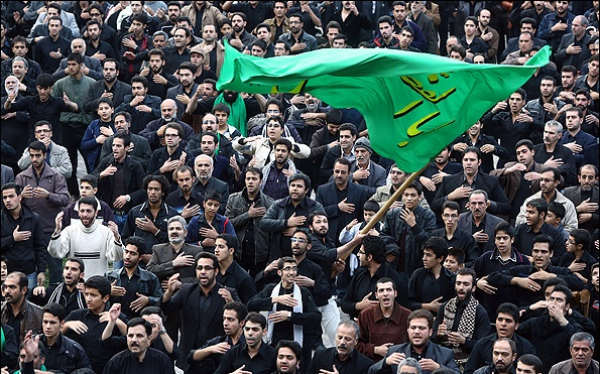
Shiʿi mourning rituals have long been criticized by some Sunni scholars. In this essay, from a Shiʿi perspective, yet based strictly on the Qur’an and authentic Sunni sources, we demonstrate that the principle of mourning, grief, and crying for religious figures is not an innovation (bidʿah), but rather deeply rooted in the Qur’an and the Prophetic tradition. The disagreement lies mainly in methods, not in the legitimacy of mourning itself.
---
1. The Principle of Mourning in the Qur’an
1.1. Prophet Jacob’s (Yaʿqub) Grief for Joseph (Yusuf)
The Qur’an explicitly describes the intense sorrow of a Prophet of God:
> وَتَوَلّىٰ عَنْهُمْ وَقَالَ يَا أَسَفَىٰ عَلَىٰ يُوسُفَ وَابْيَضَّتْ عَيْنَاهُ مِنَ الْحُزْنِ فَهُوَ كَظِيمٌ
(Qur’an, 12:84)
Translation:
“And he turned away from them and said, ‘Oh, my sorrow over Joseph!’ And his eyes became white from grief, for he was filled with sorrow.”
Key points:
Profound and visible grief
Long-term mourning
No divine condemnation whatsoever
? If mourning and crying were forbidden, the Qur’an would have censured this behavior rather than narrating it approvingly.
---
1.2. Crying as a Sign of Faith
> وَيَخِرُّونَ لِلْأَذْقَانِ يَبْكُونَ
(Qur’an, 17:109)
Translation:
“And they fall upon their faces weeping.”
Here, the Qur’an presents crying out of reverence, truth, and faith as a virtue of believers.
---
2. Mourning of the Prophet Muhammad ﷺ in Authentic Sunni Sources
2.1. The Prophet’s Crying for His Son Ibrahim
A well-known authentic hadith:
> إِنَّ الْعَيْنَ تَدْمَعُ، وَالْقَلْبَ يَحْزَنُ، وَلَا نَقُولُ إِلَّا مَا يُرْضِي رَبَّنَا
(Ṣaḥīḥ al-Bukhārī; Ṣaḥīḥ Muslim)
Translation:
“Indeed the eyes shed tears and the heart grieves, but we say nothing except what pleases our Lord.”
? The Prophet:
Cried openly
Expressed sorrow
Considered crying natural and legitimate
Thus, crying is not a protest against divine decree.
---
2.2. The Prophet’s Mourning for Hamzah (Sayyid al-Shuhadāʾ)
Sunni sources report:
> لَكِنَّ حَمْزَةَ لَا بَوَاكِيَ لَهُ
(Musnad Aḥmad; Sunan Ibn Mājah)
Translation:
“But Hamzah has no women to mourn him.”
After this statement, the women of the Ansar mourned Hamzah, and the Prophet did not forbid them.
? Had mourning or lamentation been unlawful, the Prophet ﷺ would have immediately prohibited it.
---
2.3. The Prophet’s Crying for the Martyrs of Uhud
> The Prophet cried over the martyrs of Uhud
(Ṣaḥīḥ Muslim)
This clearly establishes that mourning martyrs is part of the Prophetic practice.
---
3. Responding to the Objection of “Niyāḥah” (Forbidden Wailing)
Some Sunnis equate all mourning with niyāḥah, but this is incorrect.
What is forbidden in hadiths:
Pre-Islamic wailing (niyāḥah jāhiliyyah)
Protest against God’s decree
Blasphemous or despairing statements
Violent acts expressing rejection of divine wisdom
What is not forbidden:
Crying
Expressing grief
Mentioning the tragedy of the deceased
Gathering to remember the oppressed
? Prominent Sunni scholars such as al-Nawawī and Ibn Ḥajar al-ʿAsqalānī explicitly state that crying and mourning without objection to God are permissible.
---
4. The Legitimacy of Mourning for Imam Husayn (ʿA)
Even according to standards accepted by Sunnis:
Imam Husayn is the grandson of the Prophet ﷺ
He is described as “the leader of the youth of Paradise” (mutawātir Sunni hadith)
He was brutally and unjustly martyred
The Prophet foretold his martyrdom and cried for him
(Sunan al-Tirmidhī; Musnad Aḥmad)
? Therefore, mourning Imam Husayn:
Continues the Prophet’s own practice
Honors justice and resistance to oppression
Preserves essential Islamic values
---
5. Final Summary
✔ The Qur’an affirms grief and crying of God’s Prophets
✔ The Prophet Muhammad ﷺ openly mourned and cried
✔ Authentic Sunni sources do not reject mourning itself
✔ What is forbidden is ignorant wailing, not conscious mourning
✔ Shiʿi mourning is a protest against injustice, not against God
Trump, Netanyahu quietly planned aggression against Iran since February: Report
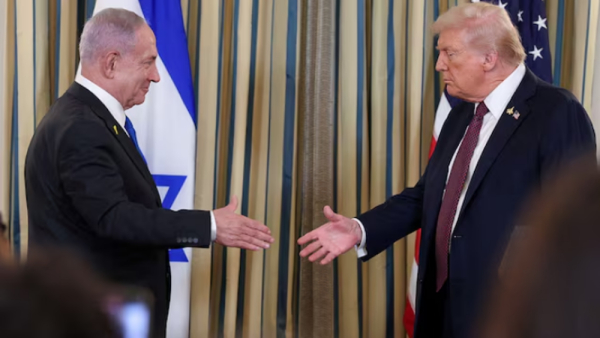
US President Donald Trump and Israeli prime minister Benjamin Netanyahu reportedly coordinated the June war against Iran months in advance, while orchestrating a media campaign to portray Washington as opposed to Tel Aviv’s plans.
According to sources cited by the Washington Post, Netanyahu met Trump in February and gave him four options for how an attack on Iran could happen.
“The Israeli prime minister first showed Trump what the operation would look like if Israel attacked alone. The second option was for Israel to take the lead, with minimal US support. The third was full collaboration between the two allies. The last option was for the US to take the lead,” the report said.
The report added that “Trump wanted to give nuclear diplomacy with Iran a chance, but he continued intelligence-sharing and operational planning with Israel.”
One day before the aggression, Trump indicated the US could potentially strike Iran but preferred a diplomatic solution.
“He and Netanyahu maneuvered to keep the Iranians unprepared for what would happen next,” sources added.
In the lead-up to the war, Tel Aviv leaked information that Netanyahu’s strategic affairs minister Ron Dermer and Mossad chief David Barnea would meet with US envoy Steve Witkoff.
Although a round of US–Iran indirect negotiations was scheduled for 15 June, Israel launched an unprovoked aggression on Iranian military and nuclear facilities on June 13.
“Israel had decided to strike, as the US well knew. The planned diplomacy was a ruse, and officials from both countries encouraged media reports of a US–Israeli rift,” the sources said.
According to sources, reports claiming that Netanyahu was not aligned with Witkoff or Trump were false. However, this perception was useful, as it allowed the planning to proceed without attracting much attention, the Post said.
Following Israel’s aggression, Washington proposed a highly restrictive deal demanding Tehran renounce support for resistance movements like Hezbollah and Hamas and replace key nuclear sites with facilities that cannot enrich uranium.
Tehran rejected the proposal, and Trump subsequently authorized US strikes, according to a senior diplomatic source.
The US entered the war by bombing three Iranian nuclear sites in a grave violation of the United Nations Charter, international law, and the Nuclear Non-Proliferation Treaty (NPT).
On June 24, Iran managed to impose a halt to the aggression after conducting waves of successful retaliatory operations.
Hebrew media had also confirmed in June that Trump had publicly opposed an attack on Iran while secretly greenlighting Israel’s aggression.
Since the outbreak of the war in Gaza, US and Western media reports have frequently framed Washington as “frustrated” with Israel’s actions, despite its military support for Tel Aviv.
Between October 2023 and September 2025, at least 46 Western media reports described former US presidents Joe Biden and Donald Trump as being “frustrated” with Israel’s operations.
Press TV’s website