zarezadeh
Returning from Hajj: The Beginning of a New Life
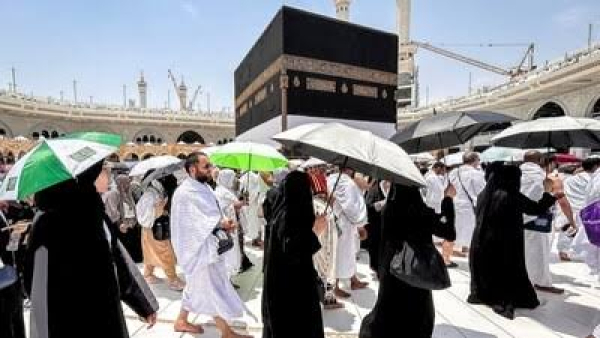
Hajj is not the end of the road; it is a beginning. The beginning of living lighter, with a softer heart and kinder eyes toward the world. Perhaps that is why longing for Hajj is not merely longing for a place—it is yearning for that state of purity experienced in that sacred land.
I miss the moment when your eyes first fall upon the Kaaba and your supplication is answered. The tears that flow without permission. The promise whispered inside: I will return better than I came.
The obligatory Hajj is a journey that calls every longing heart. And how difficult it is to know the invitation exists… yet the moment of your arrival has not come.
Arafat: Where the Human Soul Is Reborn
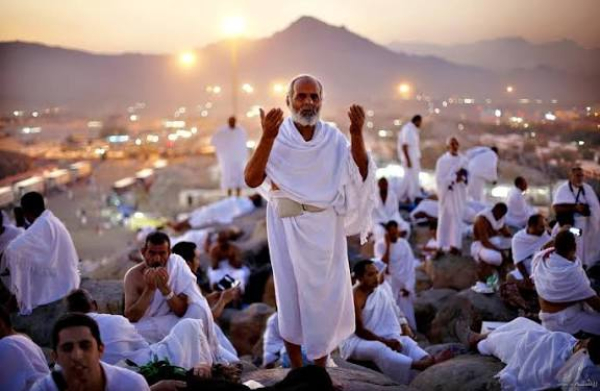
It is said that if one is not forgiven in Arafat, then where else will they be forgiven? That sentence alone is enough to bring tears to my eyes. Arafat means recognition—recognition of weaknesses, fears, and hopes long hidden.
Longing for Hajj is longing for that pure standing. For confessions spoken without intermediaries. For whispers heard by no one but God. There, a person realizes how deeply they need mercy—and how wide open the door of forgiveness truly is.
The Deepest Solitude in the Midst of Millions
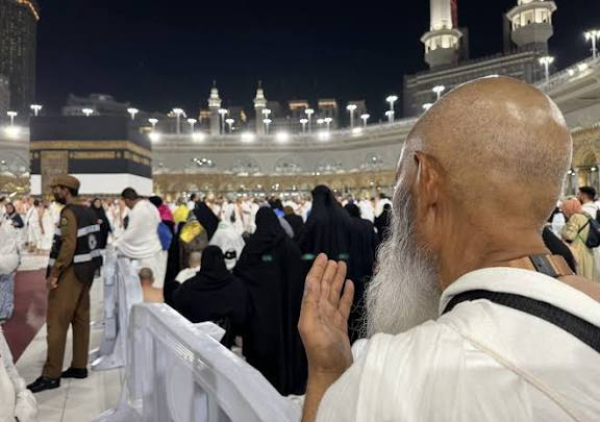
Hajj carries a beautiful paradox: you stand among millions of people, yet you experience the deepest solitude of your life. You circle the Kaaba, and with every round, a layer of pride falls away. Each step becomes a small practice in letting go of attachments.
Longing for Hajj is longing for those endless circumambulations. For the moment your hand touches the covering of the Kaaba—or perhaps does not—but your heart still binds itself to that sacred black cloth. There you realize that the center of the world is not marked on maps; it beats within the hearts of those who revolve around a single Truth
“Labbayk”… A Call That Still Echoes in My Soul
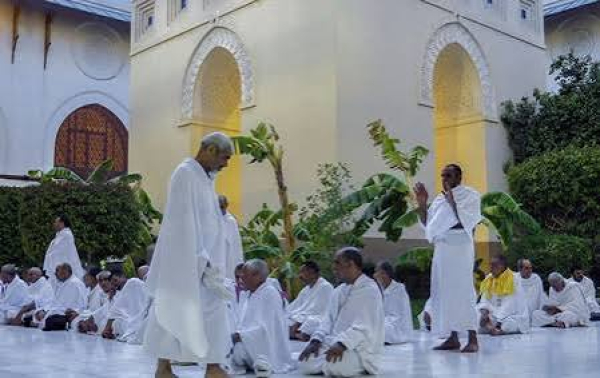
“Labbayk Allahumma Labbayk…”
This chant is not just words; it is a covenant between the servant and the Lord. Every time I hear the Talbiyah, my heart responds, even if I am miles away from the Miqat. Labbayk means: I am here. I heard Your call.
Longing for Hajj is longing to answer that call. To stand on the plains of Arafat, where it is said that one day equals a lifetime. To raise your hands beneath the burning sun and feel as though your entire past is being washed in forgiveness. Who can taste such a day and not yearn to return?
When the Name “Mecca” Makes My Heart Tremble
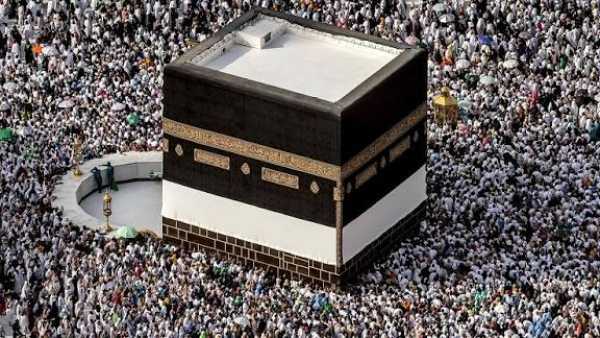
Sometimes just hearing the name “Mecca” is enough to make something collapse inside my chest. It feels as though my heart has remained beside the Kaaba while my body lingers far away in this earthly distance. The thought of that first gaze upon the Sacred House, that heavy silence between tears and supplication, that sea of lovers whispering one Name… how can anyone witness such a scene and ever feel settled again?
The obligatory Hajj is not merely a journey; it is a return to one’s origin. A place where you remove the colorful garments of the world and stand before God in two simple white cloths, saying: I have come, without title or status. Longing for Hajj is longing to become simple again—to reach that moment when nothing stands between you and the sky.
A Powerful Leadership; A Pillar of Stability Amid Regional Turbulence
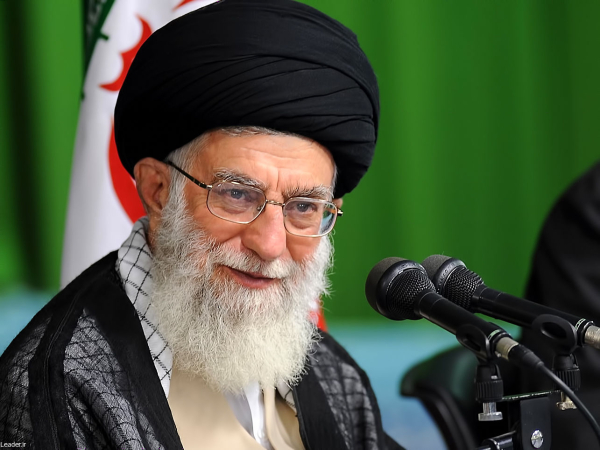
In a world where the Middle East has consistently faced political, security, and economic crises, the stability of a nation requires leadership marked by experience, firmness, and decisive authority. The Leader of the Islamic Republic of Iran, who has held this position since 1989, has played a central role for more than three decades in shaping the country’s major domestic and foreign policies.
One of the most significant characteristics of this leadership has been a continuous emphasis on political independence and the preservation of national sovereignty. At a time when many countries in the region experienced costly upheavals and deep instability, Iran’s governing structure maintained its cohesion. This continuity has been attributed to a strategic approach focused on strengthening internal institutions, expanding defensive capabilities, and promoting self-reliance in key strategic sectors.
On the regional level, the Islamic Republic’s overarching policies in recent decades have aimed at increasing geopolitical influence and playing an active role in Middle Eastern affairs. Support for resistance movements, advocacy for regional security without the presence of extra-regional powers, and firm positions in the face of external pressure reflect an approach grounded in authority and deterrence.
Domestically, emphasis on scientific and technological advancement has been another defining feature of this period. Today, Iran has achieved notable standing in certain strategic fields such as nanotechnology, defense industries, and nuclear science, placing it among the more advanced countries in the region in these areas. The significant growth in academic scientific output over the past two decades further illustrates this trajectory.
In summary, the current leadership of Iran may be described through three key concepts: stability, authority, and continuity. In an era of rapid global transformation, long-term experience in managing complex crises is regarded by supporters of this approach as a decisive factor in preserving national cohesion and advancing the country’s overarching objectives.
Iran receives worldwide congratulations on 47th anniversary of victory of Islamic Revolution
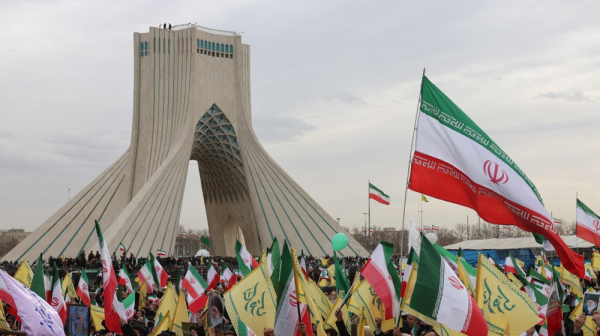
Congratulations have poured in from around the world on the 47th anniversary of the victory of the Islamic Revolution of Iran, with international leaders and senior officials sending messages of goodwill to the Leader, president, and people to mark the national occasion.
Nicaraguan President Daniel Ortega issued a statement congratulating Leader of the Islamic Revolution Ayatollah Seyyed Ali Khamenei, President Masoud Pezeshkian, and the people of Iran on the anniversary of the victory of the Islamic Revolution.
"As we commemorate the 47th anniversary of the glorious Islamic Revolution of Iran on February 11, on behalf of the people and the Government of Reconciliation and National Unity of the Republic of Nicaragua, and on our own behalf, we extend our warmest and most revolutionary congratulations to you, the government, and the people of the Islamic Republic of Iran,” he said.
“Dear brothers, please accept our fraternal and revolutionary embrace, along with the affection of the people of Nicaragua for the people of Iran,” Ortega added.
Meanwhile, Sheikh Mohammed bin Abdulrahman bin Jassim Al Thani, Prime Minister and Minister of Foreign Affairs of Qatar, sent a message to President Pezeshkian, congratulating him on the national occasion.
In a separate message, Mahdi al-Mashat, President of Yemen’s Supreme Political Council, also sent a congratulatory message to President Pezeshkian on the occasion of the 47th anniversary of the victory of the Islamic Revolution.
“I proudly and sincerely congratulate Your Excellency on the 47th anniversary of the victory of the Islamic Revolution, and I wish you good health and ever-increasing success, as well as greater stability and prosperity for your dear country,” he said.
The top Yemeni official stressed that the remarkable progress of the Islamic Republic of Iran, particularly in scientific and military fields, had angered its enemies, and that this achievement was the result of decades of resistance against American sanctions and aggression, which the Iranian nation had achieved under the wise leadership of Ayatollah Khamenei.
“In light of the current conditions in the region, we are confident in the ability of the Islamic Republic of Iran—both its leadership and its people—to confront all challenges with greater wisdom and strength. This confidence stems from the Iranian people, who over the past decades have made their voice heard by their enemies and will once again declare their unwavering support for the Islamic Revolution to the enemies of the Islamic Ummah,” he added.
Al-Mashat went on to say that the success of Iran’s Islamic Revolution under the leadership of Imam Khomeini brought significant support to the causes of the Islamic Ummah, especially the cause of Palestine and its oppressed people, and that the Iranian people, by enduring all forms of war and siege out of loyalty to their bonds of faith and Islamic values, have presented a unique model in this regard.
He concluded by emphasizing that the Islamic Revolution of Iran deserves to receive the convergence and a helping hand from Islamic and Arab countries in pursuit of the interests of the Islamic Ummah, their nations, and their sovereignty and independence.
“We in the Republic of Yemen once again stand against the conspiracies that target Iran and the entire region,” al-Mashat stressed.
In addition, Subrahmanyam Jaishankar, India’s Minister of Foreign Affairs, shared a photo of himself with Iran’s Foreign Minister Abbas Araghchi on X, congratulating him, the Iranian government, and the people of Iran on the occasion of the 47th anniversary of the Islamic Revolution.
United Nations Secretary General Antonio Guterres also issued an official message congratulating President Pezeshkian and people of Iran on the anniversary of the Islamic Revolution.
The UN chief emphasized the importance of dialogue and international cooperation in addressing global challenges, stating that confronting these challenges requires renewed engagement and a commitment to multilateral cooperation to achieve peace and security, advance sustainable development goals, and uphold human rights.
Press TV’s website
Iran officials: Mass participation in Islamic Revolution anniversary rallies proves country's strength
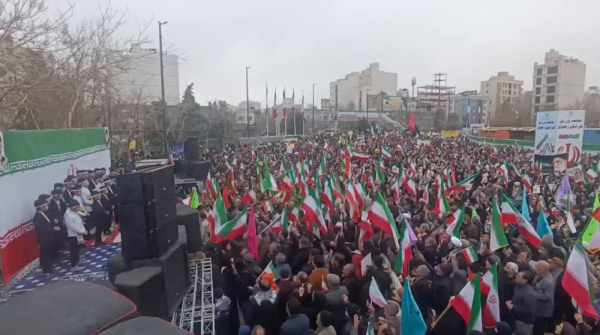
The large crowds marking the 1979 Islamic Revolution anniversary show Iran's strength and authority, offering firm backing to the country’s representatives in ongoing diplomatic efforts, senior Iranian officials say.
Foreign Minister Abbas Araghchi said the public presence carried a clear message to the world and strengthened Iran’s position in diplomacy and negotiations.
“We are encouraged in the fields of diplomacy and negotiations by our people and our armed forces,” he stated.
He said the participation reassures officials that they have the nation’s support and that the armed forces of the Islamic Republic remain firmly committed to defending the country.
Araghchi described the anniversary as a “good day,” pointing to the “magnificent” participation and public backing of the Islamic Republic’s diplomatic path.
“Our hearts are warmed by the people, the armed forces, and the leadership,” he said, adding that such support would translate into a stronger presence in diplomatic arenas.
He also noted that the time and location of the next round of negotiations have not yet been determined.
Minister of Petroleum Mohsen Paknejad, speaking on the sidelines of the rallies, congratulated the nation on the anniversary and said the Iranian people have consistently stood by the ideals of the Revolution.
Referring to oil sanctions, viewed in Tehran as part of a broader campaign of economic pressure led by the US and supported by Israel, he said his fellow colleagues in the energy sector have developed solutions to remove existing restrictions.
“We will not face serious problems,” he said, stressing that oil sales will continue despite the measures imposed on the country.
Defense Minister Brigadier General Aziz Nasirzadeh described this year’s turnout as unprecedented.
“I have never seen such an enthusiastic presence in any year,” he said. He added that the Iranian people are fully aware of global developments and took part with clear understanding.
According to Nasirzadeh, “this presence is more powerful than any bomb or missile.” Addressing threats from hostile powers, he said Iran would respond with full strength in ways “the enemies cannot imagine.”
Intelligence Minister Esmail Khatib said the rallies gave concrete expression to national unity, a principle repeatedly emphasized by the president. He stated that unity has now moved from mere words to reality through public participation.
Asked how cohesion can be preserved, Khatib said the best path forward is mutual support, constructive engagement, and respectful tolerance of differing views.
Education Minister Alireza Kazemi described the demonstrations as a manifestation of national authority and legitimacy.
He said the turnout serves as the “best response” to hostile rhetorics and plots in the international arena, particularly from Israel and its Western supporters.
According to Kazemi, alignment between the military, law enforcement, and the public provides strong backing for the government and its diplomatic efforts, with positive outcomes abroad.
Judiciary Chief Gholamhossein Mohseni-Eje'i joined marchers in Tehran and renewed allegiance to the ideals of the Revolution’s founders.
He said people across Iran created an epic scene “more magnificent than in previous years,” and displayed their determination in support of the establishment, Islam, and the country.
Eje'i said the rallies carried two clear messages. The first, he said, was directed at “treacherous and oppressive enemies” who have recently resorted to insults and threats.
“The people of Iran today delivered a firm and crushing response to these empty words,” he said, adding that citizens signaled readiness to defend their homeland more than ever.
The second message, he noted, was aimed at officials themselves. He said authorities must intensify efforts to address public concerns, work tirelessly to resolve problems, and ensure security and welfare.
“We must never separate ourselves from the people,” he said, adding “These people, who have always stood by the Revolution, deserve the highest level of service.”
During the march in Tehran, the head of the Judiciary spoke directly with participants and listened to their concerns, underscoring efforts to present the anniversary not only as a symbolic event but also as a sign of continued public engagement in the face of sustained foreign pressure.
Press TV’s website
Iran’s missile program will never be on negotiating table: Shamkhani
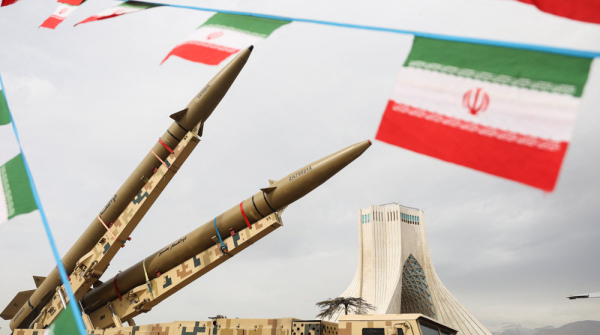
Iran’s ballistic missile capabilities are a "red line" that will never be placed on the negotiating table, a high-ranking Iranian defense official has said.
Rear Admiral Ali Shamkhani, who serves as the secretary of Iran’s Defense Council, a subsidiary of the Supreme National Security Council (SNSC), made the remarks on the sidelines of the February 11 Islamic Revolution anniversary rallies.
The statement comes as Washington continues to push for an expansion of ongoing nuclear talks to include Tehran’s missile development. Shamkhani’s comments were a direct response to renewed calls from the administration of President Donald Trump for missile restrictions.
While Iran has expressed willingness to discuss its nuclear activities in exchange for sanctions relief, it has consistently decoupled its defensive missile program from those negotiations.
Shamkhani said Washington’s “habit” of combining threats with diplomacy was a tired tactic used to give “credibility” to its negotiation stance, but Tehran remains unmoved by that posture.
‘Limited attack’ means full-scale war
Rear Admiral Shamkhani said any military provocation, regardless of its scale, would be met with a total response.
Shamkhani warned the United States against a "limited strike" on Iranian interests, saying the Iranian Armed Forces have clearly signaled through both official statements and field displays of power that any aggression would be viewed as the start of an all-out war.
"A military conflict in a region with such a level of sensitivity and density of interests cannot be restricted to a specific geography or just two parties," Shamkhani warned.
Due to the region's vital energy infrastructure, he said, any conflict would have "global consequences" affecting lives far beyond West Asia.
Shamkhani said the only logical path forward for the West is to pursue "serious dialogue" and abandon "theatrical and propaganda behaviors" that are only meant to destabilize the region further.
The remarks come amid a visit to Washington by the Israeli regime's prime minister Benjamin Netanyahu.
Netanyahu is expected to meet with Trump to push for a tougher US stance, specifically demanding that any future deal include strict limitations on Tehran’s ballistic arsenal.
On the eve of the White House meeting, President Trump signaled he was considering sending a second naval "armada" to West Asia to increase pressure on Iran.
On February 8, Foreign Minister Abbas Araghchi reiterated that Iran’s missile program has "never been, and never will be," part of the agenda in the nuclear talks.
Press TV’s website
Iranians mark 47th anniversary of Islamic Revolution with massive nationwide rallies
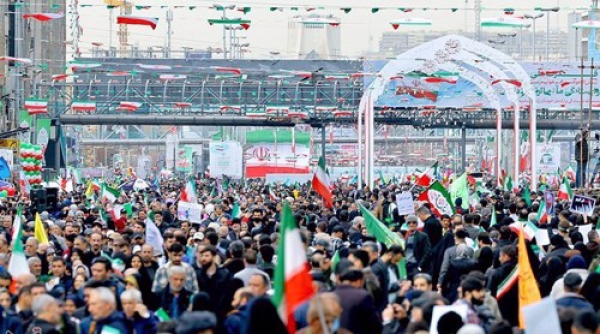
Iranians have marked the anniversary of the Islamic Revolution with nationwide rallies in their millions, sending a strong message of allegiance to the ideals of the late Imam Khomeini who upended the US-backed monarchy 47 years ago.
Huge crowds poured into Tehran’s main squares and into public spaces across roughly 1,400 cities and towns, braving chilly temperatures, rain and snow in a display of national unity amid provocations and threats by the US and Israel in recent weeks.
In Tehran, participants gathered from 9:30 a.m. local time and proceeded toward the iconic Azadi Square where President Masoud Pezeshkian addressed the massive crowd.
They chanted slogans in unison condemning decades of crimes by the United States against the Iranian nation, as well as the Israeli regime’s atrocities.
They also carried photos of the martyrs of the eight-year Iraqi war on Iran, the 12-day US and Israeli war in June, and the recent foreign-backed riots, as well as other martyrs who lost their lives in the line of duty.
About 7,200 domestic journalists and nearly 200 foreign media representatives covered the events, documenting public participation and related ceremonies and countering Western media narratives that downplay or mischaracterize such gatherings.
On Tuesday night, people across the country chanted “Allahu Akbar” at 9:00 p.m. to commemorate the victory of the Islamic Revolution. In many cities, especially Tehran, spontaneous crowds carrying Iranian flags gathered in public squares.
On Monday, Leader of the Islamic Revolution Ayatollah Seyyed Ali Khamenei called on the Iranian nation to demonstrate its will and steadfastness on the anniversary of the Islamic Revolution, saying such unity would frustrate the enemy.
The large-scale turnout follows riots on Jan. 8 and 9, when protests initially sparked by economic grievances on January 8 and 9 and turned into unruly scenes of mayhem and destruction. Armed groups infiltrated the demonstrations, leading to damage to shops, government buildings and public facilities, as well as casualties among civilians and security forces.
Iranian authorities confirmed that American and Israeli spy agencies were directly involved, providing funding, training, and media support to the perpetrators. According to a statement last month by Iran’s Foundation of Martyrs and Veterans Affairs, a total of 3,117 people lost their lives during the riots, including 2,427 innocent civilians and security personnel.
On the sidelines of the march, several burned and damaged vehicles destroyed during the recent foreign-backed riots were put on display. Officials said they had been set on fire and vandalized by rioters.
Following an insult to the Holy Qur'an during the January terrorist incidents by operatives trained by Mossad, some marchers held copies of the Qur'an and chanted, “Truth does not burn,” in condemnation.
Several cruise missiles — including Soumar, Noor, and Qadir — as well as ballistic missiles such as Zolfaghar, Haj Qassem, and Emad, were exhibited in Azadi Square.
In addition to the missiles, wreckage of several Israeli drones said to have been shot down during the 12-day war in June was also shown to participants in Azadi Square.
President Masoud Pezeshkian also attended the gathering of marchers in Tehran and delivered a speech to the participants in Tehran within the next few hours.
Marchers said in a resolution that their large and unifying presence represented “a clear manifestation of the Iranian nation’s political maturity, national cohesion, and historical vigilance” in the face of complex plots, mounting pressure, and a comprehensive hybrid war by the enemies of the Islamic Revolution, particularly the United States, Israel, and their allies.
The statement said recent events — including an “open aggression and imposed 12-day war” against Iran and the Resistance Front, as well as “bitter incidents of an American-Zionist coup attempt by armed terrorist elements” — had exposed the foe’s hostility and violence while also demonstrating to the world the resilience of Iran and its allies.
“With a deep understanding of the enemy’s hybrid, cognitive, and media warfare and with direct experience of the 12-day imposed war, we emphasize the necessity of preserving sacred unity, social solidarity, strengthening social capital, and avoiding any division or polarization,” the resolution declared.
It added that national cohesion and the close bond between the people and the Islamic system constitute the country’s most important support in confronting internal and external threats.
The rallies commemorate the Iranian people’s overthrow of the Pahlavi dictatorship, which had the full backing of the United States, in the winter of 1979.
Imam Khomeini returned from exile on February 1, 1979, receiving an enormous welcome from the public weeks after the shah’s departure in mid-January.
The downfall of the Pahlavi regime was sealed on February 11, 1979, when the military abandoned its allegiance to the shah and aligned itself with the Revolution.
Press TV’s website