zarezadeh
Iran’s military alertness main ‘deterrent’ against enemy miscalculations: Top commander
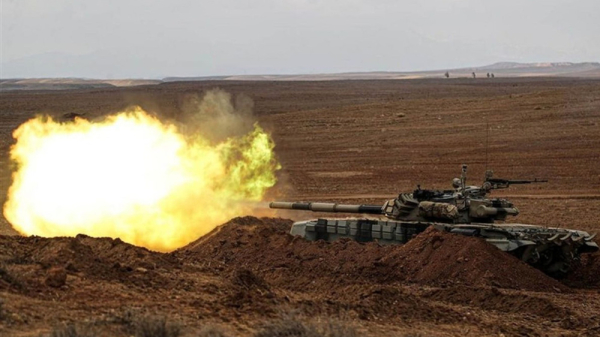
A senior Iranian commander said the constant alertness and readiness of the country’s Armed Forces constitute the “most important deterrent” against any adventurism or miscalculation by enemies.
Commander of the Iranian Army Ground Force Brigadier General Ali Jahanshahi made the remarks on Saturday during a visit to a mobile assault brigade in the city of Piranshahr, West Azarbaijan Province, which was conducted to assess the combat readiness and operational capabilities of the units.
He said the Army’s Ground Forces are “continuously and vigilantly” defending Iran’s territory as they are monitoring and neutralizing all the enemy’s actions and threats.
He pointed to the guidelines of Leader of the Islamic Revolution Ayatollah Seyyed Ali Khamenei about the importance of maintaining full readiness in the face of the enemy, saying the Armed Forces’ alertness is the key factor that deters enemies from any action against Iran’s interests and security.
“The Ground Forces have reached a level of capability and deterrence that can nip any threat in the bud,” Jahanshahi emphasized.
He stressed the importance of enhancing combat capabilities, utilizing state-of-the-art equipment and up-to-date tactics against asymmetric threats, and conducting regular maneuvers and tactical drills in the region.
The top commander added that the Ground Forces will not allow ill-wishers to carry out any measure against Iran’s territory.
Family of US citizen shot dead by Israeli settler demands end to impunity
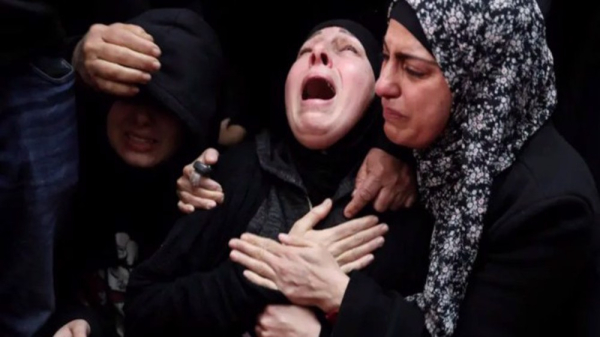
The family of a 19-year-old Palestinian-American man who was reportedly shot dead by an Israeli settler in the occupied West Bank is calling for those responsible to face justice, as concerns grow over rising settler attacks and the limited number of legal cases that follow.
The cousin of Nasrallah Abu Siyam, a US national born in Philadelphia who died on Wednesday near the city of Ramallah, said on Saturday that his killing reflected a wider pattern of impunity.
“A young man of 19 shot and killed in cold blood, and no responsibility… Impunity completely,” Abdulhamid Siyam told the BBC.
Abu Siyam’s death marks at least the sixth time in roughly two years that an American citizen has been killed in events involving Israeli settlers or military forces in the territory.
According to family members, Abu Siyam was part of a group of around 30 people from the village of Mukhmas who confronted armed settlers they believed were trying to take livestock from the community. Witness accounts say both groups threw stones before settlers began firing live rounds, injuring several residents.
Abu Siyam was hit during the shooting and later succumbed to his wounds.
Abdulhamid Siyam said that young Palestinian lives are lost without meaningful consequences, as he insisted that his cousin’s killing illustrates a broader climate where perpetrators are rarely held accountable.
The US State Department confirmed it was aware that an American citizen had died and said officials were closely observing developments. The US government added that consular support was available if needed.
The Israeli regime’s embassy in Washington said that the killing was being examined and that a formal operational investigation should be concluded quickly.
Palestinian groups and human rights advocates say that investigations of this kind seldom result in criminal charges, and that cases involving settler violence are frequently not pursued by Israeli authorities.
The incident occurred less than two weeks after the Israeli regime approved a set of broad measures aimed at accelerating settlement construction in the occupied West Bank, a decision that drew widespread criticism from the international community.
Press TV’s website
IRGC Navy tests Sayyad-3G air defense missile in Strait of Hormuz
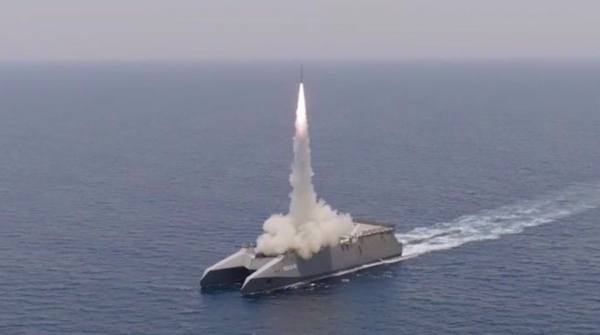
The Islamic Revolution Guards Corps (IRGC) Navy has successfully launched the Sayyad-3G naval air defense missile for the first time during the “Smart Control” exercises in the Strait of Hormuz.
According to footage released during the drills on Saturday, the missile was fired from the vessel Shahid Sayyad Shirazi, marking the system’s operational debut at sea.
The Sayyad-3G is the naval variant of Iran’s Sayyad-3 air defense missile and features a vertical launch system with a reported range of 150 kilometers (93 miles).
Iranian officials said the missile offers medium-to-long-range air defense coverage and facilitates the establishment of a regional air defense umbrella for vessels of the Shahid Soleimani class.
Authorities stated that the system is capable of independently detecting and engaging aerial threats, while also being integrated into a broader command-and-control network. This dual capability, they said, enhances the survivability of naval units against a range of air threats.
With a declared 150-kilometer range, the Sayyad-3G is designed to intercept and destroy various airborne targets, including fighter jets, high-altitude unmanned aerial vehicles, support aircraft, maritime patrol aircraft, and cruise missiles. Iranian officials described the missile as adding long-range defensive capacity to the country’s naval operations.
The Strait of Hormuz—one of the world’s most critical energy transit chokepoints—was the location of the three-day “Smart Control” drills, which began on February 16. Military analysts note that establishing extended air defense coverage in such a strategically sensitive waterway significantly increases the defensive depth of deployed naval forces.
Iran first tested the land-based Sayyad-3 air defense missile on December 28, 2016. The land version reportedly has a range of 120 kilometers, a length of six meters, and a weight of approximately 900 kilograms. The newly tested Sayyad-3G represents the maritime adaptation of that system, incorporating vertical launch capability suited for naval platforms.
The latest test underscores Tehran’s continued efforts to enhance its integrated air and missile defense architecture, particularly in strategically vital maritime zones.
The IRGC naval forces started military drills off the country’s southern coast on Monday, practicing smart control of the strategic Strait of Hormuz.
The drills come amid heightened regional tensions and repeated US threats to attack Iran if it does not accept its nuclear demands, among others.
The United States has dispatched warships to regional waters near Iran, prompting authorities in Tehran to warn that even a single shot fired at the country would be met with a massive response targeting US assets in the region.
Press TV’s website
The Ahl al-Bayt and Relatives of the Prophet Buried in Baqi
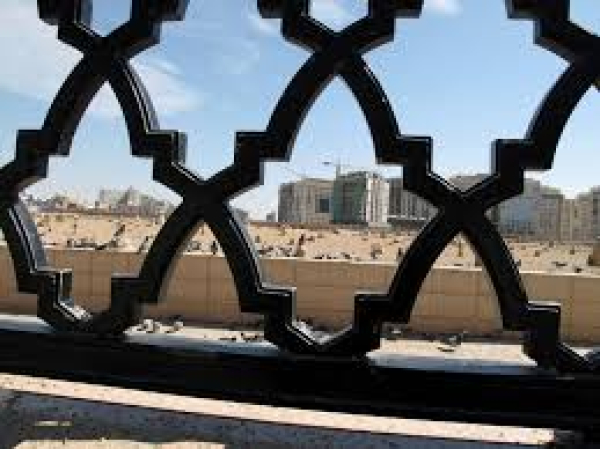
Imam Hasan al-Mujtaba (peace be upon him), Imam Ali ibn Husayn Zayn al-Abidin (peace be upon him), Imam Muhammad al-Baqir (peace be upon him), and Imam Ja‘far al-Sadiq (peace be upon him) are buried there, along with Fatimah bint Asad, the mother of Imam Ali (peace be upon him), and Abbas, the uncle of the Prophet. They are buried opposite the main entrance of Baqi, toward the south on the right side.
The daughters of the Prophet—Zaynab, Ruqayyah, and Umm Kulthum—are buried in front of the main entrance, a short distance away from it.
Also buried in Baqi are Aqil ibn Abi Talib, Abdullah ibn Ja‘far ibn Abi Talib, Umm al-Banin (peace be upon her), the mother of Abbas, Halimah al-Sa‘diyyah, the Prophet’s foster mother, Safiyyah, the Prophet’s aunt, Jumana, the Prophet’s aunt, and Arwa, the Prophet’s aunt.
Although it is widely believed that Atikah, another aunt of the Prophet, is buried in Baqi, historical sources do not provide confirmed reports about this.
Among the wives of the Prophet buried in Baqi are Umm Salamah, Hafsah, Zaynab bint Jahsh, Zaynab bint Khuzaymah, Safiyyah bint Huyayy, Aisha bint Abi Bakr, and Mariyah al-Qibtiyyah. They are buried to the north of the graves of the Prophet’s daughters, about eight meters to the right.
What is the origin of the name “Baqi Cemetery”?

The word Baqi comes from the root baqa‘, which refers to a piece of land that is different from the surrounding land, or land where trees—or their roots—are scattered sparsely across it.
In Islamic sources, the famous cemetery of Medina is called Baqi. It is also known as Baqi al-Gharqad because thorny gharqad trees used to grow there.
Can Iran sink the American aircraft carrier Abraham Lincoln?
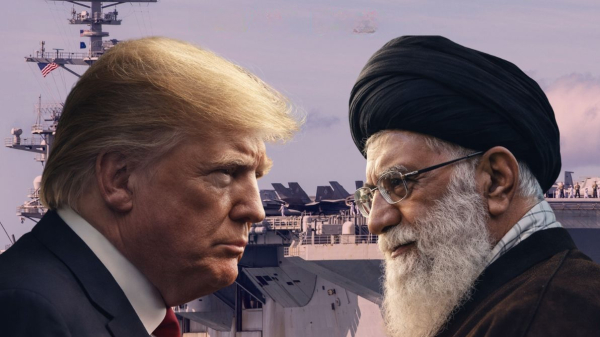
Yes, Iran has the military capability to do so, and at the right opportunity, this aircraft carrier and all its personnel could be sent to destruction and death. Iran is waiting for the right moment. Now we explain what the conditions are.
Amid rising tensions in West Asia and the deployment of a United States Navy carrier strike group led by the aircraft carrier Abraham Lincoln in the northern Arabian Sea, a long-standing question has once again emerged in strategic circles: Can Iran sink a U.S. aircraft carrier?
On paper, U.S. President Donald Trump could order an airstrike against Iran in the shortest possible time, but in practice, it is not that simple. Although America’s naval power is extremely impressive, Iran’s hands are not empty when it comes to confronting the U.S. Navy and its massive warships.
The aircraft carrier Abraham Lincoln, a nuclear-powered Nimitz-class carrier, carries about 60 F/A-18 Super Hornet fighter jets. This means that launching attacks on Iran from these aircraft is not as easy as it seems, and it is unclear whether U.S. carriers would be able to protect themselves against Iranian missile attacks in the event of war.
---
Missile cities versus carriers and fighter jets
Iran’s conventional air force is generally considered limited, largely because years of sanctions have prevented Iran from acquiring large numbers of modern fighter aircraft. However, Iran has compensated for this limitation by developing its missile capabilities.
Today, Tehran possesses one of the most diverse missile arsenals in the world, including short-range ballistic missiles, medium-range missiles, cruise missiles, and most importantly, hypersonic ballistic weapons. Hypersonic missiles travel at speeds greater than Mach 5, drastically reducing reaction time for the opponent.
According to military sources and based on Iran’s missile responses to Israel during the 12-day war, Iran has demonstrated that it possesses intercontinental missiles equipped with hypersonic systems such as the Fattah-2 missile. Some Iranian ballistic missiles are specifically designed to target ships and large naval vessels.
Some of these missiles were reportedly used by Yemeni forces in 2024 to target commercial and military vessels in the Gulf of Aden, and the Yemeni government confirmed purchasing these missiles from Iran.
In fact, the experience of Yemeni forces using Iranian anti-ship missiles during operations related to Gaza and against ships bound for Israel in 2024 demonstrates that Iran has sufficient missile capability to target warships at sea.
---
How vulnerable are American carriers?
The aircraft carrier Abraham Lincoln does not operate alone at sea. It is surrounded by a carrier strike group consisting of cruisers and destroyers.
According to Reuters, the Abraham Lincoln is protected by warships equipped with the Aegis combat system, one of the most advanced naval air defense networks in the world. This defensive shield operates in layers.
The outer layer includes electronic warfare systems designed to disrupt or confuse incoming missiles. Each destroyer carries about 90 air defense missiles, including the RIM-174 SM-6 interceptor, which has a range of over 400 kilometers. Newer versions also have ballistic missile defense capabilities, allowing them to intercept certain ballistic and hypersonic threats at various stages of flight.
However, a key question remains: how effective would this defense system be against a massive missile barrage from Iran, especially if more than 100 missiles were launched simultaneously?
Even the most advanced missile defense systems may struggle against saturation attacks, as intercepting more than 100 incoming missiles at once presents a major operational challenge.
---
How would Iran carry out such an attack?
Iran would likely rely on precise technical intelligence and careful operational planning.
According to India Today, Iranian forces could launch hundreds of long-range Shahed-136 drones alongside ballistic and cruise missiles toward U.S. naval vessels. This would aim to overwhelm defensive systems and force American warships to use up their interceptors.
After exhausting these defenses, hypersonic missiles with greater destructive power could then be launched toward the carriers.
A potential Iranian attack would likely involve two phases:
Launching large numbers of drones to deplete air defense interceptors
Launching ballistic missiles to strike the carrier itself
---
Geography: the decisive factor
Geographically, it is unlikely that U.S. aircraft carriers would enter coastal waters near Iran, such as the Persian Gulf or even the Gulf of Oman, because Iranian coastal missile forces would have maximum effectiveness there.
Instead, the Abraham Lincoln operates in the Arabian Sea, using geographic distance and terrain to increase defensive response time.
Aircraft carriers are not stationary targets. A Nimitz-class carrier weighs over 100,000 tons and can travel at speeds exceeding 25 knots, covering hundreds of kilometers per day. Carrier strike groups constantly change course to avoid predictable movement patterns.
For a successful attack, Iran would need rapid targeting, satellite surveillance, integrated command systems, and real-time missile launch capabilities.
Iran has invested in satellite tracking, navigation systems, and domestic space technology to improve its targeting capability.
In the past, GPS was the only global navigation option, but today countries such as China, Russia, Japan, and the United Kingdom have their own navigation systems. Iran has also sought to develop indigenous systems and integrate with non-Western satellite navigation networks.
---
Iran ready to test its naval deterrence
Despite these developments, sinking a U.S. aircraft carrier remains extremely difficult.
Iran could increase the risks and operational costs for U.S. naval forces, but destroying a carrier would require a complex combination of intelligence, timing, and weapon effectiveness.
Military experts note that naval deterrence is not based solely on weapon size, but on which side can detect, track, and strike first.
Iran appears to be working toward improving its missile, surveillance, and satellite capabilities to enhance its naval deterrence.
The Loyal Doves and the Radiant Sun of Jannat al-Baqi
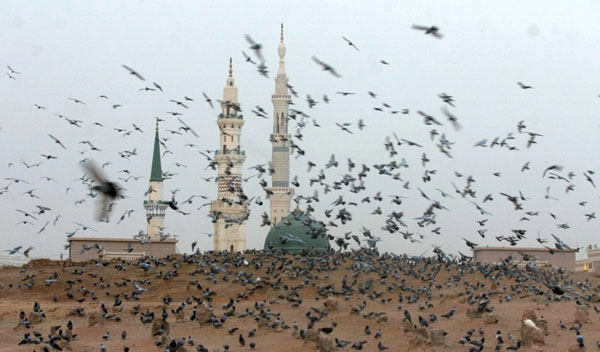
Al-Baqi is the most famous and most virtuous cemetery of Muslims in the city of Madinah. After the migration (Hijrah) to Madinah, the Prophet (peace be upon him) selected the land of Al-Baqi as the burial place for deceased Muslims. This land was located southeast of Al-Masjid an-Nabawi and close to it.
As‘ad ibn Zurarah al-Khazraji was the first person among the Ansar to be buried there, and Uthman ibn Maz‘un was the first among the Muhajirun to be buried in this cemetery.
Later, with the inclusion of the Hash Kawkab cemetery and the houses of the Companions that were located between Al-Masjid an-Nabawi and Al-Baqi, the area of this cemetery was expanded. In the contemporary period, land belonging to the Madinah municipality was also added to this cemetery.
Al-Masjid an-Nabawi (The Prophet’s Mosque)
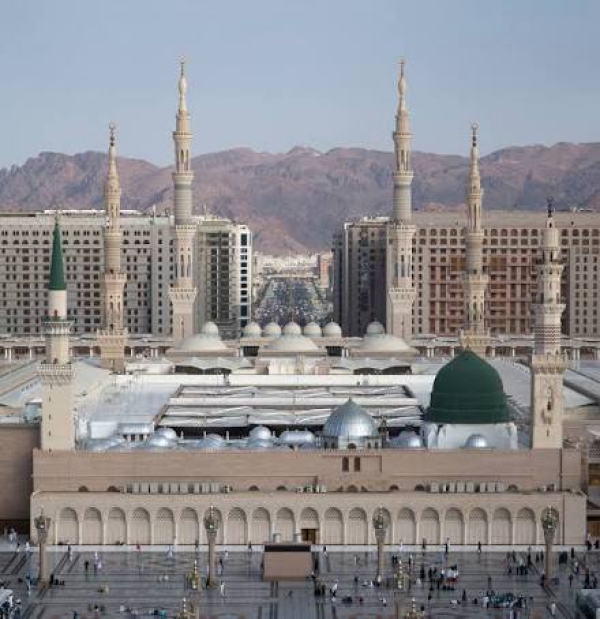
Thirteen years after the Prophet’s mission and his preaching and guidance in Makkah, the polytheists decided to assassinate the Prophet (peace be upon him). As a result, he was forced to migrate from Makkah to Madinah.
Upon arriving in Madinah, the Prophet (peace be upon him) built a mosque that became known as Al-Masjid an-Nabawi (the Prophet’s Mosque).
Over the course of ten years, Al-Masjid an-Nabawi witnessed the tireless efforts of the Prophet (peace be upon him), and after him, the Commander of the Faithful (Imam Ali) and the infallible Imams (peace be upon them).
Presence and worship in this mosque are highly recommended, and the virtue of each unit (rak‘ah) of prayer in Al-Masjid an-Nabawi is equal to ten thousand units of prayer elsewhere.
Syria Alawite women abducted and raped, others sold by Jolani's men: Report
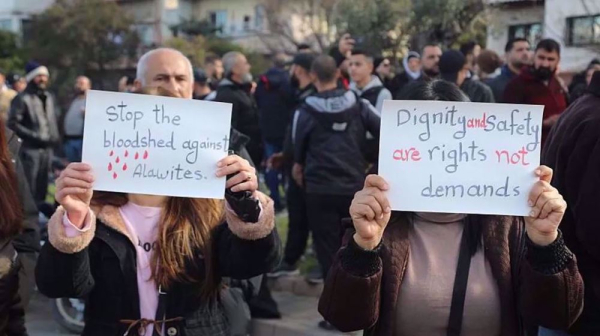
Since former al-Qaeda affiliate Hayat Tahrir al-Sham (HTS) took power in Syria, dozens of Alawite women have been abducted and raped, and forced by new authorities to change their testimonies, BBC reports.
The Syrian Feminist Lobby (SFL), a women's rights advocacy group, told the British broadcaster that it had recorded reports of more than 80 missing women and had verified 26 of them as abductions.
Ramia, a 19-year-old woman from Lattakia, recounted that she had been kidnapped while preparing to have a picnic in a field in her village in Latakia.
While her mother and siblings were about to arrive, a white car pulled up and three armed men got out, claiming to be members of Syria's General Security forces, and forced Ramia into the vehicle.
“The car drove in the opposite direction from our house, and then we left the village. That's when I realized they had kidnapped me,” Ramia said.
“They beat me. I started crying and screaming, but they kept hitting me even harder. One of them asked me if I was Sunni or Alawite. When I answered that I was an Alawite, they started insulting the sect.”
Ramia was taken to Idlib and raped, before being released after two days.
In Idlib, her captor, who did not speak Arabic fluently and was likely a foreign militant who had come to fight for HTS, took pictures of her to send “to the emir, who would decide her fate.”
The militant's wife, who was in the same house with his children, told Ramia that the picture “would be used to determine her price when she is sold.”
When Ramia asked her kidnapper's wife how many women he had abducted before her, the wife replied that there were “many.”
“Some are raped and sent back to their families, and others are sold,” the militant's wife told Ramia.
A security source in one of the coastal regions of Syria confirmed to BBC that abductions had occurred, claiming that “investigations have been opened into them” and that “measures have been taken to dismiss” those involved from service, including security personnel.
But the kidnapped women and their families emphasized that the authorities have made no effort to hold the kidnappers accountable.
Ramia said she thought the so-called HTS police were interested in her return, but after the kidnapper was identified, they stopped answering her family's repeated calls to follow up on the investigation.
The family even decided to leave the country after receiving a series of threatening phone calls.
Ali, a man in his thirties whose wife Nour disappeared while on her way to visit family in a coastal village, told BBC that he knows the kidnapper's identity and has shared all his information with the security services, but is still waiting for a response.
“I suffer day and night, spending all my time alone in the forest, praying for my wife and for her return to us,” he said.
His wife was returned several weeks later, but they declined to give details about the circumstances of her abduction.
Another returnee was Nasma, a mother in her thirties, who was also abducted and held in what appeared to be an industrial facility in Idlib for seven days.
Three Syrian men who were holding her “hurled sectarian insults at me, saying that Alawite women were created to be captives”, Nasma said.
Nasma was raped multiple times by her captors. “All I could think about was death. I would die, and my child would be left without a mother,” she stated.
After the man responsible for her kidnappers decided to release her, Nasma went to the security authorities, who treated her rudely and mocked her.
“They said they knew the terrorist groups that kidnapped me, but when I went to file the police report, they asked me to change my statement and claim that I had just gone out for a walk,” she added.
According to the report, Nasma is not the only one who was asked to change her statements after being kidnapped.
BBC said another woman who had just returned after being abducted, was too afraid to talk to the media, especially after “security personnel asked her to change her story,” which she refused to do, according to a relative.
The SFL says that the testimonies of the abducted women “indicate the presence of an extremist religious ideology in many of the kidnapping cases.”
In December 2024, the HTS led by former Daesh deputy Muhammad al-Jolani took control of Damascus in a surprise offensive that was launched from their stronghold in northwestern Syria, reaching the capital in less than two weeks.
The HTS administration has since been accused of flagrant violations of human rights in Syria, particularly against minorities, namely Syria's Alawite minority, drawing widespread condemnations from the international community.
In November, Jolani's interior ministry claimed that out of 42 cases of kidnappings it had probed, the allegations were found to be false in 41 of them.
However, various reports have said that the widespread kidnapping of Alawite women began shortly after the collapse of al-Assad's government, intensifying after HTS-led forces massacred at least 1,600 Alawite civilians in March 2025.
After news of the abductions began reaching the media and gaining attention, the Jolani regime and affiliated media outlets launched a propaganda campaign to hide the kidnappings.
The campaign included forcing victims to make videos claiming that they had not been abducted, but had run away with their Sunni Muslim lovers, and publishing them on social media.
Despite numerous reports from human rights organizations documenting sectarian violence, extrajudicial killings, arbitrary detention, and sexual violence, Western governments have increasingly shifted toward open engagement the Jolani regime.
In 2025, the US formally removed Hay’at Tahrir al-Sham from its terrorist designation list, and Jolani held direct talks in Washington with President Donald Trump, a move critics say reinforced claims that Washington has come to view him not only as a pragmatic partner but, in practice, as a strategic asset despite his group’s terrorist past.
Press TV’s website
Iran won’t initiate war, but will ‘decisively’ defend itself against aggression: UN envoy
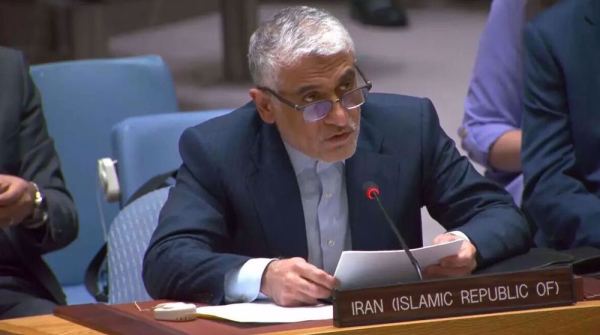
The Iranian ambassador and permanent representative to the United Nations has stressed that the Islamic Republic will not initiate any war but will deliver a “decisive” response to an act of aggression against the country.
Amir Saeid Iravani made the remarks in a letter sent on Thursday to the UN chief and the Security Council president, one day after US President Donald Trump threatened that Washington may need to use the Indian Ocean's Diego Garcia Island, home to a joint UK-US military base, to attack Iran.
“The Islamic Republic of Iran has repeatedly stated at the highest level that it neither seeks tension nor war, and will not initiate any war,” he said.
“However, in the event that it is subjected to military aggression, Iran will respond decisively and proportionately in the exercise of its inherent right of self-defense under Article 51 of the Charter of the United Nations.”
He also noted that in case of any military aggression against Iran, all regional bases, facilities, and assets belonging to the “hostile force” would constitute "legitimate targets" for Iran’s retaliatory operations.
The United States, Iravani warned, would bear responsibility for any "unpredictable and uncontrolled" consequences.
He further denounced Trump’s threats to use force against Iran as a flagrant violation of the UN Charter and international law that risks plunging the entire region into a new cycle of crisis and instability.
“Given the volatile situation in the region and the persistent movement and build-up of military equipment and assets by the United States, such a belligerent statement by the President of the United States must not be treated as mere rhetoric, it signals a real risk of military aggression, the consequences of which would be catastrophic for the region and would constitute a grave threat to international peace and security,” he added.
Meanwhile, the Iranian envoy emphasized that the country remains fully committed to the purposes and principles of the UN Charter and to diplomatic solutions.
He highlighted Tehran’s engagement in recent indirect nuclear talks with Washington in Geneva aimed at lifting unlawful US sanctions and addressing ambiguities regarding Iran’s peaceful nuclear program.
Iravani also said that a durable and balanced solution can be achieved if the United States, like Iran, approaches nuclear talks with "seriousness and sincerity and demonstrate genuine respect for the UN Charter and international law."
Additionally, he renewed Iran’s call on the Security Council to ensure that the United States immediately ceases its unlawful threats, complies with its obligations under the UN Charter, and refrains from any action that could further escalate tensions or lead to a military confrontation.
“The Security Council and the Secretary-General must act without delay, before it is too late. The Security Council must not allow threats of the use of force and acts of aggression to be normalized, legitimized, or treated as an acceptable political norm, or to be used as instruments of foreign policy. Should such unlawful conduct be left unaddressed, another sovereign Member State's turn will soon come,” he warned.
Trump began to threaten military action against Iran after recent economic protests in the country, which were quickly hijacked by foreign-backed rioters.
Since then, the United States has dispatched a number of warships to regional waters near Iran, prompting authorities in Tehran to warn that even a single shot fired at the country would be met with a far-reaching and massive response.
Press TV’s website