zarezadeh
Iran warns any aggression will have grave consequences for entire region
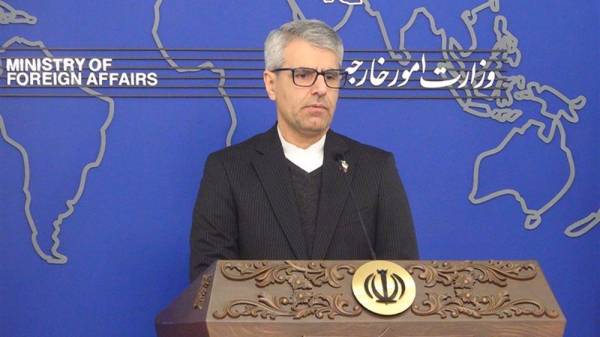
Iran says regional countries are making collective efforts to prevent war as they are well aware that any act of adventurism against Tehran will have grave consequences for the entire region.
"We believe that regional countries are well aware that insecurity in the region and any threat against Iran will have effects and repercussions” that will affect others as well, Iranian Foreign Ministry spokesman Esmaeil Baghaei told reporters at his weekly press conference in Tehran on Monday.
He added that regional countries are making collective efforts to prevent the escalation of tension as they have a consensus on the dangers of any adventurism against Iran.
He urged all countries to remain vigilant in the face of media speculation and the third parties’ abuse of regional issues.
He pointed to contacts and interactions between Iran and regional countries, particularly Saudi Arabia, and called on all regional countries to pay attention to the situation in the region.
Baghaei’s remarks come amid significant American military buildup across the West Asia region, including the Persian Gulf, which has run in tandem with repeated threats by US President Donald Trump of fresh military action targeting the Islamic Republic.
Iranian officials have vowed that any act of aggression against the country will be met with a swift and powerful response.
On Sunday, Leader of the Islamic Revolution Ayatollah Seyyed Ali Khamenei warned that any attack would trigger a “regional war.”
“They should know that if they start a war this time, it will be a regional war,” Ayatollah Khamenei stated.
Why is knowing Imam Mahdi (p) important?

In conclusion, understanding Imam Mahdi (p) is essential for every Muslim, as he symbolizes ultimate guidance and justice in Islam. Signs of his reappearance, such as devastating wars, global chaos, and a divine call, remind us to stay alert and spiritually prepared. By reforming ourselves and living with strong faith and devotion, we can aim to be part of Imam Mahdi’s (p) army, helping him bring justice and peace to the world. As we await his arrival, we must remain strong in our beliefs and be ready to serve the Imam of our time when the time comes.
How can I be in Imam Mahdi’s (p) Army?
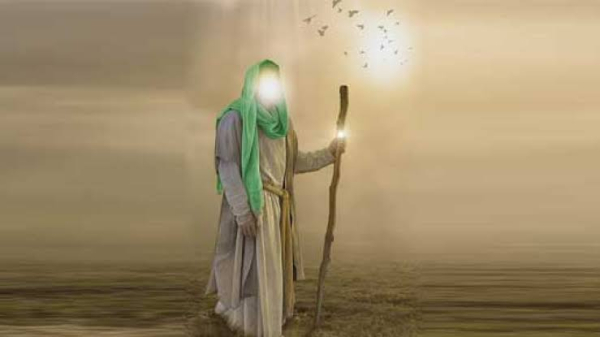
To be a part of Imam Mahdi’s army, we must be true followers of Islam and the Ahl al-Bayt. One internal way to prepare is to reform ourselves. Imam Mahdi’s mission is to bring justice to the world by reforming it. It is said that “The slogan on al-Mahdi’s flag is al-bay‘atu lillah ( allegiance belongs to God).” In this way we need to evaluate our lives, do we have this outlook on life? Do our actions truly reflect devotion to God, or do we serve ourselves? To join Imam Mahdi’s (p) army, we will need to live by his slogan. During his occultation, let us reflect and refine our intentions. This ensures we stand ready, hearts aligned with his cause, when he calls.
Where will Imam Mahdi (p) appear?
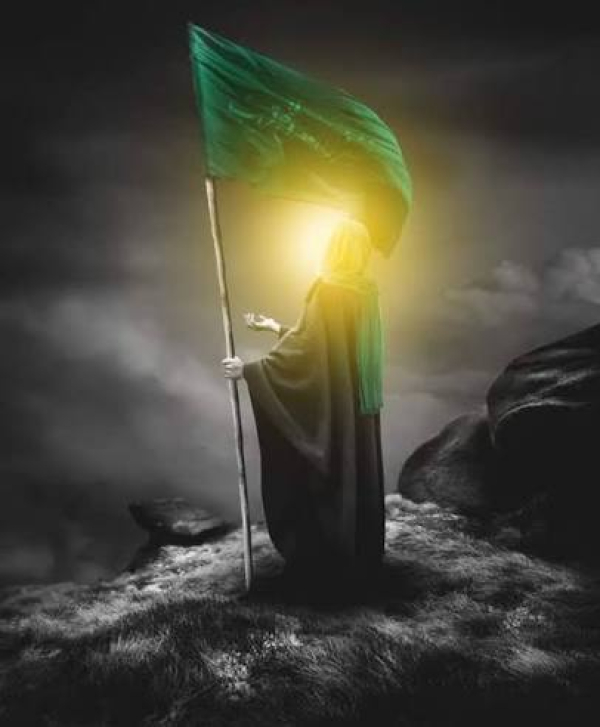
Many hadith and historical analyses have been done to understand and answer the question, where will Imam Mahdi (p) reappear? There is an overwhelming consensus that Imam Mahdi (p) will go towards the Kaaba and a voice will come from the sky letting everyone know that he has reappeared. He will then stand by Hajr al-Aswad, and call people toward faith and truth.
When will Imam Mahdi (p) come?

Many have asked, when will Imam Mahdi (p) come? While we do not know the exact date, and traditions even point to the fact that we have been forbidden from suggesting we know the exact date and time of Imam Mahdi’s arrival, there are various signs reported in the traditions of Prophet Muhammad and the Imams that would indicate is imminent return.” Here are three of them:
Devastating Wars
A destructive force led by a bloodthirsty man named al-Sufyani will emerge in the Levant in the month of Rajab. He will send an army to Iraq, which will return after killing and causing great destruction. He will send another army to -Madīnah, but God will annihilate them between Mecca and Madinah.
Chaos, Conflict, Despair, and Frustration
The world will witness immense chaos and extreme differences between people. It will even envelope the believers to the extent that they will curse and disrespect each other. Moreover, a state of despair about the savior’s reappearance will become widespread, and people will say that he has died or been killed. The reappearance will then be near.
The Call Announcing His Reappearance
The angel Gabriel will call from the sky such that it will be heard by all people of the world in their own languages. This will occur before dawn on Friday the 23rd of the month of Ramadan. The angel Gabriel will declare, “O servant of God! Hear what I say. This is the Mahdi from the household of Muhammad emerging from the land of Mecca. Respond to [obey] him.”
What will Imam Mahdi (p) look like?

The Holy Prophet (phuh&hp) is reported to have said, “Al-Mahdi is from my children, his name is [like] my name, his agnomen is [like] my agnomen. He is the most similar to me in my appearance and my character.”
Imam al-Baqir (p) is also reported to have narrated from his father as saying that Imam Ali (p) once said on the pulpit, “From my progeny at the end of time, a man will appear, whose face is reddish-white, whose chest is broad, with strong shoulders and two moles on his back: one with the color of his skin and the other like that of the Prophet.”
While different reports suggest that the mother of the Imam, Lady Narjis, is either a Roman prisoner or a north African bondswoman, stronger reports suggest the latter. It is reported to have been narrated by Yazeed al-Kunaasee who said, “I heard Abaa Jafar Muhammad (p), he said: ‘Verily, the master of this affair in him is the resemblance of Yusuf (p), he is the son of a black bondswoman, and God will reform his affair in one night.”’
Birth Anniversary of Imam Muhammad al-Mahdi (p)
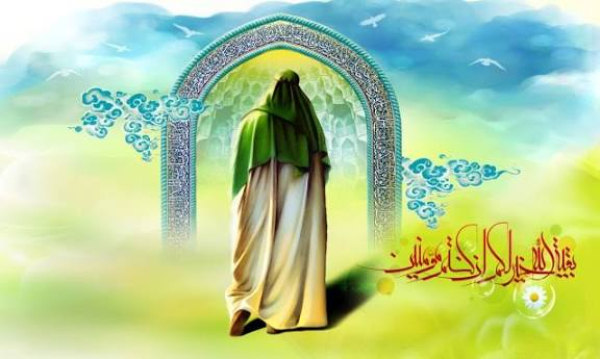
Imam Mahdi (p), according to many reports, was born on the 15th of Shaban 255 AH/869 CE in Samarra, Iraq, and is the son of Imam Hasan ibn Ali Al-Askari (p), the 11th Imam. At the age of five, he entered into occultation after the passing of his father on 8 Rabi al-Awwal. His occultation began with a minor phase lasting approximately seventy years, followed by the major occultation “which continues till today and whose duration is known only to God.
Imam Mahdi (p) is known by several titles each reflecting his grand stature:
Al-Mahdi: The One Guided by God
Al-Hujjat ibn al-Hasan: The Proof who is the son of Imam Hasan (p)
Sahib uz-Zaman: The Owner of the Time
Al-Muntadhar: The Awaited One
Al-Muntaqim: The Avenger
Al-Maw’ud: The Promised One
Khatam al-Awsiya: The Last Successor
Al-Qaim: The One who Will Rise
Al-Gha’ib: The Hidden One
Waiting for Hajj
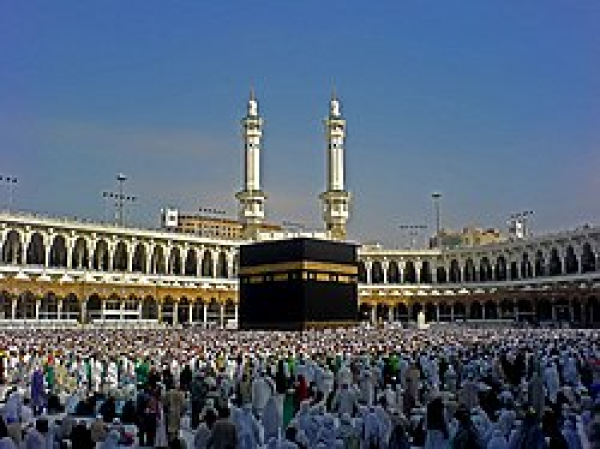
Sometimes your heart wants nothing, and nowhere…
It just wants to return.
To return to the place where the heart first became itself;
To where the earth ends and the sky begins.
Longing for the House of God is unlike any other longing.
It is not like missing a friend,
Nor like being far from home.
It is more like remembering something you once lost—
Something that suddenly calls your name in the noise of the world.
Whenever I grow tired, my heart remembers that simple black cube
Around which all the whiteness of the world revolves.
It remembers a place where you become small,
Yet your soul becomes greater than ever.
The House of God…
You are not just a building;
You are the direction of the heart.
A compass—if it is lost, a person gets lost even within himself.
I miss that moment
When I was no longer “me”…
I was only a servant.
Only need, and a gaze,
And tears that flowed without permission.
O God,
If seeing Your House again is not written for me,
Then at least leave my heart there—
Somewhere in the middle of tawaf,
Somewhere closer to You than ever before.
The Arrest of Maduro by the U.S.: An Earthquake in the Global Order and the Return of Power Politics
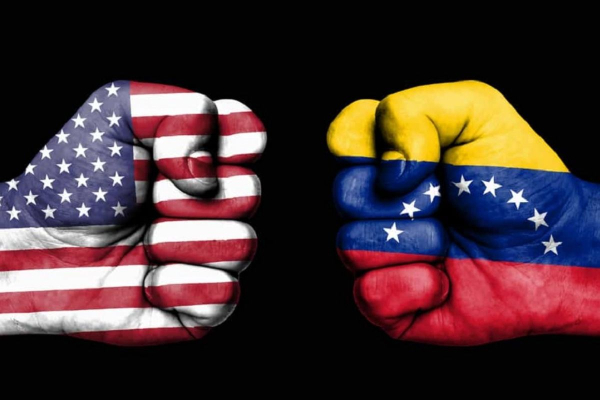
The recent action by the United States in carrying out a military operation on Venezuelan soil and arresting President Nicolás Maduro must be regarded as one of the most controversial and unprecedented political events of recent years—an incident that has shocked not only Latin America, but the entire international system.
In this operation, U.S. forces entered Venezuelan territory, detained Maduro and his wife, and transferred them to the United States to stand trial. The operation was accompanied by heavy clashes and human casualties, and in practice amounted to a direct military intervention aimed at changing the balance of power in a sovereign country.
Washington has justified the move with accusations such as drug trafficking and “narco-terrorism,” but a large part of the international community considers this explanation insufficient. In the view of many governments and analysts, what has happened is nothing less than a blatant violation of Venezuela’s sovereignty and a breach of one of the most fundamental principles of international law: the prohibition of the use of force.
The significance of this event goes far beyond Venezuela’s internal political fate. The operation sends a deeply alarming message: that major powers can, without authorization from international institutions and purely on the basis of their own judgments and interests, attack an independent country and even arrest its president. If such a pattern becomes normalized, the very concept of a “rules-based international order” will give way to a “might-makes-right” world order.
From a geopolitical perspective, this move is likely to intensify tensions between the United States and major rivals such as China and Russia, pushing the world into a more dangerous phase of great-power rivalry—one in which shared international rules are increasingly weakened.
At the regional level, Latin American countries fear that this precedent could lead to wider instability, internal conflicts, and new waves of humanitarian and migration crises. Many governments in the region have received a clear message: national sovereignty is no longer guaranteed, and any country could one day become a target under similar pretexts.
At the same time, the economic and energy dimension cannot be ignored. Venezuela possesses the largest oil reserves in the world, and any shift in the balance of power there can have a direct impact on global energy markets and on the competition among major powers over resources.
Overall, the arrest of Maduro is far more than a legal or security case. It is a sign of a dangerous turn in global politics: a move toward normalizing the use of force, weakening international law, and returning to a logic in which power stands above law. The earthquake that has begun in Venezuela today may tomorrow shake the foundations of the global order elsewhere.
Israel approves over 3,400 settler units in occupied East al-Quds
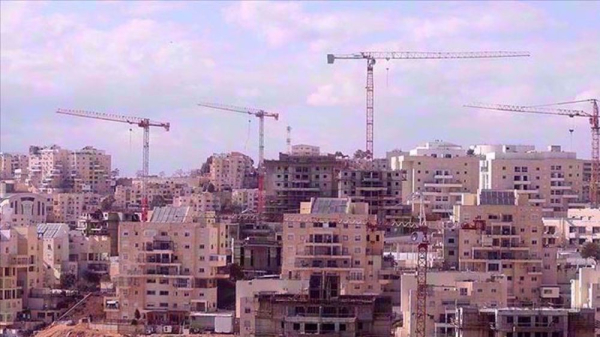
Israeli authorities have issued a tender to build 3,401 new settler units east of occupied al-Quds, despite international condemnation of Tel Aviv’s ongoing settlement expansion.
The Wall and Settlement Resistance Commission said on Wednesday that the move represents a “highly dangerous escalation” in Israel’s accelerated colonization of Palestinian lands.
According to the commission, Israeli authorities have shifted from planning and approval to active implementation of the project.
Commission head Muayyad Shaaban said the tender is part of a plan approved in August 2025.
He noted that in 2025, Israel issued tenders for 10,098 settlement units across the occupied West Bank, with over 7,000 allocated to the Ma’ale Adumim settlement.
Shaaban warned that the tender effectively severs occupied al-Quds from its Palestinian surroundings and links the Ma’ale Adumim settlement to the city.
He said the project undermines any realistic prospect of a geographically contiguous Palestinian state and aims to fundamentally alter the city’s demographic and geographic landscape.
Israel’s anti-settlement organization Peace Now condemned the tender as “political recklessness” that erodes the possibility of a political solution.
It said the settlement building seeks to entrench irreversible facts on the ground that would lead towards an "apartheid-like system."
Peace Now noted that 2025 ended with a record 9,629 settlement units approved, including more than 6,700 in Ma’ale Adumim, exceeding the total published tenders of the previous six years combined.
The organization added that the tenders stem from a framework agreement signed in the presence of Israeli Prime Minister Benjamin Netanyahu between Israeli authorities and the Ma’ale Adumim municipality.
Since Israel’s occupation of the West Bank and East al-Quds in 1967, more than 700,000 Israeli settlers have settled in over 279 settlements across the occupied territories.
While all Israeli settlements are illegal under international law, the occupying regime has stepped up settlement expansion in blatant violation of United Nations Security Council resolutions.
In a landmark opinion in July 2024, the International Court of Justice (ICJ) declared Israel’s occupation of Palestinian territory illegal and called for the evacuation of all settlements in the occupied West Bank and East al-Quds.
Press TV’s website