zarezadeh
Stages of Gratitude for Blessings

Surah Ibrahim
And when your Lord declared: "If you are grateful, I will surely increase you in favor, but if you are ungrateful, then indeed My punishment is severe."
Stages of Gratitude for Blessings
Heart-based gratitude; meaning that a person should recognize all blessings as coming from God.
Tongue-based gratitude; such as a person saying: Alhamdulillah
Practical gratitude; is gratitude that is achieved by performing acts of worship and spending one's life and wealth in the path of pleasing God and serving people.
‘Maduro abduction has Zionist tint’: Venezuela’s acting-president Delcy Rodriguez
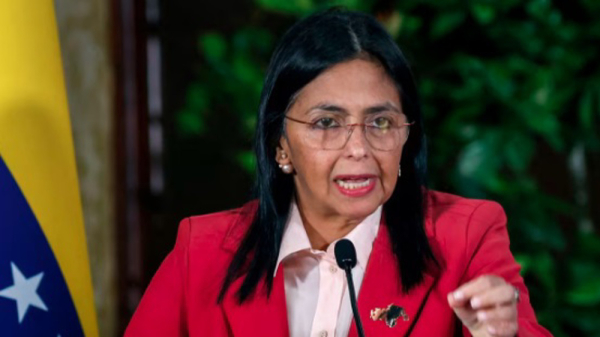
The acting-president of Venezuela, chosen by its highest court of law, says the abduction of President Nicolas Maduro carries a “Zionist tint.”
After US forces launched an attack on Caracas in the early hours of Saturday, resulting in the abduction of Maduro, Venezuela’s Supreme Court designated Vice President Delcy Rodríguez as interim president to ensure “administrative continuity” and form the country’s National Defense Council.
The US forces' attack involved over 150 aircraft and marked a significant intervention amid multiple attempts to topple the democratically elected government of Maduro, including allegations of leading a drug trafficking cartel.
Rodríguez, who was designated as interim leader, demanded that Maduro and his wife, who were flown to a detention facility in New York after abduction, be immediately released.
In a televised address late Saturday, she condemned the US forces' attack, saying it carried a “Zionist tint.”
During her speech, she emphasized that Maduro remains the “only president of Venezuela” and demanded his immediate release.
Rodríguez described the attack as an “unprecedented military aggression” by the US, asserting that it was motivated by a desire to seize control of Venezuela’s vast oil reserves.
Surrounded by military leaders and Cabinet officials, Rodríguez said that a National Defense Council had been formed and with the full deployment of Venezuela’s national armed forces to safeguard the country’s sovereignty, the Bolivarian state “will never again be a colony of any empire.”
Rodríguez’s remark about the attack carrying a “Zionist tint” points to the involvement or influence of Israeli regime forces in the American forces' attack.
“The governments of the world are simply shocked that it is the Bolivarian Republic of Venezuela which is the victim and subject of an attack of this nature, which has, without a doubt, a Zionist tint,” she said.
Rodríguez stressed that governments around the world were shocked by the US aggression against the Latin American state, insisting that “history and justice will make them pay.”
Press TV’s website
Solving Venezuela's problems through national unity
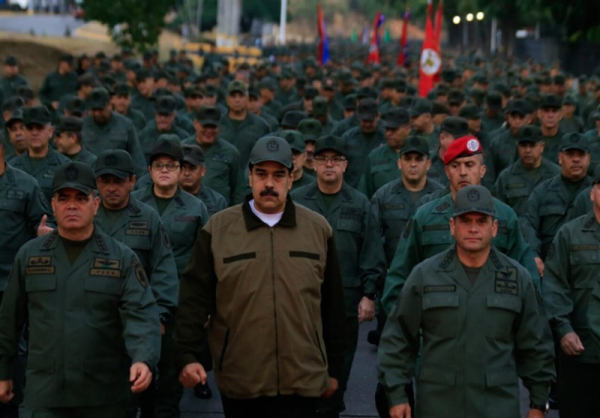
1. National Unity: The Key to True Power
History has shown that any country under external pressure can only resist effectively if its people are united.
In Venezuela, political and factional divisions have made it easier for the U.S. and its allies to exercise economic and media influence.
When the people unite, no sanctions, threats, or external pressure can fully control the government or the nation.
2. Active Resistance, Not Passive
Resistance is not only military; economic, cultural, and political resistance is equally important.
Sanctions, psychological warfare, and media pressure can be countered through self-reliance, grassroots support networks, and maintaining national morale.
Venezuela’s experience shows that real power emerges when people are fearless and take responsibility for their own destiny.
3. The United States and Its Motives
Trump and successive U.S. administrations are fundamentally after Venezuela’s oil resources, not the welfare of its people.
U.S. focus is on oil, minerals, and natural revenues—not on citizens’ rights or prosperity.
Every political pressure or action from the U.S. is mostly a tool to control the country’s resources rather than help the population.
4. Key Conclusion
Only national unity + intelligent resistance can limit U.S. interference and conspiracies.
Maduro or any political leaders can succeed only if they have real backing from a united population.
Without popular resistance, economic and media pressure from the U.S. can weaken internal stability and reduce national independence.
Examining possible scenarios regarding Venezuela
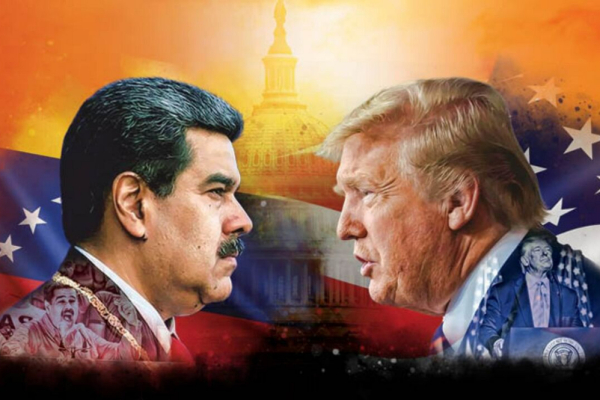
Possible scenarios and their relative likelihood
Scenario 1: Full return of Maduro (low probability – around 15%)
This scenario would only occur if:
The Venezuelan military remains fully unified and loyal
Russia, China, or other allies provide practical, not just political, support
The United States concludes that the cost of the crisis is too high
The main weakness of this scenario:
The U.S. rarely withdraws completely once pressure has begun
Economic pressure is long-term and exhausting
Even Maduro’s allies prioritize stability over endless confrontation
Outcome:
If Maduro returns, he would likely return weaker, more constrained, and forced to make major concessions.
Scenario 2: Gradual removal of Maduro without state collapse (most likely – around 45%)
This is the scenario the United States generally prefers:
Maduro exits formal power (not necessarily through force)
A transitional government or managed elections are formed
State institutions, the army, and borders remain intact
Limited economic reopening toward the West
Key characteristics:
No sudden revolution
No full military occupation
No large-scale civil war
Outcome:
Venezuela does not become another Syria or Libya
But its political independence is significantly reduced
Foreign policy shifts decisively
This scenario is considered the most “manageable” by the U.S., Europe, and some regional actors.
Scenario 3: Chronic, long-term instability (around 30%)
In this case:
Maduro is neither fully removed nor fully restored
No replacement government fully stabilizes
Protests, sanctions, and economic hardship continue
Comparable cases:
Iraq after 2003
Lebanon in recent years
Outcome:
Ordinary people suffer the most
Emigration increases
The country remains weak but does not disintegrate
Scenario 4: Full collapse or civil war (low probability – around 10%)
This is the worst-case scenario, and current indicators do not strongly support it, because:
The Venezuelan military remains largely cohesive
Society is not deeply fragmented into heavily armed factions
Neighboring countries fear extreme instability
What is likely to happen to Maduro personally?
The most realistic forecast:
He is unlikely to return as a powerful sitting president
He may:
Remain in exile
Retain a symbolic or behind-the-scenes role
Exit politics in exchange for guarantees
Historical pattern:
Not a heroic survival like Fidel Castro
Not a violent downfall like Muammar Gaddafi
More similar to leaders gradually removed from power in Latin America
Venezuela’s future in one sentence
Venezuela will likely:
Remain a unified country
Experience reduced political and economic independence
Need many years to regain stability
Final, very direct conclusion
The United States is not seeking total destruction
It is seeking controllable influence
Maduro is unlikely to return, but removing him will be costly and gradual
The Venezuelan people will bear the heaviest burden
How did the core conflict between the United States and Venezuela begin?
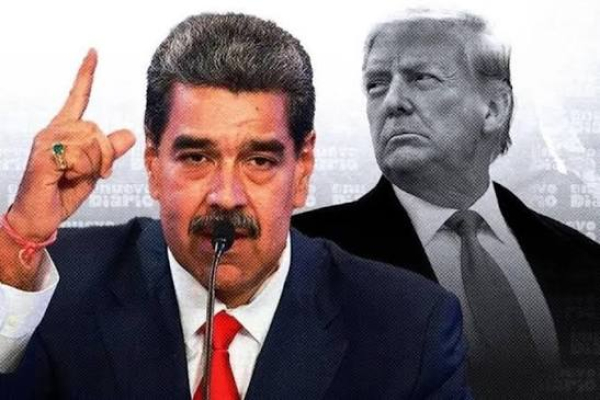
1. Political independence and breaking away from U.S. influence
The serious conflict began when:
Venezuela, starting in the era of Hugo Chávez, adopted a strongly anti-hegemonic policy toward the United States.
Strategic relations with Russia, China, Iran, and Cuba were expanded.
U.S. influence in Latin America was openly challenged.
From Washington’s perspective, Venezuela became: “A dangerous model for other countries in the region.”
2. Oil as the central issue
Venezuela:
Possesses the largest proven oil reserves in the world.
Nationalized its oil industry, pushing out major U.S. companies.
Sold oil outside frameworks preferred by the United States.
For the U.S., Venezuela represents:
A threat to energy security interests.
A challenge to liberal capitalist economic models.
An obstacle to controlling the regional energy market.
Accusations the United States has made against Nicolás Maduro
To justify pressure, the U.S. has consistently raised several accusations:
1. “Dictatorship and election fraud”
Claims that elections are not free or fair.
Labels Maduro’s government as illegitimate.
This is despite the fact that:
Maduro has been elected multiple times.
Some non-Western international observers have recognized aspects of these elections.
2. “Human rights violations”
Allegations of suppressing protests.
Claims of detaining political opponents.
These accusations are often used as a political tool, while U.S. allies with comparable or worse records are treated differently.
3. “Drug trafficking and corruption”
Accusations that Maduro and senior officials cooperate with drug cartels.
Publicly announced rewards for Maduro’s arrest.
This level of accusation is generally seen as a step toward: Legitimizing regime change rather than simply combating corruption.
What are the real U.S. strategies toward Venezuela? (Strategic analysis)
Without exaggeration or slogans, the commonly discussed scenarios are:
Scenario 1: Internal collapse
Severe economic sanctions.
Pressure on daily life to provoke social unrest.
Media campaigns to undermine the government’s legitimacy.
Objective:
Government collapse without direct military intervention.
Scenario 2: Installing a replacement government
Support for aligned opposition groups.
Recognition of an alternative “interim president” (such as Juan Guaidó in the past).
Seizure of Venezuelan assets abroad.
Objective:
Political control without military occupation.
Scenario 3: Sending a warning to Venezuela’s allies
Indirect pressure on countries such as Iran, Cuba, and Nicaragua.
Demonstrating the cost of defying U.S. influence.
Objective:
Maintaining regional hegemony.
What does the United States ultimately want?
In summary:
It does not want Venezuela to remain fully independent.
It does not want Venezuela to serve as an anti-U.S. resistance model.
It does not want Venezuelan oil resources to remain outside its influence.
It seeks instead:
A compliant government.
Open access for U.S. corporations.
The weakening or removal of resistance-aligned governments in Latin America.
Final summary
The U.S. problem is not simply Nicolás Maduro as an individual.
The core issue is an independent Venezuela.
Analysis of the current situation in Venezuela
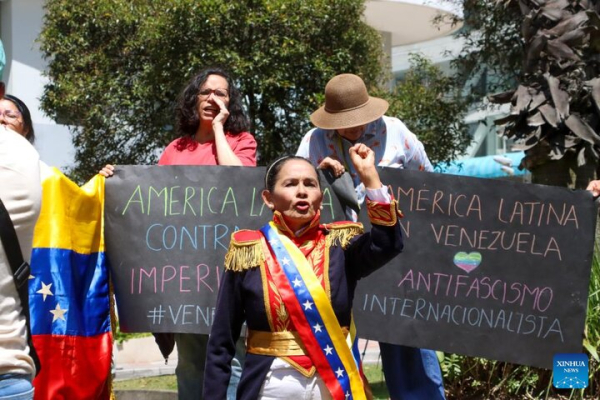
Widespread Protests in Caracas and Across Venezuela
“Venezuelans Take to the Streets in Mass Demonstrations Against U.S. Attack”
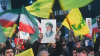
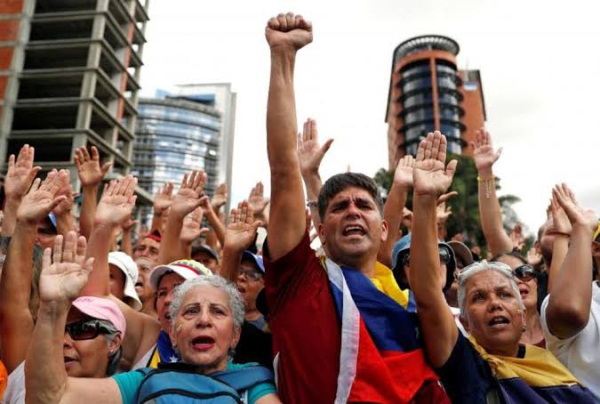
People in Caracas and other cities have held large protests against the U.S. military assault, chanting slogans in support of national sovereignty and condemning the foreign intervention. Demonstrators have expressed anger over the bombings, the capture of President Maduro, and the violation of their country’s independence. Responses from protesters reflect deep resentment toward the attack and strong calls for unity and resistance among Venezuelans.
Shock and Emotion After Capture of President Maduro
“Emotional Reactions Across Venezuelan Communities After Maduro’s Capture”
Photos and accounts from within Venezuela show a mix of intense emotional reactions among citizens — ranging from anger and horror to fear for the nation’s future after reports of President Nicolás Maduro’s capture by U.S. forces. Many ordinary people appear stunned and uncertain about what comes next, while public gatherings reflect both mourning and defiance.
Mixed International Eyewitness Reports Reflect Local Sentiment
“On-the-Ground Reports Describe Venezuelan Public in Shock and Defiance”
Eyewitness and Reuters summaries from the region indicate that Venezuelan society is largely in shock, with many civilians overwhelmed by the rapid military developments. There are also reports of fear about instability and concern for everyday survival alongside resistance to external intervention.
Global Reaction and Regional Shock After the Attack
“World in Shock — Colombia Condemns U.S. Attack on Venezuela and Maduro’s Detention”
Following the U.S. military intervention and reported detention of President Maduro, the President of Colombia publicly condemned the attack as unacceptable and a violation of Venezuela’s sovereignty. The Colombian government has put border security forces on alert amid concerns of escalating regional instability.
U.S. Military Strike and Capture of Maduro
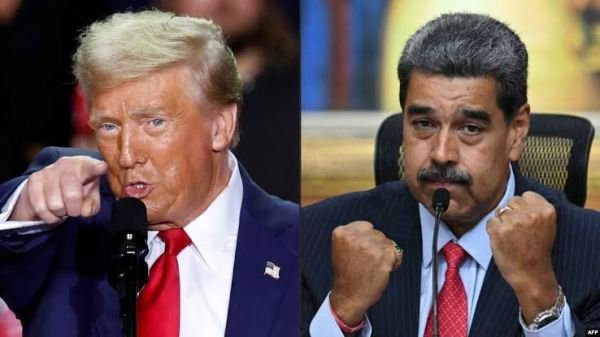
U.S. Strikes Venezuela and Captures Maduro; Trump Says U.S. Will ‘Run the Country’ for Now”
The United States launched a major military strike on Venezuela, targeting Caracas and other regions. President Donald Trump announced that Venezuelan President Nicolás Maduro and his wife have been captured by U.S. forces and removed from the country. Trump stated the U.S. will oversee the situation in Venezuela while further decisions are made. Strong explosions were heard across the capital.
Detention of Maduro and Escalating International Reactions
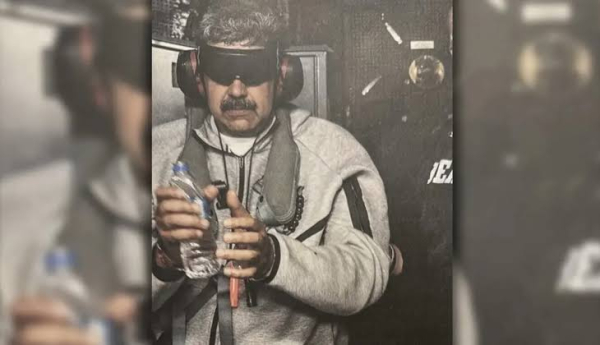
“Nicolás Maduro and His Wife Detained During U.S. Operation; Global Shock and Condemnation Intensify”
Detailed description of this stage:
Reports indicated that U.S. special forces launched a ground operation, during which Venezuelan President Nicolás Maduro and his wife were detained.
U.S. officials later confirmed the operation, stating that Maduro and his family had been transferred خارج of the country and that the United States would temporarily oversee security arrangements in Venezuela.
The operation was reportedly carried out with special forces supported by aerial surveillance and air cover, marking a major escalation from the initial airstrikes.
Casualties and internal situation in Venezuela:
Preliminary figures suggested that at least 12 people were killed and around 90 injured, though the numbers were not final and could increase as more information emerged.
Venezuelan military units attempted to establish defensive positions in the streets of Caracas, leading to heightened tension and clashes in several areas of the capital.
International reactions:
The attack triggered strong global reactions, with several countries and political movements condemning the operation as a violation of Venezuela’s sovereignty and international law, warning of dangerous consequences for regional and global stability.
Beginning of the Attack and Widespread Bombardment of Venezuela
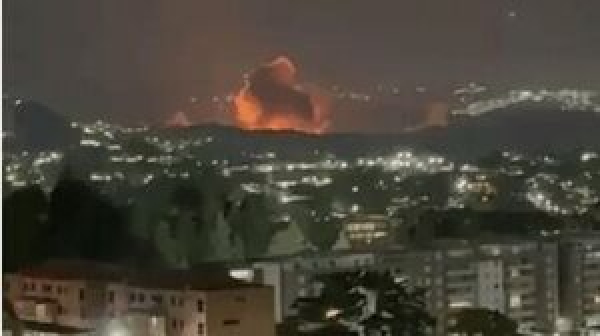
“The United States Launches a Full-Scale Military Attack on Venezuela; Explosions Rock Caracas”
Detailed description of this stage:
In the early hours of last night, U.S. military fighter jets and aircraft carried out heavy airstrikes and launched cruise missiles, targeting military positions, bases, and key strategic facilities in the Venezuelan capital, Caracas, and its surrounding areas.
Air-raid sirens and the sound of multiple powerful explosions were reported across different districts of the capital, confirming the intensity of the assault.
According to reports, the strikes focused on air bases, command-and-control centers, and critical military infrastructure belonging to the Venezuelan armed forces.
Initial information indicated that the air attack lasted for nearly one hour, causing widespread disruption and fear among civilians.
Response from Venezuelan authorities:
The Venezuelan government reacted immediately by declaring a state of armed defense and deploying military forces throughout major cities, particularly Caracas.
President Nicolás Maduro declared a nationwide state of emergency, calling on the Venezuelan people and the armed forces to remain united and prepared to resist foreign aggression.