zarezadeh
Iranian forces strike US vessels in swift retaliation for tanker attack: Top military comm
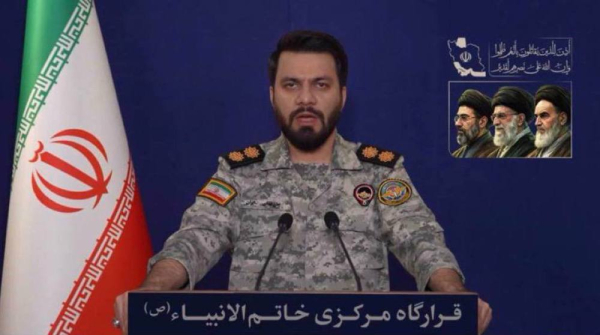
A spokesperson for the Khatam al-Anbiya Central Headquarters said on Thursday that Iranian forces gave an immediate and decisive response to a series of US military aggressions in the strategic waters of the Strait of Hormuz and along the country's southern coastline.
In a statement, Ebrahim Zolfaghari noted that the "aggressive, terrorist, and outlaw" US military, in violation of a ceasefire, targeted an Iranian oil tanker.
The vessel was transiting from Iran's coastal waters in the Jask region, heading towards the Strait of Hormuz.
In a separate but simultaneous incident, another Iranian ship came under attack while entering the Strait of Hormuz, directly opposite the UAE's Fujairah port.
Concurrent with these fresh acts of aggression, the spokesperson said that US forces, operating in coordination with certain countries in the region, launched airstrikes against civilian areas in the coastal provinces.
These aerial attacks reportedly targeted locations along the coasts of Bandar Khamir, Sirik, and Qeshm Island.
According to the statement, Iran's response was immediate and decisive.
The armed forces of the Islamic Republic of Iran launched a swift counterattack, engaging US military vessels east of the Strait of Hormuz and south of the port of Bandar Chabahar.
The Iranian operation inflicted "significant damage" on the American warships, he said.
The spokesperson warned that the "criminal and aggressive" US and its allies must recognize that the Islamic Republic of Iran will, as it has in the past, deliver a crushing response to any act of aggression or violation "powerfully and without the slightest hesitation."
‘Bared fangs are not a smile’: Iran Navy repels US destroyers from Strait of Hormuz
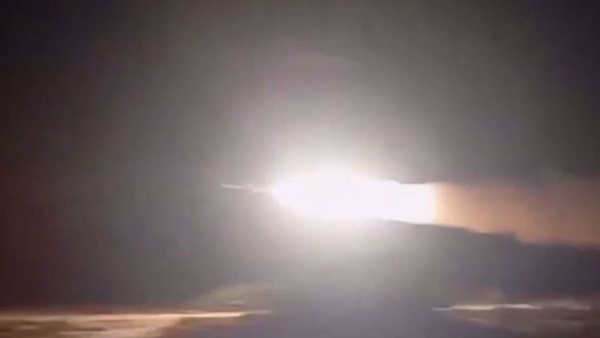
Iran's Army Navy has struck American destroyers with cruise missiles and combat drones near the Strait of Hormuz after US forces attacked Iranian oil tankers in violation of a ceasefire, forcing them to flee the area.
In a statement Friday, the Islamic Republic of Iran Army announced that its naval forces attacked American destroyers Thursday night “using various missiles, combat drones, and rockets,” after the aggressor vessels “in violation of the ceasefire, assaulted Iranian oil tankers near the Strait of Hormuz and in territorial waters.”
The statement added that following the response, “the aggressor American destroyers changed course and left the area.”
The operation came after a series of US military attacks on Iranian ships and port areas. According to a statement by a spokesperson for the Khatam al-Anbiya Central Headquarters, the “aggressive, terrorist, and outlaw” US military targeted an Iranian oil tanker transiting from the Jask coastal region toward the Strait of Hormuz.
In a separate but simultaneous incident, another Iranian vessel came under attack while entering the strait, directly opposite the UAE's Fujairah port.
Concurrent with the tanker strikes, US forces, operating in coordination with regional allies, launched airstrikes against civilian areas along Iran's southern coastline, hitting locations near Bandar Khamir, Sirik, and Qeshm Island, the spokesperson said.
The Islamic Revolution Guards Corps Navy offered a more detailed account of the retaliatory operation, describing it as a “highly extensive and precise combined operation” launched in response to the tanker attack near Jask and the subsequent advance of US destroyers toward the strait despite “clear warnings.”
The IRGC Navy commander said Iranian forces deployed anti-ship ballistic missiles, anti-ship cruise missiles, and destructive drones, all equipped with high-explosive warheads, firing them “directly at the enemy destroyers.”
Intelligence monitoring conducted after the strike confirmed “significant damage” to American military assets, the commander said, adding that three US vessels “fled the Strait of Hormuz area immediately” in the face of Iranian firepower.
Khatam al-Anbiya Central Headquarters spokesperson Ebrahim Zolfaghari had earlier warned that Iran would “deliver a crushing response to any act of aggression or violation powerfully and without the slightest hesitation.”
Foreign Ministry's warning
As the military statements circulated, Foreign Ministry spokesperson Ismail Baghaei took to X with a pointed message directed at Washington and its regional allies
“If you see a lion's fangs bared, do not assume the lion is smiling,” he wrote in an Arabic post.
Press TV’s website
Two approaches in Iran-US negotiations, end the war first or stop enrichment first?
In the negotiations between Iran and the US, there has always been a fundamental difference. The US says that first you should completely stop enrichment and let us verify, then negotiate. But Iran's view is that first the war and the siege should be completely ended, then we can talk about technical details. This means two different perspectives on solving the problem of negotiations.
The US proposal is a bid for time with maximum pressure on Iran.
Although the US calls it a compromise plan, it actually has a series of unilateral and temporary conditions in mind.
They say stop enriching for 12 to 15 years and remove all nuclear materials from the country. This means that our peaceful nuclear program will be effectively shut down for years. In return, the US will commit to releasing Iran's frozen assets.
They do not officially accept a military attack on Iran, but they do not guarantee that they will not attack again. Our rights as victims of war and aggression are practically ignored.
Instead of a permanent end to the war, they only offer a temporary ceasefire. That is, the situation of neither war nor peace will continue, and in exchange for reducing traffic restrictions in the Strait of Hormuz, they will gradually lift the naval blockade. Their final and main condition is the complete opening of the Strait for the passage of ships carrying oil and gas.
They will not lift the sanctions all at once, but gradually and only if we do what they say. That is, the economic pressure and the blockade will remain.
In short, the US does not want to solve the root of the problem, it only wants to manage the tension at the lowest cost to itself. In this scenario, Iran will continue to be under military threat and sanctions, and negotiations will become a tool to extract more concessions from us.
But Iran has correctly focused in its proposals on ending threats, sanctions, and oppression first, and then getting into technical details. The logic is simple: a country that has been attacked and invaded should not haggle over its sovereign and defensive instruments in the midst of a war.
As has been repeatedly announced, Iran’s proposed package has three principles:
A complete and unconditional end to military operations and the withdrawal of all foreign forces from the region.
A complete and immediate lifting of sanctions (economic, financial, oil), not gradual and conditional.
Determining a way to compensate for the damages of the war, and that technical talks on nuclear issues should only be held in the second stage and after trust is restored.
Adhering to this arrangement is a way for Iran not to be forced to surrender under the shadow of threats. As long as the war and siege continue, negotiating about the nuclear program means accepting force.
Lasting peace can only be achieved by stopping aggression and lifting sanctions.
Therefore, Iran's success lies in establishing the order of priorities (first the end of the war, then technical dialogue).
Sincerely
Ismail Jalili
Combined operation of the IRGC Navy
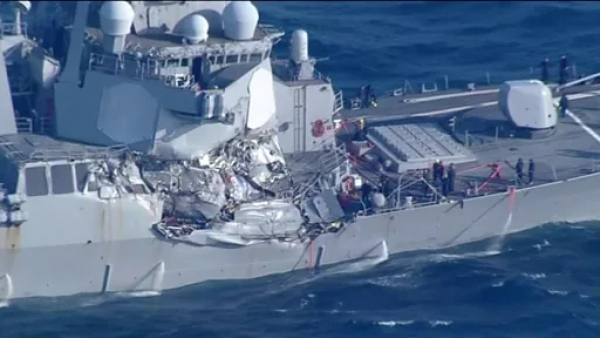
following the enemy aggression The IRGC Navy Command: Following the violation of the ceasefire and the aggression of the US terrorist army against an Islamic Republic of Iran tanker near the port of Jask and the approach of the US terrorist army destroyers to the Strait of Hormuz, a very large-scale and precise combined operation was carried out using various types of ballistic and anti-ship cruise missiles and destructive drones with high-explosive warheads to fire at the enemy destroyers. Intelligence observations indicate significant damage to the American enemy and the three invading enemy ships quickly fled the Strait of Hormuz area.
Pezeshkian praises Leader's humility, sincerity in first direct meeting
Logo
News / Politics
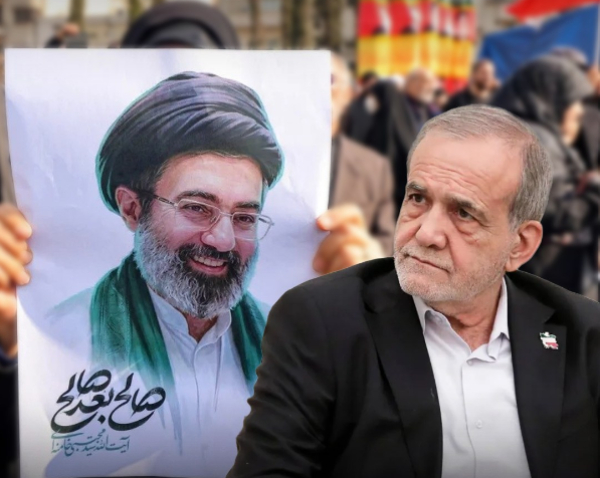
Pezeshkian President Masoud Pezeshkian says after a meeting with the Leader of the Islamic Revolution that Ayatollah Seyyed Mojtaba Khamenei's humility and sincerity should serve as a model for administrative management across the country.
President Masoud Pezeshkian has described his recent meeting with Leader of the Islamic Revolution Ayatollah Seyyed Mojtaba Khamenei, highlighting the atmosphere of the gathering and the Leader's personal, ethical, and managerial qualities.
Speaking during a visit to the Ministry of Industry, Mining and Trade on Wednesday, Pezeshkian described the meeting as having taken place in a warm and sincere atmosphere, with discussions lasting nearly two and a half hours.
President Pezeshkian stated that what stood out more than any other issue was the Leader's humble, deeply sincere, and respectful manner of engagement — an approach that transformed the discussion into an environment built on trust, calm, empathy, and direct dialogue.
The President further emphasized the need to strengthen cohesion, trust, and empathy at all levels of the country's administrative management.
He noted that when the highest-ranking official of the country interacts with officials and individuals with such ethical character, humility, and a people-oriented spirit, that behavior naturally serves as a model for the nation's administrative and managerial system.
This model, he added, is based on responsibility, closeness to the people, and truly listening to issues and problems, in keeping with the practice and conduct of the martyred and great Leader of the Islamic Revolution.
According to the President, the Leader attended the meeting with precisely the same spirit of simplicity, humility, sincerity, and mutual respect — a spirit that made the conversation completely direct, frank, and accompanied by a sense of closeness and trust.
Ayatollah Seyyed Mojtaba Khamenei was appointed Leader of the Islamic Revolution shortly after the martyrdom of his father and predecessor, Ayatollah Seyyed Ali Khamenei, who was assassinated in a terrorist aggression by the United States and Israel.
The unprovoked attack on February 28 touched off days of barbaric bombing of Iran’s military and civilian infrastructure, intended to bring down the Islamic Republic following violent riots in which foreign-linked armed elements brutally attacked police, security forces and public service personnel.
What was expected to last only a few days until the fall of the Islamic Republic instead stretched into 41 days. During that time, Iran responded with fierce intensity, launching drone and missile strikes at US and Israeli targets—ultimately forcing both regimes to announce a unilateral ceasefire that remains in effect to this day.
Press TV’s website
Our Leader and his people
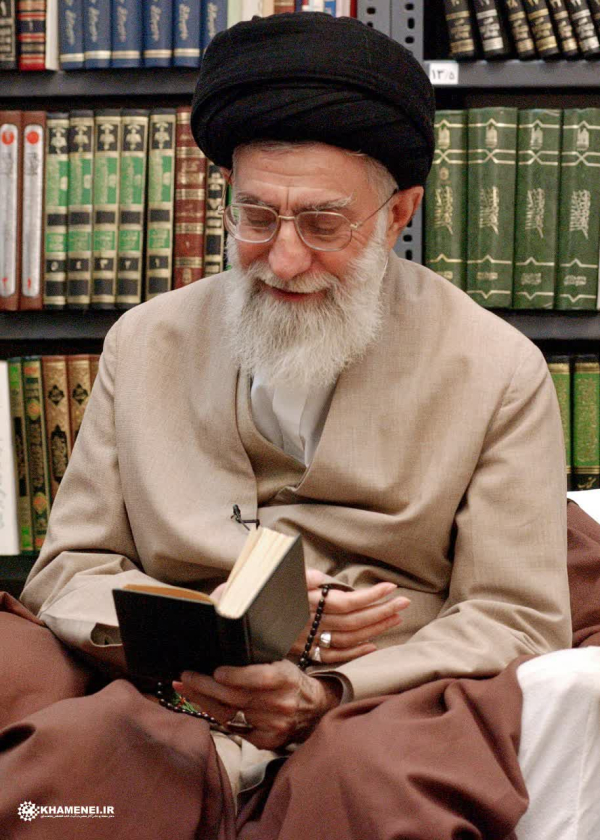
A little reflection and thinking in the words of the martyr of the Islamic revolution of Iran Imam Khamenei
The leader of the martyr of the revolution: The day I am not, there are people. This republic does not belong to the individuals it belongs to the people .
Iran ready for diplomacy to end war, but will uphold national rights, Pezeshkian tells Macron
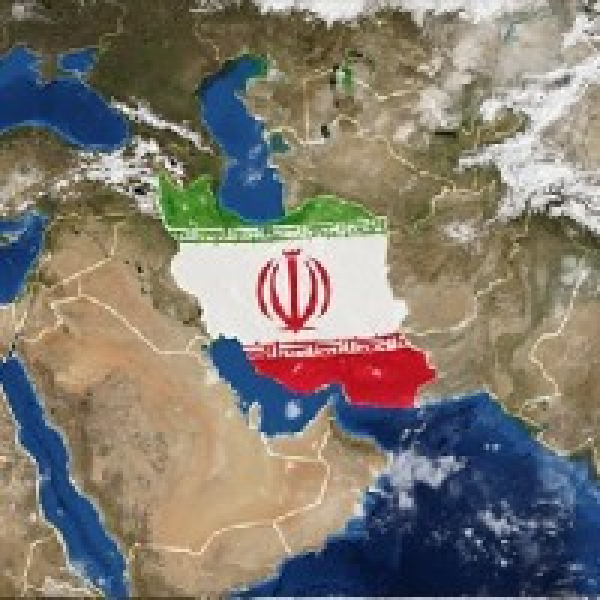
President Masoud Pezeshkian of Iran has told his French counterpart Emmanuel Macron that the Islamic Republic is ready to pursue in earnest diplomatic channels to end the war, but insists on securing the rights of the Iranian nation.
The Iranian president also reaffirmed Tehran’s deep distrust of the White House due to Washington’s invariable acts of aggression during negotiations.
In a telephone conversation on Wednesday, the two presidents reviewed the strategic situation in the region, notably the issue of the Strait of Hormuz and the progress of a temporary ceasefire agreement and ongoing talks between Iran and the United States, according to a readout from the Iranian presidency.
“The Islamic Republic of Iran, within the framework of international law, is ready to seriously pursue diplomatic paths to end the war, while emphasizing the realization of the rights of the Iranian nation,” Pezeshkian said.
Distrust of US rooted in ‘stabbing from behind’
On Tehran’s mistrust of Washington, Pezeshkian said it stems from hostile actions by the American side.
“This distrust is the result of hostile acts by the American side, the latest of which were two attacks on our country during negotiations, effectively stabbing us in the back.”
The United States and Israel launched their illegal, unprovoked war of aggression against Iran on February 28, in the middle of nuclear negotiations. They assassinated the Leader of the Islamic Revolution, Ayatollah Seyyed Ali Khamenei, and several other senior officials and commanders.
The United States and Israel have also bombarded civilian infrastructure, schools, and hospitals across Iran.
The presidents of Iran and France also exchanged views on the situation in the Strait of Hormuz, a critical waterway Iran has placed under tight control since the war began.
As a sovereign right, Iran has imposed a new maritime transit mechanism that requires all vessels to obtain permission before passing.
The phone conversation also touched on the initial ceasefire agreement and the mediation efforts led by Pakistan.
A fragile truce has been in place since early April, but indirect talks between Tehran and Washington have stalled, with Iran accusing the US of violating the ceasefire through a naval blockade and threats.
France has been one of the European countries maintaining diplomatic channels with Tehran throughout the war, and Macron has previously spoken with Pezeshkian in March.
Indirect talks have failed to produce a breakthrough, with Iran demanding the lifting of the illegal blockade, an end to the war, and compensation for damages.
Press TV’s website
Defense official: US must recognize Iran’s rights, break with Israel to escape ‘quagmire’
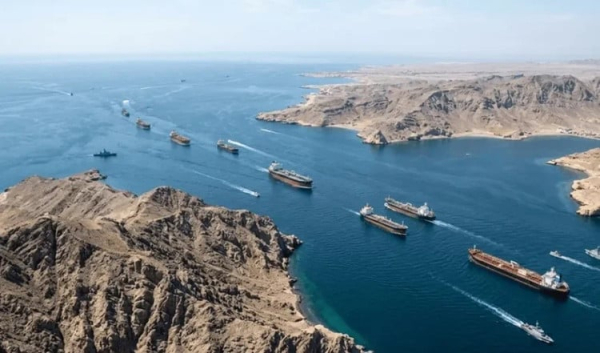
The spokesperson for Iran’s Ministry of Defense says the United States and the Israeli regime must recognize the rights of the Iranian nation to pave the way for putting an end to the war against the Islamic Republic.
“The American-Zionist enemy must accept the rights of the Iranian nation, and especially the US enemy must distance itself from the evil Zionist regime (Israel), and this will pave the way for the end of the war,” Brigadier General Reza Talaei-Nik told reporters on Wednesday.
He warned that the US cannot get out of the "quagmire it is stuck in" if it refrains from accepting the rights of the Iranian nation, and if it refuses to distance itself from the “evil and criminal” Israeli regime, adding it should accept the realities of the battlefield.
He added that the Iranian nation constitutes the “strategic depth of Iran’s defense power.”
The United States and Israel launched their unprovoked war of aggression against Iran on February 28. They assassinated Leader of the Islamic Revolution Ayatollah Seyyed Ali Khamenei and struck nuclear facilities, schools, hospitals and civilian infrastructure.
Iran’s Armed Forces responded with 100 waves of retaliatory strikes under Operation True Promise 4, launching hundreds of ballistic and hypersonic missiles, as well as drones, against American military bases across West Asia and Israeli positions throughout the occupied territories.
In a move sending shockwaves throughout the global energy markets, the Islamic Republic shut the Strait of Hormuz to enemies and their allies and then deployed far stricter controls over the waterway after Washington sustained an illegal naval blockade it had imposed on the country.
Iran then ruled out returning to the negotiation table unless the blockade was lifted.
Tehran says it is still reviewing Washington’s latest proposal for a potential agreement to end the war, with no official response yet delivered.
Foreign Ministry spokesman Esmail Baghaei said on Wednesday that genuine negotiation requires good faith, not dictation or extortion.
Press TV’s website
Iran's parl. speaker calls US media's bluff about pending arrangement with Tehran
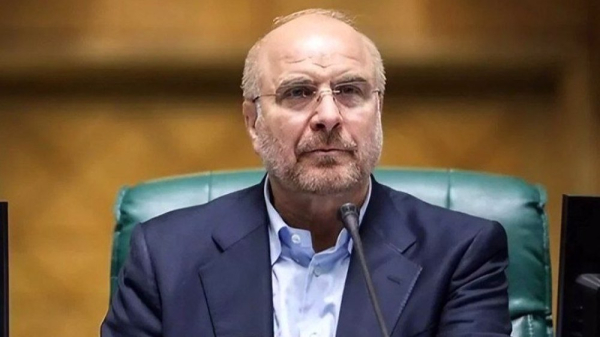
Speaker, Mohammad-Baqer Qalibaf
Majlis (the Iranian Parliament)'s speaker dismisses recent reports about a supposed impending arrangement between Tehran and Washington, describing them as misleading and part of recurring fake media narratives originating in the United States.
In a post on X on Thursday, Mohammad-Baqer Qalibaf referred to allegations published by the US-based outlet Axios regarding such an arrangement, ironically describing them as "Operation Fauxios."
He suggested that circulation of such reports reflected a routine pattern in US media coverage, particularly stories attributed to unnamed sources that Iranian officials have repeatedly rejected as unfounded and have later been proven invariably wrong.
Qalibaf noted that the psychological operation had come after "Operation Trust Me Bro failed," pointing to the unfailing frustration of US President Donald Trump's hostile intentions regarding the Islamic Republic during Washington's latest aggression.
The US and the Israeli regime launched their latest round of unprovoked aggression targeting Iran from February 28 to April 7.
The latter date saw Trump announce a unilateral two-week ceasefire after the Islamic Republic faced the aggression with at least 100 waves of decisive and successful retaliatory strikes.
In a move sending shockwaves throughout the global energy markets, the Islamic Republic shut the Strait of Hormuz to enemies and their allies and then deployed far stricter controls over the waterway after Washington sustained an illegal naval blockade it had imposed on the country.
Iran then ruled out returning to the negotiation table unless the blockade was lifted. On Wednesday and amid the Islamic Republic's continued resilience, Trump said he was "pausing" his so-called "Project Freedom," a much-hyped plan supposedly aimed at forcibly reopening the strait.
Press TV’s website
IRGC says it will allow ‘safe, stable’ transit via Hormuz ‘with aggressor threats neutralized’
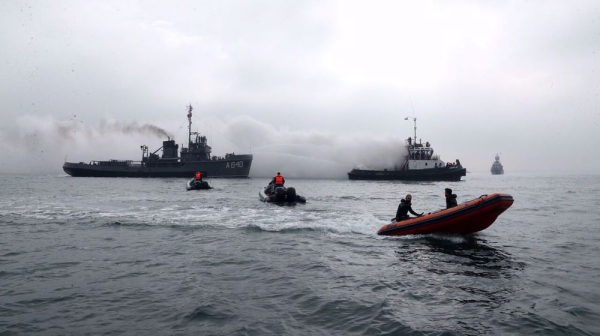
The Islamic Revolution Guards Corps (IRGC) has announced that transit through the Strait of Hormuz will gradually become safe and stable as the security situation in the Persian Gulf improves "with the aggressor's threats neutralized."
The IRGC Navy said in a post on its X account on Wednesday that it had seen a good level of compliance with its regulations from shipping companies and staff seeking to transit the Strait of Hormuz.
It said that Iran would allow a resumption of transit in the key waterway, which is responsible for a fifth of global oil demand, now that threats from the US and the Israeli regime against Iran are subsiding.
“We thank captains & shipowners in the Persian Gulf & Gulf of Oman for complying with Iran’s Strait of Hormuz regulations & contributing to regional maritime security. With the aggressor’s threats neutralized & new protocols in place, safe, stable passage through SOH will be ensured,” said the post.
It came just two days after Iran was forced to fire missiles and drones to warn US warships seeking to approach the Strait of Hormuz in an attempt to break the country’s control over the waterway.
US President Donald Trump said earlier on Wednesday that he had abandoned a newly announced plan to force Iran to open the Strait.
Iran has restricted passage through Hormuz since the early days of the US-Israeli aggression on its territory in early March, maintaining the restrictions as the US and Israel kept violating the terms of a ceasefire, which was announced more than a month later to stop the aggression.
Sources told Press TV on Tuesday that Iran was introducing a new mechanism allowing ships to pass through designated corridors in the Strait of Hormuz.
That came amid reports that Iran and the US were inching closer to a deal that would allow a permanent end to the aggression and an easing of Iran’s restrictions on passage through Hormuz.
Press TV’s website