zarezadeh
New law will set conditions for transit through Strait of Hormuz: Deputy speaker
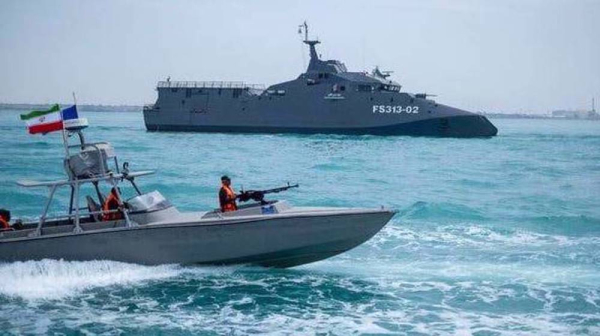
The Iranian Parliament will approve a new law introducing a new legal regime for the Strait of Hormuz in accordance with directives of Leader of the Islamic Revolution Ayatollah Seyyed Mojtaba Khamenei, setting the conditions for transit of ships through the strategic waterway, a senior lawmaker said.
Speaking on the sidelines of a supervisory visit by the Parliament's Civil Commission to Hormuzgan Province on Sunday, Deputy Speaker Ali Nikzad said Iran would never retreat from its inherent rights in the Strait of Hormuz, a vital conduit for international oil and gas supplies.
“This law does not only address the conditions of the Islamic Republic of Iran, but also takes into account the rules of international law and the rights of the neighboring countries,” he said.
According to the draft law, he added, ships belonging to the Israeli regime would not be allowed under any circumstances to pass through the Strait. He emphasized that no permission would also be granted to hostile countries, the United States in particular, to pass through the waterway.
“Other ships must comply with the law to be approved by Parliament to pass through the Strait of Hormuz,” Nikzad explained.
Under the new legislation, he noted, authorizations will be obtained from the Leader and passed on to to the Armed Forces.
The top parliamentarian further said that tolls will be charged for services such as safety, maritime guidance, and environmental protection in the Strait of Hormuz and the revenues would be allocated to the improvement of Iran’s defensive power, public livelihoods, and reconstruction and completion of the country’s infrastructure.
He added that a “desperate” President of the United States Donald Trump has imposed a blockade on Iranian ports and vessels, which is absolutely “doomed to fail.”
He emphasized that the status of the Strait of Hormuz will not return to the conditions before the unprovoked war waged by the United States and the Israeli regime, which started on February 28.
Nikzad reiterated that the Strait of Hormuz and the Persian Gulf waters in Hormuzgan Province belong to the Islamic Republic.
In response to the US-Israeli aggression against the Islamic Republic, the Iranian Armed Forces launched daily missile and drone operations targeting locations in the Israeli-occupied territories as well as US military bases and assets across the region.
Furthermore, Iran retaliated against the strikes by closing the Strait of Hormuz, which resulted in a significant increase in oil prices and its by-products.
On April 8, forty days into the war, a Pakistan-brokered temporary ceasefire between Iran and the US took effect. Negotiations ensued in the Pakistani capital of Islamabad but stopped short of an agreement amid Washington’s maximalist demands and insistence on unreasonable positions.
Since then, Trump has offered shifting timelines and goals for the war. He has faced widespread condemnation over his comments on the aggression, including when he threatened to destroy Iran’s “entire civilization.”
Press TV’s website
IRGC: Trump has to choose between ‘impossible’ war or ‘bad deal’ with Iran
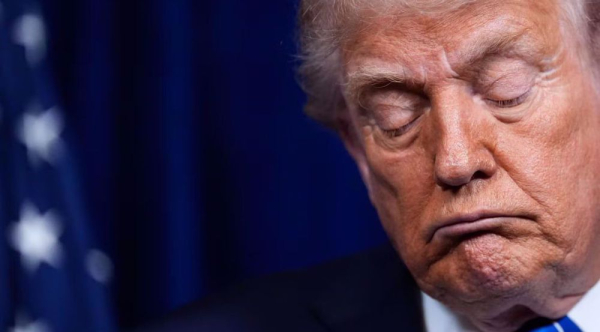
The Islamic Revolution Guards Corps (IRGC) says US President Donald Trump now faces a sharply narrowed choice between an “impossible military operation” against Iran and a “bad deal” with the country.
The IRGC’s Intelligence Organization made the announcement in an X post on Sunday, after Iran submitted a comprehensive proposal aimed at bringing a permanent end to the illegal US-Israeli war of aggression against the Islamic Republic.
With the proposal, Iran put the ball back into the court of Trump, whose country is looking for a face-saving way to escape the war quagmire it has become trapped in.
"Iran sets Pentagon a blockade deadline; China, Russia, Europe shift tone against Washington; Trump’s passive letter to Congress; acceptance of Iran’s negotiating terms; there is only one way to read this: Trump must choose between ‘an impossible military operation or a bad deal with the Islamic Republic of Iran,’” it said.
“The room for US decision-making has narrowed."
The unprovoked US-Israeli aggression on Iran began on February 28 with airstrikes that assassinated senior Iranian officials and commanders.
The Iranian armed forces unleashed 100 waves of successful retaliatory strikes against sensitive and strategic American and Israeli targets throughout the region.
They also blocked the Strait of Hormuz to oil and gas tankers affiliated with the enemies and those cooperating with them in an attempt to maintain security at the critical waterway.
On April 8, forty days into the war, an Islamabad-brokered temporary ceasefire went into effect but the first round of Tehran-Washington negotiations failed to reach an agreement.
Trump unilaterally extended the truce, but imposed an inhumane “naval blockade” of Iran.
Tehran has refrained from committing to a second round of talks, with authorities citing Washington’s excessive demands and piracy against Iranian ships as two main impediments to concluding the war.
Press TV’s website
Iran says it is reviewing US response to 14-point plan delivered via Pakistani intermediary
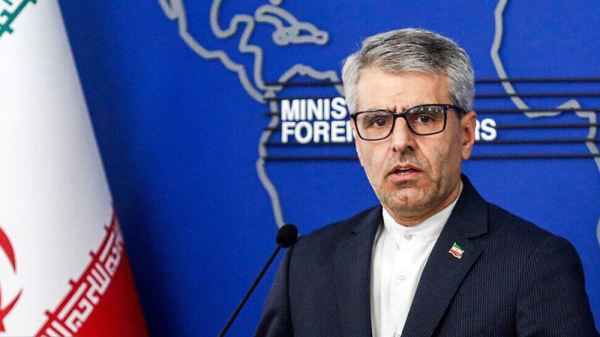
Iran confirmed on Sunday that the United States has delivered its response to Tehran’s proposed 14-point plan through Pakistani mediators, and that the Islamic Republic is currently reviewing the document.
“The Americans have given their answer to Iran’s 14-point plan to the Pakistani side, and we are currently reviewing it,” Foreign Ministry Spokesman Esmaeil Baghaei said in a televised interview.
He clarified that the Iranian proposal is exclusively focused on ending the US-Israeli aggression against Iran and hostilities in the region and contains no provisions related to the country’s nuclear program.
“The plan we have presented is centered on ending the war. There are absolutely no details regarding the country’s nuclear issues in this proposal,” Baghaei said.
He dismissed recent reports, including a piece by Al Jazeera, which claimed the 14-point plan included a 15-year suspension of Iran’s nuclear activities and potential US-Iran cooperation on mine-sweeping operations in the Strait of Hormuz.
“These are among the things that I believe are fabricated by the imagination of some media outlets. No such thing exists in the plan,” the spokesman said.
He pointed out that the nuclear issues that have recently been raised were covered in previous negotiations between Tehran and Washington and have nothing to do with the current plan.
The US and Israel attacked Iran in mid-June and late February as Tehran was in the midst of diplomatic talks with Washington over its peaceful nuclear program, he explained.
“We are not currently engaged in any negotiations over the nuclear issue, and decisions about the future will be made in due course,” he emphasized.
Baghaei reiterated that Iran’s immediate diplomatic and security focus remains on halting aggression across the region, particularly in Lebanon.
“We are currently concentrated on ending the war in the region, including in Lebanon,” he said. “As for other matters, decisions will be made at their appropriate time. As I mentioned, at this stage we are focused on ending the war, and we have no nuclear negotiations.”
The proposed framework is based on an initial cessation of hostilities, followed by a 30-day period during which detailed provisions would be examined, the spokesperson said.
Iran fundamentally does not accept negotiations under ultimatums or imposed deadlines, he asserted.
The spokesperson dismissed media speculations that some countries have been named as guarantors of a possible agreement between Iran and the US.
Ghalibaf's account of the enemy's 6 defeats
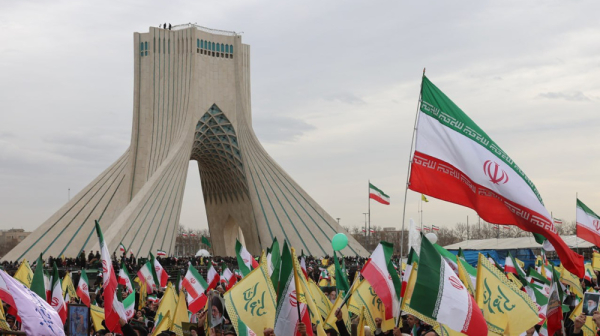
Ghalibaf's account of the enemy's 6 defeats | Trump seeks Iran's surrender through internal discord and naval blockade | We, the military and political officials, are moving forward with complete unity around the orders of the Revolutionary Leader | The Iranian people will defeat the enemy's deceitful plan
In an audio file, the Speaker of the Parliament addressed the Iranian people about the most important issues of the day in the country, especially the enemy's new plan to force the Iranian people to surrender. The main parts of this conversation are as follows:
From day one, the enemy sought to finish the system within 3 days by assassinating the Revolutionary Leader and military commanders, but they failed.
Then they moved on to destroying the country's offensive system, but as time went on, they saw that the sound of our missiles and drones continued.
Then they moved on to Venezuelaizing Iran and failed again, then they moved on to activating separatists from the west of the country, who were defeated by the grace of God and the efforts of the military and intelligence forces.
After months of planning and attacking the country's security bases during the war, they planned a coup for Wednesday, but the Iranian people unanimously rejected them.
The enemy was looking to bring troops into the country and tested this plan in Isfahan, but it turned into the scandal of Tabas 2.
Each of these plans could have destroyed a country, but the Iranian nation, with the support of God's grace, has been able to defeat each and every one of these enemy plans.
This defeat of the enemy had a socio-political infrastructure, and without it, no success would have been achieved, and that was the coherent and active presence of the people, but the enemy has entered a new stage and wants to activate economic pressure and internal division through a naval blockade and media atmosphere to weaken us from within or even collapse.
Trump openly divides the country into two groups: extremists and moderates, and then immediately talks about a naval blockade to force Iran to surrender through economic pressure and internal division.
The solution to confronting the enemy's new conspiracy is only one thing: maintaining coherence. From day one until today, maintaining coherence has been the bane of all the enemy's conspiracies, and today, given the enemy's new design, it is more important, and any divisive action is completely in line with the enemy's new design.
With the knowledge I have of the Iranian people, I can say that these people, by God's grace, will defeat this deceitful design of the enemy, and we will achieve a brilliant victory in this war and be included in the divine promise that "And what you love is victory from God, and a near victory, and give good tidings to the believers."
Mohammad Baqir Qalibaf Information Center
Message of the Leader of the Islamic Revolution on the Occasion
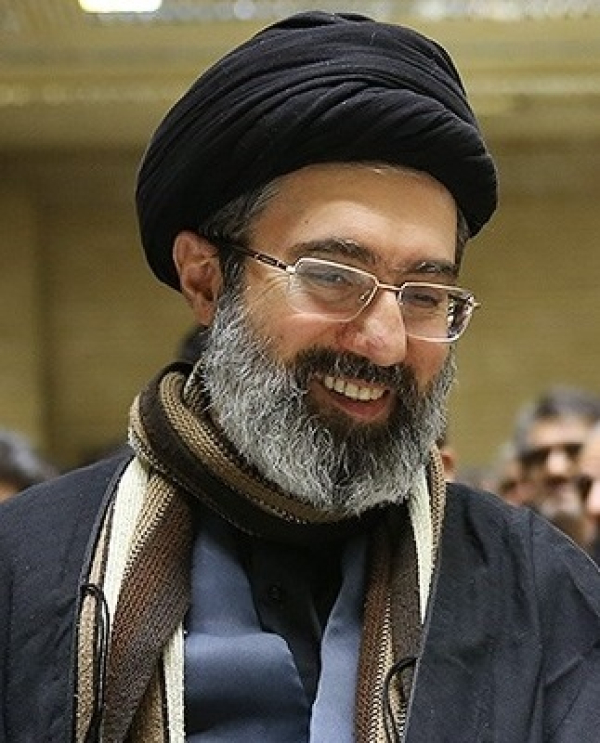
In the Name of Allah, the Most Gracious, the Most Merciful
The two days of May 11th and 12th are days in which the status of the worker and the status of the teacher are appreciated. Apart from the linguistic and symbolic glorification, which is in itself a proper and correct thing to do, the progress of any country is hostage to the two wings of knowledge and action.
The teacher plays a role in the first stage of realizing this goal. He has the serious responsibility of teaching knowledge, increasing skills, and an important part of growing the vision and molding the identity of the future generation. Students and pupils who grow up alongside each teacher will, in the not-so-distant future, apply the skills and knowledge they have learned and perhaps reflect the behaviors and words of their teachers in their attitudes, behavior, and speech in a variety of settings, from the warm family circle to the workplace and the streets.
On the other hand, the workplace is a vast stage across the country, stretching from homes, offices, business units, and mosques to farms, workshops, factories, mines, and many types of service jobs. The more this vast area benefits from the two elements of hard work and commitment, which are considered the pillars of any great success, the more and better the country's progress will be guaranteed.
We know that a worker, in the light of commitment and good deeds, sometimes finds such a position that it is worthy to kiss the capable and artistic hand of a teacher and mentor with gratitude and appreciation. This, of course, is something that can be provided from the lap of everyone’s first mentors, namely their parents, and then from the understanding of the teacher.
Now that the Islamic Republic of Iran, after more than forty-seven years of struggle, relying on the grace of God in the military battle with the enemies of its progress and excellence, has proven to the world some of its remarkable capabilities, it must also disappoint and defeat them in the stage of economic and cultural jihad.
Teachers will be the most effective link in the cultural battle and workers will be the most effective elements in the economic battle; so that it can be claimed that these two are the backbone of the cultural and economic arena. Therefore, it is necessary for them to be well aware of the importance of their specific position, beyond a job for which they receive a salary.
In parallel with this, it should be noted that although annual or occasional verbal celebrations are appropriate and appropriate, appreciation for the efforts of these two groups should be deeper and more practical than this. I believe that just as the dear Iranian people show appropriate support for their country's military forces by being present in the squares and streets, it is appropriate for them to show strong support in helping teachers and workers.
Among other things, the interaction of students' families and students in the administration of schools and universities should be facilitated more than before, and productive workers should be supported by prioritizing the consumption of domestically produced goods, and especially the owners of affected businesses should avoid, as much as possible, layoffs and separation of their workforce, whether in production or service units, and rather, they should consider each worker as the wealth of that production or service unit; and of course, the respected government should support this benevolent act to the extent possible.
Dear Iran, as it has emerged as a military power after years of effort, God willing and by God’s grace, by drawing the lines of the Iranian-Islamic identity and instilling it as much as possible in the minds and souls of the youth of this country through educators and teachers, and by giving priority to the consumption of domestically produced goods that are the result of the efforts of hardworking Iranian workers, it will traverse the path to the peaks of progress and excellence. Of course, with the prayers and intercession of our Lord, may God hasten his return, may he be reborn as soon as possible, God willing. Peace be upon you, mercy of God, and blessings.
Seyyed Mojtaba Hosseini Khamenei
America's Contradictions About War Damages
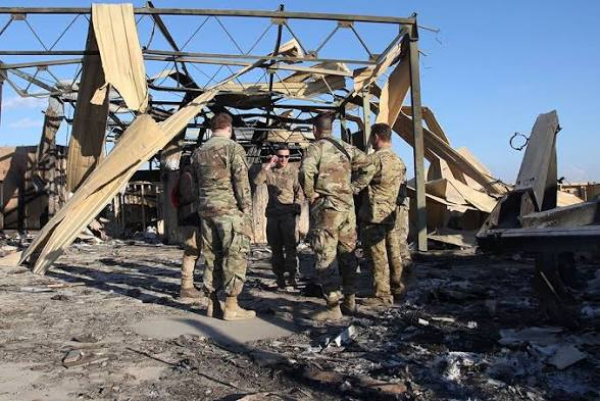
Over time, new dimensions of the extent of the damage, casualties, and costs of the war against Iran are becoming apparent to the United States. The initial picture of the costs is now changing with new data, pushing the estimates to a higher level.
In this regard, the US Department of Defense announced in a congressional hearing that the direct costs of the war have been estimated at about $25 billion so far. However, soon after this number was released, some American media outlets emphasized that this figure is significantly lower than the actual damages and covers only a portion of the costs.
In this regard, CNN, citing its informed sources, announced that the actual estimate of the damages, taking into account the costs of reconstruction, equipment replacement, and infrastructure damage, will probably be $50 billion; a figure that is far from the Pentagon's initial announcement.
CNN also reported that at least 16 US military sites in the region were targeted and damaged in the Iranian attacks. The damaged facilities make up the majority of US military positions in West Asia, and the damage includes high-value targets.
Iran slams US 'self-defense' claims, says US-Israeli strikes noting but ‘aggression’
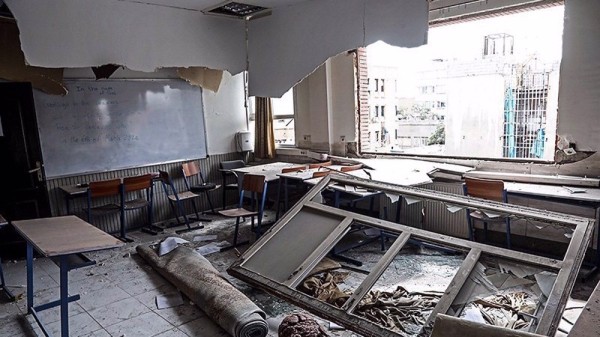
Iran’s Foreign Ministry spokesman has forcefully rejected Washington's justification for the aggression it launched against the Iranian nation, dismissing US claims of self-defense.
Taking to X on Friday, spokesman Esmaeil Baghaei condemned new justifications issued by the US State Department. Questioning the premise of Washington's military actions, Baghaei asked, "'Self-defense' against what? Was there any 'armed attack' by Iran to justify 'self defense'?"
He emphatically noted the answer is "Definitely not," adding, "So this was absolutely NOT 'self-defense' — it was an act of AGGRESSION against the nation of Iran."
The spokesman's comments were triggered by an April 21 State Department release in which legal adviser Reed Rubinstein detailed the administration's rationale. Rubinstein claimed that the United States is engaged in the war "at the request of and in the collective self-defense of its Israeli ally, as well as in the exercise of the United States’ own inherent right of self-defense."
The criminal US-Israeli aggression against Iran began on February 28 with airstrikes that assassinated senior Iranian officials and commanders. The strikes also targeted the country’s vital economic and civilian infrastructure, claiming the lives of over 3,300 Iranians, according to the latest data.
However, Rubinstein's invocation of self-defense contrasts sharply with internal US military assessments. During a congressional briefing just one day after the aggression commenced, Pentagon staff acknowledged to attendees that Iran was not planning to strike US forces or bases in West Asia unless Israel attacked Iran first.
This acknowledgment drastically undercuts false allegations from the administration of US President Donald Trump, which claimed Iran was planning preemptive strikes against American assets.
Furthermore, the State Department's admission clarifies that Washington entered a war of aggression against Iran on behalf of the Israeli regime. This candid disclosure directly contradicts President Trump, who has repeatedly insisted that Israel had nothing to do with his decision to spark another war in West Asia.
Trump has continually complained online about the circling narrative. On the social media platform Truth Social, he recently claimed, “Israel never talked me into the war with Iran.”
Despite the president's denials, US involvement was reportedly arranged following a February 11 meeting between Trump, Israeli prime minister Benjamin Netanyahu, and several US and Israeli officials in the White House Situation Room. Reports indicate it was Netanyahu’s direct influence and subsequent pressure campaign that thrust America into the war.
Most advanced US warship retreats as war on Iran breaks American Navy
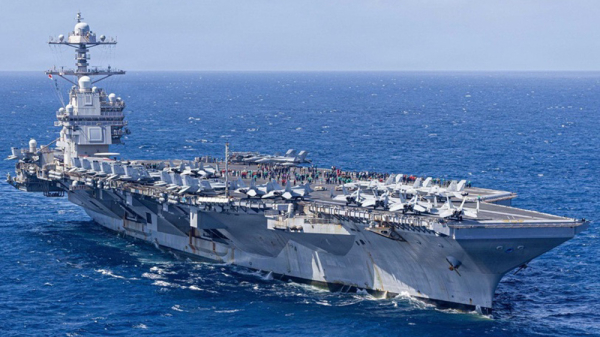
The USS Gerald R. Ford, the largest and most expensive aircraft carrier ever built by the United States, has been forced to withdraw from West Asia after 309 days of continuous deployment in support of the unprovoked US terrorist war against Iran.
The $13 billion leviathan is returning to Norfolk, Virginia, in a state of significant mechanical degradation, a humiliating retreat that exposes the fragility of the American war machine.
The Ford's departure, expected around mid-May 2026, leaves the US naval presence diminished at a critical moment.
While two other carriers — the USS George H.W. Bush and the USS Abraham Lincoln — remain to enforce the illegal US blockade targeting Iranian oil shipments, the loss of the Ford reduces "immediate strike capabilities" precisely as diplomatic efforts between Washington and Tehran have completely stalled.
War secretary Pete Hegseth admitted to Congress on April 29 that the decision to extend the Ford's deployment was the result of "a tough decision-making process", a tacit acknowledgment that the US has overextended itself in a war that was never justified.
The 309-day deployment — the longest since the Vietnam War — has literally broken the ship. A fire erupted in the carrier's laundry room in March 2026, injuring several sailors and displacing more than 600 crew members from their sleeping quarters.
Reports indicate that some sailors were forced to sleep on tables and passageway floors. But the fire was only the most visible failure.
The Ford has suffered continuous problems with its onboard sanitation systems, averaging approximately one sewage-related maintenance issue per day for months on end. Crew living conditions deteriorated to the point where basic human functions became a daily ordeal.
A recent Pentagon testing assessment revealed that even before the fire, there was insufficient data to determine the ship's "operational effectiveness" under realistic combat conditions.
Key systems — including its advanced aircraft launch and recovery technology, radar, and weapons elevators — remain under scrutiny, with serious questions about their reliability during sustained wartime use.
Upon returning to Norfolk, the Ford will enter an extended maintenance period that experts estimate could last up to 14 months, effectively removing allegedly the most advanced carrier ever built from active duty for more than a year.
The Ford is not an isolated case. The entire US carrier fleet is showing signs of systemic collapse under the strain of the war on Iran.
USS John C. Stennis is 14 months behind schedule and $483 million over budget for its mid-life Refueling and Complex Overhaul (RCOH).
Workforce shortages and the discovery of a heavily degraded steam turbine essential for converting nuclear energy into usable power have turned what should have been a four-year overhaul into a five-year nightmare. The carrier will not return to service until at least October 2026.
USS Harry S. Truman is scheduled to begin its own RCOH in June 2026 before the Stennis has even returned to the fleet.
This means two nuclear carriers will be out of service simultaneously, with the Navy's single refueling facility unable to accelerate work or shift capacity elsewhere. The Truman's overhaul is expected to last until at least January 2031.
USS Nimitz, the oldest active carrier in the fleet, is scheduled for decommissioning by March 2027, further reducing the already strained carrier count .
The US Navy is legally required to maintain 11 aircraft carriers in active service. With the Ford sidelined, the Stennis delayed, the Truman entering the shipyard, and the Nimitz heading for retirement, officials warn that the Navy may soon fall below this statutory minimum for the first time in decades.
The strain of the war on Iran is not only breaking ships; it is also breaking sailors. The USS George Washington endured a nearly six-year overhaul period during which 11 crew members died by suicide.
Crew members reported poor food quality, limited recreational options, and the psychological agony of being confined to a ship in port for years without deployment.
The crew turned over three times during the overhaul; by the time the carrier reentered service, 85 percent of its sailors had never been deployed on any vessel.
Similar morale crises are now unfolding across the fleet. Reports indicate that some crew members aboard the Ford are considering leaving the Navy due to the unprecedented length of the deployment.
Observers say the withdrawal of the USS Gerald R. Ford sends an unmistakable message to the world that the American war machine, for all its bluster and billions, is crumbling under the weight of its own aggression.
The war on Iran launched without justification and sustained on behalf of Israeli interests has exposed the rot at the heart of US naval power.
Press TV’s website
'Pentagon is lying': Netanyahu's gamble cost US four times official estimate, Araghchi says
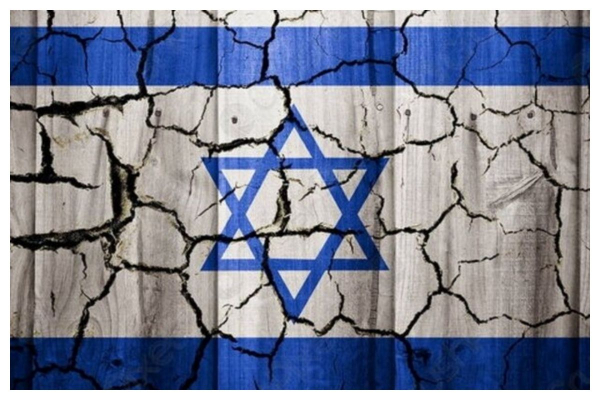
Iranian Foreign Minister Abbas Araghchi says the Pentagon is lying about the financial toll of the war on Iran, noting that the aggression has directly cost the United States $100 billion so far—four times the official estimate.
"The Pentagon is lying. Netanyahu's gamble has directly cost America $100b so far, four times what is claimed," Araghchi wrote on X Friday.
"Indirect costs for U.S. taxpayers are FAR higher. Monthly bill for each American household is $500 and rising fast," he added.
"Israel First always means America Last," he said, referring to the Israeli role in dragging the US into a war of aggression against the Iranian nation.
His comments come as the Pentagon's $25 billion cost estimate faces mounting scrutiny from multiple quarters.
According to a CNN report citing three unnamed sources familiar with internal assessments, the figure presented by a senior Pentagon official to lawmakers on Wednesday significantly underestimates the true financial burden.
The sources revealed that the $25 billion figure excludes extensive damage inflicted on US military bases across the region during Iran's defensive strikes.
When reconstruction and replacement of destroyed assets are factored in, one source noted, the cost likely ranges between $40 billion and $50 billion.
Academic experts paint an even grimmer picture. Professor Linda Bilmes, a public policy expert at the Harvard Kennedy School, projects the Iran war could ultimately cost US taxpayers $1 trillion.
"I am certain we will reach $1 trillion for the Iran war," Bilmes said in an interview, estimating short-term costs at around $2 billion per day during the 40 days of the war.
Bilmes argued the Pentagon's accounting methods mask the true expense, as figures are based on historical inventory values rather than current replacement costs—which are typically far higher.
Long-term expenses include reconstruction of damaged facilities, replenishing military inventory, rebuilding bases in the Persian Gulf, and potential lifetime disability benefits for roughly 55,000 deployed troops exposed to Iran’s retaliatory attacks.
Meanwhile, an online tracker monitoring the war's cost to American taxpayers shows the figure has reached $67 billion.
Veteran Senator Bernie Sanders issued a warning Wednesday, criticizing the Trump administration for funneling massive public funds into what he called a pointless war instead of addressing domestic needs.
"War in Iraq: $2.1 trillion. War in Afghanistan: $2.3 trillion. Projected cost of the war in Iran: $1 trillion. Somehow, there is always money for war, but never enough money for housing, education or the needs of working people. We must and will change our national priorities," Sanders wrote on X.
The criminal US-Israeli aggression against Iran began on February 28 with airstrikes that assassinated senior Iranian officials and commanders and targeted the country's infrastructure, including economic facilities. Over 3,300 Iranians have lost their lives in the aggression, according to the latest data.
Iranian armed forces responded with daily missile and drone operations targeting locations in Israeli-occupied territories and US military bases across the region.
Iran also closed the Strait of Hormuz to ships belonging to the US and its allies that participated in or supported the aggression, triggering a significant spike in oil prices.
A Pakistan-brokered temporary ceasefire took effect on April 8, forty days into the war. Negotiations in Islamabad subsequently stalled amid Washington's excessive demands and unreasonable positions.
Tehran says the illegal US blockade on Iran’s ports should be lifted before the next stage of talks for ending the war begins. Iran has also asserted it has no intention of reopening the Strait of Hormuz as long as the blockade remains in place.
Meanwhile, the US blockade of Iranian ports has failed to achieve its stated aim of cutting off Iran's oil revenues.
Press TV’s website
On Persian Gulf Day, Iranian president says naval blockade poses threat to global peace
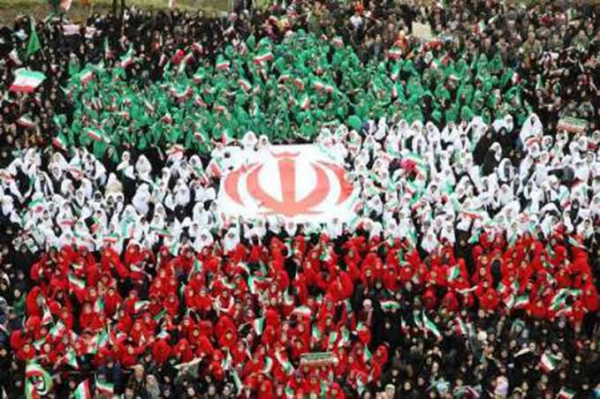
Iranian President Masoud Pezeshkian says any attempt to impose naval restrictions and blockade contravenes international regulations and poses a threat to the interests of regional nations and global peace and stability and is doomed to fail.
In a message on the occasion of the National Day of the Persian Gulf on Thursday, Pezeshkian said the day is a valuable opportunity to once again remind the historical truth that this waterway is an “inseparable” part of Iranians’ identity and a symbol of the great Iranian nation's resistance to old and new colonialists.
He added that the day is celebrated this year under the circumstances that the US-Israeli imposed war against the Islamic Republic once again reveals the significance of this region, particularly the Strait of Hormuz, to the world.
He emphasized that the bravery of the Iranian naval forces showed that this vital passage plays a key role in transferring energy and is also a symbol of national sovereignty and “reflects Iran's undeniable role in ensuring regional and global security.”
The president noted that the enemies have changed the field of their pressure from economic sector to naval blockade and restrictions in marine trade routes as a new means to exert pressure on the Iranian nation and government.
“But our enemies should know that the Persian Gulf is not an arena for imposing unilateral foreign wills, but rather is a part of the system of international interactions and its security only makes sense in light of collective cooperation and mutual respect for the sovereignty of its coastal countries,” Pezeshkian added.
“As we have repeatedly announced, the presence and interference of foreigners will not help improve security in the region but will create tension and disrupt lasting peace in the Persian Gulf,” he emphasized.
During the 40 days of the US-Israeli aggression, it became clear that the US military bases in regional countries failed to ensure security for the host countries and jeopardized their peace and security, he said.
Pezeshkian stated that these bases from which attacks against Iran were carried out were considered legitimate targets for the country as they facilitated the invasion against the Islamic Republic.
As the guardian of security of the Persian Gulf and the Strait of Hormuz, Iran continues to adhere to the principles of freedom of navigation and maritime safety, except for hostile countries, he emphasized.
He, however, reiterated that Iran believes that the implementation of such principles must be coupled with respect for the Iranian nation and sovereignty.
Pezeshkian held the United States and the Israeli regime responsible for any insecurity in this waterway.