zarezadeh
President Pezeshkian: Iran will never submit to US threats, bullying
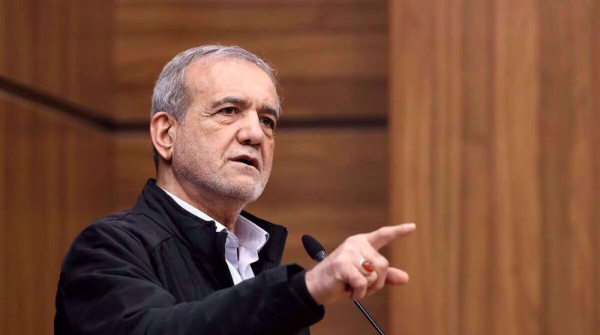
President Masoud Pezeshkian has stressed that Iran rejects the language of threats, and will never submit to US “bullying.”
Pezeshkian made the remarks in a phone call with Iraqi prime minister-designate Ali Faleh al-Zaidi on Tuesday during which discussed the challenge faced by regional countries following the US-Israeli aggression against Iran.
“The Islamic Republic of Iran is ready for any dialogue within the framework of international law, but based on its faith, belief, and conviction, it has not submitted and will never submit to coercion in any way. If they speak to us logically, dialogue is possible, but the language of threats and bullying will not lead anywhere,” Pezeshkian said during the phone call.
The US and Israel started a fresh round of aerial aggression on Iran on February 28, some eight months after they carried out unprovoked attacks on the country.
Iran began to swiftly retaliate against the strikes by launching barrages of missile and drone attacks on the Israeli-occupied territories as well as on US bases and interests in regional countries.
On April 8, a Pakistan-brokered temporary ceasefire between Iran and the US took effect. However, subsequent peace negotiations in Islamabad ultimately failed amid Washington’s maximalist demands and insistence on unreasonable positions.
US attacks civilian cargo boats heading to Iran's shores, killing 5 on board: Report
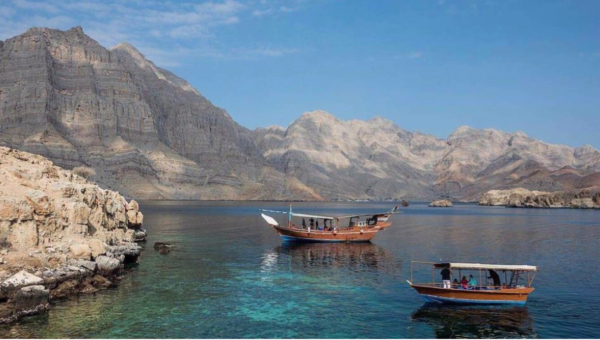
The United States has attacked two civilian cargo boats heading from the Omani coast to the Iranian shoreline, claiming the lives of at least five people on board, a report says.
Tasnim News Agency reported the development on Tuesday, citing a military source.
The source, meanwhile, refuted the US claims of having targeted speedboats belonging to the Islamic Revolution Guards Corps (IRGC), saying, "Instead of targeting IRGC speedboats, the United States, in a blatant crime, opened fire on two small boats carrying civilians’ goods."
Detailing the developments on the ground following issuance of the false account by Washington, the source said, "Given that none of the IRGC’s combat vessels had been hit, local sources were consulted to verify the nature of the incident."
"The investigation revealed that US forces had [actually] attacked and fired on two small cargo boats transporting goods belonging to civilians. The boats were traveling from [the town of] Khasab, along the coast of Oman, towards Iranian shores. The attack resulted in the deaths of five civilian passengers."
The source asserted that the Americans had to certainly be held accountable for the crime.
It attributed perpetration of the crime to the enemy's acting in a "hasty and clumsy" manner due to the "inexplicable fear and nightmare" it has been experiencing since the Islamic Republic issued credible warnings against hostile and trespassing vessels in the Persian Gulf and the Strait of Hormuz.
Tensions have been rife in the Persian Gulf and around the strategic chokehold since February 28, when the United States and the Israeli regime began their latest bout of unprovoked aggression against Iran.
Iran shut down the waterway to enemies and their allies following the launch of the aggression.
It began exercising far stricter controls last month after Donald Trump announced an illegal blockade of Iranian vessels and ports in continuation of the aggression and in violation of the terms of a ceasefire the US president, himself, had declared earlier.
On Friday, the IRGC's Navy pledged to enforce Leader of the Islamic Revolution Ayatollah Seyyed Mojtaba Khamenei's "historic" directive concerning the Persian Gulf and the Strait of Hormuz.
Ayatollah Khamenei had issued the directive a day earlier, asserting that foreigners with "ominous" plots targeting the Persian Gulf had no place in the region "except at the bottom of its waters."
Press TV’s website
IRGC warns ships must exclusively use designated routes in Hormuz Strait
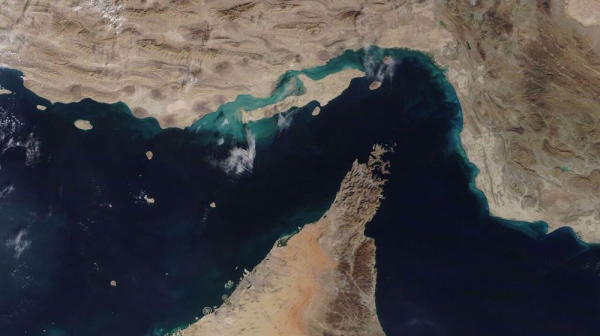
The Islamic Revolution Guards Corps (IRGC) has warned ships seeking to pass the Strait of Hormuz to exclusively use routes designated by Iran as safe.
The IRGC said in a Tuesday statement that it would deal decisively with ships avoiding the Iranian-designated corridors and sailing through other parts of the Strait of Hormuz.
“Any deviation by vessels to other routes will be unsafe and will be met with a decisive response from the IRGC Navy,” said the statement.
“…the only safe route for passing through the Strait of Hormuz is the corridor previously announced by Iran.”
The warning came a day after Iranian and US naval forces exchanged fire near the Strait of Hormuz, after US President Donald Trump announced he had ordered an operation to break restrictions imposed by Iran on cargo transit via the Strait of Hormuz.
Several ships and other port facilities were hit during the exchange of fire, while both sides claimed they had successfully defended their military positions in the Persian Gulf.
However, experts have warned that US interference with the status quo in the Strait, which has been in place since the early days of the US-Israeli aggression against Iran in early March, would seriously escalate the situation, prompting a resumption of military confrontation that was halted as part of a ceasefire reached in early April.
The IRGC on Tuesday refuted US claims that two ships bearing American flags had passed the Strait of Hormuz on the first day of Washington’s renewed effort to open the waterway, which is responsible for a fifth of global oil demand.
Iran has allowed a limited number of ships to pass the Strait over the past weeks, and the transit has happened through two entry and exit lanes designated by Iran as safe.
The corridors are located in the northernmost part of the Strait near the island of Larak, with authorities warning that other parts of the Strait may be laden with mines.
Press TV’s website
Exclusive: Iran launches new maritime mechanism for vessels transiting Strait of Hormuz
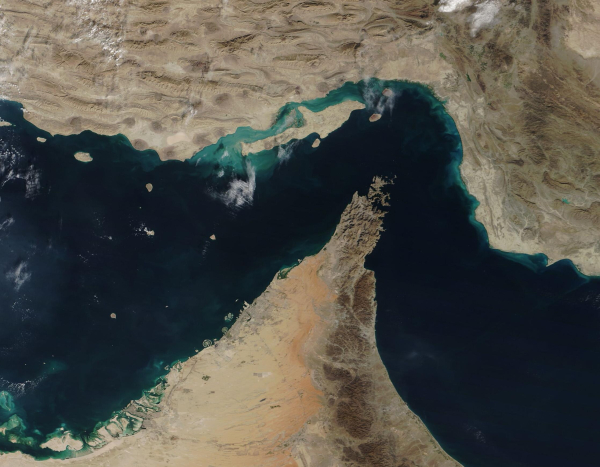
Iran has officially launched a new mechanism for governing maritime traffic through the strategic Strait of Hormuz, Press TV has learned.
Under the newly implemented system, all vessels intending to transit the Strait will receive an email from the official address This email address is being protected from spambots. You need JavaScript enabled to view it. outlining the rules and regulations for passage.
Ships are required to adjust their operations according to this framework and obtain a transit permit before crossing the Strait of Hormuz, one of the world’s most critical oil shipping chokepoints.
The initiative, described as a sovereign governance system, is now operational in the Strait of Hormuz, through which approximately 20% of all internationally traded oil passes.
Iranian armed forces have placed the Strait of Hormuz under strict control, blocking all ships associated with the US and Israel following the launch of their war of aggression against the Islamic Republic on February 28.
Tehran had signaled a willingness to reopen the Strait after the US and Israel agreed to include Lebanon in a Pakistan-brokered ceasefire agreement that helped halt the aggression against Iran.
However, Iranian authorities declared the waterway closed again as Washington and Tel Aviv continued violating the terms of the ceasefire.
A draft law now advancing in Iran’s Parliament would permanently ban any ships associated with the US or Israel from transiting the Strait of Hormuz. The legislation also establishes a tolling system for the passage of non-hostile vessels.
Tensions have escalated sharply in recent days after the United States launched an operation on Sunday aimed at breaking Iran’s control over the Strait. Iranian forces have repeatedly warned US warships against approaching the strategic waterway.
On Monday, Iran’s naval forces fired missiles and drones near US destroyers that ignored repeated calls to stay away from the Strait.
Iranian officials have vowed to maintain their sovereign authority over the chokepoint, warning that any attempt to challenge their control will be met with force.
Press TV’s website
An informed military source: Iran is ready for any scenario in the Strait of Hormuz / First shots were fired
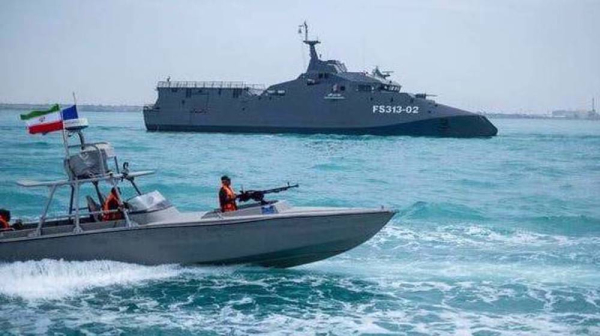
An informed source told Tasnim News Agency about the hostile action of the Americans in the Strait of Hormuz: Iran is fully prepared for any scenario and the Americans know that Iran will not allow bullying of Trump and the American forces.
Referring to the first shots fired by the Iranian forces at some American combat vessels, he noted: The Iranian armed forces will not allow the passage of the American combat forces, just like the 40-day war, and any movement in the Strait of Hormuz will not be carried out without the permission of the Iranian armed forces.
This informed source noted: All vessels should learn from the experience of the 40-day war and not pay the price of the Americans' stupidity.
He emphasized: In addition to firing at the American combat vessels, Iran has also prepared other scenarios that it will take action on if necessary.
IRGC vows to 'forcefully stop' ships violating Strait of Hormuz regulations
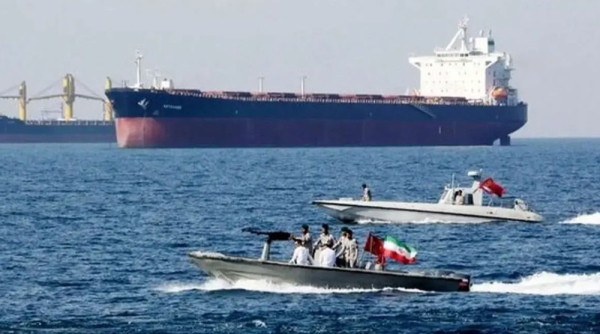
The Islamic Revolution Guards Corps (IRGC) has vowed to “forcefully stop” vessels attempting to defy the management rules enforced by its Navy regarding international transit through the strategic Strait of Hormuz.
Spokesman Brigadier General Hossein Mohebbi made the remarks on Monday, warning that any maritime movement running counter to principles declared by the Navy would face serious risks.
He ruled out as "baseless" statements made to the contrary by American officials and various institutions, such as the UK Maritime Trade Organization, regarding maritime affairs governing the Persian Gulf.
"There has been no change in the management of the Strait of Hormuz. Any maritime movement by civilian and commercial vessels that complies with the transit protocols issued by the IRGC Navy, and is carried out along designated routes in coordination [with the relevant authorities], will enjoy security and safety," he underlined.
He emphasized that it was essential for all shipping and insurance companies to pay heed to the IRGC's related statements.
Iran shut down the chokepoint to enemies and their allies following the launch on February 28 of the United States' and the Israeli regime's latest bout of unprovoked aggression targeting the Islamic Republic.
It began exercising far stricter controls last month after Donald Trump announced an illegal blockade of Iranian vessels and ports in continuation of the aggression and in violation of the terms of a ceasefire the US president, himself, had declared earlier.
On Friday, the IRGC's Navy pledged to enforce Leader of the Islamic Revolution Ayatollah Seyyed Mojtaba Khamenei's "historic" directive concerning the Persian Gulf and the Strait of Hormuz.
Ayatollah Khamenei had issued the directive a day earlier, asserting that foreigners with "ominous" plots targeting the Persian Gulf had no place in the region "except at the bottom of its waters."
Iran’s military vows to target any foreign forces approaching Strait of Hormuz
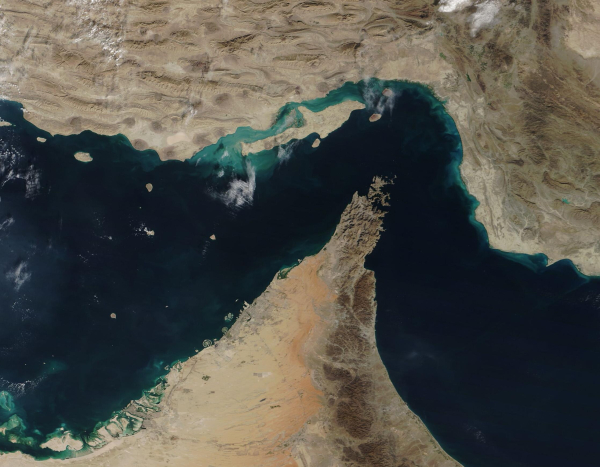
The commander of Iran’s highest operational command unit has warned that the Iranian Armed Forces will target any foreign forces, particularly from the US military, that attempt to approach or enter the strategic Strait of Hormuz.
In a statement released on Monday, Major General Ali Abdollahi, commander of Khatam al-Anbiya Central Headquarters, reiterated that the security of the Strait of Hormuz is solely under the authority of the Islamic Republic of Iran's armed forces.
He emphasized that all safe passage through the strategic waterway must be coordinated with Iranian military forces.
General Abdollahi stated that "the criminal leaders and the aggressive, terrorist American army" had recently resorted to piracy and banditry in international waters, endangering global trade and economic security.
He warned that these leaders and their allies must understand that "the resistant and courageous Iranian nation" and its armed forces would respond to any threat or aggression at any level and in any part of Iran with a "severe and regret-inducing response."
The commander affirmed that Iran will maintain and powerfully manage the security of the Strait of Hormuz.
He called on all commercial vessels and tankers to refrain from any attempt to transit without prior coordination with the armed forces stationed in the strait, warning that failure to do so would endanger their safety.
After receiving response, Iran says ‘endless US greed’ knows no bounds
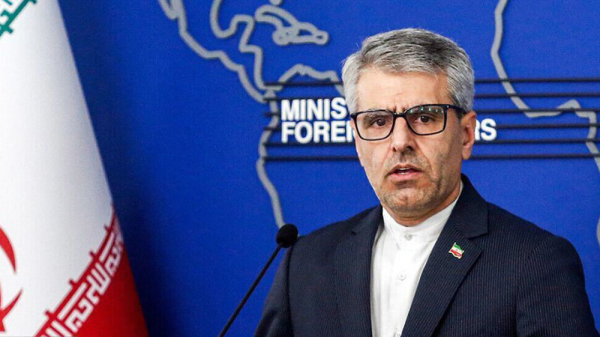
Iran says the United States has not abandoned its pattern of excessive demands and endless greed, confirming the delivery of Washington’s response to Tehran’s proposed 14-point plan regarding mutual negotiations meant to end the war against the Islamic Republic.
Speaking at his weekly press conference on Monday, Iranian Foreign Ministry spokesman Esmaeil Baghaei said Tehran has received the American response through Pakistani intermediaries and is reviewing it but did not discuss specific details of the reply.
"The United States' habitual greed and unlimited demands never end. We are facing a party that constantly changes its views which will complicate any diplomatic process,” he added.
He rejected speculation by media outlets about nuclear issues based on matters discussed in previous negotiations which exclusively focused on the nuclear issue.
"Therefore, topics about enrichment and uranium are speculation. At this stage, we are not talking about anything other than a complete halt to the war," the spokesperson emphasized.
He said Iran will announce its views after reaching a conclusion, again through the Pakistani mediator.
Baghaei said Iran would make necessary decisions about the course of action it should take later in the future.
In a televised interview on Sunday, Baghaei clarified that the Iranian proposal is exclusively focused on ending the US-Israeli aggression against Iran and hostilities in the region and contains no provisions related to the country’s nuclear program.
Two missiles hit US Navy vessel after it ignored Iran's warning: Report
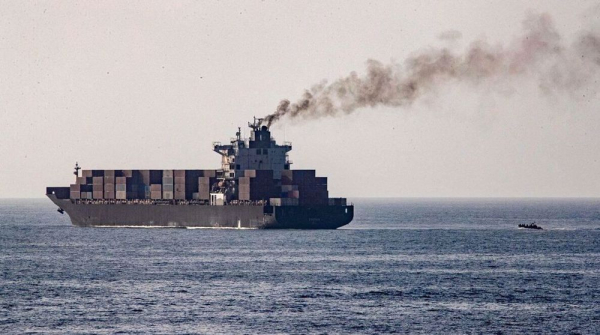
Two missiles have struck a US Navy vessel near the strategic Strait of Hormuz after it ignored warnings from Iran's naval forces, according to a report.
Fars News Agency reported that the American warship was moving in the vicinity of Jask port on Monday with the intention of transiting through the Strait of Hormuz, in violation of maritime security protocols.
The vessel reportedly disregarded multiple warnings issued by the Islamic Republic of Iran's naval forces before being targeted.
According to the report, the US vessel suffered damage from the strikes, forcing it to abandon its course and retreat from the area.
The Islamic Republic of Iran had previously announced that any transit through the Strait of Hormuz without official authorization from Iran is not permitted, and that any disregard for this warning would be met with a decisive response from the country's armed forces.
Leader’s advisor warns US carriers, says graveyard ready for ‘pirates’
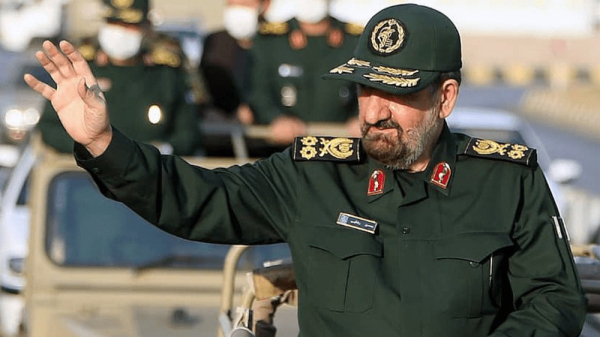
A senior advisor to Leader of the Islamic Revolution Ayatollah Seyyed Mojtaba Khamenei says the United States is the “only pirate in the world that possesses aircraft carriers,” warning that such carriers will face destruction if tensions escalate.
Mohsen Rezaei, a former chief commander of the Islamic Revolution Guards Corps (IRGC), said in an X post on Sunday that Iran’s ability to confront “pirates” is no less than its ability to “sink warships.”
“Prepare to face a graveyard of your carriers and forces, just as the wreckage of your aircraft was left behind in Isfahan,” he wrote.