zarezadeh
IRGC: US warships will burn like bases if Iran attacked again
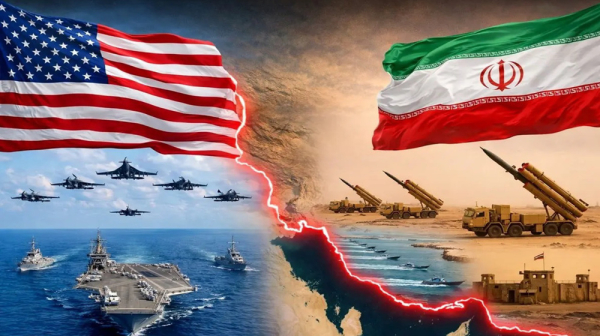
A top IRGC commander says Iran will respond to any enemy aggression with prolonged and painful blows, adding that American naval vessels will share the fate of US military bases in the region.
Commander of the Islamic Revolution Guards Corps (IRGC) Aerospace Force Brigadier General Seyyed Majid Mousavi warned US Central Command on Thursday over reported plans for a "short and intense" series of strikes targeting Iranian infrastructure.
"You have seen the fate of your bases in the region; you will also see the fate of your warships," General Mousavi wrote in a post.
His warning comes as US President Donald Trump is said to receive a briefing on new plans for potential military aggression against Iran on Thursday from CENTCOM Commander Admiral Brad Cooper.
According to the report, the briefing signals Trump seriously weighing a return to large-scale military attacks, either to break the stalemate in negotiations or to deliver what Axios boasted as “a final blow before ending the war”.
CENTCOM, it said, has devised a plan for a "short and intense" series of strikes on Iran, likely targeting infrastructure.
Another delusional proposal expected to be presented to Trump reportedly focuses on “seizing control of part of the Strait of Hormuz to reopen it for commercial shipping” in an operation that could include ground forces.
“A further option previously discussed, and possibly to be raised again, is a special forces mission to secure Iran's stockpile of highly enriched uranium,” the pro-Zionist outlet surmised.
Axios cited Trump as saying on Wednesday that he views a naval blockade of Iran as "somewhat more effective than bombing", though he remains open to military action if Iran does not yield.
"With painful, prolonged, and far-reaching strikes, we will respond to the enemy's operations—even if they are swift and brief—by the grace of God,” General Mousavi warned.
Iranian Armed Forces executed decisive strikes for 41 days, targeting US and Israeli military assets in the region, after the two regimes launched terrorist strikes targeting Iran’s top officials and military and civilian infrastructure.
The US was forced to unilaterally declare a two-week ceasefire on April 8, allowing for negotiations in Islamabad. But peace talks fell through after the Americans could not achieve what they had failed to achieve through military aggression.
Ultimately, US President Donald Trump announced a naval blockade on Iranian ports, but the measure has left the American and European economies bleeding from runaway energy prices.
A high-ranking security source from the Khatam al-Anbiya Headquarters – the country’s central war command – told Press TV on Wednesday that Tehran’s patience with the US piracy in the Sea of Oman is wearing thin.
“The continued American maritime piracy and banditry in the form of a so-called ‘naval blockade’ will soon be met with practical and unprecedented action,” the source said.
A new chapter’: Leader says Iran will determine ‘new legal rules’ in Strait of Hormuz
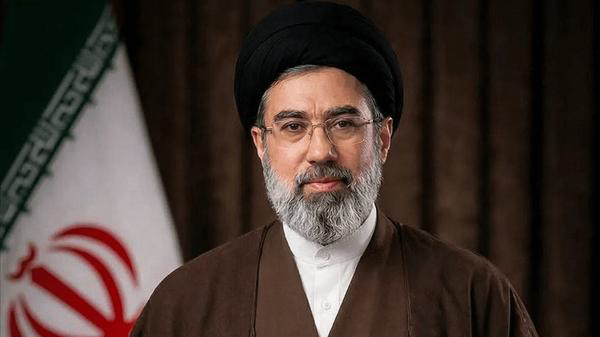
Ayatollah Seyyed Mojtaba Khamenei, Leader of the Islamic Revolution, declared the dawn of a "new chapter" for the strategic waterway, asserting that Iran will implement new management rules over the Strait of Hormuz following recent US-Israeli aggression against the country.
Ayatollah Khamenei made the remarks in a message on Thursday marking National Persian Gulf Day. On April 30, Iran annually commemorates its historic 1622 triumph over colonial occupation along its southern coastline.
This year's observance comes exactly two months after the US and Israeli regime launched an unprovoked military aggression against Iran on February 28.
Ayatollah Khamenei described the Persian Gulf as an “irreplaceable blessing” for the Muslim nations of the region, noting that this body of water and the Strait of Hormuz have “shaped a part of our identity and civilization and, in addition to being a connecting point for nations, create a vital and unique route for the global economy.”
“This strategic asset has provoked the greed of many devils in past centuries, and the history of repeated aggressions by European and American foreigners, insecurities, damages, and numerous threats to the countries of the region are only a fraction of the ominous plots of the world's arrogant powers against the inhabitants of the Persian Gulf region, the latest example of which was the recent thuggery of the Great Satan,” he added, referring to the US-Israeli aggression on Iran which began on February 28.
Possesses the longest land coast of the Persian Gulf, he continued, the Iranian nation has made “the greatest sacrifices for the independence of the Persian Gulf and the confrontation with foreigners and aggressors; from the expulsion of the Portuguese and the liberation of the Strait of Hormuz to the struggle against Dutch colonialism and the epics of resistance against British colonialism, and so on.”
The Islamic Revolution, he stressed, has been a “turning point of these resistances in severing the hands of the arrogant powers from the Persian Gulf region.”
“Today, two months after the largest military expedition and aggression by the world's bullies in the region and America's humiliating defeat in its plot, a new chapter for the Persian Gulf and the Strait of Hormuz is unfolding,” Ayatollah Khamenei added.
US main factor of insecurity in region
The Leader noted that nations of the region witnessed the “vigilance” of the Iranian naval forces in the past 60 days.
“The nations of the Persian Gulf region, who for many years had grown accustomed to the silence and submissiveness of their rulers in the face of bullies and aggressors, have witnessed with their own eyes over the past sixty days the beautiful manifestations of solidity, vigilance, and endeavor by the brave men of the naval forces of the Army and the IRGC, alongside the zeal and gallantry of the people and youth of the southern region of dear Iran, in rejecting foreign domination,” he wrote.
Following the latest imposed war on Iran, it has been “proven not only among global public opinion and the nations of the region, but even to the rulers of countries, that the presence of American foreigners and their nesting and establishing footholds in the lands of the Persian Gulf is the most important factor of insecurity in the region,” he added.
“America's hollow bases do not even have the endurance and capability to secure themselves, let alone there being any hope for America to secure its regional dependents,” highlighted the Leader as Iran’s retaliatory missile and drone strikes devastated US bases in the region during the 40-day war.
'Foreigners have no place in region except at the bottom of its waters'
He noted that the future of the Persian Gulf will be “bright” and without the presence of the US.
“The bright future of the Persian Gulf region will be a future without America and in the service of the progress, comfort, and prosperity of its nations,” he wrote, adding that Iran shares a “common destiny” with the neighbors of the Persian Gulf and the Sea of Oman.
However, he added, “Foreigners who, from thousands of kilometers away, greedily commit atrocities within it, have no place in it except at the bottom of its waters.”
“The chain of this triumph,” he continued, “which by the grace of God has been realized under the shadow of the measures and policies of resistance and the strategy of a strong Iran, will be the vanguard of the new regional and global order.”
‘Miraculous awakening’
“Today, the miraculous awakening of the Iranian nation is not limited to tens of millions of people ready to sacrifice their lives in the fight against Zionism and the bloodthirsty America,” he added, referring to the more than 30 million Iranians who have signed a campaign in Iran to sacrifice their lives for the homeland amid the foreign aggression.
“Rather, at the forefront of the united ranks of the resurrected Islamic Ummah, ninety million zealous and noble Iranian compatriots inside and outside the country consider all their identity, spiritual, human, scientific, industrial, and basic and modern technological capacities—from nano and bio to nuclear and missile—as their national asset, and they will guard them just as they do their maritime, land, and aerial borders,” he wrote.
‘New management’ of Strait of Hormuz
“Islamic Iran, through practical gratitude for the blessing of exercising management over the Strait of Hormuz, will secure the Persian Gulf region and will dismantle the hostile enemy's abuses of this waterway,” Ayatollah Khamenei stressed, noting that the waterway will be managed by new rules.
“The legal rules and the exercise of the new management of the Strait of Hormuz will bring about comfort and progress to the benefit of all nations in the region, and its economic blessings will gladden the nation's heart; by the permission of Allah, even if the disbelievers despise it,” he added.
In part of the response to the US-Israeli aggression, Iran closed the Strait of Hormuz to shipping linked to aggressor countries and their supporters.
Press TV’s website
Iran has every right to counter US's state-sponsored piracy, terrorism: UN envoy
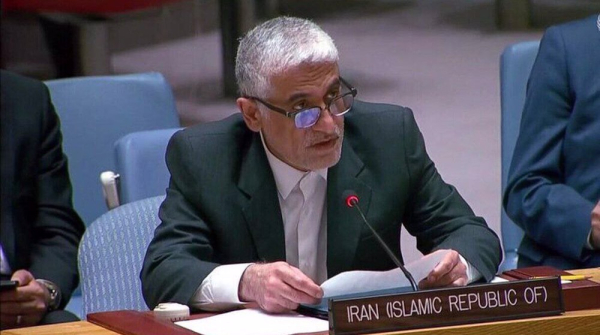
Iran's ambassador to the United Nations underlines that the Islamic Republic reserves all rights to duly confront the United States' seizure of Iranian vessels as part of Washington's continued illegal blockade against the country.
In a letter dated Wednesday, Amir Saeid Iravani said he was writing "to bring to the urgent attention" of the UN Security Council the "continuing internationally wrongful acts of the United States through yet another piracy-style seizure and deliberate targeting of commercial vessels, namely the M/T Majestic and M/T Tifani."
Iravani pointed to a public statement released earlier by a US attorney, describing it as "an explicit and deliberate admission of internationally wrongful conduct." He noted how the attorney had "boasted of the pirate-style seizure" of the two vessels and the subsequent stealing of 3.8 million barrels of Iranian oil.
"The US attorney’s statement clearly confirms that the United States armed forces have interdicted, boarded, and forcibly seized Iran’s commercial vessels on the high seas on the basis of their bullying attitude," the letter read.
He added, "Such conduct is nothing but another clear example of US addiction to lawlessness and constitutes a flagrant violation of the Charter of the United Nations, in particular Article 2(4)."
According to the letter, the actions "fall squarely within the definition of an act of aggression" under UN General Assembly Resolution 3314 of 1974, which defines aggression as the use of armed force by one state against another.
Such actions against vessels engaged in legitimate commercial activity also pose a direct threat to maritime safety and security, and escalate the volatile situation in the region, the ambassador underscored.
"In substance and effect, such actions are identical to state-sponsored piracy and terrorism, carried out under the guise of domestic processes that have no standing under international law," the letter added.
The United States bears full and undeniable international responsibility for the consequences of such atrocities, Iravani noted, stressing, "The Islamic Republic of Iran has every right, in accordance with international law, to counter these insolent actions."
He concluded by calling on the Security Council to condemn the seizures, demand the immediate and unconditional release of all seized vessels, cargo, and property, and take measures to prevent their recurrence.
The United States began taking such measures against Iranian vessels, despite President Donald Trump's announcement on April 7 of a two-week lull in unprovoked American aggression against the Islamic Republic.
Tehran has condemned the blockade as a violation of the terms of the ceasefire and reciprocated by closing down the strategic Strait of Hormuz to all traffic with the exception of the vessels that manage to obtain permission from relevant Iranian authorities for transit through the chokepoint.
IRGC Navy to confront any fresh American aggression with 'surprise tactics': Official
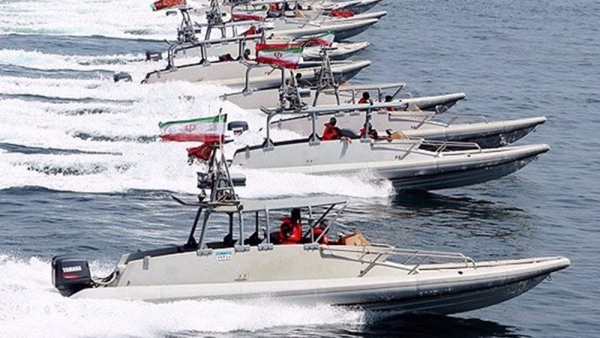
The Islamic Revolution Guards Corps (IRGC) Navy's deputy for political affairs says the naval force's "surprise tactics" await the United States in the event of any fresh miscalculation.
Mohammad Akbarzadeh made the remarks on Tuesday in the southern Iranian city of Minab, where more than 170 schoolchildren and staff were martyred on the first day of the latest bout of the US's and the Israeli regime's unprovoked aggression targeting the Islamic Republic on February 28.
"In the event of any [fresh] military action by the United States against Iran, the IRGC Navy will deploy its new capabilities," he said.
Dealing with such act of aggression, he added, the Navy would "employ its new cards, including in the field of smart targeting, and will set the massive vessels of the criminal regime ablaze with its fury and take them out of operation."
The Islamic Republic would also "utilize its other instruments of power across other resistance fronts,” the official concluded.
Iran's Armed Forces faced the aggression with at least 100 waves of decisive and retaliatory counterstrikes against sensitive and strategic American and Israeli targets across a vast expanse of the West Asia region.
The reprisal, which was partly conducted in cooperation with regional resistance groups, prompted the US to announce a two-weak lull in its attacks on April 7 before extending the ceasefire upon its expiry.
American officials, themselves, have admitted that the Islamic Republic continues to maintain substantial military capabilities, despite the aggression.
IRGC Navy vows to respond to any new act of aggression with new surprises
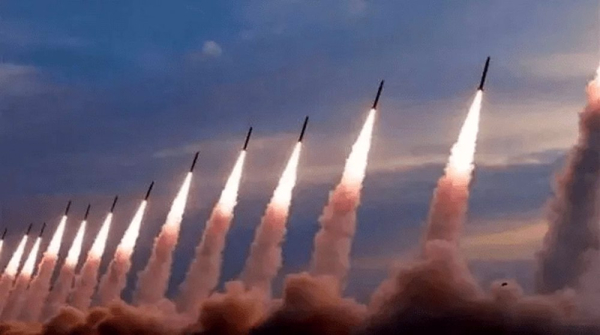
The political deputy chief of the Islamic Revolution Guards Corps (IRGC) Navy has warned that any fresh act of military aggression by the United States against Iran will unleash the country’s unforeseen capabilities.
Speaking on Tuesday night to a gathering in Minab at the city’s Martyrs’ Cemetery, Mohammad Akbarzadeh stated that if the US makes another miscalculation and launches an attack on Iran, the IRGC Navy will deploy its new assets, including advanced smart targeting systems.
“If America wishes to repeat its miscalculation and attack the Islamic Republic of Iran, the IRGC Navy will use its new cards — including in the field of smart targeting — and will burn the giant warships of the criminal regime in its fiery wrath, taking them out of operation,” he said.
The IRGC Navy official further emphasized that in the event of renewed US aggression, the Islamic Republic of Iran would also utilize other instruments of power across various resistance fronts.
Netanyahu attends 81st court session to answer corruption charges
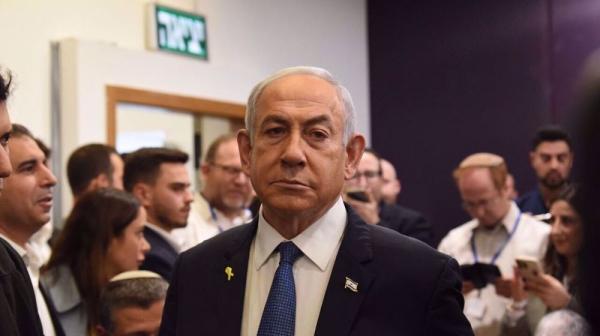
Israeli prime minister Benjamin Netanyahu appeared Tuesday before the District Court in Tel Aviv for the 81st time since his trial began in 2020, responding to corruption charges against him.
Tuesday’s session marked Netanyahu’s first court appearance in nearly two months, his last having taken place on February 24, shortly before US-Israeli aggression against Iran began on February 28.
The aggression started with airstrikes, assassinating the Leader of the Islamic Revolution Ayatollah Seyyed Ali Khamenei and senior Iranian officials and commanders.
Netanyahu had been scheduled to appear on Monday but requested the session be canceled, citing “security reasons.”
He is now in the final stage of his testimony, having already completed more than 80 days of hearings.
According to the prosecutor’s office, he still has approximately 11 full days of testimony remaining, along with a brief re-examination by his defense team.
“In the past two weeks, his hearings were canceled at his request, and since the start of the war with Iran, he has not testified, despite the resumption of all court sessions in Israel,” Israeli daily Maariv reported on Tuesday.
Netanyahu faces charges of corruption, bribery, and breach of trust in three cases, Cases 1000, 2000, and 4000, for which indictments were filed in November 2019.
Case 1000 involves allegations that Netanyahu and members of his family received expensive gifts from wealthy businessmen in exchange for favors.
In Case 2000, he is accused of negotiating with Arnon Mozes, publisher of Yedioth Ahronoth, for favorable media coverage.
Netanyahu is also scheduled to testify in Case 4000, in which he stands accused of bribery, fraud, and breach of trust.
According to the indictment, he maintained a bribery relationship with businessman Shaul Elovitch, the former owner of the Walla news website.
On November 30, 2025, Netanyahu requested a pardon from Israeli President Isaac Herzog without admitting guilt or stepping down from political life.
However, the so-called Israeli law does not permit a presidential pardon without an admission of guilt from the defendant.
Since the start of his trial in 2020, Netanyahu has denied all charges, describing them as a “politically motivated campaign” aimed at removing him from office.
In addition to the corruption charges, Netanyahu has been wanted since 2024 by the International Criminal Court (ICC) for war crimes and crimes against humanity in Gaza, where more than 72,000 Palestinians have been killed and 172,000 wounded in the genocidal war since October 2023.
Press TV’s website
Iran: Responsibility for any disruption in Strait of Hormuz lies squarely with US aggression
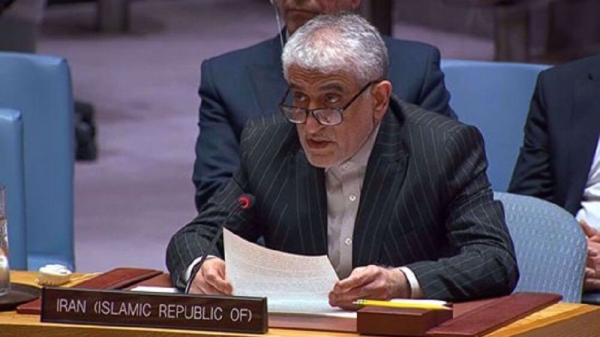
Iran has categorically stated that any disruption or obstruction in maritime traffic through the Strait of Hormuz and surrounding waters is the direct responsibility of the United States and its allies, whose reckless and illegal actions have turned a vital international waterway into a zone of heightened tension and danger.
Speaking at a United Nations Security Council high-level open debate on the safety and protection of waterways in the maritime domain on Monday, Iran’s Ambassador and Permanent Representative to the UN, Amir Saeed Iravani, blamed Washington and its allies for escalating threats to maritime security.
“Responsibility for any disruption, obstruction or other interference in maritime transport in the Persian Gulf, the Sea of Oman and the Strait of Hormuz lies directly with the aggressors, namely the United States and its supporters, whose illegal and destabilizing actions have escalated tensions and endangered maritime safety and freedom of navigation,” Iravani stated.
The Iranian envoy emphasized that the Islamic Republic has always upheld freedom of navigation and maritime security in the Persian Gulf, the Strait of Hormuz and the Sea of Oman.
For decades, Iran has responsibly fulfilled its duties as a coastal state, guaranteeing the safety of sea lanes and the smooth flow of international shipping, he said.
Iravani pointed out that the current crisis stems from the widespread and unjustified war of aggression launched by the United States and the Israeli regime against Iran since February 28.
“Since February 28, the United States and the Israeli regime have waged an unwarranted large-scale war of aggression against Iran,” Iravani said.
These acts constitute a blatant violation of international law and the UN Charter, particularly Article 2(4), directly undermining maritime security and threatening regional and global peace, Iravani said.
He warned that the Strait of Hormuz has been increasingly militarized by the US and its allies to facilitate hostile operations against Iran, including the movement of military equipment aimed at aggression.
This dangerous militarization has exposed international shipping to unprecedented risks in the Persian Gulf and the Strait of Hormuz.
“Meanwhile, the United States has continued its international wrongdoing by imposing a so-called naval blockade, illegally seizing Iranian merchant ships, and detaining their crews,” Iravani declared.
“These dangerous and escalating actions violate international law, violate the Charter of the United Nations, constitute the crime of piracy, and are defined as acts of aggression under Article 3(c) of General Assembly Resolution 3314 of December 14, 1974,” he said.
Iran strongly condemns these illegal measures and has called on the Security Council to take a decisive stand and condemn the aggressors, ensure full accountability, and demand the immediate and unconditional release of all seized Iranian ships and crews.
As the primary coastal state whose territorial sea includes the Strait of Hormuz, Iran has implemented necessary and lawful practical measures in full accordance with international law to counter emerging threats, safeguard safe navigation, and prevent the vital waterway from being misused for hostile military purposes.
These steps strike a proper balance between the security needs of the coastal state and the continued safe passage of ships in an extremely tense environment, the ambassador explained.
Iravani noted that Iran is not a party to the 1982 United Nations Convention on the Law of the Sea and is therefore not bound by its treaty provisions, except where they reflect generally recognized customary international law.
“Enduring stability and security in the Persian Gulf and the wider region can only be achieved through a lasting and permanent cessation of aggression against Iran, accompanied by credible guarantees of non-repetition and full respect for Iran’s legitimate sovereign rights and interests,” he stressed.
The Iranian ambassador categorically rejected all accusations leveled against Iran during the meeting, describing them as baseless claims lacking any legal foundation and designed solely to divert attention from the criminal actions of the United States and its allies.
“These claims once again reveal their double standards,” Iravani said.
“Their so-called concern for maritime safety is neither genuine nor consistent with their own actions. They speak of protecting navigation rights while deliberately ignoring the United States’ illegal naval blockade and its recent terrorist attacks on Iranian merchant ships — acts that bear all the hallmarks of piracy and hostage-taking,” he said.
Iravani made it crystal clear that any attempt to shift blame onto Iran is invalid and without merit. The responsibility for any disruption in the Persian Gulf, Sea of Oman, or Strait of Hormuz rests entirely with the real aggressors — the United States and its supporters — whose destabilizing policies continue to jeopardize international maritime security.
Post-war transit through Hormuz only possible under Iran's security protocols: Defense official
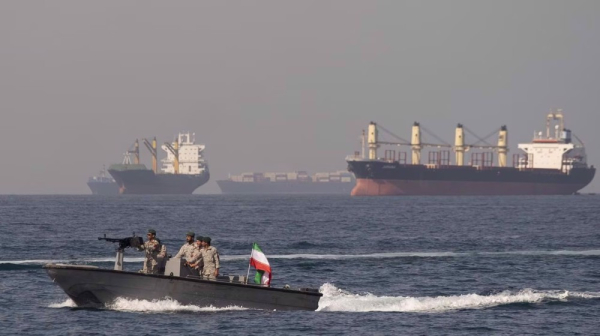
An Iranian deputy defense minister says the country would allow passage through the Strait of Hormuz in the Persian Gulf after the conclusion of the US-Israeli aggression under protocols that protect Iran’s security.
Brigadier General Reza Talaei Nik told a meeting of defense ministers of the Shanghai Cooperation Organization in Bishkek, Kyrgyzstan, on Tuesday that Iran recognizes international concerns about the current restrictions it has imposed on passage through the Strait of Hormuz.
Talayi Nik said, however, that the restrictions are a response to the US-Israeli attacks on the country, which began in late February and halted with a ceasefire on April 8.
The general said that Iran would allow commercial shipping through the Strait, a vital conduit for global oil and gas shipments, if the war of aggression stops permanently.
“Allowing the smooth transit of commercial ships will be on the agenda after the end of the war, provided that protocols that do not jeopardize Iran's security are observed,” he said.
The comments come amid efforts in the Iranian government and parliament to introduce a new legal regime for transit in the Strait of Hormuz.
Authorities say under the new system, a total ban will be imposed on ships owned by or linked to the Israeli regime, while ships related to hostile countries and their affiliates will face restrictions.
Iran is also planning to introduce a toll payment system for passage through the Strait with the aim of compensating for the losses suffered because of years of economic sanctions imposed on the country by Western governments.
Current restrictions on passage through Hormuz have caused a major surge in international oil prices, increasing pressure on the United States and Europe.
Experts believe the West should reach a compromise with Iran to allow transit via the Strait to return to normal levels.
Press TV’s website
The Knowledge of Imam Reza (AS)

He inherited the knowledge of his grandfather, the Messenger of God (PBUH), and thus became its pioneering source that quenched the thirst for knowledge. History narrates many of his scientific positions and intellectual discourses in which he triumphed over the opponents of the divine message and excelled in various branches of knowledge that provided knowledge seekers and thinkers of the time.
Imam Musa al-Kazim (a.s.) is reported to have said to his children many times: "Your brother Ali ibn Musa is the learned scholar of the family of Muhammad (s.a.w.s.), so you can ask him about your religion. Memorize what he tells you, because I have heard my father Ja'far ibn Muhammad say more than once: The scholar of the family of Muhammad is in your loins, I wish I could meet him."
Ibrahim ibn Abbas Sawli is quoted as saying: "I never saw Imam Reza (a.s.) not have an answer to a question that was asked of him, and I did not see his contemporary more knowledgeable than him. Al-Ma'mun tested him by asking him almost everything and always gave him an answer, and his answer and model were always taken from the Holy Quran."
Birthday of Imam Reza
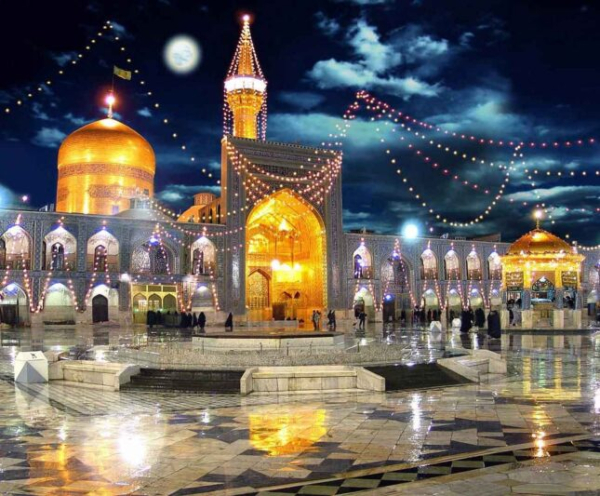
The date of birth of Imam Reza (AS) was 11th Dhul-Qa'dah, 148 AH, in Medina. Every year, on the day of Imam Reza's (AS) birth, celebrations and joyous events are held in Iranian cities, especially in the holy city of Mashhad (AS), the place of his beloved shrine. People from different cities travel to Mashhad to visit Imam Reza (AS) and seek blessings on this blessed day.