zarezadeh
‘Black day for US, Israeli air forces’: Iran downs 2 fighter jets, 2 missiles, 3 drones in single day
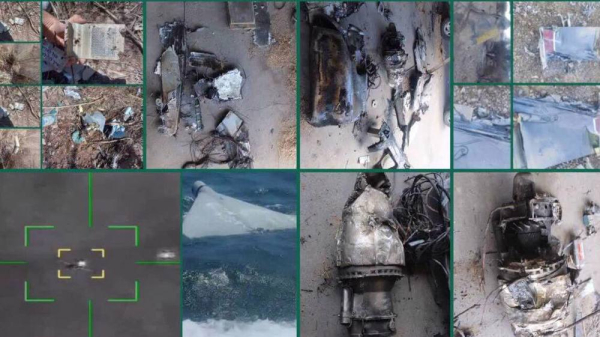
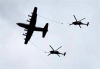
Iranian armed forces announced that its air defense forces downed at least two fighter jets and five drones and missiles on Friday, describing it as a "black day" for the American and Israeli air forces.
In a statement released Saturday, the Islamic Revolution Guards Corps (IRGC) public relations wing detailed a series of successful interceptions across multiple Iranian provinces.
The IRGC's Aerospace Defense Force fighters successfully hunted and destroyed two cruise missiles in the skies of Khomein and Zanjan, according to the statement.
Additionally, two MQ-9 attack drones were shot down in the skies of Isfahan, and one Hermes drone was destroyed in the skies of Bushehr.
The IRGC said these interceptions were carried out using its new advanced air defense system, operating under the control of the country's integrated air defense network.
In a separate and particularly significant engagement, the IRGC's Aerospace Defense Force successfully destroyed an advanced enemy fighter jet in central Iran.
The hunt for the missing pilot continues with reports that he failed to eject safely.
Also on Friday, Iran's Army announced that the Islamic Republic's integrated air defense network downed an American A-10 Warthog warplane over the country's southern waters near the Strait of Hormuz.
The Army stated that the targeted aircraft "was tracked and engaged by the Army Air Defense Force's systems, and subsequently crashed into the waters of the Persian Gulf."
The IRGC statement warned that Iran's air defenses are becoming increasingly formidable as the war imposed on the Islamic Republic by the American-Israeli coalition continues.
"With the continued innovative, sustained, and precise monitoring by Iran's air defense heroes, the skies of Iran will become increasingly unsafe for the fighter jets of the aggressor enemy," the statement read.
Iranian armed forces continue to carry out retaliatory military operations against the United States and the Israeli regime in response to the aggression against the country, particularly the civilian infrastructure in different provinces.
On Friday, the IRGC and the Iranian Army carried out multiple attacks as part of Operation True Promise 4, which was launched immediately after the US-Israeli coalition carried out an unprovoked act of aggression against the Islamic Republic of Iran on February 28.
Iranian armed forces have so far carried out 93 waves of missile and drone strikes with advanced weaponry targeting Israeli military facilities in the occupied territories, as well as US occupation bases and assets scattered across the West Asia region.
On March 19, Iran achieved what no country had before: a successful engagement against the US Air Force’s crown jewel, the F-35 Lightning II stealth fighter, using the Majid infrared-guided system in central Iran.
For nearly two decades, the F-35 program represented the zenith of US military hegemony, a multi-trillion-dollar, fifth-generation platform designed to penetrate the world’s most sophisticated air defenses with impunity.
Other jets in the F-family have also been engaged and struck over the past month, including several F-15s, F-16s, and F-18s, intercepted by Iran’s advanced integrated air defense systems, which experts note have improved significantly since the 12-day war.
Iranian defenses have also destroyed more than a dozen MQ-9 Reaper drones, valued at roughly $30 million each and forming the backbone of US unmanned surveillance and strike operations.
As of Friday, the IRGC announced that the total number of drones downed by the Joint Air Defense Headquarters’ integrated network has crossed 150.
Press TV’s website
The fallout from the F-15 crash is worse for the US than initially thought, by Ian Wells
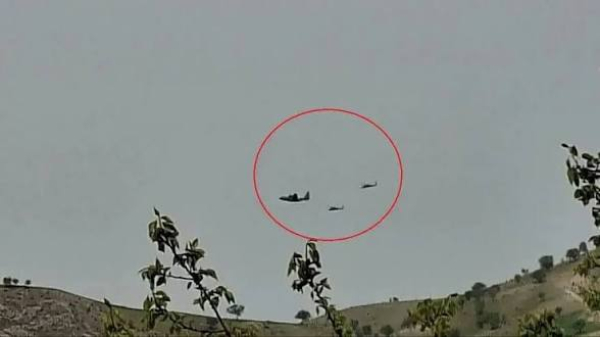
The fallout from the F-15 crash for the US is far worse than initially thought, BBC News partner CBS News in the US reported, citing two US officials.
In addition to the F-15A being shot down on the morning of April 3, an A-10 Warthog that was being used to search and rescue the jet was also hit and damaged. The pilot ejected and was successfully rescued.
Two helicopters were also involved in the rescue operation and recovered the F-15 pilot who ejected, but the search for the second officer is ongoing.
The helicopter carrying the rescued pilot was then hit by small arms fire, wounding several crew members.
This series of events shows that despite Donald Trump's recent claims that Iran cannot take any action against American aircraft in its skies, the dangers are still very real and serious.
Helicopters in rescue operation for US pilot spark reaction
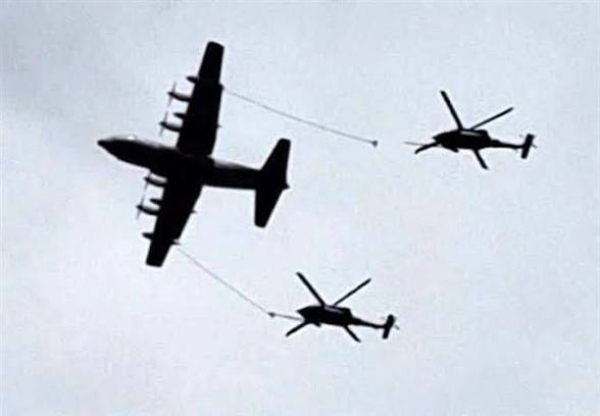
Videos of small arms fire on US helicopters in Iran during the rescue operation for the downed F-15 fighter pilot have been recorded, showing officers and at least one civilian firing a shotgun.
US officials told NBC that two military helicopters came under light fire during the rescue operation. CBS, the BBC’s US news partner, said that the helicopter carrying the rescued F-15 pilot came under small arms fire and several crew members were injured, but the helicopter landed safely.
The search for the second occupant, a weapons systems officer, is continuing on both sides. The deputy governor of Kohgiluyeh and Boyer Ahmad said: “The efforts of law enforcement, security and public forces to identify and arrest the missing pilot are continuing.”
American sources say that all the injured troops have received first aid and will be transferred for further medical attention.
Images of the rescue operations in Khuzestan, Kohgiluyeh and Boyer Ahmad on the last day of the Nowruz holiday have been widely viewed and have provoked reactions from citizens.
Wave 93: Israeli military support centers targeted in joint retaliatory strike
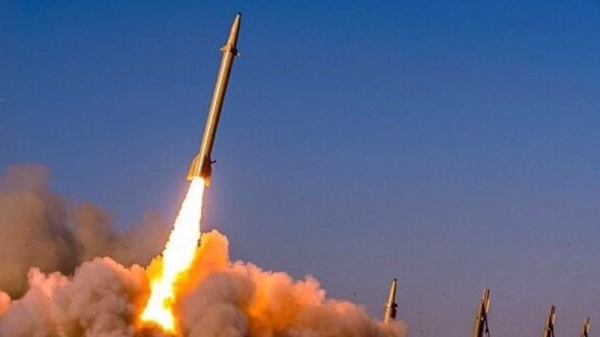
Iranian and allied resistance forces executed Wave 93 of their retaliatory campaign against US-Israeli aggression, dealing precise blows to critical Israeli military staging grounds deep inside the occupied territories.
Wave 93 of Operation True Promise 4 was executed on Friday afternoon against targets in the north and the heart of the occupied territories, and dedicated to the great mujahid Sayyid Hassan Nasrallah and Sheikh Ahmed Yassin, according to a statement by the Islamic Revolution Guards Corps.
During this fierce assault, the centers of gathering and combat support of the Zionists in Western Galilee, Haifa, Kafr Kanna, and Krayot were precisely hit, the statement noted.
Ma'ariu: Iran considers itself in a position of power and is not willing to negotiate
The Zionist newspaper Ma'ariu reported today, citing US intelligence officials, that the Islamic Republic of Iran is not ready to enter into serious negotiations.
These officials, pointing out that Iran continues to harden its positions for this reason, stated: This approach has two main reasons: first, the high level of distrust in Trump and the United States and at the same time, the feeling of acting from a position of power.
According to US intelligence officials, some senior officials also doubt that a lasting agreement can be reached, because there is a fear that military attacks will resume after the agreement.
Foreign media surprised by the jump in the rate of Iranian missile launches at Israel
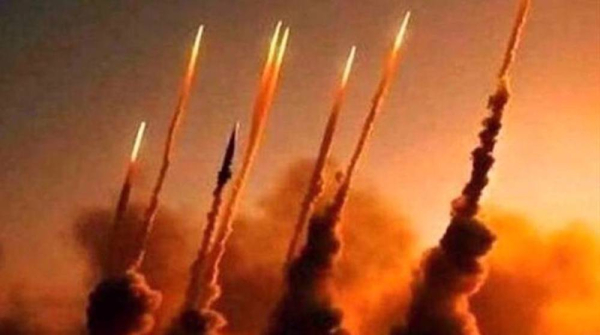
Media outlets in the West Asian region reported that the rate of missile launches by Iran towards the positions of the Zionist regime has increased surprisingly in the past 7 days.
The Turkish network "TRT" reported: "Iran fired 200 missiles at Israel last week, which is equivalent to 31 percent of the total 585 missiles fired at the regime in the first 4 weeks of the war."
The Israeli newspaper "Jerusalem Post" also admitted: "Iran carried out the most unprecedented missile attack in the history of its conflict with Israel on the eve of Passover."
Turkey's "Anatolia" also wrote that "despite the claims of American and Zionist officials, Iran's operational capacity and striking power have been fully maintained."
The West Asian War Has Caused the Biggest Energy Shock in History

The heads of the world’s three key economic and energy institutions said in a joint statement that the ongoing war in West Asia has led to “one of the largest supply shortages in the history of the global energy market” and is already having devastating effects on the economies of vulnerable countries, especially low-income energy importers.
For this reason, the International Energy Agency (IEA), the International Monetary Fund (IMF) and the World Bank Group (WBG) announced the formation of a coordination group to manage the consequences of this crisis.
In part, the statement states that “the war in the Middle East has caused major disruptions to people’s lives and livelihoods in the region, and its impact is significant, global and highly asymmetric.” Therefore, the group is tasked with assessing the severity of the impacts in different countries, estimating financial needs and, in cooperation with regional and international partners, providing targeted support to countries at risk.
Economic experts consider the formation of this coordination group to reflect the unprecedented severity of the current crisis and concerns about its spread to other sectors of the global economy.
White House growing frustration over US ability to reopen Strait of Hormuz
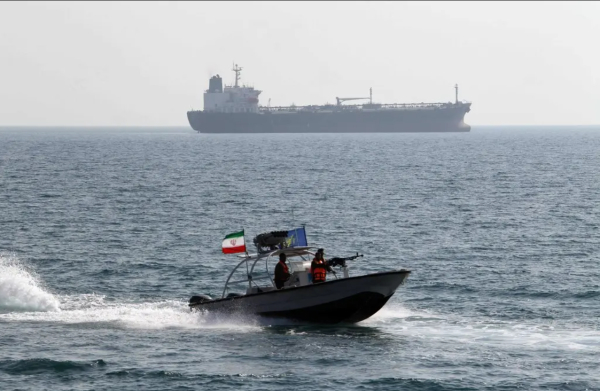
CNN reported that Donald Trump and his administration are increasingly convinced that they cannot declare the reopening of the Strait of Hormuz a prerequisite for declaring the end of the war mission in Iran.
Donald Trump and his administration have tried on several occasions to remove responsibility for ensuring the passage of ships through this vital waterway for global trade from their administration and hand it over to other countries, especially European countries.
Many analysts have warned the Trump administration in recent days that there is no reasonable and safe option for the US to return the Strait of Hormuz to its pre-war status.
Inside the White House, many senior officials understand that reopening the vital waterway, which is under Tehran’s control, is essential not only to end the war but also to reduce skyrocketing oil and gasoline prices.
Spokesperson for the Ministry of Defense: Punishment of the Enemy Continues
Sardar Reza Talaeinik: The enemy has suffered a heavy defeat in the disintegration and collapse of the Islamic Republic of Iran, weakening the armed forces, creating a split in national sovereignty, creating internal chaos, opening the strategic Strait of Hormuz, and also in pushing the people away from the field of resistance and defense.
Completing the punishment of the enemy, obtaining compensation or its equivalent destruction, and completing the escape of American soldiers from the region and the complete destruction of American bases, as well as ensuring that there will be no new war against Iran and the region with field sovereignty and the joint battle of the fighters, the people, and the resistance front will continue until the enemy's complete surrender.
Bloomberg: Iran has set up a “toll” in the Strait of Hormuz
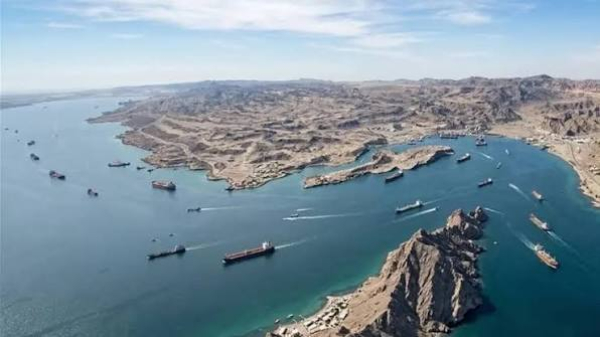
According to a Bloomberg report, the Islamic Republic of Iran has effectively set up a “toll booth” in the Strait of Hormuz, according to which ships belonging to friendly and allied countries can pass through the strategic waterway of the Strait of Hormuz by paying a fee and completing certain formalities.
According to the report, ships are required to provide complete ownership information and details of their cargo to an entity affiliated with the Islamic Revolutionary Guard Corps before passing.
After registering the information, these ships are subject to security checks and then the negotiation phase begins to determine the passage fees.
The fee received for tankers usually starts at around one dollar per barrel of oil.
The Bloomberg report indicates that these payments are made in non-cash form and mainly using Chinese yuan or digital currencies (especially stablecoins).
Once payment is confirmed, a permit code is issued to the vessel and a naval escort is provided by the Iranian military for its safe passage through the Strait of Hormuz.
In some cases, vessels are asked to temporarily re-flag countries such as Pakistan in order to qualify for a permit.