zarezadeh
Hamas: Deal reached with Israel to release 620 Palestinians following delay
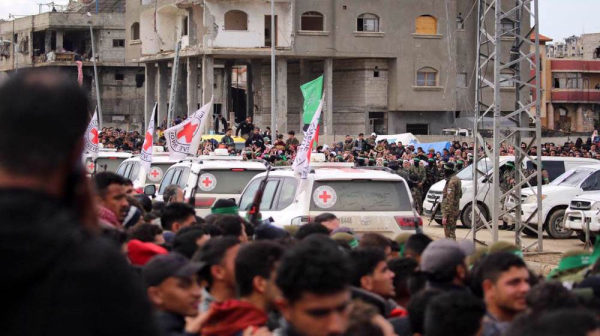
Days after Israel failed to release hundreds of Palestinians in exchange for Israeli captives, Hamas says it has reached a new agreement with mediators in Egypt to bring the abductees home.
The Egyptian-brokered agreement between Hamas and Israel will also see the exchange of the final four bodies of Israeli captives due to be released in the first phase of the ceasefire deal.
Hamas spokesperson Hazem Qassem said on Wednesday that the resistance fighters would hand over the bodies of the captives on Thursday “simultaneously with the occupation’s release of the postponed batch, in addition to the release of the equivalent number of women and children who were arrested after October 7 in the Gaza Strip.”
There “are clear guarantees from the mediators” that Israel must abide by what has been agreed upon, Qassem said.
The body of Israeli captive Ohad Yahalomi is one of four set for a handover in Gaza on Thursdays, according to Hamas officials.
Israeli media reports said the bodies of the captives would be handed over to Egyptian authorities.
Israel had delayed the release of the Palestinian prisoners after Hamas handed over six Israeli captives from Gaza on Saturday.
Hamas said the delay is a “serious violation” of a ceasefire that largely halted Israel’s brutal war on the Gaza Strip after more than 15 months.
The truce deal, which took effect on January 19, has also seen 25 Israeli captives released alive so far in exchange for hundreds of Palestinian prisoners.
The latest agreement would complete the current six-week first phase of the deal which will expire this weekend.
During the first phase, Hamas is returning 33 captives — including eight bodies — in exchange for nearly 2,000 Palestinian prisoners.
The latest exchange could also pave the way for negotiations of a second phase, which were supposed to begin weeks ago, but never did.
The second phase was to include a permanent end to Israel’s military campaign, a full withdrawal of the regime’s forces from Gaza and the release of around 60 remaining captives held by Hamas.
And, the third phase of the deal was to include the reconstruction of Gaza, which has been decimated by Israel.
According to UN satellite data (UNOSAT), two-thirds of Gaza's pre-war structures – over 170,000 buildings – have been damaged or flattened by the regime’s military forces.
Press TV’s website
Palestinian prisoners freed as Hamas releases bodies of Israeli captives

number of Palestinian prisoners have been freed by the Israeli regime as the Gaza Strip-based resistance movement Hamas hands over the bodies of four Zionist captives to the International Committee of the Red Cross for transfer to the regime.
The prisoners reached the city of Ramallah in the West Bank on board Red Cross vehicles on Thursday after departure from the Ofer Prison in the occupied territory.
The exchange wrapped up the first phase of captive/prisoner exchange between the two sides, which has been underway as part of a ceasefire agreement that began being implemented last month in the hope of ending the regime’s 15-month-plus war of genocide against Gaza.
The released Palestinians are part of more than 600 prisoners, who are slated to be free by the regime for the first phase to wind down.
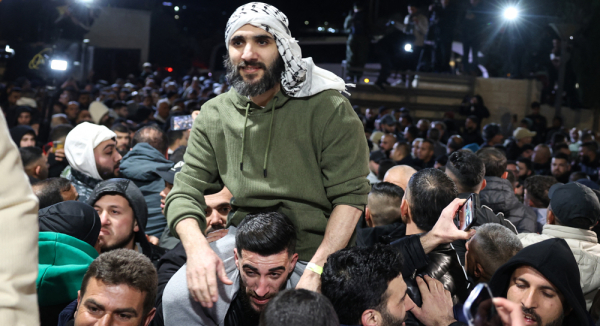
The prisoners were greeted with cheers from hundreds of supporters as they arrived in Ramallah, part of a larger celebration known as Toufan al-Ahrar (the Flood of the Free).
Some of the released prisoners, wearing green jackets and keffiyehs, a type of Palestinian shawl, were lifted high in a moment of jubilation by the crowd, which had defied the regime’s threats and warnings against their coming together to welcome the freed prisoners.
Over all, the first phase saw Hamas handing over 33 captives, including eight bodies, in exchange for nearly 2,000 Palestinian prisoners.
The Israeli regime had delayed the release of the Palestinian prisoners after Hamas handed over six Israeli captives from Gaza on Saturday.
As the ceasefire deal nears its expiration next Saturday, there is uncertainty over whether an extension would be agreed on or if negotiations for a second phase of the deal would commence amid Tel Aviv’s dilatory and obstructionist efforts.
A potential next phase could involve release of the remaining 59 Zionist captives, who are held in Gaza.
It is also expected to feature a full Israeli withdrawal from Gaza, and complete cessation of the regime’s aggression against the coastal territory.
Press TV’s website
Hamas affirms commitment to ceasefire, says negotiations only path to free Israeli captives
The Palestinian Hamas resistance group has expressed its "full commitment" to a ceasefire deal, emphasizing that negotiations are the only way to secure the release of the remaining Israeli captives.
Hamas made the announcement on Thursday, as Israel began releasing 642 Palestinians after the resistance group handed over the bodies of four Israeli captives as part of the final prisoner swap in the first phase of the ceasefire deal.
“We renew our full commitment to the ceasefire agreement with all its details and provisions and our readiness to enter into negotiations related to the second phase of the agreement,” Hamas said in a statement.
It also noted that the only way to free the Israeli captives still held in Gaza is through “negotiation and commitment” to the ceasefire agreement.
Israeli authorities’ “failed" attempts to obstruct the prisoner exchange have left the regime with “no choice” but to begin talks for the second phase of the truce, it added.
Israel launched a genocidal war on the Gaza Strip on October 7, 2023, after Hamas carried out a historic operation against the usurping entity in retaliation for its intensified atrocities against the Palestinian people.
The Tel Aviv regime failed to achieve its declared objectives of freeing captives and eliminating Hamas despite killing at least 48,348 Palestinians, mostly women and children, in Gaza.
Israel accepted Hamas’ longstanding negotiation terms under the Gaza truce, which began on January 19.
The ceasefire consists of three phases, each lasting 42 days. In phase one, a total of 33 Israeli captives, including eight bodies, were released in exchange for some 1,900 Palestinian abductees held in the regime's jails.
Press TV’s website
Tawaf from the Second Floor of the Masjid Al Haram
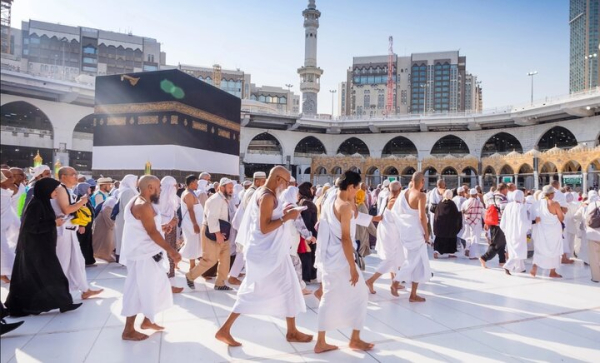
Is Tawaf from the second floor sufficient for those who are excused, or is it necessary to have a deputy? And is it a condition to precede and delay the Tawaf around the Kaaba?
Answer:
For those who are unable to perform Tawaf around the Kaaba, as a precaution, they should perform Tawaf from the upper floor and have a deputy perform the Tawaf, and neither of them is a condition to precede or delay the Tawaf by a deputy.
Israel planning ‘unprecedented’ repressive measures before Ramadan: Jerusalem governorate
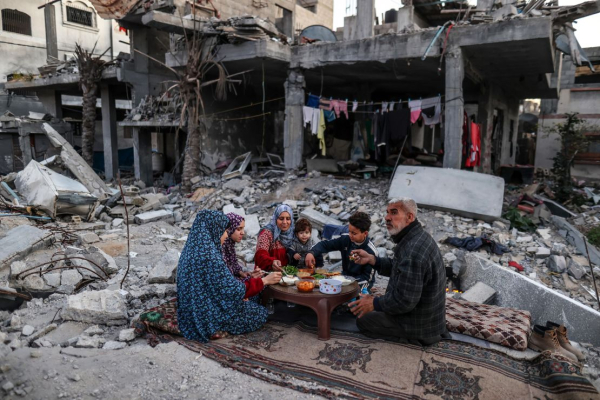
Israeli authorities are preparing to “impose unprecedented repressive policies”, in advance of the holy Muslim month of Ramadan, which is expected to start on Saturday, to further isolate occupied East Jerusalem and its Palestinian surroundings, according to the Jerusalem governorate.
The Palestinian Authority’s governing body said in a statement that occupation authorities are planning “a series of racist and provocative measures”, including limiting the number of Muslim worshippers at Al-Aqsa Mosque compound.
It said recently released Palestinian prisoners would be banned from entering Al-Aqsa, and entry for worshippers from the occupied West Bank would be restricted based on age, with only men aged 55 and above and women more than 50 years of age allowed in.
Israeli forces are also intensifying their presence by deploying 3,000 armed personnel at checkpoints surrounding East Jerusalem on a daily basis and tightening their grip on 82 military checkpoints, including by using earthen blockades, iron gates, security cameras and intrusive searches.
“The governorate urges Arab and Islamic nations, as well as the international community, to take responsibility and act urgently to halt these violations.”
Iran’s enemies have yet to receive ‘serious’ blows: IRGC chief
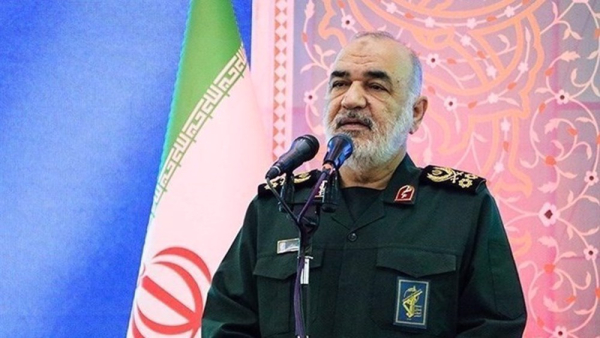
The chief commander of the Islamic Revolution Guards Corps (IRGC) has lauded the defense and military capabilities of the country, underlining that Iran’s enemies have yet to receive “serious” blows notwithstanding a number of retaliatory strikes and operations over the past year.
Major General Hossein Salami made the remarks on Wednesday as he addressed IRGC units and Basij volunteer forces partaking in the joint drills, codenamed Payambar-e-A’azam (The Great Prophet) 19, in Markazi Province.
Salami said Iran's real power can shake the world, adding that the enemies should beware the country’s blows as in Operation True Promise 1 and 2, which were carried out against the Israeli-occupied territories last year.
“Iran is a single and powerful soul and can shake the world. Iran is great and the enemies have not yet received serious blows from Iran, and everything they have seen so far in the True Promise operations has been only a warning and a prototype,” the IRGC chief said.
“If the enemies do not learn a lesson from the [Islamic Republic’s] history of 46 years and continue their wickedness, they should expect the humiliation and ignominy that they have ... experienced in the past 46 years; [as] the Islamic Republic of Iran is moving forward.”
Underlining that Iran has grown stronger over the years and is independent and powerful, Salami said the Islamic Republic adheres to a school of thought that cannot be taken away by the enemies and such concepts as struggle, independence and, freedom are among its all-time ideals.
“The United States and Israel hatched plots to politically isolate the Iranian people and attempted to shake the hearts of the nations, especially Iran, with strict psychological operations, but they failed in every situation they created,” the IRGC chief said.
Salami also emphasized that Washington and Tel Aviv failed to defeat the Gaza Strip and the Palestinian resistance in the besieged territory.
Iran launched a barrage of missiles toward the Zionist entity’s military and intelligence and spying bases in retaliatory attacks in July and October last year.
The operations came in support of Palestinians in Gaza and in response to the regime’s assassinations of Hamas’s chief Ismail Haniyeh, Hezbollah’s leader Sayyed Hassan Nasrallah, and IRGC commander Abbas Nilforoushan.
Press TV’s website
What are the health benefits of fasting?

Fasting can have many health benefits and even extend your lifespan. However, if you have a medical condition, you should consult your doctor about not fasting and only fast if your doctor allows it. Here are some of the health benefits of fasting.
Benefits of Fasting: Prevents Diabetes by Reducing Insulin Resistance
Several studies have shown that fasting can improve blood sugar control. This is especially beneficial for people who are at high risk of developing diabetes. A study in 10 people with type 2 diabetes found that short-term intermittent fasting significantly reduced blood sugar levels. On the other hand, one study found that intermittent fasting and fasting every other day were as effective as calorie restriction in reducing insulin resistance.
Reducing insulin resistance can increase the body's sensitivity to insulin, which allows the body to move glucose from the bloodstream into the cells. In addition to its potential blood sugar-lowering effects, fasting can also help stabilize blood sugar levels and prevent spikes. Keep in mind that these effects can be different for men and women. For example, one study found that fasting helped improve blood sugar control in women but not in men.
Improves overall health by preventing inflammation in the body
Although acute inflammation is a natural immune process that is activated to fight infections, chronic inflammation can pose many risks to your health. Research suggests that inflammation can play a role in people with chronic diseases such as heart disease, cancer, and rheumatoid arthritis. Some studies suggest that one of the benefits of fasting is that it can help reduce inflammation levels in the body and promote health.
A study in 50 healthy adults found that intermittent fasting for one month significantly reduced levels of inflammatory markers. Additionally, an animal study showed that following a low-calorie diet to mimic the effects of fasting was effective in reducing inflammation levels and was also very beneficial in treating MS, a chronic inflamm
Ramadan is the month of God's hospitality
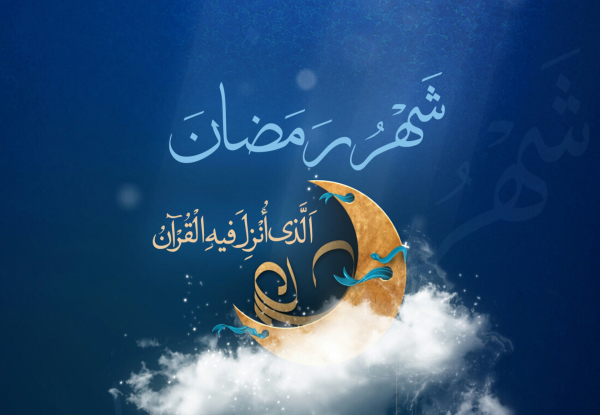
In Ramadan, believers are invited to God's hospitality, and this hospitality has the following characteristics:
1- The host is God and He has personally invited the guests.
2- The means of hospitality are the Night of Power, the revelation of the Quran, the descent of angels, the acceptance of prayers, the tenderness of the soul, and distance from hell.
3- The time of hospitality is the month of Ramadan, which according to narrations, the beginning of which is mercy, the middle of which is forgiveness, and the end of which is reward.
4- The manner of hospitality is such that the guests' needs for a year are met in it, and the earth is adorned with the descent of angels on the Night of Power.
5- The food of this month is the food of the soul, which is necessary for spiritual growth, not food for the body. The grace of the food of this hospitality is the verses of the Quran, the recitation of one verse of which in the month of Ramadan is like reciting the entire Quran in other months.
This feast has no resemblance to worldly feasts. God, the All-Knowing, the Rich, the Creator, the Eternal, the Mighty, and the Glorious, becomes the host of ignorant, poor, mortal, created, and humiliated humans, and says: I will answer your prayers and I will grant the reward of glorification for every soul that dies in the month of Ramadan.
Muhammad ibn Ali al-Baqir (peace be upon him)

Muhammad ibn Ali al-Baqir (peace be upon him)
Muhammad was born in Medina around 676. In 680, as a young child, he witnessed the Battle of Karbala, where his grandfather Husayn ibn Ali (peace be upon him) and most of his relatives were massacred by the forces of the Umayyad Caliph Yazid ibn Muawiyah (r. 680–683). After his father's martyrdom around 712, Muhammad (peace be upon him) was recognized by most of his father's followers as the next Imam.
Muhammad al-Baqir lived a pious and scholarly life in Medina, attracting a growing number of followers, students, and visitors. During his nearly twenty-year imamate, he is considered to have laid the doctrinal and religious foundations of Twelver Shiism. He can also be considered the father of Ismaili and Zaydi jurisprudence. He ultimately contributed significantly to the Twelver interpretation of the Quran. Most of Imam Baqir's disciples were based in Kufa, in present-day Iraq, many of whom later became prominent Shia jurists and traditionists. Some of these, such as Zurarah ibn Ayan, may have occasionally disagreed with Al-Baqir, who would not have approved such independent views if they had gone beyond the general theological and legal framework presented by the (Shiite) Imams. In Sunni Islam, Imam Baqir is regarded as an authority on Sharia and the Prophetic tradition.
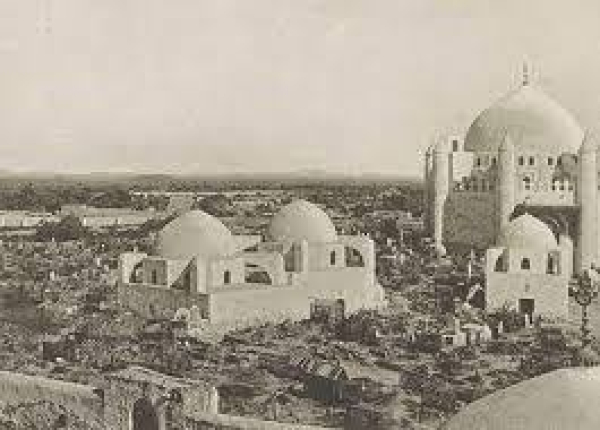
According to most Shia accounts, Imam Muhammad Baqir died around 732 and was poisoned by the Umayyads. He is buried in the Baqi' cemetery in Medina, but the shrine over his grave has been destroyed twice by Wahhabis. Imam Baqir was succeeded by his eldest son, Ja'far al-Sadiq, who further developed Shia theology and law.
Moral Advice of Allama Hassanzadeh Amoli
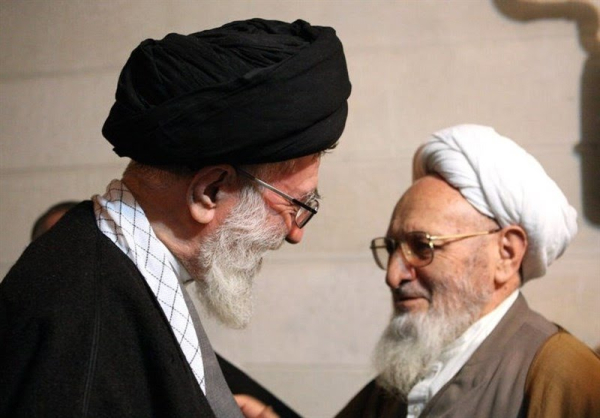
Moral Advice of Allama Hassanzadeh Amoli
In his book "Liqa' Allah", which he wrote about 53 years ago, Allama Hassanzadeh Amoli gives fourteen pieces of advice to those interested in monotheistic conduct.
In his book "Liqa' Allah", Allama Hassanzadeh Amoli gives fourteen pieces of advice to those interested in monotheistic conduct. He wrote this treatise in 1389 AH (53 years ago). On the eve of the Arbaeen, the passing of that master of arts, we review his humanizing and instructive advice below:
1. Continuous reading and constant familiarity with the Quran: "The closer you get to the Quran, the closer you get to the perfect human being. Look at the pleasure and benefits you get from the Quran! Its truths are the degrees of essence and the steps of ascension."
2. Constant ablution: "O friend! Know that ablution is light and persistence in purity will elevate you to the world of holiness. This commandment of great benefit is proven by its people; you should be careful about it."
3. Eating too much: "O friend! Too much food kills the heart and will cause rebellion and unbridledness. Hunger is one of the characteristics of a believer."
4. The Messenger of God (PBUH) said: "Do not speak excessively except in the remembrance of God, for much speech that does not include the remembrance of God hardens the heart."
5. Self-examination: Imam Kazim (AS): "He who does not examine himself every day is not one of us. If he has done a good deed, he should ask God to increase it, and if he has done a wrong deed, he should seek forgiveness and repent."
6. Meditation: "Be mindful of yourself! Be mindful of yourself! Be mindful of yourself! Mindfulness means that the servant knows that God is a rival to him and close to him, and that He knows his actions, sees his movements, hears his words, and is aware of his secrets, and that he cannot hide himself from God and escape from His authority.
7. Observing politeness in the presence of God: "Imam Jawad (a.s.) explained the truth of politeness and said: Recite the Quran as it was revealed, narrate our words as we have spoken them, and call upon God as you are in need and in need of Him."
8. Izlat: "The main meaning of Izlat is the separation of the senses, to solitude, from the possession of the senses; because every calamity, temptation, and calamity that the soul is afflicted with, the senses are involved in it. With solitude and separation of the senses, the soul's support from the world and the devil, desires and lusts, is cut off.
9. Tahajjud: God Almighty's command to His Prophet to reach the praised station:
And from the night, you pray therein as a voluntary prayer for you, perhaps your Lord will raise you to a praised station (Al-Isra, 79). And the reason for the pious enjoying the blessings of the hereafter is introduced by their staying awake at night (Dhariyat, 15-19)
10. Thinking: Those who remember Allah Standing, sitting, and on their sides, and they reflect on the creation of the heavens and the earth. Our Lord, You have not created this in vain. Glory be to You. We have escaped the punishment of the Fire. (Aal Imran, 191)
11. Constant remembrance: Both verbal and heartfelt remembrance
12. Academic and practical asceticism: "Asceticism, in the two paths of knowledge and action, and only according to the path of the Muhammadan Sharia. From other than this path, nothing but distance and distance will be achieved."
13. Great determination: "Have great determination! To the extent that you do not worship anyone or anything except Allah Almighty; Do not worship even out of desire for heaven and fear of hell, otherwise you have worshipped your own desires."
14. Repentance from good and bad deeds! "My teacher, Ayatollah Elahi Tabataba'i, said: "True repentance is that you repent from good and evil." I thought for a while and then said: But repentance from evil does not need to be explained, but what is repentance from good? He said: What we consider good, such as prayer, fasting, reciting the Quran, studying, and researching our studies and the like, if we truly reflect on it, we will find that all of them are incomplete and imperfect. Therefore, it is obligatory for a perceptive person to repent from these incomplete deeds and intend to perform them in a perfect manner that is acceptable to God."
Tasnim News Agency