zarezadeh
Moral advice of Allameh Tabataba'i
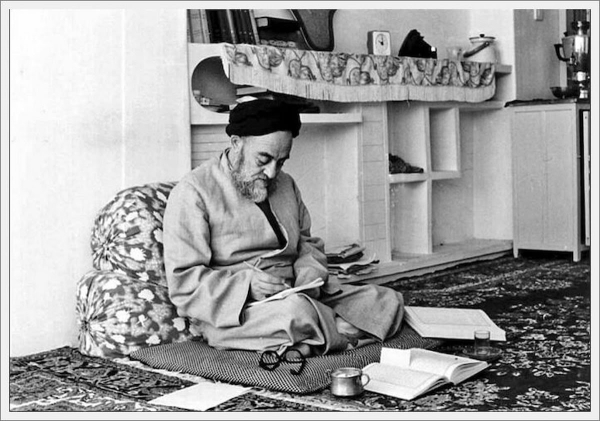
Allama Tabataba'i says: "Remember God so that God will remember you. If God remembered man, he would be freed from ignorance. If he is stuck in a task, God will not let him fail. If he is stuck in a moral problem, God, who has beautiful and best names and is characterized by excellent qualities, will certainly remember man."
What happens to your body when you fast?

Whether you’re fasting or not, your body still needs energy. The body’s main source of energy is a sugar called glucose, which is usually found in carbohydrates, including grains, dairy products, fruits, some vegetables, beans, and even sweets. The liver and muscles store glucose and release it into the bloodstream whenever the body needs it.
However, during fasting, this process changes. After about eight hours of fasting, the liver will use up the last of its glucose stores. At this point, the body enters a state called gluconeogenesis, which marks the transition of the body to a fasting state. Studies have shown that gluconeogenesis increases the number of calories the body burns. If carbohydrates are not consumed, the body begins to produce glucose using fat.
Eventually, these energy sources are used up by the body, and if fasting continues, it can turn into a more serious starvation. At this stage, the metabolism slows down considerably and the body begins to burn muscle tissue for energy. True starvation occurs after several consecutive days or even weeks without eating; therefore, since fasting in Islam is less than 24 hours, it is generally safe and will not cause any problems for you unless you have a specific disease, and it also has some benefits.
The Holy Quran and effects of honey in treating physical illnesses
قال الله تعالي:« و اوحي ربك الي النحل ان اتخذي من الجبال بيوتا و من الشجر و مما يعرشون ثم كلي من كل الثمرات فاسلكي سبل ربك ذللاً يخرج من بطونها شراب مختلف الوانه فيه شفاء للناس».نحل 68
Honey is a sweet food that is often in liquid form and is obtained from honey bees. The Holy Quran mentions various foods, but it is only in the case of honey that it is called "healing".
"And your Lord inspired the bee with an instinct: Eat from the mountains and the fruits of the flowers, and walk in ease in the paths that your Lord has prepared for you; there comes out of your bellies a drink of various colors, in which is healing for people."
Honey and digestive diseases:
The various chemical elements in honey are such that they can have beneficial effects on some diseases of the digestive system. For example:
*It helps digest food because it contains digestive enzymes. These enzymes include: amylase, sucrase, lipase, etc.
* Honey reduces the severity of stomach acid (it regulates the increase in gastric acid secretions). It is useful for stomach ulcers and gastritis. It regulates the reduction of gastric acid secretions, and in fact, it can be said that honey plays an effective role in regulating stomach acids. In this context, an interesting study was conducted by Professor "Khotkin" on a large number of patients with gastric ulcers and intestinal ulcers. In this study, a group of these patients were treated in the usual way at medical centers, and another group was treated only with honey, the result was extremely interesting. 61% of the first group was completely cured and 18% of them still suffered from pain, but 84% of the second group was completely cured and 9.5% of them still complained of pain.
Scientists believe that honey has a dual effect on stomach ulcers: a local effect that causes the wound to heal quickly and regulates stomach acids, and a general effect that improves the patient's general condition and calms his nervous system.
* The positive effect of honey in treating intestinal infections, especially in children, is completely clear and proven. The Holy Prophet (PBUH) is also quoted as having recommended eating honey to treat diarrhea in many cases.
* Honey prevents fermentation due to its formic acid content, which is effective on intestinal microbes.
* Honey prevents constipation, especially constipation that occurs after surgery, because it contains volatile essential oils that increase intestinal activity. Similarly, honey contains astraacetyl glucoside, which is converted into oxymethyl anthraquinone in the intestines and prevents constipation.
* In most liver and gallbladder diseases, if honey is included in the patient's diet, it will be beneficial and effective; because honey is a nutrient for liver tissues and increases the storage of sugars in the liver.
If honey is mixed with pollen and royal jelly (the food of the queen bee), it is effective in most liver diseases due to its mineral salts, vitamins, hormones, acids, etc. and increases the activity of the liver's sugar metabolism. Dr. Koch believes that this power of effect in honey is due to a substance called (Glueatilic Factory) which has a special effect on the liver and the circulatory system and the heart.
Israel-engineered terrorism in Aleppo shows Syria's key role in Axis of Resistance
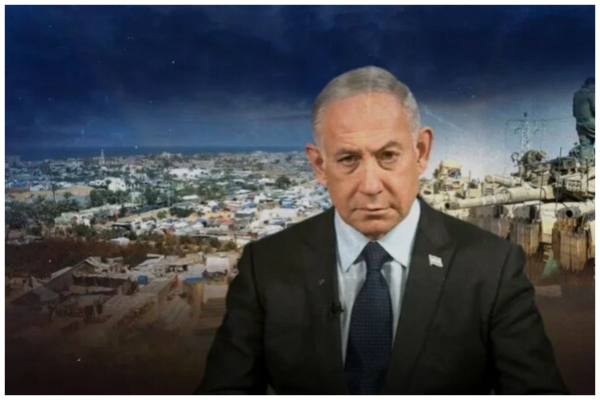
Following the cessation of Israeli hostilities in Lebanon with a ceasefire on November 27, residents of south Lebanon, along with those from other affected regions, were finally able to return to their homes.
However, certain border villages and towns have been classified as "high-risk" areas due to heightened security concerns, rendering them inaccessible for the time being.
There have even been reports about Israeli occupation forces stationed at the border opening fire at Lebanese people who tried to return to their homes after the ceasefire.
Meanwhile, a ceasefire in Lebanon coincided with the intensification of violent aggression in western Aleppo, where the Syrian Arab Army (SAA) is currently engaged in confrontations against Israel-backed Takfiri terrorists incorrectly described in mainstream media as Syrian “rebels.”
These terrorist groups, operating in Syria under the umbrella of Hayat Tahrir Al Sham, are supported by the Israeli regime and Western powers and represent a broader geopolitical dynamic at play.
The Zionist entity’s recent disgraceful defeat in southern Lebanon after nearly 70 days of unchecked aggression, marked by its inability to penetrate Lebanese territory due to Hezbollah’s adept military maneuvers, prompted a strategic recalibration.
To salvage its already tattered image, the Israeli regime is now pursuing new fronts of war, aiming to disrupt critical supply chains facilitating the transfer of arms to the Lebanese resistance.
This escalation follows a pointed warning from the Zionist entity’s Prime Minister, Benjamin Netanyahu to Syrian President Bashar al-Assad, telling him “You’re playing with fire.”
Netanyahu’s statement, made in the aftermath of the ceasefire in Lebanon and admission of defeat against Hezbollah, directly references Syria’s crucial role in helping the Axis of Resistance.
Syria’s role in the Axis of Resistance
Syria plays a pivotal role within the Axis of Resistance, serving as a key supporter of both Hezbollah and Palestinian resistance factions by facilitating the transfer of weapons and resources.
Beyond its logistical contributions, Syria also hosts critical research facilities in the city of Aleppo, underscoring its strategic importance to the broader resistance network. Furthermore, Syria remains a frontline state in the struggle against Western-backed proxies, which aim to gain control of Aleppo and undermine President Bashar al-Assad’s democratically-elected government in Damascus.
These dynamics highlight Syria’s dual role as both a logistical hub and a steadfast actor in resisting external attempts to destabilize the region.
Syria’s arms depots, consisting of domestically manufactured weapons as well as supplies procured from other countries, have been instrumental in supporting Hezbollah’s operations in Lebanon.
Over the last decade, Syrian research facilities and scientific research centers dedicated to weapons development have been repeatedly targeted by the enemy.
This has included airstrikes on strategic sites and the targeted killings of key personnel involved in coordinating arms transfers. In recent weeks, these attacks have intensified, signaling a deliberate effort to weaken Syria’s military infrastructure and its role in sustaining the resistance.
At the same time, resistance forces are positioned in Aleppo to counter the growing threat of enemy-backed proxies in and from northern Syria. These proxies are attempting to overextend the resistance and cut off essential supply routes, further illustrating the interconnected nature of the regional war.
Why did Syria refrain from entering war?
The argument that Syria did not enter the war against the Zionist regime is rooted in the complex realities of its domestic and regional circumstances.
Syria refrained from direct involvement alongside Hezbollah or Palestinian resistance factions because it is deeply engaged in its own internal battles, fighting terrorist forces within its borders. Despite this, Syria has continued to serve as a critical supplier of weapons to the resistance front.
For instance, when Hezbollah targeted the Israeli regime’s Tel Nof airbase, it used a modified version of the 302-mm Syrian M-302 Khaibar-1 Multiple Launch Rocket System (MLRS) with a declared range of up to 225 km, referred to as the “Fadi-6.”
This adaptation, provided by Syria, included extending the rocket's range and reducing the warhead's weight, resulting in a total weight of 650 kg and a 140 kg warhead.
Additionally, a military video released by Hezbollah on November 3 highlighted its underground facilities and reinforced its commitment to resistance.
“We will not leave the battlefield... We will not lay down our weapons," it stated.
The footage showcased “Fadi-4” rockets, derived from Syria’s Khaibar-1, alongside AKS-74U carbines, further demonstrating Syria’s contributions to the Lebanese resistance’s arsenal.
There have also been repeated discoveries of weapons by the IOF during their infiltration of warehouses and buildings in southern Lebanon. Among these findings were weapons of Russian origin, previously identified as being used by the Syrian Arab Army.
These discoveries further underscore Syria’s deep involvement and unwavering support for Hezbollah, demonstrating the extent of its commitment to the resistance.
Israel’s terror operations in Syria (2022–2024)
Between 2022 and 2024, Israel’s operations in Syria largely focused on dismantling the country’s air defenses, radar systems, and military research facilities.
It systematically targeted critical components of Syria’s military infrastructure, including scientific research centers, defense laboratories, and weapons depots. These sites are essential for Syria’s military development and strategic capabilities.
In early November 2024, for example, Israel launched an attack on a scientific research facility and defense laboratories of the Syrian Arab Army near Al-Safira in the Aleppo countryside.
These facilities are not only critical bridges for the transfer of weapons but also central to Syria’s broader role in supporting the resistance. Syria’s scientific research centers, defense laboratories, and military manufacturing facilities form the backbone of its defense capabilities, enabling the production of weapons ranging from bullets to missiles and artillery.
Israeli regime’s recent actions can be characterized as defeatist, reflecting its acknowledgment of losing the war in Lebanon against the Lebanese resistance before it even began.
Its escalations in Syria are not only attempts to regain some semblance of control but are also aimed at undermining Hezbollah’s resistance capabilities.
However, the SAA remains steadfast in its defense of the Syrian people and its support for the Axis of Resistance. The freedom fighters in Syria are deeply loyal to President Bashar al-Assad and inspired by the martyrdom of iconic leaders such as Sayyed Hassan Nasrallah.
Over the past decade, Syria has significantly bolstered the resistance in Lebanon, including advancements in drone and missile technology for Hezbollah.
In parallel, an intense propaganda campaign against the SAA is in full swing, similar to those launched against the Arab country beginning in 2011.
Such efforts aim to delegitimize Syria’s role in the resistance axis and weaken its influence.
Yet, history demonstrates that when an enemy resorts to these strategies in the aftermath of a defeat, it is often only a matter of time before it faces another failure.
Syria’s resilience and its strategic alliances continue to thwart the Tel Aviv regime’s attempts to destabilize the region, and the enduring battle for a liberated Palestine continues.
Ghadir Khumm is a university student in Canada pursuing a master’s degree. She focuses on postcolonial studies, dedicates her time to international relations, and crafts insightful political analyses on global issues.
By Ghadir Khumm
Press TV’s website
Netanyahu: Israel won't allow Hayat Tahrir al-Sham forces in southern Syria
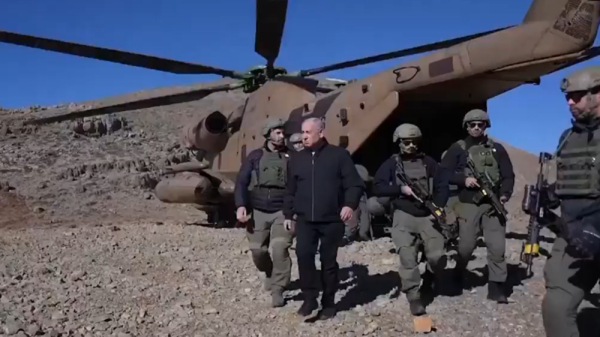
Israeli prime minister Benjamin Netanyahu has said that his regime will not tolerate the presence of Hayat Tahrir al-Sham (HTS) nor any other forces affiliated with the Arab country's new rulers in southern Syria.
Netanyahu said at a military graduation ceremony on Sunday that Israel will keep its positions there as a “defensive measure” and for as long as is necessary.
"We will not allow forces of the HTS or the new Syrian army to enter the territory south of Damascus. We demand full demilitarization of southern Syria, in the provinces of Quneitra, Daraa and Sweida," Netanyahu was quoted as saying.
The Israeli prime minister also said the regime's troops will remain stationed at a so-called “buffer zone” inside the occupied Syrian Golan Heights, seized following the fall of President Bashar al-Assad,
Former al-Qaeda affiliate HTS took control of Damascus in early December in a stunning offensive, prompting a wary Israel to move forces into a UN-monitored demilitarized zone within Syria.
Militant factions, led by Hayat Tahrir al-Sham, toppled Assad’s government on December 8 last year.
Following the downfall of Assad’s government, the Israeli military has been launching airstrikes against military installations, facilities, and arsenals belonging to Syria’s now-defunct army.
Israeli military aircraft on Tuesday launched a series of strikes against several weapons sites inside Syria in the latest act of aggression.
The Israeli military said that its unmanned aerial vehicles struck weapons which it said belonged to the former Syrian administration in the Sa'sa' district of Rif Dimashq province, located southwest of the capital Damascus and near the occupied Golan Heights.
Israeli media recently reported that the regime’s ministers had met to discuss a classified plot to promote the division of Syria after the fall of Assad's government.
Last month, regional security sources briefed on the plot were quoted as saying that Israel had already planned to divide Syria into three blocks and to establish military and strategic ties with the Kurds in Syria’s northeast and the Druze in the south, leaving Assad in power in Damascus.
Press TV’s website
Israel strikes targets in southern Syria after pressing for ‘demilitarization’
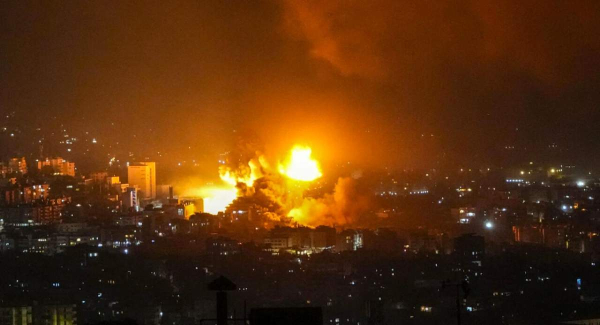
Israeli warplanes have carried out multiple airstrikes on military targets across southern Syria, attacking areas outside the capital Damascus and the southern province of Dera’a after a call by Israeli prime minister Benjamin Netanyahu for “demilitarization” of the region.
Israeli minister for military affairs Israel Katz confirmed the assaults, which hit military installations in the town of Kiswah, south of Damascus, as well as some sites in Dera’a.
Israeli paper Yedioth Ahronoth also alleged that Tel Aviv had begun implementing a scheme aimed at “entering southern Syria and controlling” it.
The developments came after Netanyahu pressed for “complete demilitarization” of southern Syria, including the provinces of Quneitra, Dara’a, and Sweida.
In 2011, the Israeli regime began backing up Takfiri terrorist groups and intensifying its deadly aggression against Syria as a means of trying to oust the Arab country’s democratically-elected government of Bashar al-Assad, which had consistently proven an opponent of Tel Aviv’s regional aggression.
Late last year, the regime ramped up its attacks across the Syrian territory even further, claiming that it sought to prevent violence inside Syria from spilling over into the occupied territories.
Israeli forces even entered the United Nations-demarcated buffer zone between Syria and the occupied Palestinian territories in the country’s Tel Aviv-occupied Golan Heights in a move that was condemned by the UN.
Meanwhile, foreign-backed militants overthrew the Syrian government amid the Israeli escalation that was targeting the country’s defensive and civilian infrastructures, setting up their own administration.
In the aftermath of the Tuesday airstrikes, however, Syria’s new authorities condemned the Israeli regime's aggression, demanding immediate withdrawal of Israeli forces from the country’s territory, and warning of the consequences of the regime’s continued military presence there.
Protests over Netanyahu’s ‘demilitarization’ push
Also on Tuesday, widespread protests erupted across southern Syria in response to Netanyahu's recent remarks.
Demonstrators in cities such as Dara’a, Damascus, Sweida, and Quneitra took to the streets in defiance of Netanyahu's call, with those showing up in the capital gathering outside the United Nations office to denounce the Israeli prime minister's statements and urge an international response to Israeli violations of Syria’s sovereignty.
Many protesters emphasized Syria's right to territorial integrity and sovereignty, rejecting any foreign interference, whether by the regime or others.
Press TV’s website
Shaking hands between men and women that are not Mahram

All imitation authorities consider any physical contact between girl and boy, even shaking hands with people from religions other than Islam, and those who live abroad are prohibited from doing so. And it is only permissible to shake hands with gloves they do not press each other and do not intend to enjoy.
Islam's opinion on the hand with the unholy
While the opposite sex may not stimulate lust for many people, there are other people who are also stimulated with this brief amount of communication, given that among the first group may also be people who may be with Cordly to show themselves provide the basis for illegitimate communication.
Accordingly, it deserves to be lost with the unholy that is not essential in social life. God Almighty has enacted most of the religious laws and considers the public interest in the general community, although the wisdom of the judgment may not include some people. For example, although shaking hands with women may not create any erotic feeling in some older or middle -aged people, the sacred law has ruled in many people because of the same feeling.
But about the physical contact of the man and the woman and the shakes and clashes with each other, the imitation authorities have generally said: Handy is not permissible unless something is hijab, or secondary titles such as The necessity is true.
To brush during fasting?

Some people do not have the opportunity to brush before dawn, so they have to brush your teeth after adhan, here may be the question for some to brush at this time? Will fasting be invalidated or not?
Ayatollah Khamenei
Question: Is it okay to brush with toothpaste?
Answer: It's okay; But the mouth water that is impregnated with toothpaste and water should be prevented.
Ayatollah Behjat
Question: Is it okay to brush with a fasting toothpaste?
Answer: If nothing comes into the throat, it's okay.
Why shouldn't the traveler fast?

According to verse 185 of Surah Baqarah, why can't the traveler fast?
Regarding the necessity of fasting on the journey, the Holy Qur'an in Surat al -Baqarah says: "You want it easy and it doesn't want it to be difficult."
Imam Sadiq (peace be upon him) quotes the Prophet (peace be upon him): "Iftar is a broken journey and prayer of divine gifts. Whoever does not pay attention to it has rejected the divine gift. "
According to this statement, perhaps one of the philosophies and wisdom of fasting in the journey is the same issue of discount on the task, and in other words, it is the expression of the servants.
What is the decree of fasting during Ramadan because of exams?
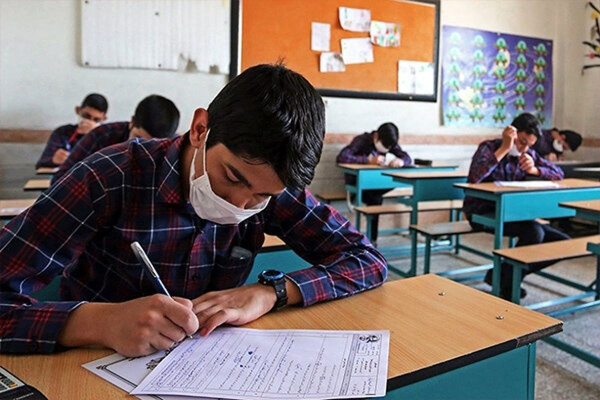
Ayatollah Makarem Shirazi:
Iftar's permission is not fasting and if it can, it must change its study hours and postpone the time interval of Iftar to magic or when it is more capable of studying. Otherwise, the only AFTARI license is to get out of the city in some days (eg, 2-5 days), and there to return and return. And until Ramadan next year it did it.