zarezadeh
Palestine Israel to release longest-serving Palestinian inmate Nael al-Barghouti
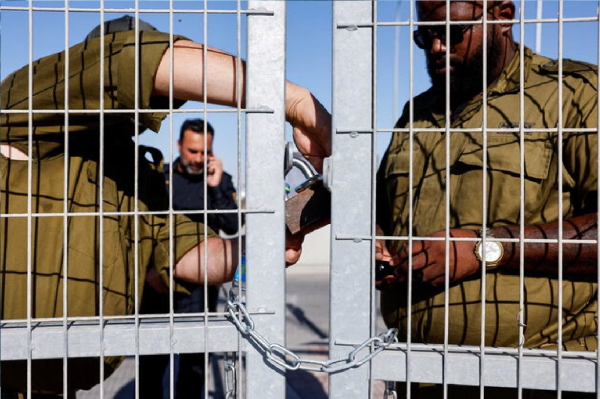
Nael al-Barghouti, the longest-serving Palestinian inmate, is to be released on Saturday after over four decades in Israeli prisons, under the ceasefire agreement between Israel and the Palestinian Hamas resistance movement.
Barghouti, who was arrested by Israeli police in 1978 at the age of 19, called his family on Tuesday that he would be released on Saturday under the seventh round of captive-prisoner exchange as part of the ceasefire deal, the Palestinian Media Center reported.
Barghouti, now 67, has been subjected to the worst forms of torture behind bars and suffers from several ailments. He was even denied the right to attend his father’s funeral in 2004 by the Israeli authorities.
He also told his family that his release would be conditional on his forced exile to an undisclosed country, the report added.
Barghouti, now a symbol of Palestinian resilience, was sentenced to 112 years in prison for allegedly killing an Israeli occupation officer north of occupied Ramallah. In 2009, he broke the Guinness World Record for the world’s longest-serving political prisoner.
He was released in a prisoner exchange deal between Hamas and the Israeli regime in 2011. However, the freedom did not last long. In June 2014, Israeli authorities reneged on the terms of the exchange deal and re-arrested Barghouti, sentencing him to 30 months in prison but after completing his term, they reinstated his original life sentence plus 18 years.
There were about 5,200 Palestinians in Israeli prisons before Al-Aqsa Flood operation in October 2023. The number has now risen to more than 10,000 people as per the statistics given by Palestinian officials.
The occupying entity failed to achieve its declared objectives of freeing captives and eliminating Hamas despite killing at least 48,284 Palestinians, mostly women and children, in Gaza.
After 15 months of genocide, Israel accepted Hamas’ longstanding negotiation terms under the Gaza ceasefire, which began on January 19.
The ceasefire consists of three phases, each lasting 42 days. In phase one - the current phase - a total of 33 Israeli captives will be released in exchange for around 2,000 Palestinian abductees held in the regime’s jails.
So far, Hamas has released 19 Israeli captives and five Thai nationals in return for 985 Palestinian abductees.
Press TV’s website
Palestinian man from Gaza dies in Israeli prison as Foreign Ministry urges intl. investigation into regime’s crimes
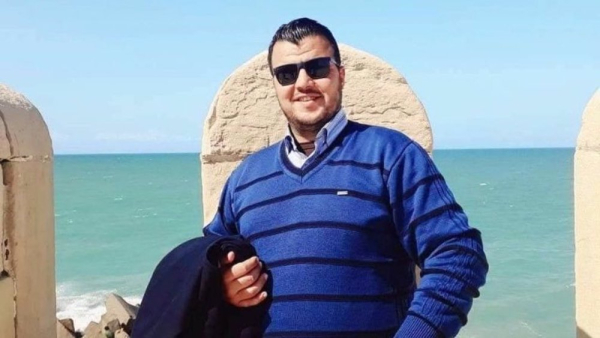
A young Palestinian man from the war-torn Gaza Strip has died in an Israeli detention facility, according to recent reports from two Palestinian prisoners’ rights groups.
The Commission of Detainees’ and Ex-Detainees’ Affairs and the Palestinian Prisoners’ Society (PPS) announced in a joint statement on Monday that 35-year-old Mus’ab Hani Haniyeh passed away on January 5. Still, Israeli authorities made no mention of the cause.
Haniyeh, father of a nine-year-old child, was from Hamad City and abducted by Israeli forces on March 3, 2024, according to the statement.
Haniyeh was not suffering from any significant health issues prior to his abduction, it highlighted.
“The occupation indicates that an investigation is underway in an attempt to evade any international accountability,” the joint statement added.
The statement noted that Haniyeh’s death brings the total number of Palestinian detainees who have died in Israeli prisons since the onset of the genocidal war on the Gaza Strip on October 7, 2023, to 59, including 38 prisoners from the besieged coastal sliver.
They slammed the death of Haniyeh as a new crime to be added to the long list of crimes committed against Palestinian detainees.
The groups also voiced concern about the increasingly dangerous upsurge of Palestinian detainees’ deaths, stating that thousands are being held in Israeli prisons and are subjected to torture, starvation, medical crimes, sexual assaults, and contagious diseases.
Meanwhile, the Palestinian Ministry of Foreign Affairs and Expatriates on Monday called for an international investigation into Israeli crimes against Palestinian prisoners.
The ministry said in a statement that it views with grave concern the increase in the number of Palestinian detainees, particularly from the Gaza Strip, who have died in Israeli jails.
It stated that 59 detainees have died so far in Israeli imprisonment due to systematic torture since the onset of the bloody onslaught on Gaza.
The statement highlighted that such deaths occurred due to the torture and ill-treatment of prisoners, including thousands of detainees whose places of detention and fates have not been disclosed by Israeli officials.
The Palestinian foreign ministry called on international humanitarian and human rights organizations to swiftly intervene to protect Palestinian detainees, and oblige Israeli authorities to fulfill their responsibilities toward detainees.
It also stressed the need to enable the United Nations Commission of Inquiry to assume its tasks and investigate these extrajudicial killings, committed against Palestinian detainees in a gross violation of the Geneva Conventions.
Press TV’s website
The groups also voiced concern about the increasingly dangerous upsurge of Palestinian detainees’ deaths, stating that thousands are being held in Israeli prisons and are subjected to torture, starvation, medical crimes, sexual assaults, and contagious diseases.
Stone Throwing Three Jamarats
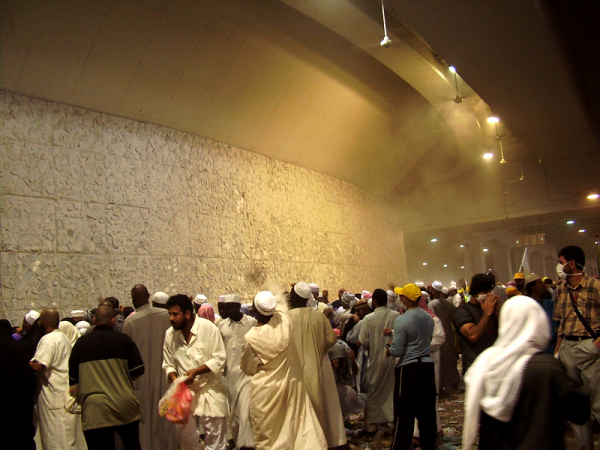
Stone Throwing Three Jamarats
On the nights that we said it is obligatory to stay in Mina, on those nights it is obligatory to stone the three Jamarats: that is, he should throw pebbles at three places, which are called the first (Jamra al-Awli), the middle (Jamra al-Masihi), and the last (Jamra al-Aqaba). However, if he intentionally leaves it out, it will not harm his Hajj and it is valid; although if it is intentional, it is a sin.
Issue: The number of pebbles for each Jamarat on each day should be seven, and its etiquette and rulings are the same as we previously mentioned for Jamra al-Aqaba.
Issue: The time for throwing pebbles is from sunrise to sunset, and it is not permissible at night. And if someone is sick or infirm and fears that he will not be able to throw during the day due to the large number of people, it is permissible to throw at night.
It is obligatory to stone the Jamarat in order: that is, first the first Jamarat, then the middle one, then the Jamarat of Aqaba; and if he does not do it in this order, he must repeat it in such a way that the order is achieved; whether he intentionally did it wrongly or out of forgetfulness, ignorance of the issue, or negligence; in any case, he must repeat it.
If someone forgets to stone the Jamarat and comes to Mecca, if he remembers during the days of Tashreeq, that is, the eleventh, twelve, and thirteenth, he must return and perform it. If he is unable to do so, he must appoint a deputy. If he remembers after these days or intentionally delays it until after these days, the obligatory precaution is that he himself or his deputy comes and performs it, and in the next year, he or his deputy should perform it in the days that he missed.
Issue: If he forgets to stone the Jamarat until he leaves Mecca, the obligatory precaution is that he or his deputy should perform it in the next year.
Staying the Night in Mina
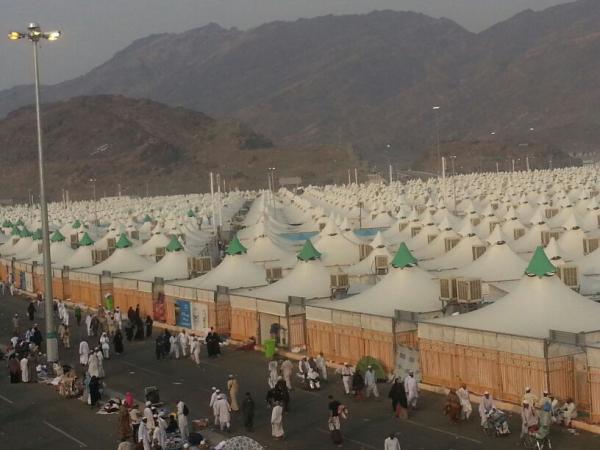
It is obligatory to stay in Mina on the eleventh and twelfth nights; that is, to stay the night from sunset until midnight. And for some, it is obligatory to stay the thirteenth night as well, such as someone who has fished or had intercourse while in the state of ihram, and someone who does not go on the twelfth day and stays until sunset. Such a person must also stay the thirteenth night. And for some, it is not obligatory to stay these nights in Mina, such as the sick, the sick’s caregiver, and those who find it difficult to stay.
Issue: In order to obtain half of the night, one must count from sunset until sunrise, as a matter of precaution and obligation, which is approximately twelve o’clock at night. Therefore, it is permissible to leave Mina after midnight.
Issue: For someone who has not been in Mina since the beginning of the night without an excuse, the obligatory precaution is to return before midnight and stay until morning.
Issue: Whoever leaves the night in Mina, must sacrifice a sheep for each night that he did not stay, and it does not matter whether he did not stay knowingly and intentionally, or because he forgot or did not know the issue; and even the sick, the nurse, and the one who is difficult for him to stay, which we have said is not obligatory, should stay. It is also obligatory for them to sacrifice a sheep for each night that they did not stay, and there is no specific place for sacrificing this sheep, so they can sacrifice it after returning to their place.
Issue: It is not obligatory for those who have not been away for a while since the beginning of the night or have left for a while before midnight to sacrifice them, it is a recommended precaution in sacrificing.
Issue: Those who are permitted to migrate on the twelfth day, which is usually the case, must migrate after the afternoon and it is not permissible before the afternoon; and those who migrate on the thirteenth day are free to migrate whenever they wish.
Tawaf al-Nisa
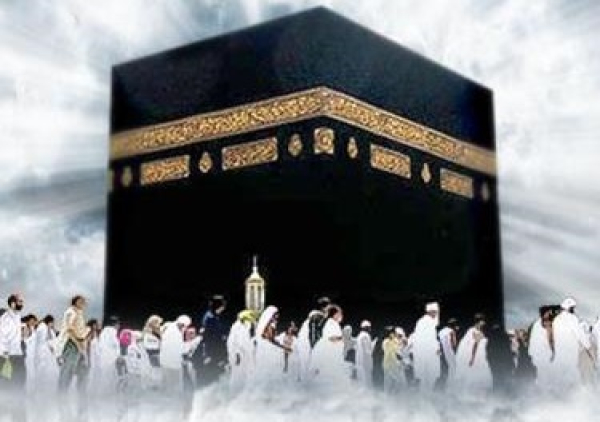
Tawaf al-Nisa
Issue: The fourth of the acts of Mecca is Tawaf al-Nisa, which is similar in practice and rulings to Tawaf al-Umrah and Tawaf al-Hajj, but it must be performed with the intention of Tawaf al-Nisa.
Two rak’ahs of Tawaf al-Nisa prayer
Issue: The fifth of the acts of Mecca on the return from Mina is the two rak’ahs of Tawaf al-Nisa prayer. This prayer is similar in its manners and rulings to Tawaf al-Umrah and Tawaf al-Hajj, but it must be performed with the intention of Tawaf al-Nisa prayer.
These were the five acts that must be performed after returning from Mina in Mecca, and after performing these acts, the woman and the perfume that remained become permissible. Only hunting in the sanctuary remains as a taboo, which is always forbidden, and it should be understood that these five acts must be performed in the same order and after the three acts of Mina, and the order should not be changed voluntarily and without an excuse.
Issue: Tawaf al-Nisa is not exclusive to men and is also obligatory on women and children. If they do not perform it, if it is a man, the woman is not permissible for him, and if it is a woman, the man is not permissible for her.
Issue: Tawaf al-Nisa and its prayer are obligatory, but they are not a pillar, and intentionally leaving them does not invalidate the Hajj. However, if it is not performed, the woman is not permissible for the man or the man for the woman. It should be understood that what is meant by saying that a woman is not permissible is not only a person’s own wife, but any woman; neither his own wife nor any other woman if he wants to take her is not permissible for him. Likewise, a man is forbidden to a woman, meaning any man, not just his own husband.
Issue: If he does not perform Tawaf al-Nisa by mistake and returns from Hajj, then if he is able, he should go back and perform it himself. If he is unable or has difficulty, he should hire a representative, and after the representative performs it, the woman becomes permissible for him.
Sa'i between Safa and Marwah
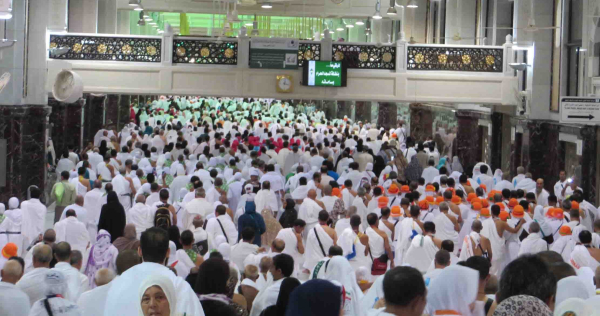
The third act of Mecca is Sa'i between Safa and Marwah, which must be performed seven times. This is no different from Sa'i between Safa and Marwah, which was mentioned in the acts of Umrah, except for the intention, which is to perform the Sa'i between Safa and Marwah for Hajj. This act is modeled after Hazrat Hajar, peace be upon her.
Tawaf prayer for Hajj
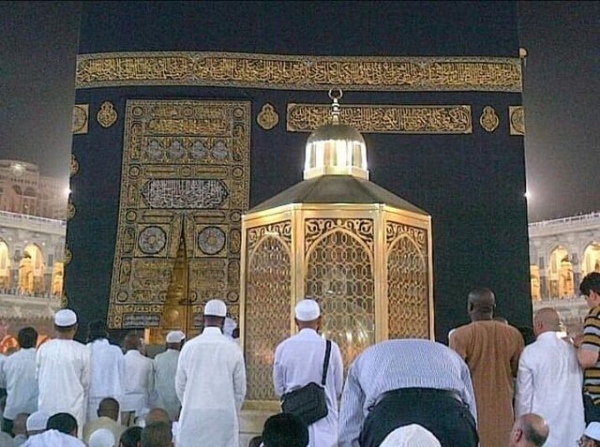
The second of the acts of Mecca is the Tawaf prayer. This prayer is no different from the Tawaf prayer for Umrah, and its rules and etiquette are the same, except that here one must make the intention for the Tawaf prayer for Hajj.
After the Tawaf of Ziarat, this prayer should be recited immediately. This prayer is recited behind the Maqam of Hazrat Ibrahim.
Tawaf-e-Ziyarat
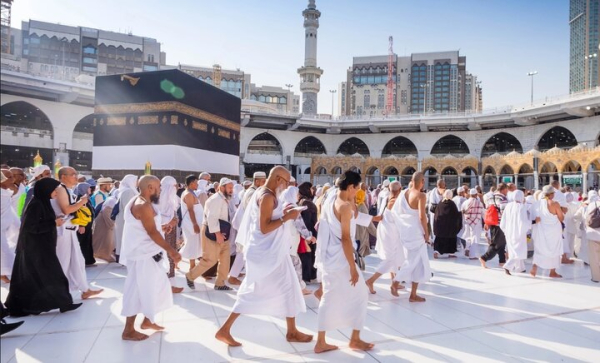
It is obligatory to return to Mecca after completing the three acts of worship in Mina, to perform the acts that are obligatory there. However, it is not necessary to return to Mecca on the same day of Eid or the day after to perform the acts of worship in Mecca. Rather, one can delay these acts until the end of Dhul-Hijjah. This means that if the last day of Dhul-Hijjah comes and he performs the acts, there is no problem. However, since it is obligatory to stay in Mina on the eleventh and twelfth nights, and it is also obligatory to throw stones at the Jamarat in Mina on these two days, they usually stay in Mina for these two nights and two days, and then return to Mecca after the afternoon of the twelfth day and perform the acts for the few days they are in Mecca.
Issue: The first act that must be performed in Mecca after returning from Mina is the Tawaf-e-Hijjah, which is called Tawaf-e-Ziyarat. This Tawaf is the same as the Tawaf-e-Umrah in all its customs, conditions, and rulings. As mentioned, the only difference is in the intention, which here must be with the intention of the Tawaf-e-Hijjah.
Cutting hair and nails or shaving the head
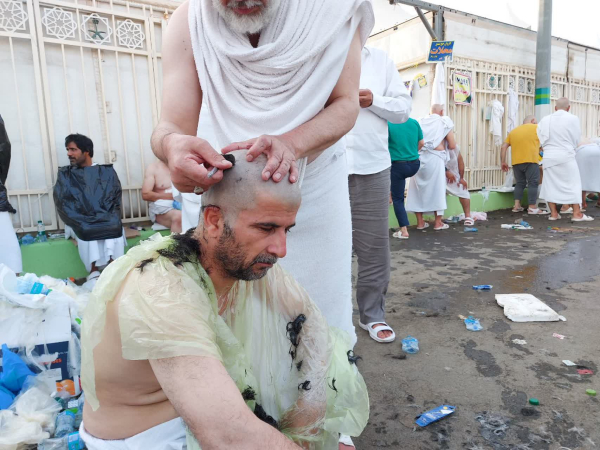
After slaughtering, it is obligatory to shave the head or to cut some of the hair or nails. Of course, if it is the first year of Hajj, it is obligatory to shave the head, but for a woman, shaving the head is not permissible and she must make a mistake, that is, either by the hair or by the nails; and shaving the head or cutting the head is an act of worship, and it must be with the intention of approaching and not showing off, which will be invalid, and shaving the beard does not suffice to make a mistake.
Issue: It is permissible to shave the head herself or to have someone else do it, and the same applies to making a mistake, but she must make the intention herself, and it is better for someone else to make the intention as well.
Issue: The place for shaving the head or cutting the head is Mina, and it is not permissible to do it anywhere else, but it is not obligatory. Rather, it is permissible to delay it until the end of the thirteenth day, although it is recommended to do it on the day of Eid as a precaution.
Issue: If someone intentionally, unintentionally, or out of forgetfulness and ignorance of the issue does not shave or shave until he leaves Mina, it is obligatory for him to return to Mina and do so. If returning is not possible, he should shave or shave wherever he is and, if possible, send his hair to Mina.
Issue: It is necessary to observe the order of these three acts as a precaution and obligatory; that is, first throwing the Jamarat, then the sacrifice, then shaving or shaving; but if he does not observe the order unknowingly, there is no problem and it is correct.
Issue: After shaving or shaving, a person leaves Ihram and the things that were forbidden to him become permissible except for three things: women, pleasant odors, and hunting in the sanctuary.
Sacrifice and its rulings in Hajj

After stoning the Jamarat on the day of Eid, it is obligatory to sacrifice a camel, cow, or sheep in Mina. Since sheep are usually sacrificed, it should be known that the sheep to be sacrificed must be, as a matter of precaution and obligation, one year old and in its second year. It must be healthy and flawless in every way, meaning that it must not have any defects in its horns, tail, testicles, ears, eyes, hands, feet, etc. It must also not be thin, and as a matter of precaution, it must not be lame. However, if its ear is split or has a hole, but is not defective or cut, there is no problem. Likewise, if its outer horn, which is like a sheath for the inner white horn, is broken, and the inner horn itself is healthy, there is no problem.
Issue: A person can slaughter the animal himself or he can hire a representative, and the representative must be a Shia and make the intention at the time of slaughter for everyone who is slaughtering, and it is known that in the slaughter of expiation, it is also necessary for the slaughterer to be a Shia.
Issue: It is not correct to participate in the sacrifice and everyone must sacrifice a sacrifice himself.
Issue: If one intentionally or due to an excuse does not sacrifice on the day of Eid, the obligatory precaution is to slaughter it during the days of Tashreeq, i.e. the eleventh, twelfth and thirteenth, and if that is not possible, during the rest of the month of Dhul-Hijjah.
Issue: The recommended precaution is to divide the sacrifice into three parts: one part should be given as a gift, one part as charity, and some of it should be eaten and the charity should be given to the believers. However, since none of these are obligatory, there is no problem if one gives the charity to the poor infidels or if one gives the entire sacrifice to them. And it does not guarantee the share of the poor. Of course, caution is very desirable, especially in eating a certain amount of the sacrificed animal, but it is not obligatory.
Issue: If someone delegates to someone to buy and slaughter a sacrifice for him, and the delegate also does so, and then the person doubts whether he did it correctly or not, it is sufficient and correct to ignore this doubt.
Issue: If someone does not have the power to sacrifice, meaning that he does not have a sheep, nor the money to buy it, nor can he borrow or obtain it in any other way, instead of sacrificing, he must fast for three days during Hajj and seven days after returning from Hajj. (There are some issues here that we have not mentioned because they do not usually happen. If this happens, ask his family.)