zarezadeh
Iran’s deterrence power strengthened after ballistic missile upgrades: Top general
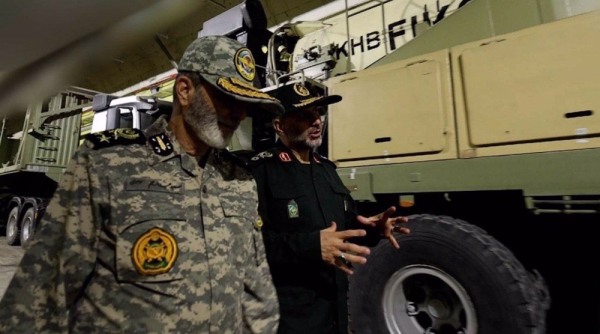
Iran’s top military official says the country has strengthened its deterrence by upgrading domestically manufactured ballistic missiles.
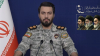
Chief of Staff of the Iranian Armed Forces Major General Abdolrahim Mousavi made the remarks on Wednesday during a visit to an Islamic Revolution Guards Corps (IRGC) missile town.
“By upgrading its ballistic missiles in all technical dimensions, Iran has been able to strengthen its deterrence power,” he said during the visit, accompanied by Brigadier General Majid Mousavi, commander of the IRGC Aerospace Force.
Mousavi also expressed Iran’s readiness to confront any act of aggression by its enemies.
“Following the 12-day war, we have changed our military doctrine from defensive to offensive by adopting the policy of asymmetric warfare and [boosting readiness for a] crushing response to the enemies,” the top general said.
He was referring to the illegal US-Israeli aggression against Iran that killed at least 1,064 people last June.
Israel launched the unprovoked war on June 13 while Iran was engaged in nuclear talks with the US, which also joined the aggression by striking Iranian nuclear sites.
In response, Iranian armed forces targeted strategic sites across the occupied territories and at Al-Udeid, the largest US military installation in West Asia.
Iran has since moved to enhance both its defensive and offensive capabilities.
The region is once again bracing for another potential military confrontation after the United States deployed air and naval forces to the region and threatened to attack the Islamic Republic.
Iranian officials have warned that any US attack would prompt an immediate response and could ignite a regional war.
Tensions have eased slightly as regional countries launched a flurry of diplomatic efforts to prevent war. Iranian and US diplomats are now set to meet in Oman on Friday for a new round of talks on Tehran’s nuclear program.
Earlier this week, General Mousavi warned that any miscalculation by the Islamic Republic’s enemies would trigger a “rapid” and “decisive” response.
Iranian Armed Forces are prepared to respond forcefully to threats, he added. “We think only of victory. We have no fear of the enemy’s superficial might, and we are fully ready for confrontation and to deliver a retaliatory slap.”
Press TV’s website
The Continuous Expansion of the Universe in the Qur’an

Allah says in the Qur’an:
﴿وَالسَّمَاءَ بَنَيْنَاهَا بِأَيْدٍ وَإِنَّا لَمُوسِعُونَ﴾
(Surah Adh-Dhariyat, 51:47)
Translation:
“And the heaven We constructed with strength, and indeed, We are [its] Expander.”
The key word here is “لَمُوسِعُونَ (lamūsiʿūn)”, which implies continuity and ongoing action — meaning the expansion is not a completed event, but a continuing process.
Modern cosmology has shown that the universe is not static; rather, it is constantly expanding, a discovery confirmed in the 20th century through observations such as those of Edwin Hubble.
For people at the time of the Qur’an’s revelation, who largely believed the heavens were fixed and unchanging, this description is remarkably thought-provoking.
The Invisible Barrier Between Bodies of Water in the Qur’an
Allah says in the Qur’an:
﴿مَرَجَ الْبَحْرَيْنِ يَلْتَقِيَانِ بَيْنَهُمَا بَرْزَخٌ لَا يَبْغِيَانِ﴾
(Surah Ar-Rahman, 55:19–20)
Translation:
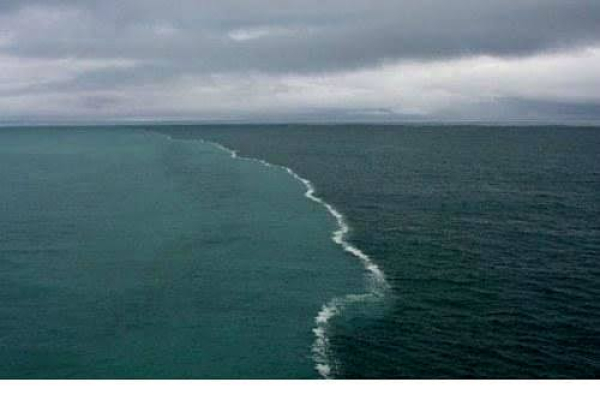
“He released the two seas, meeting side by side;
between them is a barrier so neither of them transgresses.”
The Qur’an describes the meeting of two bodies of water while stating that between them exists a “barzakh”—an invisible barrier that prevents them from fully mixing, even though they appear to merge.
Modern oceanography has discovered that when different bodies of water meet—such as saltwater and freshwater, or seas with different salinity and temperatures—there are physical boundaries caused by differences in density, salinity, and temperature.
These boundaries, known as haloclines or thermoclines, limit complete mixing between the waters.
For people living at the time of the Qur’an’s revelation, who had no access to underwater exploration or modern scientific tools, this description is remarkably thought-provoking.
The Stages of Human Embryonic Development in the Qur’an
Allah says in the Qur’an:
﴿وَلَقَدْ خَلَقْنَا الْإِنسَانَ مِن سُلَالَةٍ مِّن طِينٍ
ثُمَّ جَعَلْنَاهُ نُطْفَةً فِي قَرَارٍ مَّكِينٍ
ثُمَّ خَلَقْنَا النُّطْفَةَ عَلَقَةً فَخَلَقْنَا الْعَلَقَةَ مُضْغَةً﴾
(Surah Al-Mu’minun, 23:12–14)
Translation:
“And indeed, We created man from an extract of clay.
Then We placed him as a drop of fluid in a secure place.
Then We made the drop into a clinging form, and We made the clinging form into a lump.”
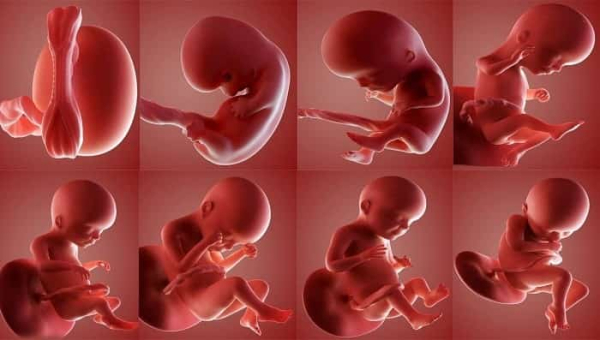
The Qur’an describes human creation as a gradual, step-by-step process.
The terms used are remarkably precise:
• Nutfah: a small drop of fluid
• ʿAlaqah: something that clings or hangs
• Mudghah: a chewed-like lump
Modern embryology confirms that human development occurs in distinct stages, and during early phases the embryo shows forms that strikingly resemble these descriptions.
The term mudghah, in particular, aligns with the appearance of early embryonic tissue marked by somite-like indentations.
For people living in the 7th century with no access to microscopes or internal anatomy, this layered description is deeply thought-provoking.
The Protective Role of the Sky in the Qur’an
Allah says in the Qur’an:
﴿وَجَعَلْنَا السَّمَاءَ سَقْفًا مَّحْفُوظًا وَهُمْ عَنْ آيَاتِهَا مُعْرِضُونَ﴾
(Surah Al-Anbiya’, 21:32)
Translation:
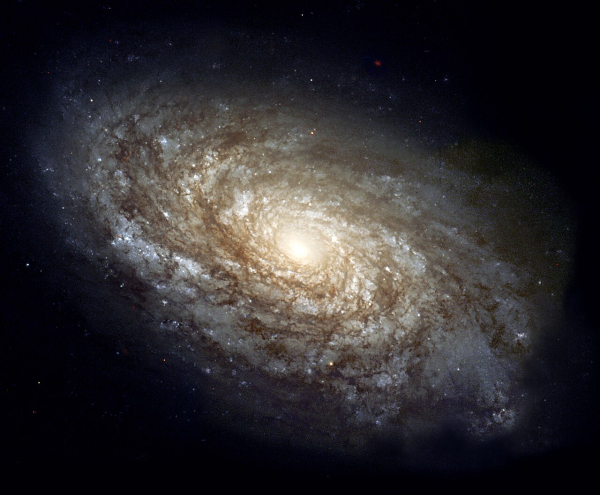
“And We made the sky a protected ceiling, yet they turn away from its signs.”
The Qur’an describes the sky as a “protected ceiling” (saqfan maḥfūẓan).
Modern science has shown that Earth’s atmosphere plays a crucial protective role:
• It shields life from harmful ultraviolet and cosmic radiation
• It burns up most meteors before they reach the Earth’s surface
• The ozone layer protects living organisms from deadly solar rays
To people in the early centuries, the sky appeared only as an open space above them.
Describing it as a protective structure—without visible pillars—invites deep reflection in light of modern atmospheric science.
Iron Sent Down to Earth in the Qur’an

Allah says in the Qur’an:
﴿وَأَنزَلْنَا الْحَدِيدَ فِيهِ بَأْسٌ شَدِيدٌ وَمَنَافِعُ لِلنَّاسِ﴾
(Surah Al-Hadid, 57:25)
Translation:
“And We sent down iron, in which there is great strength and benefits for people.”
The Qur’an uses the expression “anzalnā al-ḥadīd” — “We sent down iron”.
Interestingly, modern astrophysics shows that much of the iron found on Earth did not originate within the planet itself, but came from meteorites formed in massive stars and delivered to Earth during its early formation.
Iron is essential for human civilization:
• It forms the core of tools, construction, and weapons
• It is vital for human biology, especially in blood (hemoglobin)
For people in the 7th century, iron was simply a metal mined from the ground.
Describing it as something sent down from above is a subtle expression that aligns remarkably well with modern scientific understanding of cosmic origins.
The Uniqueness of Fingertips in the Qur’an

Allah says in the Qur’an:
﴿أَيَحْسَبُ الْإِنسَانُ أَلَّن نَّجْمَعَ عِظَامَهُ بَلَىٰ قَادِرِينَ عَلَىٰ أَن نُّسَوِّيَ بَنَانَهُ﴾
(Surah Al-Qiyamah, 75:3–4)
Translation:
“Does man think that We will not assemble his bones?
Yes indeed, We are قادر (fully able) even to perfectly restore his fingertips.”
The verse emphasizes fingertips (banānah) specifically, rather than just bones.
This is striking because modern science has discovered that fingerprints are unique to every individual, even between identical twins, and play a crucial role in personal identification.
Today, fingerprints are used worldwide in:
• Forensic science
• Biometric security
• Identity verification
At the time of the Qur’an’s revelation, fingertips held no known special significance beyond being part of the hand.
Highlighting them as a symbol of precise recreation strongly aligns with what we now know about their uniqueness.
The Pairing of Plants in the Qur’an

Allah says in the Qur’an:
﴿وَمِن كُلِّ شَيْءٍ خَلَقْنَا زَوْجَيْنِ لَعَلَّكُمْ تَذَكَّرُونَ﴾
(Surah Adh-Dhariyat, 51:49)
Translation:
“And of everything We have created pairs, that you may reflect.”
The Qur’an highlights that everything is created in pairs.
Modern botany confirms that most plants reproduce in pairs or complementary structures:
• Many plants have male and female reproductive organs (flowers with stamens and pistils)
• Some species are dioecious, meaning male and female flowers grow on separate plants
• This pairing ensures pollination, genetic diversity, and survival of the species
Even beyond plants, this “pairing” concept applies broadly in nature: animals, seeds, and even molecules (like DNA) exhibit forms of complementary pairing.
For people in the 7th century, the deep universality of pairing in all living things was not scientifically known, yet the Qur’an mentions it as a sign for reflection.
Time Dilation in the Qur’an

Allah says in the Qur’an:
﴿وَيَسْتَعْجِلُونَكَ بِالْعَذَابِ وَلَن يُخْلِفَ اللَّهُ وَعْدَهُ وَلَكِنَّ أَكْثَرَ النَّاسِ لَا يَعْلَمُونَ﴾
(Surah Al-Sajdah, 32:28)
و همچنین:
﴿وَيَسْتَعْجِلُونَكَ بِالْعَذَابِ وَهُمْ يَرَوْنَهُ بَعِيدًا وَنَرَهُ قَرِيبًا﴾
(سوره المؤمنون، 23:112–114؛ اشاره ضمنی به تجربه متفاوت زمان)
Translation (Conceptual Meaning):
“And they urge you to hasten the punishment, while to them it seems distant, but to Us it is near.”
The Qur’an frequently mentions that time for humans is relative compared to God.
Modern physics, through Einstein’s theory of relativity, shows that time is not absolute:
• Time moves differently depending on speed or gravitational field
• A person traveling near the speed of light or near a massive object experiences slower passage of time relative to someone far from such effects
In the Qur’an, the concept of “a day of God being like a thousand years of human reckoning” (Surah Al-Hajj, 22:47) expresses a relativity of time:
﴿وَيَوْمَ عِندَ رَبِّكَ كَأَلْفِ سَنَةٍ مِّمَّا تَعُدُّونَ﴾
(Surah Al-Hajj, 22:47)
This aligns remarkably with modern understanding that time is experienced differently depending on perspective, centuries before the scientific formulation of relativity.
The Function of Sleep in the Qur’an

Allah says in the Qur’an:
﴿وَهُوَ الَّذِي جَعَلَ لَكُمُ اللَّيْلَ لِتَسْكُنُوا فِيهِ وَالنَّهَارَ مُبْصِرًا ۚ إِنَّ فِي ذَٰلِكَ لَآيَاتٍ لِقَوْمٍ يَسْمَعُونَ﴾
(Surah Yunus, 10:67)
Translation:
“And He it is who made the night for you to rest in, and the day for sight. Indeed in that are signs for people who listen.”
The Qur’an describes sleep as a form of rest and restoration, and emphasizes the cyclical nature of night and day.
Modern science confirms:
• Sleep is essential for physical restoration (muscle repair, tissue growth)
• Sleep supports memory consolidation and cognitive function
• The circadian rhythm, regulated by light and darkness, governs sleep-wake cycles
Even more remarkably, the Qur’an describes a state resembling death during sleep:
﴿وَتُسَبِّحُ اللَّيْلَ طَوِيلًا وَتُسَبِّحُ النَّهَارَ عَشِيًّا﴾
(Interpretation: Sleep is like a minor “death” from which we awaken rejuvenated)
For people in the 7th century, understanding the scientific and restorative role of sleep was not known, yet the Qur’an presents it as a natural sign of God’s wisdom.