zarezadeh
Mountains as Stabilizers of the Earth in the Qur’an

Allah says in the Qur’an:
وَالْجِبَالَ أَوْتَادًا
(Surah An-Naba’, 78:7)
Translation:
“And the mountains as pegs (stakes).”
The Qur’an describes mountains as “awtād” (pegs or stakes), implying they stabilize the Earth.
Modern geology shows that:
• Mountains often have deep “roots” extending into the Earth’s crust
• These roots help stabilize tectonic plates through the principle of isostasy
• Mountains influence earthquake patterns, soil formation, and water flow
While mountains do not prevent all seismic activity, their deep foundations act as natural stabilizers for the crust.
For people in the 7th century, who only saw the visible part of mountains, the description of them as pegs stabilizing the Earth is remarkably accurate.
Closer Than You Think

The Qur’an gently corrects a common human assumption:
the idea that God is distant, and that we must travel far to reach Him.
Allah says:
﴿وَنَحْنُ أَقْرَبُ إِلَيْهِ مِنْ حَبْلِ الْوَرِيدِ﴾
(Surah Qaf, verse 16)
“And We are closer to him than his jugular vein.”
The striking beauty of this verse lies in its imagery:
Habl al-warīd (the jugular vein) is the closest and most vital vein in the human body.
Life itself depends on it.
Yet the Qur’an declares that God is even closer than that.
This means:
In moments of loneliness
In fear
In doubt
Even when you have no words to pray
You are never outside the presence of God.
The verse does not merely say that God sees or hears us.
It says that He is near — present without distance, without intermediaries, without conditions.
Sometimes, we do not need to search for God at all.
We only need to become still
and realize
that He is already here.
When Ease Walks Beside Hardship

One of the most beautiful and comforting subtleties in the Qur’an appears in the way God speaks about hardship and relief.
Allah says:
﴿فَإِنَّ مَعَ الْعُسْرِ يُسْرًا إِنَّ مَعَ الْعُسْرِ يُسْرًا﴾
(Surah Ash-Sharh, verses 5–6)
“Indeed, with hardship comes ease. Indeed, with hardship comes ease.”
The beauty lies in the language itself:
The word al-‘usr (العُسر – the hardship) is definite, referring to one specific difficulty.
But yusrًا (ease) is indefinite, suggesting multiple forms of ease.
Classical scholars noted a profound meaning here:
? One hardship is never alone; it is accompanied by many eases.
Even more striking is the word “ma‘a” (with).
The Qur’an does not say ease comes after hardship — it says ease comes with it.
This teaches a gentle but powerful truth:
In the very heart of difficulty, relief is already present — even if we cannot yet see it.
The Shiite Perspective on the Wives of the Prophet of Islam

In Shiite thought, the Prophet of Islam, Muhammad (peace be upon him and his family), holds a unique and exalted status, and everything associated with him is regarded with respect and reverence. The wives of the Prophet, known in Islamic tradition as the “Mothers of the Believers,” are therefore accorded dignity and respect, and honoring them is a principle emphasized by Shiite Muslims.
Shiites, in general, respect all of the Prophet’s wives and firmly reject any form of insult, disrespect, or inappropriate behavior toward them. Within Shiite teachings, historical analysis or discussion of early Islamic events—when conducted in a scholarly and respectful manner—must not be confused with insult or defamation. Respect for religious figures is considered an essential part of Islamic ethics.
At the same time, it is important to distinguish between the official teachings of Shiite Islam and the actions or statements of certain extremist or provocative individuals or groups. Unfortunately, at various times, some radical or ill-intentioned actors have sought to create division and hostility among Muslims through offensive rhetoric or disgraceful actions. Shiites emphasize that such behavior has no basis in Shiite doctrine and does not represent Shiite beliefs; rather, it often serves agendas aimed at sowing discord and exploiting religious sensitivities.
Among the wives of the Prophet, Lady Khadijah (peace be upon her) holds a particularly special place in Shiite belief. She was the first woman to believe in the Prophet, devoted her wealth and social standing to the cause of Islam, and supported the Prophet during the most difficult years of the early Islamic mission. Shiites regard Lady Khadijah as an exemplary model of faith, sacrifice, wisdom, and loyalty, and they hold deep love and respect for her.
Overall, the Shiite view of the Prophet’s wives is one grounded in respect, propriety, and the rejection of insult. Shiites believe that religious differences should not lead to disrespect or hostility among Muslims, and that preserving Islamic unity—alongside scholarly and respectful dialogue—is an undeniable necessity in the contemporary Muslim world.
What Was the Cause of the Unrest Inside Iran?

The unrest that occurred in Iran can be analyzed within the framework of economic pressure and political developments. According to the views of some analysts, U.S. economic sanctions against Iran played a significant role in weakening the country’s economy. These sanctions disrupted economic conditions, led to a sharp rise in the prices of the U.S. dollar and gold, reduced people’s purchasing power, and caused widespread inflation across society.
As a result of these conditions, economic dissatisfaction—particularly among merchants and market traders—increased, and livelihood-based and protests emerged. However, according to claims made by some groups, these protests later deviated from their original path and turned into unrest.
Based on this narrative, individuals affiliated with foreign intelligence services, including Mossad, infiltrated among the people and attempted to push the situation toward violence. It is claimed that these elements carried out organized acts of sabotage, including creating clashes, the killing of civilians and security forces, and setting fire to banks as well as religious and cultural centers.
According to this perspective, such actions were not carried out by ordinary protesters but by infiltrated and organized elements with the aim of destabilizing the country. Within this analytical framework, responsibility for these unrests is attributed to the policies of the United States and its allies, including Israel—policies that, through economic pressure and security-related acons, are seen as having created the conditions for internal instability.
Iranian surveillance drone successfully completes mission in intl. waters amid reports of US sabotage

An Iranian Armed Forces’ patrol and surveillance drone has successfully completed its mission in international waters amid reports of United States forces' downing one such aircraft.
The Leader said recent US rhetoric about war and military assets was nothing new, stating, “The Americans should know that if they start a war this time, it will be a regional war.”
Ayatollah Khamenei, meanwhile, stressed that threats and displays of military power would not intimidate the Iranian nation.
Palestinians harassed, blocked at Rafah crossing amid limited Gaza reopening
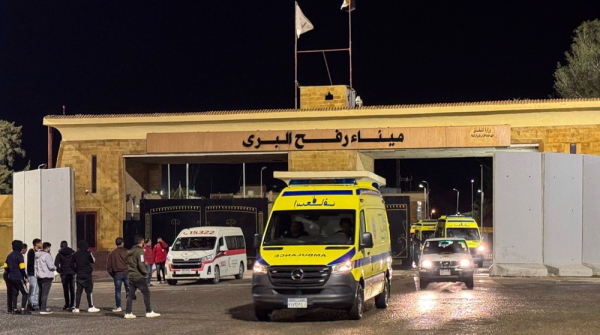
People of Gaza seeking to return home have reportedly faced intimidation and abuse by Israeli-backed violent gangs operating near the Rafah crossing, as only a fraction of travelers were allowed through, highlighting the ongoing restrictions and humanitarian challenges in the besieged strip.
Witnesses said that out of 50 Palestinians scheduled to enter Gaza from Egypt, only 12 were allowed through on Monday, while 38 were blocked.
Armed gangs linked to the late smuggler Yasser Abu Shabab escorted travelers to Israeli checkpoints and participated in interrogations, they added.
Al-Araby TV reported that those entering Gaza were stopped by masked militants at a checkpoint roughly 500 meters from the crossing and subjected to multiple rounds of questioning.
An Israeli official confirmed to Haaretz that “militia members escort Palestinians entering from the Rafah crossing to the Israeli security checkpoint.”
The Abu Shabab-linked gang, which has previously looted aid trucks and opened fire on Palestinian civilians while coordinating with Israeli forces, has become a key actor in controlling movement at the crossing.
At least 20 killed in heavy Israeli bombing of displacement tents in Gaza
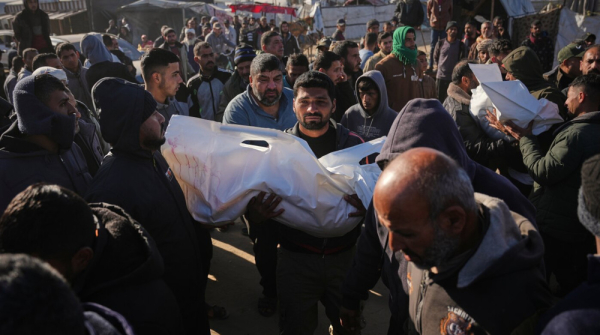
Israeli warplanes have carried out heavy strikes on tents housing displaced Palestinians in Khan Yunis, killing civilians and overwhelming local hospitals, in clear violation of the ceasefire agreement with the Palestinian resistance movement Hamas.
Medical and local sources said on Wednesday that Israeli fighter jets bombed displacement tents in al-Mawasi, west of Khan Yunis, twice within a short period, setting fire to shelters and killing people who had sought safety there. Hospitals in Gaza later confirmed that the death toll from attacks across the Gaza Strip had risen to 20.
Health officials said 13 of those killed were from the al-Tuffah and al-Zeitoun neighborhoods of Gaza City, where homes and streets came under fire.
Among the dead was a one-month-old infant, killed during the same wave of attacks that struck residential areas and civilian gatherings.
Eyewitnesses said the shelling focused on tents sheltering displaced families in Khan Yunis. Other strikes hit a house in al-Tuffah, east of Gaza City, and a street in the al-Zeitoun neighborhood, leaving additional people wounded and causing further destruction in already devastated districts.
Israeli helicopter fire was also reported in western Khan Yunis, expanding the assault in southern regions of the Gaza Strip.
The attacks unfolded as the Israeli regime continues to violate the ceasefire with Hamas which came to effect in October 2025.
The Role of the United States and the Zionist Regime in the Recent Unrest in Iran

The recent unrest and disturbances in Iran cannot be analyzed merely within the framework of social protests. Numerous indications suggest that these events were part of a deliberate and organized project designed by foreign adversaries—particularly the United States and the Zionist regime—to undermine Iran’s national security and stability. Iranian media outlets and officials have repeatedly emphasized that these developments are a continuation of the so-called “maximum pressure” strategy and a broader hybrid war against the Islamic Republic of Iran.
According to reports published by Iranian news agencies, the United States and Israel have for years employed various tools—including economic sanctions, psychological warfare, media operations, and social networks—to foment dissatisfaction and instability inside Iran. During the recent unrest, this strategy was pursued more aggressively, with attempts to transform limited social grievances into organized and violent riots.
One of the most significant dimensions of this sedition was the extensive role played by Western- and Israeli-linked media outlets. Networks such as Iran International, BBC Persian, and other aligned platforms sought to inflame tensions by exaggerating events, disseminating biased and misleading information, and openly encouraging the continuation of unrest. Iranian sources have reported that some of these outlets even published practical instructions aimed at provoking chaos and confronting security forces.
Furthermore, evidence and statements cited by domestic media indicate that intelligence agencies affiliated with the United States and the Zionist regime attempted to organize and sustain the unrest through financial support, cyber guidance, and communication with anti-Iranian elements and opposition groups. These actions are widely assessed as part of a joint Washington–Tel Aviv strategy to weaken Iran’s regional influence and entangle the country in internal crises.
Ultimately, the recent unrest once again demonstrated that Iran’s enemies seize every opportunity to strike at the nation’s security and unity. Nevertheless, public awareness, the clarifying role of domestic media, and the firm response of Iran’s security and law enforcement institutions prevented the core objectives of this sedition from being realized. Enhancing public awareness and understanding the nature of the enemy’s hybrid warfare remain the most effective means of preventing the repetition of such scenarios in the future.
The Role of Imam Mahdi (AJ) in Individual and Social Life

Imam Mahdi (may God hasten his reappearance) is not merely a religious belief or a historical figure, but a living and active reality in the lives of believers. Belief in a living Imam strengthens the spiritual connection between human beings and God and enhances a sense of guidance, awareness, and hope throughout life’s journey. This belief rescues people from confusion and directs them toward a bright and promising future.
In personal life, attention to Imam Mahdi (AJ) plays a fundamental role in self-development and moral growth. A person who considers themselves in the presence of the Imam becomes more conscious of their behavior, speech, and intentions, striving to choose a more righteous path. Such an outlook nurtures piety, responsibility, and inner reform.
From a social perspective, the culture of awaiting the Imam’s reappearance lays the foundation for justice-seeking and social reform. A society that believes in the return of Imam Mahdi (AJ) cannot remain indifferent to oppression, corruption, and discrimination. True anticipation encourages active social participation, the defense of human rights, and continuous efforts to establish justice.
Imam Mahdi (AJ) represents a perfect model of divine and humane leadership. Understanding his goals and ideals clarifies the correct path of governance, social interaction, and respect for human rights. Following his teachings contributes to the formation of a balanced, ethical, and justice-oriented society.
Ultimately, awaiting the reappearance of Imam Mahdi (AJ) is a constructive and hope-inspiring force for both individuals and communities. This anticipation protects humanity from despair and calls people toward constant effort in self-improvement and social reform. The promise of his return heralds a future in which truth will prevail over falsehood and justice and spirituality will spread across the world.