zarezadeh
Detention of Maduro and Escalating International Reactions

“Nicolás Maduro and His Wife Detained During U.S. Operation; Global Shock and Condemnation Intensify”
Detailed description of this stage:
Reports indicated that U.S. special forces launched a ground operation, during which Venezuelan President Nicolás Maduro and his wife were detained.
U.S. officials later confirmed the operation, stating that Maduro and his family had been transferred خارج of the country and that the United States would temporarily oversee security arrangements in Venezuela.
The operation was reportedly carried out with special forces supported by aerial surveillance and air cover, marking a major escalation from the initial airstrikes.
Casualties and internal situation in Venezuela:
Preliminary figures suggested that at least 12 people were killed and around 90 injured, though the numbers were not final and could increase as more information emerged.
Venezuelan military units attempted to establish defensive positions in the streets of Caracas, leading to heightened tension and clashes in several areas of the capital.
International reactions:
The attack triggered strong global reactions, with several countries and political movements condemning the operation as a violation of Venezuela’s sovereignty and international law, warning of dangerous consequences for regional and global stability.
Beginning of the Attack and Widespread Bombardment of Venezuela
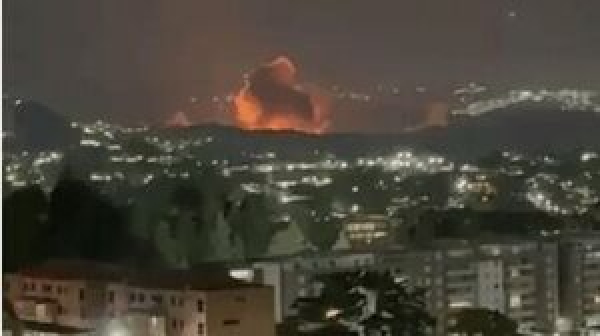
“The United States Launches a Full-Scale Military Attack on Venezuela; Explosions Rock Caracas”
Detailed description of this stage:
In the early hours of last night, U.S. military fighter jets and aircraft carried out heavy airstrikes and launched cruise missiles, targeting military positions, bases, and key strategic facilities in the Venezuelan capital, Caracas, and its surrounding areas.
Air-raid sirens and the sound of multiple powerful explosions were reported across different districts of the capital, confirming the intensity of the assault.
According to reports, the strikes focused on air bases, command-and-control centers, and critical military infrastructure belonging to the Venezuelan armed forces.
Initial information indicated that the air attack lasted for nearly one hour, causing widespread disruption and fear among civilians.
Response from Venezuelan authorities:
The Venezuelan government reacted immediately by declaring a state of armed defense and deploying military forces throughout major cities, particularly Caracas.
President Nicolás Maduro declared a nationwide state of emergency, calling on the Venezuelan people and the armed forces to remain united and prepared to resist foreign aggression.
Abu Ubaida of Palestine and His Martyrdom
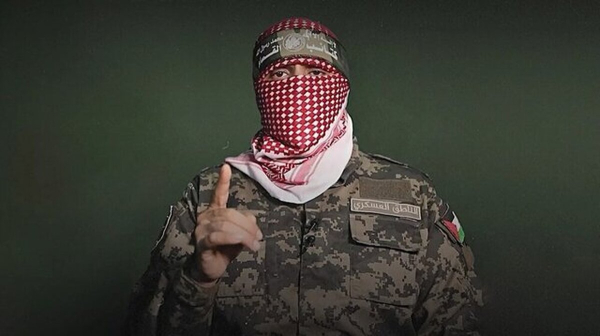
Abu Ubaida was the nom de guerre of a prominent Palestinian resistance figure and the official military spokesperson of the Izz ad-Din al-Qassam Brigades, the armed wing of the Islamic Resistance Movement (Hamas). For many years, he was known as the public voice of the Palestinian resistance, delivering statements and updates regarding developments in Gaza.
His real identity, which had remained concealed for security reasons, was later revealed to be Hudhayfa Samir Abdullah al-Kahlout. Abu Ubaida played a significant role in the media and psychological dimensions of the conflict, becoming a recognizable figure for supporters of the Palestinian cause across the region.
The Manner of His Martyrdom
In late 2025, the al-Qassam Brigades officially announced that Abu Ubaida had been martyred. According to the statement, he was targeted during an Israeli airstrike in the Gaza Strip. The attack occurred several months earlier, and he later succumbed to the severe injuries he sustained.
His martyrdom reportedly took place alongside other resistance commanders, marking a major loss for the Palestinian resistance movement.
His Role and Legacy
Abu Ubaida was regarded as the primary military spokesperson of the resistance, responsible for communicating key messages, warnings, and announcements during times of conflict. His calm yet firm tone and consistent presence made him a symbol of steadfastness and resistance for many Palestinians and supporters worldwide.
Following his martyrdom, Palestinian resistance groups emphasized that the loss of leaders and commanders would not weaken their resolve, reaffirming their commitment to continue their struggle.
Israeli military confirms soldier’s death in apparent suicide case
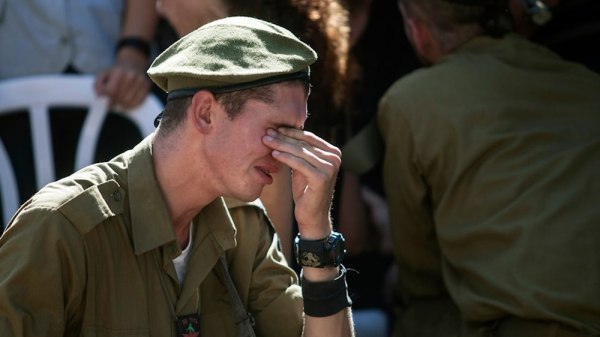
The Israeli military has announced that another Israeli soldier was found dead in the southern part of the occupied territories, in an apparent suicide.
The statement noted that a Military Police investigation has been opened, and upon its completion, the findings will be submitted to the Military Advocate General's Office for review.
This brings the number of Israeli troops who have taken their own lives since the start of the genocidal war on Gaza to more than 61.
The Israeli military went on to say that 22 cases of suspected suicide are currently under investigation or have been investigated, including 12 conscript soldiers, one career soldier, and nine reservists.
The development comes after an Israeli soldier took his own life at a military base in the northern part of the Israeli-occupied territories on December 16.
The Hebrew-language newspaper Haaretz reported that the soldier, serving as a tracker in regular military duty, shot himself inside the base. He sustained critical injuries and was later pronounced dead that evening.
From the beginning of 2024 to July 2025, a total of 279 Israeli soldiers attempted suicide, with roughly one completed suicide occurring for every seven attempts, as reported by the Knesset Research and Information Center.
In October, Israeli chief of staff Eyal Zamir highlighted a growing mental health crisis within the army, revealing that thousands of soldiers were undergoing psychological treatment.
He called on commanders to remain vigilant, identify mental health issues within their units, and ensure that affected soldiers receive prompt care.
Nearly 10,000 of the 19,000 Israeli soldiers injured in Gaza are currently dealing with psychological disorders, including post-traumatic stress disorder, and are receiving care through the rehabilitation department of the ministry of military affairs, according to a previous report by the public broadcaster KAN published in late July.
Israel has killed at least 71,269 Palestinians, mostly women and children, and injured 171,232 others in attacks in Gaza since October 2023.
A ceasefire implemented on October 10 of last year was intended to bring an end to the war. However, Israel has breached it on a daily basis, leading to hundreds of additional casualties.
Israel continues to impose restrictions on the entry of food and medicine into Gaza, where approximately 2.4 million Palestinians endure severe humanitarian challenges, according to the Gaza government media office.
Press TV’s website
The Virtues of Imam Ali ibn Abi Talib (peace be upon him)

Imam Ali (pbuh) is one of the most outstanding figures in Islamic history and a perfect embodiment of human and divine virtues. His personality is so comprehensive and unique that both friends and opponents have acknowledged his greatness and excellence. Some of his most important virtues are as follows:
1. Faith and Pioneering in Islam
Imam Ali (pbuh) was the first man to believe in the Prophet of Islam, Muhammad ﷺ. His faith was conscious, sincere, and free from any trace of idolatry. The Prophet (pbuh) said:
“Ali was the first to believe in me and he will be the first to meet me on the Day of Judgment.”
2. Knowledge and Wisdom
Imam Ali (pbuh) was the fountain of prophetic knowledge. The Prophet Muhammad (pbuh) said:
“I am the city of knowledge, and Ali is its gate.”
His vast knowledge, precise judgments, and wise sayings—especially those collected in Nahj al-Balagha—clearly reflect this virtue.
3. Justice
Justice was the foundation of Imam Ali’s life and governance. He never distinguished between friend and enemy in upholding the truth and distributed the public treasury equally. One of his famous statements illustrates this spirit:
“By God, I would rather spend the night on thorns than meet Allah and His Messenger having oppressed even a single servant.”
4. Courage and Bravery
Imam Ali (pbuh) was the symbol of bravery on the battlefield. He played decisive roles in battles such as Badr, Uhud, Khandaq, and Khaybar. The Prophet (pbuh) said:
“The strike of Ali on the Day of Khandaq is superior to the worship of all humans and jinn.”
5. Asceticism and Simple Living
Despite being the leader of the Muslim community, Imam Ali (pbuh) lived a very simple life. His food was coarse bread and salt, and his clothing was modest and rough. He viewed this world as a means, not a goal.
6. Compassion and Care for the Needy
Imam Ali (pbuh) was a refuge for orphans, the poor, and the helpless. At night, he secretly carried food to those in need without revealing his identity. Only after his martyrdom did many realize who that unknown benefactor had been.
7. Devotion and Spirituality
Imam Ali’s (pbuh) long prayers, midnight tears, and intimate supplications reflect the peak of his servitude to God. He was martyred in the prayer niche, a clear sign of his lifelong bond with Allah.
Conclusion
Imam Ali (pbuh) is a complete model of faith, knowledge, justice, courage, morality, and humanity. Knowing his virtues is not merely learning about a historical figure, but discovering a true path to righteous living and devotion to God.
The City of Najaf and the Shrine of Imam Ali (peace be upon him)
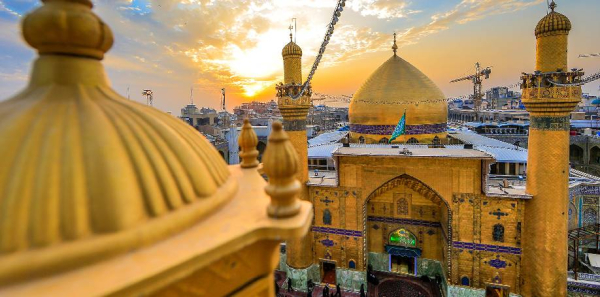
Najaf al-Ashraf is one of the holiest cities in the Islamic world and the most important pilgrimage destination for Shiite Muslims. Located in southern Iraq near the city of Kufa, Najaf holds a unique historical, cultural, and spiritual status due to the presence of the holy shrine of Imam Ali ibn Abi Talib (pbuh).
History of the City of Najaf
In ancient times, Najaf was known by names such as al-Gharī and Ẓahr al-Kufa. The true significance of this area became evident after the martyrdom of Imam Ali (pbuh) in 40 AH (661 CE). According to historical narrations, the blessed body of Imam Ali (pbuh), following his own will, was buried secretly in this location to protect it from enemies. Many years later, the exact location of his grave was revealed, and gradually the city of Najaf developed around it.
The Shrine of Imam Ali (pbuh)
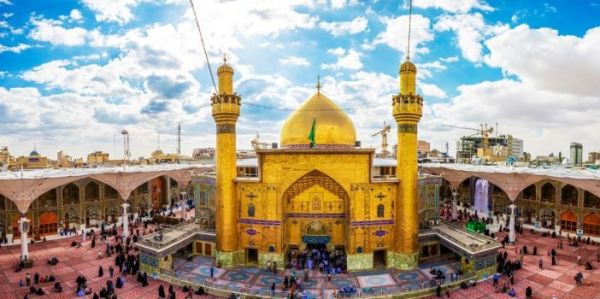
The holy shrine of Imam Ali (pbuh), commonly known as the Alid Shrine, is considered one of the most magnificent religious structures in the Islamic world. Its golden dome, grand iwans, spacious courtyards, mirror work, and exquisite tile decorations reflect the beauty and brilliance of Islamic art. Throughout history, the shrine has been renovated and expanded many times with the contributions of rulers, scholars, and devotees of the Ahl al-Bayt.
Najaf as a Center of Knowledge and Spirituality
In addition to its religious importance, Najaf is one of the greatest centers of Shiite scholarship. The Hawza of Najaf is among the oldest and most prestigious Islamic seminaries in the Muslim world. Great scholars such as Shaykh al-Tusi, Allama al-Hilli, Mirza Na’ini, Ayatollah al-Khoei, and Imam Khomeini studied, taught, or carried out scholarly activities in this city.
The Virtue of Visiting Najaf
Islamic narrations emphasize the great spiritual reward of visiting the shrine of Imam Ali (pbuh). Pilgrims regard Najaf as a place of inner peace, answered prayers, and renewal of their commitment to the values of justice, courage, and spirituality embodied by Imam Ali (pbuh).
Najaf: The City of Knowledge and Wilayah
Today, Najaf al-Ashraf stands as a symbol of wilayah (divine leadership), knowledge, resistance, and spirituality—a city that has drawn the hearts of lovers of the Ahl al-Bayt from around the world for centuries, illuminated by the radiant presence of the shrine of Imam Ali (pbuh).
The Successor of the Prophet of Islam
In Shiite belief, the succession of the Prophet of Islam ﷺ is a divine appointment, not a matter left to public choice. Based on verses of the Qur’an and authentic narrations, Imam Ali ibn Abi Talib (peace be upon him) was appointed by God as the rightful successor of the Prophet.
1. The Verse of Wilayah (Authority)
Arabic:
إِنَّمَا وَلِيُّكُمُ اللَّهُ وَرَسُولُهُ وَالَّذِينَ آمَنُوا الَّذِينَ يُقِيمُونَ الصَّلَاةَ وَيُؤْتُونَ الزَّكَاةَ وَهُمْ رَاكِعُونَ
(سورة المائدة، آية 55)
English Translation:
“Your only guardian is Allah, His Messenger, and the believers—those who establish prayer and give charity while they are bowing.”
(Qur’an 5:55)
According to Shiite interpretations and many Sunni sources, this verse was revealed about Imam Ali (pbuh) when he gave his ring to a poor man while in the state of bowing (rukūʿ) during prayer. The word Wali here means guardian, leader, and authority.
2. The Verse of Proclamation
Arabic:
يَا أَيُّهَا الرَّسُولُ بَلِّغْ مَا أُنزِلَ إِلَيْكَ مِن رَّبِّكَ وَإِن لَّمْ تَفْعَلْ فَمَا بَلَّغْتَ رِسَالَتَهُ
(سورة المائدة، آية 67)
English Translation:
“O Messenger! Proclaim what has been revealed to you from your Lord; and if you do not, then you have not conveyed His message.”
(Qur’an 5:67)
Many narrations state that this verse was revealed at Ghadir Khumm, commanding the Prophet to publicly announce Imam Ali’s leadership.
3. The Hadith of Ghadir
Arabic:
مَنْ كُنْتُ مَوْلَاهُ فَهٰذَا عَلِيٌّ مَوْلَاهُ
English Translation:
“Whoever I am his master, then Ali is his master.”
This hadith is one of the most widely transmitted (mutawātir) narrations in Islamic history and clearly indicates the authority and succession of Imam Ali (pbuh).
4. The Hadith of Position (Hadith al-Manzilah)
Arabic:
أَنْتَ مِنِّي بِمَنْزِلَةِ هَارُونَ مِنْ مُوسَى إِلَّا أَنَّهُ لَا نَبِيَّ بَعْدِي
English Translation:
“You are to me as Aaron was to Moses, except that there is no prophet after me.”
Just as Prophet Aaron was the successor of Prophet Moses, Imam Ali (pbuh) is presented as the successor of the Prophet Muhammad ﷺ.
Conclusion
Based on clear Qur’anic verses and authentic prophetic traditions, the leadership and succession of Imam Ali (peace be upon him) is divinely ordained. He is the rightful continuation of the Prophet’s path and the most qualified leader of the Muslim community after him.
The birth of Imam Ali ibn Abi Talib
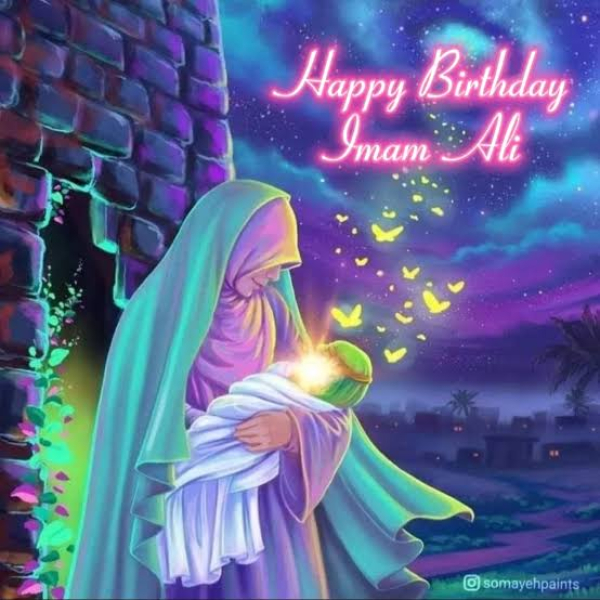
The birth of Imam Ali ibn Abi Talib (peace be upon him) is one of the most remarkable and unique events in the history of Islam and holds a special place in the beliefs of Muslims, especially Shiites.
Imam Ali (pbuh) was born on the 13th of Rajab, 30 years after the Year of the Elephant (approximately 23 years before the migration of the Prophet Muhammad ﷺ) inside the Kaaba in the city of Mecca. This feature makes his birth unparalleled in history, as according to historical sources, no one other than Imam Ali (pbuh) has ever been born inside the Kaaba. His mother was Fatimah bint Asad, a faithful and virtuous woman of Quraysh, and his father was Abu Talib, the uncle of the Prophet of Islam and one of his greatest supporters.
According to historical narrations, when Fatimah bint Asad went into labor, she came to the Kaaba and prayed to God for help. The wall of the Kaaba split open, allowing her to enter the House of God. After a few days, she emerged holding her newborn child. This event has been reported by many Shiite and Sunni historians and is considered a sign of the high status and divine position of Imam Ali (pbuh).
From childhood, Imam Ali (pbuh) was raised in the household of the Prophet Muhammad (pbuh), and he was the first man to believe in the Prophet. His birth in the House of God is seen as a symbol of his deep connection with monotheism, justice, and divine values—principles that were reflected throughout his life, leadership, and martyrdom.
For this reason, the 13th of Rajab is celebrated in Shiite culture as the birth anniversary of Imam Ali (pbuh) and is also observed as Father’s Day—a day to honor faith, courage, justice, and human
Shrine of Kadhimayn
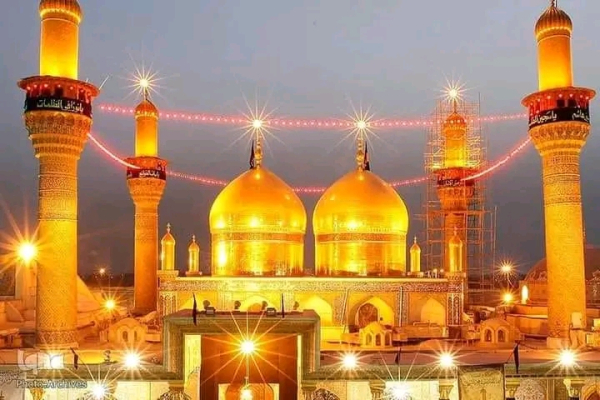
The Shrine of Kadhimayn is one of the most important sacred sites for Shia Muslims. It is located in the city of Kadhimayn, north of Baghdad. This holy shrine is the burial place of two great Shia Imams: Imam Musa al-Kadhim (peace be upon him), the seventh Imam, and Imam Muhammad al-Taqi, Imam Jawad (peace be upon him), the ninth Imam. For this reason, the site is known as Kadhimayn, meaning “the two Kadhims.”
With its golden domes and majestic minarets, the Shrine of Kadhimayn has always been a destination for pilgrims and lovers of the Ahl al-Bayt (peace be upon them) from all over the world. In addition to its spiritual significance, the shrine holds great historical and architectural value and has been renovated and expanded many times throughout history.
Alongside the two infallible Imams, a number of prominent scholars, jurists, and distinguished Shia figures are also buried in or around this holy shrine. Among the most notable are Shaykh al-Mufid, a great Shia jurist and theologian, and Nasir al-Din al-Tusi, both of whom played significant roles in the development of Islamic sciences and the teachings of the Ahl al-Bayt (peace be upon them).
Today, the Shrine of Kadhimayn is not only a sacred place of pilgrimage but also a symbol of the deep connection between Shia history, faith, and culture.
Anniversary of the Birth of Imam Jawad (peace be upon him)
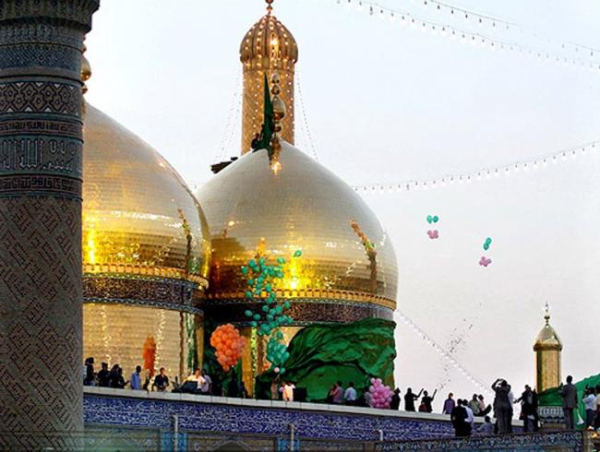
Imam Jawad (peace be upon him), the ninth Imam of the Shia, was born on the 10th of Rajab in the year 195 AH in Medina. His father was Imam Reza (peace be upon him), and his mother was a virtuous woman named Sabikah. Despite his young age, he was renowned for his vast knowledge and wisdom, and for this reason he became known as Jawad al-A’immah (the Most Generous of the Imams).