zarezadeh
The Permissibility of Tawassul to Allah Through the Righteous After Their Death

1. The Core Principle: Tawassul Is Directed to Allah, Not to the Dead
The fundamental point is that in Tawassul—even after a person’s death—
? the request is made to Allah alone,
? while the Prophet or righteous person is only a means (wasīlah) and a servant honored by Allah.
Thus, the issue is not “asking the dead for help,”
but rather calling upon Allah by virtue of the status of His righteous servants.
2. Qur’anic Evidence: The Living State of the Righteous After Death
a) The Life of the Martyrs (and by extension, the Prophets and Saints)
Allah says:
“Do not think of those who are killed in the way of Allah as dead. Rather, they are alive with their Lord, receiving provision.”
(Qur’an 3:169)
If martyrs are alive after death, then the Prophets, Imams, and righteous saints are even more deserving of this living, conscious state.
b) The Prophet’s Awareness of Deeds After His Death
Allah says:
“And say: ‘Act, for Allah will see your deeds, and His Messenger and the believers as well.’”
(Qur’an 9:105)
According to many narrations from both Shiʿa and Sunni sources:
“the believers” refers to the righteous servants of Allah
Seeing deeds requires awareness and perception, even after death
3. Explicit Hadith Evidence for Tawassul After the Prophet’s Death
a) The Hadith of the Blind Man Applied After the Prophet’s Passing
The Companion ʿUthmān ibn Ḥunayf narrates:
A man had a need that was not fulfilled during the caliphate of ʿUthmān ibn ʿAffān.
ʿUthmān ibn Ḥunayf taught him the supplication:
“O Allah, I ask You and turn to You through Your Prophet Muhammad…”
Key points:
This incident occurred after the death of the Prophet ﷺ
A Companion taught the same form of Tawassul
The man’s need was fulfilled
Sunni sources:
al-Ṭabarānī, al-Muʿjam al-Kabīr
al-Bayhaqī
Ibn Ḥajar al-Haytamī (Shāfiʿī scholar)
b) Tawassul at the Grave of the Prophet ﷺ by the Companions
Mālik al-Dār, the treasurer of ʿUmar ibn al-Khaṭṭāb, narrates:
During a drought, a man came to the grave of the Prophet ﷺ and said:
“O Messenger of Allah, ask Allah to grant rain to your الأمة (community).”
The Prophet ﷺ then appeared to him in a dream and informed him that rain would come.
This narration is recorded in:
al-Muṣannaf of Ibn Abī Shaybah
Major Sunni scholars such as Ibn Ḥajar al-ʿAsqalānī graded it as authentic.
4. Do the Dead Hear? Qur’an and Sunnah
a) Qur’anic Verses About “Not Hearing the Dead”
Allah says:
“You cannot make the dead hear.”
(Qur’an 27:80)
Scholars explain that this verse is metaphorical, comparing disbelievers to the dead.
b) Authentic Hadith: The Dead Do Hear
The Prophet ﷺ said regarding the slain disbelievers at Badr:
“You do not hear what I say better than they do.”
Ṣaḥīḥ al-Bukhārī, Book of Funerals
This clearly proves that the dead are capable of hearing, by Allah’s permission.
5. Rational Argument
Death is not annihilation, but a transition
The soul remains alive
If praying for the dead is permissible, then seeking nearness to Allah through a righteous soul is even more reasonable
Tawassul is simply supplication combined with honoring those close to Allah
6. Final Conclusion
✔ Seeking Tawassul to Allah through righteous servants after their death:
Is consistent with the Qur’an (life after death)
Is established through authentic Sunnah and the practice of the Companions
Is in harmony with sound reason
Does not constitute shirk in any way
Conclusion:
Tawassul to Allah through righteous believers after their death is not only permissible, but firmly rooted in the Qur’an and Sunnah.
Tawassul: A Qur’anic, Prophetic, and Rational Belief

1. The Meaning of Tawassul
Tawassul literally means “seeking a means” or “using a الوسيلة (means) to reach a goal.”
In Islamic theology, Tawassul refers to seeking closeness to Allah through His chosen and righteous servants, such as the Prophets and the divinely guided ones.
In Shiʿa belief:
Allah alone is the independent actor, and the righteous are only means and channels of His grace.
2. Tawassul in the Holy Qur’an
a) A Clear Qur’anic Command to Seek a Means
Allah says:
“O you who believe! Fear Allah and seek a means of nearness (wasīlah) to Him.”
(Qur’an 5:35)
This verse clearly commands believers to seek a means to Allah.
The verse does not restrict this means to a specific action; according to many Shiʿa and Sunni commentators, the most evident examples of wasīlah are the prophets and the righteous servants of Allah.
b) Tawassul through the Prophet during His Lifetime
Allah says:
“If they had come to you when they wronged themselves, and asked Allah for forgiveness, and the Messenger had asked forgiveness for them, they would have found Allah Accepting of repentance, Most Merciful.”
(Qur’an 4:64)
This verse explicitly approves seeking forgiveness through the Prophet (peace be upon him).
c) Tawassul in Previous Nations
The brothers of Prophet Joseph (Yusuf) said to their father:
“O our father, ask forgiveness for our sins for us.”
(Qur’an 12:97)
Prophet Jacob (Yaʿqub) did not reject their request, which proves that asking a righteous servant to pray on one’s behalf is Qur’anic.
3. Tawassul in the Prophetic Tradition (Sunnah)
The Hadith of the Blind Man
A blind man came to the Prophet (peace be upon him) and asked for healing.
The Prophet taught him to supplicate, saying:
“O Allah, I ask You and turn to You through Your Prophet Muhammad…”
This hadith is narrated in authentic Sunni sources such as Sunan al-Tirmidhi and Sunan al-Nasa’i, and it is one of the clearest proofs for the permissibility of Tawassul through the Prophet.
4. Is Tawassul Shirk (Polytheism)?
Shirk means attributing independent power to other than Allah.
Tawassul, according to Shiʿa belief, means:
Asking Allah by the rank and closeness of His chosen servants — not considering them independent from Him.
A rational example:
• When a sick person goes to a doctor, he does not believe the doctor is God.
• The doctor is a means, not an independent source of healing.
If Tawassul were shirk:
• The Qur’an would not command it
• The Prophet would not teach it
• The righteous generations would not practice it
5. Tawassul from the Perspective of Reason
Reason tells us:
• Allah has established the world based on causes and means
• Just as we use means in material matters, using means in spiritual matters is logical
• Tawassul respects the wise system Allah has placed in creation
6. Conclusion
✔ Tawassul:
• Is rooted in the Qur’an
• Is established in the Sunnah of the Prophet
• Is consistent with sound reason
• Does not contradict pure monotheism (Tawḥīd)
Therefore, according to Shiʿa Islam:
Tawassul is a completely logical, Qur’anic, Prophetic, and monotheistic belief.
Settlement construction plans in al-Quds violate international law: Hamas
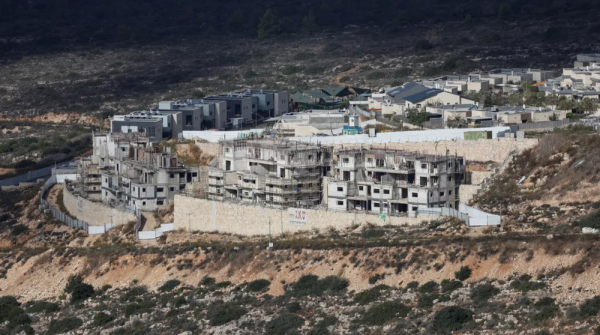
Hamas has strongly criticized the decision by the Israeli regime to approve a plan for a new settlement east of occupied al-Quds, calling the move a dangerous escalation in the settlement and annexation agenda, and another crime added to Israel's already extensive record of international law violations.
The Palestinian resistance movement said in a statement that the settlement plan approved by Israeli Finance Minister Bezalel Smotrich, which comprises thousands of housing units, is part of a deliberate policy designed to Judaize al-Quds, separate it from its Palestinian environment, and transform its character and identity.
The statement emphasized that the plan constitutes a direct attack on the rights of the Palestinian people, their territory, and their sacred sites, while also ignoring the will of the international community and its consistent warnings.
Hamas underlined that ongoing settlement activities act as a catalyst for tension and instability, placing full responsibility on the occupying Israeli regime for the repercussions of these colonial actions on the ground.
The movement urged the international community, the United Nations, and relevant legal and human rights organizations to fulfill their obligations and take immediate action to stop settlement projects and enforce measures to deter Israel.
It also called on the Palestinian people to reinforce their resilience and unity in facing efforts of Judaization and displacement.
After the launch of Israel's genocidal war in Gaza on October 7, 2023, Israeli authorities examined around 355 master plans for the development of 37,415 settlement units across 38,551 dunams (39 square kilometers) of Palestinian land. Among these, approval has been granted for 18,801 units, while the remaining 18,614 are still undergoing review.
Over 700,000 Israeli settlers currently live in more than 230 settlements established following the 1967 occupation of the West Bank and East al-Quds.
The international community views these settlements as a violation of international law and the Geneva Conventions because they are built on occupied Palestinian territories.
The UN General Assembly and the UN Security Council have consistently denounced Israel's settlement activities through various resolutions.
Press TV’s website
‘Israel deliberately targeting civilians’: Hamas condemns deadly attack on Gaza school
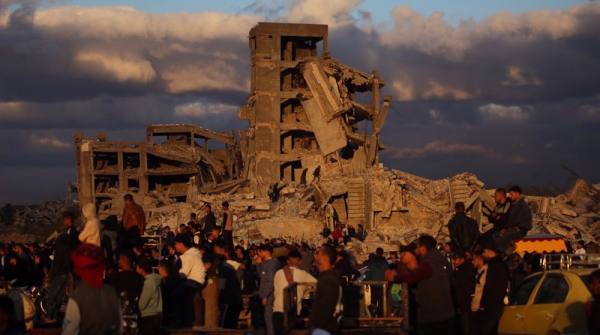
Hamas has condemned the “brutal” Israeli shelling of a school in Gaza City on Friday, which killed several Palestinians, calling it another “deliberate” war crime and a blatant violation of the ceasefire.
In a statement on Saturday, the Gaza-based resistance group also called out the “international silence and failure” to stop these crimes.
“The artillery strike carried out by the fascist Israeli occupation army on a school sheltering displaced civilians in the Al-Tuffah neighborhood, east of Gaza City, which resulted in the killings of several citizens, most of them children, is a brutal crime against innocent civilians and a flagrant, repeated violation of the ceasefire agreement,” read the statement.
The terrorist Israeli regime, it added, “continues its violations of the ceasefire by deliberately and continuously targeting civilians in the Gaza Strip, leaving more than 400 martyrs since the agreement was announced over two months ago, amid an international silence and failure to act against these crimes.”
Hamas emphasized that the occupation does not stop at targeting civilians, but deepens the humanitarian catastrophe by preventing ambulances and medical teams from reaching the sites of attacks to rescue and treat the wounded.
The resistance group warned that the criminal behavior “amounts to compounded war crimes and a blatant violation of international humanitarian law.”
Hamas also urged the mediators guaranteeing the agreement and the US administration to fulfill their responsibilities regarding these violations and to intervene immediately to halt the attempts of Prime Minister Benjamin Netanyahu’s war-criminal cabinet to impose equations that contradict and clearly undermine the agreement.
Israel’s Friday attack on a school-turned-shelter near Mohammad al-Durra Hospital, east of the al-Tuffah neighborhood, killed at least seven Palestinians and wounded several others.
Some bodies were recovered in pieces, eyewitnesses told local news sources.
Since the ceasefire took effect on October 10, Israel has violated the ceasefire at least 738 times, the Gaza Government Media Office said.
It said Israel shot at civilians 205 times, raided residential areas beyond the yellow line 37 times, bombed and shelled Gaza 358 times, and demolished people’s properties on 138 occasions.
The Palestinian Health Ministry in Gaza said at least 394 Palestinians have been killed in Israeli attacks since October 11, the first full day of the ceasefire. Another 1,075 people have been wounded.
Hamas leader Ghazi Hamas said on Tuesday that Israel had committed more than 813 ceasefire violations.
He added that since the ceasefire agreement came into force, about 400 people have been killed, noting that more than 95% of the dead are civilians.
The latest figures from the Palestinian Health Ministry, tracking the casualties from October 7, 2023, confirm that over 70,600 Palestinians, including more than 20,150 children, have been killed during the Israeli genocide against Gaza.
Press TV’s website
The Benefits of Sending Ṣalawāt

The Benefits of Sending Ṣalawāt (Blessings) upon the Prophet ﷺ and His Family
(Based on the Qur’an and Islamic Narrations)
1. Obedience to a Direct Divine Command
> “Indeed Allah and His angels send blessings upon the Prophet…”
(Qur’an 33:56)
Sending ṣalawāt is direct obedience to Allah’s command.
---
2. Acceptance and Elevation of Supplication
The Prophet ﷺ said:
“Supplication remains suspended between heaven and earth until ṣalawāt is sent upon the Prophet.”
? Sunan al-Tirmidhī, vol. 5, p. 485
---
3. Forgiveness of Sins
The Prophet ﷺ said:
“Whoever sends one ṣalawāt upon me, Allah forgives ten of his sins.”
? Ṣaḥīḥ Muslim, vol. 1, p. 306
---
4. Increase in Good Deeds (Ḥasanāt)
The Prophet ﷺ said:
“For every ṣalawāt, ten good deeds are recorded for him.”
? Sunan al-Nasāʾī, vol. 3, p. 50
---
5. Elevation of Rank and Status
The Prophet ﷺ said:
“With every ṣalawāt, Allah raises the servant ten درجات (levels).”
? Musnad Aḥmad, vol. 4, p. 164
---
6. Faster Acceptance of Supplication
Imam al-Ṣādiq (a) said:
“Ṣalawāt is the key to the acceptance of supplication.”
? al-Kāfī, vol. 2, p. 493
---
7. Removal of Grief, Anxiety, and Sorrow
The Prophet ﷺ said:
“Ṣalawāt removes grief.”
? Biḥār al-Anwār, vol. 91, p. 63
---
8. Relief from Poverty and Hardship
Imam ʿAlī (a) said:
“Ṣalawāt removes poverty.”
? Biḥār al-Anwār, vol. 91, p. 63
---
9. Illumination of the Heart and Purification of the Soul
Imam al-Bāqir (a) said:
“Ṣalawāt purifies hearts.”
? Biḥār al-Anwār, vol. 91, p. 65
---
10. Protection from Hypocrisy
The Prophet ﷺ said:
“Frequent ṣalawāt removes hypocrisy from the heart.”
? Kanz al-ʿUmmāl, hadith 39680
---
11. Nearness to the Prophet on the Day of Judgment
The Prophet ﷺ said:
“The closest people to me on the Day of Judgment are those who send the most ṣalawāt upon me.”
? Sunan al-Tirmidhī, vol. 5, p. 551
---
12. Expiation for Gatherings
The Prophet ﷺ said:
“When ṣalawāt is sent in a gathering, it becomes an expiation for that gathering.”
? Sunan al-Tirmidhī, vol. 5, p. 553
---
13. Protection from the Punishment of the Grave
Imam al-Ṣādiq (a) said:
“Ṣalawāt prevents the punishment of the grave.”
? Thawāb al-Aʿmāl, Shaykh al-Ṣadūq, p. 140
---
14. Acceptance of Deeds
Imam al-Riḍā (a) said:
“Ṣalawāt elevates deeds.”
? ʿUyūn Akhbār al-Riḍā, vol. 2, p. 265
---
15. Companionship of the Angels
The Prophet ﷺ said:
“The angels send blessings upon the one who sends ṣalawāt.”
? Musnad Aḥmad, vol. 3, p. 456
---
16. Protection from Regret on the Day of Judgment
The Prophet ﷺ said:
“Whoever hears my name mentioned in a gathering and does not send ṣalawāt will regret it on the Day of Judgment.”
? Sunan al-Tirmidhī, vol. 5, p. 551
---
17. Fulfillment of Worldly and Hereafter Needs
Imam al-Ṣādiq (a) said:
“Ṣalawāt is a means for fulfilling needs.”
? Biḥār al-Anwār, vol. 91, p. 66
---
Brief Summary
Ṣalawāt is worship, supplication, remembrance, and a means of closeness to Allah
It brings benefits in both this world and the Hereafter
It is the easiest remembrance with the greatest impact
> The best short dhikr:
Allāhumma ṣalli ʿalā Muḥammad wa Āli Muḥammad
How Can Our Supplications Be Answered More Quickly? (Based on Hadith)
1️⃣ Begin with Praise of Allah and Ṣalawāt
Imam al-Ṣādiq (a):
“Any supplication that is not preceded by ṣalawāt is veiled.”
? al-Kāfī, vol. 2, p. 493
2️⃣ Confess Sins and Repent
Imam ʿAlī (a):
“Sin delays the acceptance of supplication.”
? Ghurar al-Ḥikam, hadith 3465
3️⃣ Pray for Others Before Yourself
The Prophet ﷺ said:
“The supplication of a believer for another believer in his absence is answered.”
? al-Kāfī, vol. 2, p. 509
4️⃣ Persist and Be Consistent in Supplication
Imam al-Bāqir (a):
“Allah loves a servant who persists in supplication.”
? al-Kāfī, vol. 2, p. 473
5️⃣ Choose Special Times
The Prophet ﷺ said:
“A supplication made between the adhān and the iqāmah is not rejected.”
? Sunan al-Tirmidhī, vol. 1, p. 212
6️⃣ Consume Lawful (Ḥalāl) Sustenance
The Prophet ﷺ said:
“Whoever consumes lawful food, his supplication will be answered.”
? Biḥār al-Anwār, vol. 93, p. 374
Intercession (Shafāʿah) in Islam

Intercession (Shafāʿah) in Islam: A Qur’anic and Hadith-Based Analysis and Response to Objections
Introduction
Intercession (shafāʿah) is one of the established Islamic beliefs with deep roots in the Qur’an and the Prophetic tradition, and it is widely accepted among Muslims, particularly within Shiʿa theology. Nevertheless, some groups consider intercession contrary to pure monotheism or restrict it solely to the Day of Judgment. This article briefly explains the reality of intercession through Qur’anic verses and authentic narrations and addresses common objections.
---
1. The Principle of Intercession in the Qur’an
The Qur’an clearly affirms intercession while making it strictly dependent on Allah’s permission:
> “Who is it that can intercede with Him except by His permission?”
(Qur’an 2:255)
Allah also says:
> “They do not intercede except for one whom He approves.”
(Qur’an 21:28)
These verses demonstrate that intercession is not denied; rather, it is recognized as a divinely regulated reality.
---
2. Response to the Claim: “Intercession Is Polytheism (Shirk)”
Shirk occurs only when independence in influence is attributed to other than Allah. However, the Qur’an explicitly states that all intercession belongs entirely to Allah:
> “Say: To Allah belongs all intercession.”
(Qur’an 39:44)
Thus, intercessors act solely by Allah’s authorization and will; they possess no independent power.
---
3. The Prophet’s Intercession in Authentic Hadith
Numerous authentic narrations in both Sunni and Shiʿa sources confirm the intercession of the Prophet Muhammad ﷺ.
The Prophet said:
> “I have been granted intercession.”
(Saḥīḥ Muslim, vol. 1, p. 190)
He also stated:
> “My intercession is for the major sinners among my community.”
(Sunan al-Tirmidhī, vol. 4, p. 610; Musnad Aḥmad, vol. 3, p. 213)
These narrations clearly indicate that the Prophet’s intercession extends even to sinful believers.
---
4. Response to the Claim: “Intercession Encourages Sin”
The Qur’an restricts intercession to those who are approved by Allah:
> “They do not intercede except for one whom He approves.”
(Qur’an 21:28)
Therefore:
Intercession does not apply to disbelievers or obstinate rejecters
Faith, repentance, and attachment to divine guidance are prerequisites for benefiting from intercession
As a result, intercession does not promote sin; rather, it serves as a moral and spiritual incentive for repentance and reform.
---
Conclusion
Intercession is a definitive Qur’anic reality
It occurs solely by Allah’s permission and will
Belief in intercession does not contradict monotheism
Denial of intercession contradicts explicit Qur’anic verses and authentic Sunnah
Accordingly, intercession represents a manifestation of Allah’s vast mercy and is a fundamental component of authentic Islamic belief.
Tawassul in Islam: A Qur’anic and Hadith-Based Analysis and Response to Objections
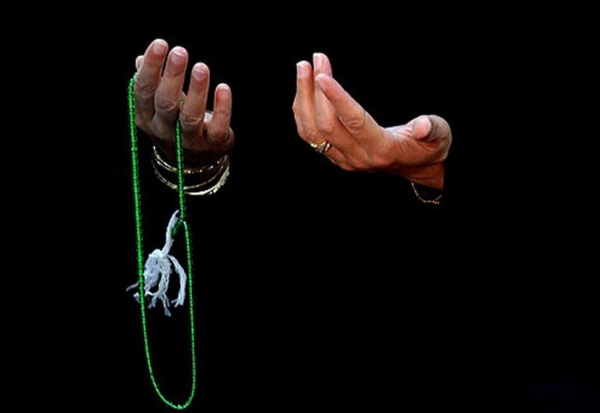
Tawassul (seeking nearness to God through a means) has long been a deeply rooted belief among Muslims, particularly within Shiʿa theology. However, some Sunni scholars reject tawassul entirely, while others permit it only with living persons and not with the deceased. This short article examines the legitimacy of tawassul through the Qur’an and Prophetic tradition and provides concise responses to these objections.
---
1. The Qur’anic Basis for Tawassul
The Qur’an explicitly affirms the principle of seeking a means to draw closer to God:
> “O you who believe! Fear Allah and seek the means (al-wasīlah) to Him.”
(Qur’an 5:35)
Prominent Sunni exegetes such as Fakhr al-Dīn al-Rāzī and al-Qurṭubī state that wasīlah includes anything that brings one closer to Allah, including righteous and honored individuals.
Allah also says:
> “If, when they wronged themselves, they had come to you and asked forgiveness of Allah, and the Messenger had asked forgiveness for them…”
(Qur’an 4:64)
This verse clearly establishes the legitimacy of approaching the Prophet and seeking Allah’s forgiveness through him.
---
2. Response to the Claim: “Tawassul Is Not Permissible at All”
If tawassul were polytheism or an innovation:
The Qur’an would not command seeking a wasīlah
The Companions would not have practiced it
In well-established Sunni sources, a blind man came to the Prophet ﷺ and asked for his prayer. The Prophet taught him to say:
> “O Allah, I ask You and turn to You through Your Prophet Muhammad…”
(Sunan al-Tirmidhī, vol. 5, p. 569; Musnad Aḥmad, vol. 4, p. 138)
This narration is a clear example of tawassul through the person of the Prophet, not merely a direct supplication without mediation.
---
3. Response to the Claim: “Tawassul Is Allowed with the Living, Not with the Dead”
This distinction has no explicit basis in the Qur’an or authentic Sunnah.
The Qur’an states:
> “Do not think of those who are killed in the way of Allah as dead.”
(Qur’an 3:169)
If martyrs are alive, then the Prophet ﷺ and the righteous saints are even more deserving of this status.
Moreover, after the Prophet’s passing, the Companion Bilāl ibn al-Ḥārith al-Muzanī came to the Prophet’s grave during a drought and said:
> “O Messenger of Allah, ask Allah to grant rain for your nation.”
Rain then fell, and none of the Companions objected to this act.
(al-Istīʿāb, Ibn ʿAbd al-Barr, vol. 3, p. 1149; al-Bidāyah wa al-Nihāyah, Ibn Kathīr, vol. 7, p. 105)
This incident clearly demonstrates tawassul after the Prophet’s death.
---
Conclusion
Tawassul has a clear Qur’anic foundation
It was practiced by the Prophet and his Companions
The distinction between the living and the deceased lacks scriptural proof
Tawassul is not worship of other than Allah, but rather asking Allah through those whom He loves and honors
Therefore, tawassul is neither polytheism nor innovation, but a well-established Islamic practice supported by the Qur’an and the Sunnah.
Animal Rights in Islam

Islam recognizes clear rights for animals and views humans as morally responsible for their well-being. In the Qur’an and Islamic teachings, animals are not mere tools for human use but valuable creatures and integral parts of God’s creation.
The Status of Animals in the Qur’an
The Qur’an describes animals as communities similar to human beings:
> “There is no creature on earth nor bird that flies with its wings except that they are communities like you.”
(Qur’an, 6:38)
Although animals are described as being subjected to human use, this subjugation implies responsibility and trust, not permission for cruelty or abuse (Qur’an 16:5–8).
---
Animal Rights in Islamic Traditions
The Prophet Muhammad ﷺ and the Ahl al-Bayt strongly emphasized kindness toward animals:
The Prophet ﷺ said:
> “There is a reward for kindness to every living being.”
(Bukhari)
The Prophet ﷺ warned of punishment for a woman who imprisoned and starved a cat.
Imam Ja‘far al-Sadiq (peace be upon him) said:
> “Do not strike animals on their faces.”
---
Examples of Animal Rights in Islam
Providing adequate food and water
Prohibiting abuse, torture, and killing without justification
Allowing working animals to rest
Performing slaughter with mercy and minimal suffering
Forbidding cruel or entertainment-based use of animals
---
Conclusion
In Islamic thought, animals are God’s creatures and possess inherent dignity. How humans treat animals reflects their faith, ethics, and sense of responsibility. Long before modern animal rights movements, Islam established clear principles for protecting animal welfare.
Trump’s Approach to the Muslim World: Risks and Responses

Donald Trump does not have a single, coherent “development plan” for the Muslim world. Instead, his approach is largely transactional and security-driven, shaped by the principle of “America First.” Countries are valued only insofar as they provide direct economic, political, or security benefits to the United States.
Trump’s policy divides the Muslim world into two broad categories:
“useful allies”—mainly wealthy and compliant states—and “problematic actors”—independent or resistant countries that face pressure, sanctions, and containment.
A central pillar of this approach is unconditional support for Israel, including pushing Muslim countries toward normalization while sidelining the Palestinian issue. At the same time, Trump views most forms of political Islam through a security lens, often failing to distinguish between moderate and extremist movements.
---
Major Risks for the Muslim World
1. Deepening divisions among Muslim countries, preventing real regional cooperation.
2. Normalization of repression, as allied governments gain political cover for domestic crackdowns.
3. Economic pressure through sanctions and financial tools, harming ordinary people more than governments.
4. Reproduction of extremism, as prolonged injustice and humiliation fuel radical reactions.
---
How to Respond Effectively
At the state level:
Reduce dependence on the United States by diversifying political and economic partnerships.
Pursue pragmatic regional cooperation.
Engage in rational, interest-based diplomacy rather than emotional confrontation.
At the elite and media level:
Produce independent narratives instead of purely reactive or ideological ones.
Expose double standards without falling into conspiracy thinking.
At the societal level:
Promote political awareness without extremism.
Strengthen internal capacities—economy, education, and social cohesion.
Separate American society from U.S. political leadership.
---
Conclusion
Trump’s strategy toward the Muslim world is not about development, but about management, containment, and exploitation. The greatest danger lies not only in his policies, but in internal weakness, division, and emotional reactions within Muslim societies. The most effective response is internal strength, political rationality, and regional cooperation.