zarezadeh
Iran’s judiciary to launch cases against collaborators in June US-Israel aggression
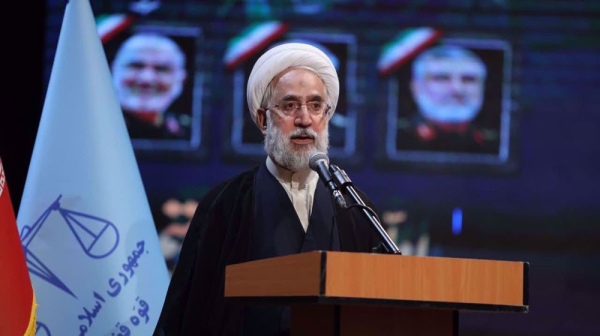
Iran’s Prosecutor General says Tehran Prosecutor’s Office will initiate legal proceedings against leaders of domestic and foreign groups that cooperated with the United States and the Israeli regime during the 12-day imposed war of June.
Speaking on Tuesday at the fourth specialized meeting on documenting and pursuing damages from the aggression, Mohammad Movahedi Azad said it was the judicial system’s “definite and legal duty” to defend the rights of the Iranian nation.
“The judicial system, utilizing all domestic and international legal capacities, is powerfully continuing the legal and criminal pursuit of the perpetrators of the recent aggression and the documentation of damages incurred.
Movahedi Azad said that “no negligence is acceptable in this path.”
The official confirmed that there are no pending cases concerning the damages caused by the imposed war, saying all files are being pursued with diligence and accuracy.
He underscored the necessity of full coordination among responsible institutions, instructing all relevant bodies to expedite the review, completion, and submission of documentation regarding the damages.
Movahedi Azad said the incidents of June once again proved that the Iranian people are an “independent, united, and resilient nation” and that “no aggression can weaken the national will and authority of the Islamic Republic system.”
Israel launched the blatant aggression against Iran on June 13. Over the course of the 12 days, the regime killed at least 1,064 people and targeted civilian infrastructure. More than a week later, the United States violated international law by joining the war and targeting three Iranian nuclear sites.
On June 24, Iran managed to impose a halt to the aggression after conducting waves of successful retaliatory operations
Press TV’s website
Why do Shiʿa omit ‘Āmīn’ after Surah al-Fātiḥah
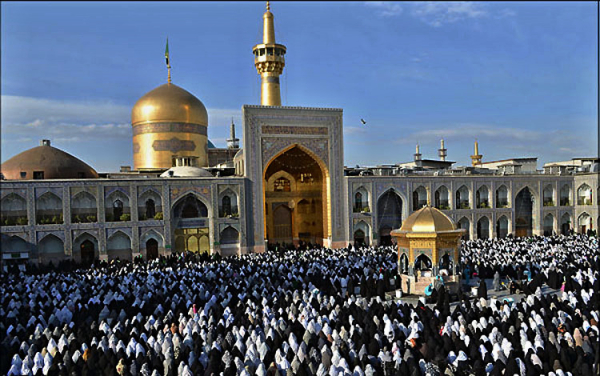
Rationally, prayer must consist only of established acts and phrases taught by the Prophet ﷺ. Any additional utterance within prayer requires explicit proof that the Prophet included it as part of ṣalāh.
From the Qur’anic perspective, Surah al-Fātiḥah itself is a complete supplication ending with:
> “Guide us to the straight path.” (Qur’an 1:6)
There is no Qur’anic instruction to add any word after it within the prayer.
From Sunni hadith literature:
Ṣaḥīḥ Muslim narrates that the Prophet ﷺ said “Āmīn” after finishing al-Fātiḥah, but the reports differ on whether it was inside the formal prayer text or a congregational response.
Imam Mālik held that saying Āmīn aloud is not part of the prayer, and in the Maliki school it is often omitted entirely. Therefore, the Shiʿi omission of “Āmīn” is supported by recognized Sunni juristic opinions and is not a deviation.
Why do Shiʿa say ‘Bismillāh al-Raḥmān al-Raḥīm’ aloud in prayer
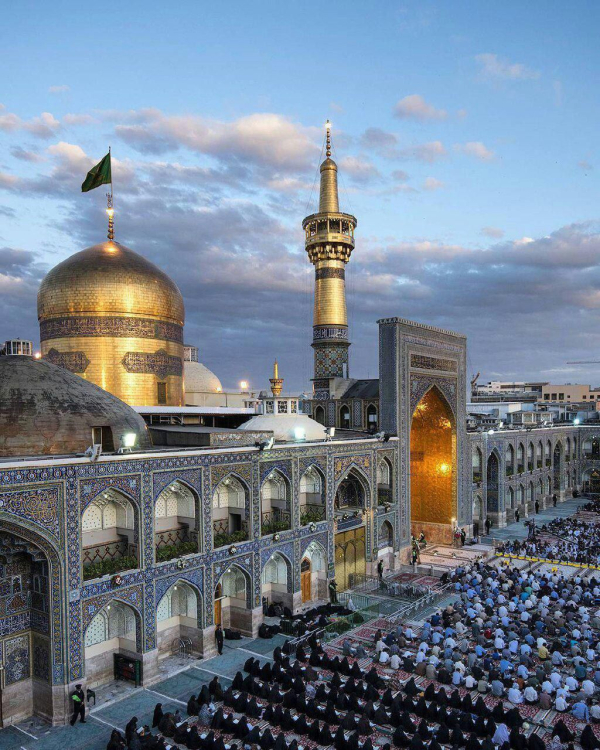
Rationally, if a phrase is part of the Qur’an, then reciting it audibly or silently depends on how the Prophet ﷺ practiced it — not on personal preference. The question is not whether to recite the basmalah, but how the Prophet recited it.
The Qur’an states:
> “Indeed, it is from Solomon, and indeed it is: In the Name of Allah, the Most Merciful, the Most Compassionate.” (Qur’an 27:30)
This verse proves that Bismillāh is a Qur’anic verse. Furthermore, in Shiʿi jurisprudence, it is considered part of Surah al-Fātiḥah, making its recitation obligatory.
From Sunni sources:
Ṣaḥīḥ al-Dāraquṭnī and Sunan al-Bayhaqī narrate that the Prophet ﷺ recited Bismillāh aloud.
Imam al-Shāfiʿī explicitly held that Bismillāh is a verse of al-Fātiḥah and should be recited audibly in audible prayers. Thus, the Shiʿi practice aligns with a well-established Sunni legal position.
Why do Shiʿa include ‘Ashhadu anna ʿAliyyan waliyyu-llah’ in the adhan?
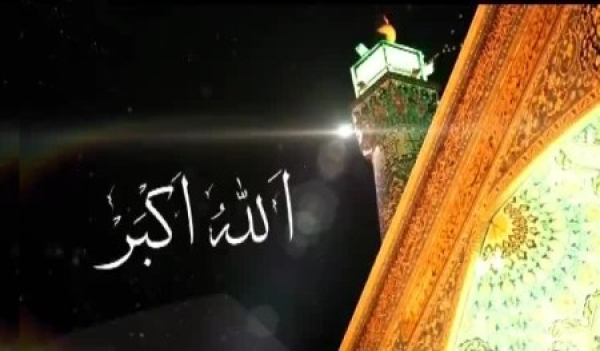
Rationally, if a statement reflects a true Islamic belief, mentioning it as a remembrance (dhikr) is permissible, provided it is not considered obligatory — and Shiʿa explicitly state that it is not part of the obligatory adhan.
The Qur’an commands:
> “O believers, remember Allah with abundant remembrance.” (Qur’an 33:41)
Affirming the wilayah of Allah’s chosen guardian is a form of remembering Allah, as obedience to Allah’s representative is obedience to Allah Himself.
Historically:
Sunni sources record that companions such as Salman al-Farsi would sometimes add explanatory phrases after the adhan.
Shiʿa similarly regard this phrase as a declaration of belief, not a mandatory component of the adhan.
---
Conclusion
The Shiʿi method of prayer:
Is firmly rooted in the Qur’an
Is authentically based on the Prophet’s Sunnah
Is supported by reliable Sunni sources
And is neither innovation nor deviation
Why do Shiʿa pray five daily prayers in three time periods?
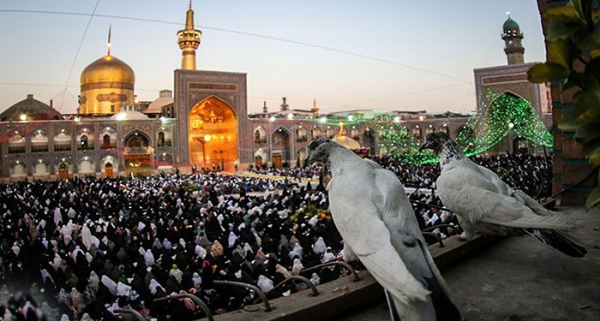
Response:
Rationally, if the Prophet ﷺ allowed flexibility to ease hardship for his community, following that concession reflects obedience, not negligence. Combining prayers does not mean abandoning any prayer; all five prayers are performed within their legitimate time frames.
The Qur’an says:
> “Establish the prayer from the declining of the sun until the darkness of the night.” (Qur’an 17:78)
This verse presents three general time spans, which clearly accommodates the combination of prayers.
From Ṣaḥīḥ Muslim:
> Ibn ʿAbbās narrates that the Messenger of Allah ﷺ combined Ẓuhr with ʿAṣr and Maghrib with ʿIshāʾ in Madinah without fear or rain.
When asked why, he replied: “So that his community would not be put to hardship.”
Therefore, the Shiʿi practice directly follows the Prophet’s Sunnah.
Why do Shiʿa prostrate on a clay tablet (turbah)? Isn’t this shirk?
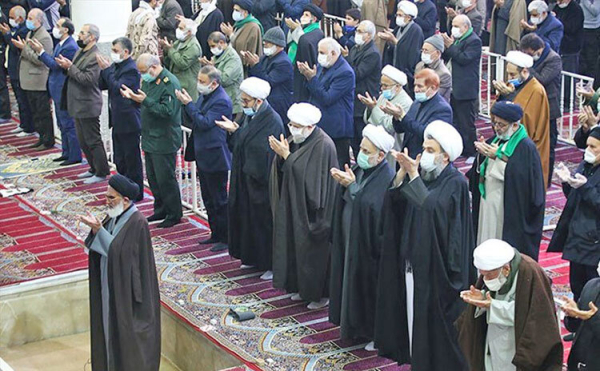
Rationally, prostration is for Allah alone, not for the surface on which one prostrates. The object beneath the forehead is merely a medium, not an object of worship. Just as prostrating on a carpet does not mean worshipping the carpet, prostrating on earth does not mean worshipping earth.
The Qur’an states:
> “From it (the earth) We created you, and into it We shall return you.” (Qur’an 20:55)
Human beings were created from earth, and prostration upon it represents the highest level of humility. The Qur’an never forbids prostration on natural ground.
From Sunni sources:
Ṣaḥīḥ al-Bukhārī records that the Prophet ﷺ prostrated on bare earth, soil, and straw mats.
Sunan al-Bayhaqī reports that companions would carry pebbles to prostrate on when the ground was hot. Thus, the turbah is simply pure earth, fully consistent with the Prophetic Sunnah.
Why do Shiʿa keep their hands at their sides during prayer instead of folding them like Sunnis?
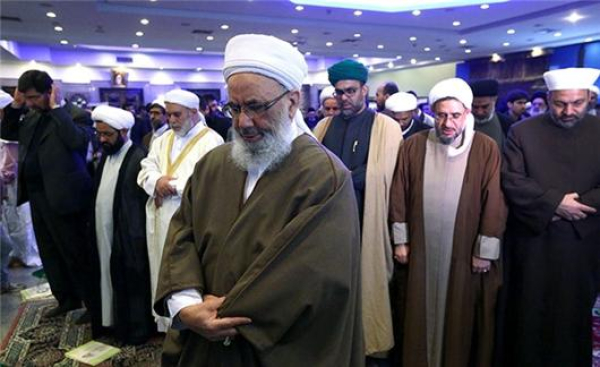
From a rational perspective, acts of worship are tawqīfī (strictly defined by revelation), meaning they must be performed exactly as the Prophet ﷺ practiced them. Any additional action requires clear evidence. If folding the hands were obligatory or a confirmed Sunnah, there would be a clear, unanimous command from the Prophet — yet such unanimity does not exist.
From the Qur’anic perspective, Allah says:
> “Establish the prayer.” (Qur’an 2:43)
The verse commands the establishment of prayer but does not prescribe specific postures like hand-folding. Therefore, the details must be derived from verified prophetic practice.
From authentic Sunni sources:
Ṣaḥīḥ Muslim reports from ʿAbdullāh ibn al-Zubayr that the Prophet ﷺ let his hands hang freely during prayer.
Imam Mālik, in al-Muwaṭṭaʾ, explicitly states that sending the hands down (irsāl al-yadayn) was the practice of the people of Madinah. Thus, the Shiʿi method is neither an innovation nor unusual; rather, it reflects one of the earliest Islamic practices.
Israel’s killing of senior Hamas commander ‘gross violation of Gaza ceasefire’: Ansarullah
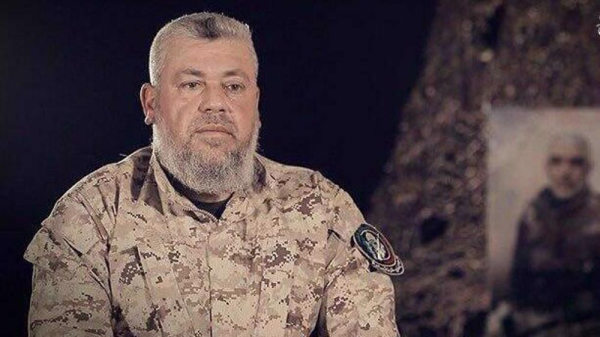
The political bureau of the Yemeni Ansarullah resistance movement has denounced the killing of senior Hamas commander Raed Saad in an Israeli attack in Gaza, stressing that the assassination will not break the will of the Resistance Front but will rather solidify its determination.
Israeli actions, not Iran, fuel anti-Semitism’: Netizens react to Jewish holiday attack in Sydney
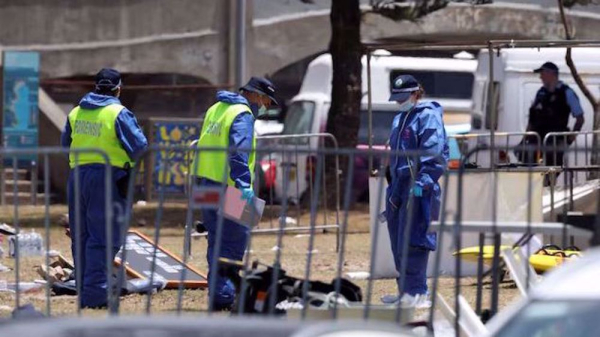
After a deadly shooting at a Jewish holiday event in Australia, social media users blamed Israel’s actions for rising “anti-Semitism,” dismissing the regime's attempts to pin the attack on Iran, even as authorities linked the gunmen to the Daesh terrorist group.
At least 15 people were killed, and dozens were injured when two gunmen, a father and son, opened fire at a Jewish event in Sydney on Sunday.
One suspected attacker was killed at the crime scene, while another is in critical condition.
Iran condemned the “violent” attack, with Foreign Ministry spokesman Esmaeil Baghaei saying, “Terror violence and mass killing shall be condemned, wherever they're committed, as unlawful and criminal.”
Reacting to the shooting incident, Canadian journalist Aaron Maté wrote on X that the attack was fueled by anger over Israel's atrocities and the impunity it receives.
“Fifteen civilians were killed in the massacre targeting Sydney's Jewish community. A day in which Israel massacres 15 Palestinian civilians in Gaza would be at the low end of the average in 2+ years of genocide.”
“Israel's atrocities and the impunity they receive are undoubtedly the number one driver of anti-Semitism worldwide,” he added.
Maté noted that Israel is exploiting the incident to justify its crimes against Palestinians and calls for more crackdown on anti-genocide protests.
“To show how little Israel and its apologists care about anti-Semitism, many are exploiting the Sydney massacre to justify Israel's rejection of a Palestinian state; baselessly blame Iran; and demand more censorship of anti-genocide protests.”
His remarks came as Israeli foreign ministry spokesman Oren Marmorstein called Baghaei’s post on X, “deceptive.”
During the shooting, a Muslim bystander intervened, disarming one of the Bondi Beach attackers and potentially saving lives.
Australian media have identified the man as Ahmed al-Ahmed, a 43-year-old Sydney resident and father of two, who owns a fruit shop in Sutherland.
Former British member of Parliament George Galloway praised al-Ahmed as a “hero”, calling on the British monarch, the ceremonial head of state in Australia, to award him “the George Cross.”
Galloway slammed Israeli Prime Minister Benjamin Netanyahu’s attempt to link Australia’s recognition of a Palestinian state to Sunday’s attack, saying Israel continues to kill Palestinians in Gaza in cold blood as the world looks on.
“If it had happened on Gaza beach, rather than Bondi, you wouldn't even know about it. Netanyahu blames Australia for recognizing Palestine. He's itching for a war with Iran. And it looks like it's starting in Venezuela,” referring to the United States's intensified military posture in the Caribbean.
American Jewish journalist Max Blumenthal also slammed the Zionists’ exploitation of the attack to “focus their wrath on [New York City Muslim mayor] Zohran Mamdani, on Palestine solidarity activism, on Iran – on any force that threatens Israeli apartheid – rather than on the actual killers, who appear to be ISIS [Daesh] sympathizers granted firearms licenses despite have been under Australian state security monitoring for at least six years.”
He noted that Zionists don't care about the safety of Jews and are more interested in advancing Israel's policies.
“Antisemitism is the fuel for Zionism and the ultimate justification for an ethnosupremacist ‘Jewish state’. With their naked exploitation of the Bondi shooting, they demonstrate once again that they are more interested in advancing Israel's genocidal imperatives than in protecting Jews.”
Israeli political analyst Ori Goldberg asserted in a post that Israel is using Australian Jews for “nefarious purposes.”
He referred to Israeli media reports that linked the Sydney attackers to a Daesh cell and to the Lebanese resistance movement Hezbollah and Iran at the same time.
“Israeli media (one channel!) reports the following: ‘the Sydney shooters had links to an ISIS [Daesh] cell! The attack had some elements linked Hezbollah! Iran was behind the whole thing!’ These are panicked lies.”
Australian authorities believe that the gunmen had pledged allegiance to the Daesh terrorist group, noting that one of them, the 24-year-old Naveed Akram, was examined six years ago over his close ties to a Sydney-based Daesh terrorism cell.
In a post on X, Matthew Ghobrial Cockerill, scholar of history at the London School of Economics and Political Science, decried the speculations as “dishonest” and “moronic” that link the attack to Palestinian nationalism, the secular anti-Zionist ideology, or Iran.
“The attack was motivated by a heterodox-extremist Sunni Muslim group - ISIS [Daesh] - which condemns all nationalism (including Palestinian) as heretical and condemns even Hamas as fake Muslims, worthy of execution. It also condemns all Shias as apostates and worthy of death, which makes nonsense of the purported connection with Iran,” he elaborated.
Australia has seen widespread outrage over Israel’s two-year genocide against the Palestinian people, with major protests in cities across the country since October 2023.
Demonstrators have voiced anger over civilian casualties, destruction of homes, and the regime’s ongoing war crimes in the Gaza Strip.
Social media and local reports indicate that public sentiment has increasingly reflected outrage over the humanitarian crisis in Gaza, with protesters demanding that the Australian government condemn the Israeli regime’s genocide and halt arms sales to Tel Aviv.
Press TV’s website
The Goal of Ethics: Inner Freedom, Not Hardship

Al-Ghazālī does not present ethics as a burden.
He says:
> Good character lightens the heart; it does not weigh it down.
Envy, resentment, greed, and hypocrisy are chains.
Virtue is liberation.
In the end, ethics for al-Ghazālī means: a free heart, a purified intention, and a livable life.
? Iḥyāʾ ʿUlūm al-Dīn, overall conclusion