zarezadeh
Iran Rises to the Top Five Economies of the Muslim World

Iran has been ranked as the fifth-largest economy in the Islamic world, based on its Gross Domestic Product (GDP) measured by Purchasing Power Parity (PPP), estimated at around 1.7 trillion US dollars.
This ranking places Iran among the top five economies out of the 53 member countries of the Organization of Islamic Cooperation (OIC).
What does this mean?
GDP (PPP) measures the real size of an economy by adjusting for differences in price levels and cost of living between countries.
It reflects actual production capacity and domestic economic strength, not just international market prices.
Because prices in Iran are relatively lower than in many countries, PPP provides a clearer picture of Iran’s real economic scale.
Countries ranked above Iran
The four economies ranked ahead of Iran in the Islamic world are:
1. Indonesia
2. Turkey
3. Egypt
4. Saudi Arabia
Iran follows them closely in fifth place, ahead of countries such as Pakistan, Bangladesh, Malaysia, Nigeria, and the UAE.
Why this ranking is important
It highlights Iran’s large internal market, industrial base, and energy resources.
It shows that despite sanctions and economic pressure, Iran remains one of the key economic powers in the Muslim world.
Iran’s economy accounts for roughly 6% of the total economic output of the Islamic world.
Key takeaway
This ranking does not mean Iran is wealthy in terms of per-capita income, nor does it reflect GDP measured at market exchange rates. Rather, it shows that Iran is one of the largest and most capable economies in terms of real production and domestic economic power.
The Difference Between Tawassul and Shafāʿah
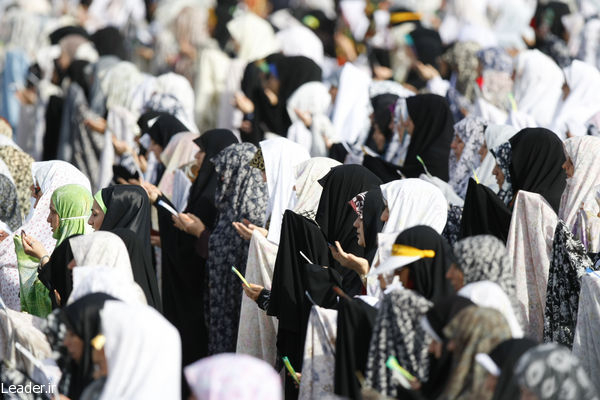
Tawassul and Shafāʿah: Two Distinct Concepts with One Monotheistic Foundation
---
The Difference Between Tawassul and Shafāʿah in Shiʿi Thought
1. Definition of Tawassul
Tawassul means seeking closeness to God through the status, supplication, or nearness of His chosen servants (the Prophet and the Ahl al-Bayt).
The true actor is God.
The intermediaries are God’s chosen servants.
The goal is facilitating the acceptance of supplication.
---
2. Definition of Shafāʿah
Shafāʿah means intercession by God’s chosen servants in the Hereafter for forgiveness, salvation, or elevation of rank.
The final decision belongs to God.
The intercessors are those granted permission by God.
Its primary context is the Day of Judgment.
---
3. Difference in Time
Tawassul: This world
Shafāʿah: The Hereafter
---
4. Difference in the Form of Request
Tawassul:
“O God, by the right of Your Prophet, grant my request.”
Shafāʿah:
“O Prophet / O Imam, intercede for me with God by His permission.”
---
5. Difference in the Addressee
Tawassul: The direct addressee is God.
Shafāʿah: The request is made to the authorized intercessor.
---
6. Difference in Function
Tawassul:
A means of nearness and acceptance of supplication.
Shafāʿah:
A means of salvation from punishment or elevation in rank.
---
7. Key Similarities
Both:
Operate only by God’s permission
Do not grant independence to intermediaries
Are fully compatible with monotheism (tawḥīd)
---
8. Shiʿi Red Lines
Tawassul and Shafāʿah ≠ worship
Tawassul and Shafāʿah ≠ independent power of saints
Both are strictly within “by God’s permission”
---
Very Brief Summary
Tawassul = a means of supplication in this world
Shafāʿah = intercession for salvation in the Hereafter
Religious Mourning: A Qur’anic and Prophetic Tradition — A Shiʿi Perspective Using Authentic Sources
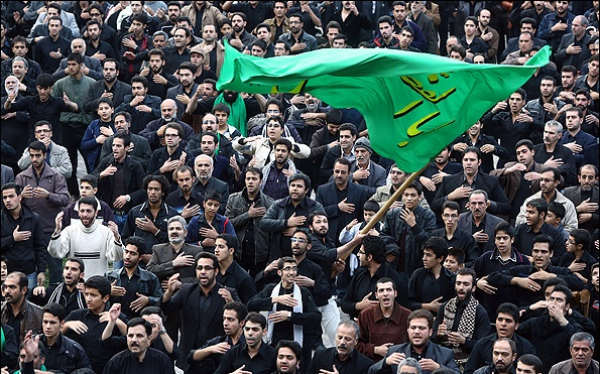
Shiʿi mourning rituals have long been criticized by some Sunni scholars. In this essay, from a Shiʿi perspective, yet based strictly on the Qur’an and authentic Sunni sources, we demonstrate that the principle of mourning, grief, and crying for religious figures is not an innovation (bidʿah), but rather deeply rooted in the Qur’an and the Prophetic tradition. The disagreement lies mainly in methods, not in the legitimacy of mourning itself.
---
1. The Principle of Mourning in the Qur’an
1.1. Prophet Jacob’s (Yaʿqub) Grief for Joseph (Yusuf)
The Qur’an explicitly describes the intense sorrow of a Prophet of God:
> وَتَوَلّىٰ عَنْهُمْ وَقَالَ يَا أَسَفَىٰ عَلَىٰ يُوسُفَ وَابْيَضَّتْ عَيْنَاهُ مِنَ الْحُزْنِ فَهُوَ كَظِيمٌ
(Qur’an, 12:84)
Translation:
“And he turned away from them and said, ‘Oh, my sorrow over Joseph!’ And his eyes became white from grief, for he was filled with sorrow.”
Key points:
Profound and visible grief
Long-term mourning
No divine condemnation whatsoever
? If mourning and crying were forbidden, the Qur’an would have censured this behavior rather than narrating it approvingly.
---
1.2. Crying as a Sign of Faith
> وَيَخِرُّونَ لِلْأَذْقَانِ يَبْكُونَ
(Qur’an, 17:109)
Translation:
“And they fall upon their faces weeping.”
Here, the Qur’an presents crying out of reverence, truth, and faith as a virtue of believers.
---
2. Mourning of the Prophet Muhammad ﷺ in Authentic Sunni Sources
2.1. The Prophet’s Crying for His Son Ibrahim
A well-known authentic hadith:
> إِنَّ الْعَيْنَ تَدْمَعُ، وَالْقَلْبَ يَحْزَنُ، وَلَا نَقُولُ إِلَّا مَا يُرْضِي رَبَّنَا
(Ṣaḥīḥ al-Bukhārī; Ṣaḥīḥ Muslim)
Translation:
“Indeed the eyes shed tears and the heart grieves, but we say nothing except what pleases our Lord.”
? The Prophet:
Cried openly
Expressed sorrow
Considered crying natural and legitimate
Thus, crying is not a protest against divine decree.
---
2.2. The Prophet’s Mourning for Hamzah (Sayyid al-Shuhadāʾ)
Sunni sources report:
> لَكِنَّ حَمْزَةَ لَا بَوَاكِيَ لَهُ
(Musnad Aḥmad; Sunan Ibn Mājah)
Translation:
“But Hamzah has no women to mourn him.”
After this statement, the women of the Ansar mourned Hamzah, and the Prophet did not forbid them.
? Had mourning or lamentation been unlawful, the Prophet ﷺ would have immediately prohibited it.
---
2.3. The Prophet’s Crying for the Martyrs of Uhud
> The Prophet cried over the martyrs of Uhud
(Ṣaḥīḥ Muslim)
This clearly establishes that mourning martyrs is part of the Prophetic practice.
---
3. Responding to the Objection of “Niyāḥah” (Forbidden Wailing)
Some Sunnis equate all mourning with niyāḥah, but this is incorrect.
What is forbidden in hadiths:
Pre-Islamic wailing (niyāḥah jāhiliyyah)
Protest against God’s decree
Blasphemous or despairing statements
Violent acts expressing rejection of divine wisdom
What is not forbidden:
Crying
Expressing grief
Mentioning the tragedy of the deceased
Gathering to remember the oppressed
? Prominent Sunni scholars such as al-Nawawī and Ibn Ḥajar al-ʿAsqalānī explicitly state that crying and mourning without objection to God are permissible.
---
4. The Legitimacy of Mourning for Imam Husayn (ʿA)
Even according to standards accepted by Sunnis:
Imam Husayn is the grandson of the Prophet ﷺ
He is described as “the leader of the youth of Paradise” (mutawātir Sunni hadith)
He was brutally and unjustly martyred
The Prophet foretold his martyrdom and cried for him
(Sunan al-Tirmidhī; Musnad Aḥmad)
? Therefore, mourning Imam Husayn:
Continues the Prophet’s own practice
Honors justice and resistance to oppression
Preserves essential Islamic values
---
5. Final Summary
✔ The Qur’an affirms grief and crying of God’s Prophets
✔ The Prophet Muhammad ﷺ openly mourned and cried
✔ Authentic Sunni sources do not reject mourning itself
✔ What is forbidden is ignorant wailing, not conscious mourning
✔ Shiʿi mourning is a protest against injustice, not against God
Trump, Netanyahu quietly planned aggression against Iran since February: Report

US President Donald Trump and Israeli prime minister Benjamin Netanyahu reportedly coordinated the June war against Iran months in advance, while orchestrating a media campaign to portray Washington as opposed to Tel Aviv’s plans.
According to sources cited by the Washington Post, Netanyahu met Trump in February and gave him four options for how an attack on Iran could happen.
“The Israeli prime minister first showed Trump what the operation would look like if Israel attacked alone. The second option was for Israel to take the lead, with minimal US support. The third was full collaboration between the two allies. The last option was for the US to take the lead,” the report said.
The report added that “Trump wanted to give nuclear diplomacy with Iran a chance, but he continued intelligence-sharing and operational planning with Israel.”
One day before the aggression, Trump indicated the US could potentially strike Iran but preferred a diplomatic solution.
“He and Netanyahu maneuvered to keep the Iranians unprepared for what would happen next,” sources added.
In the lead-up to the war, Tel Aviv leaked information that Netanyahu’s strategic affairs minister Ron Dermer and Mossad chief David Barnea would meet with US envoy Steve Witkoff.
Although a round of US–Iran indirect negotiations was scheduled for 15 June, Israel launched an unprovoked aggression on Iranian military and nuclear facilities on June 13.
“Israel had decided to strike, as the US well knew. The planned diplomacy was a ruse, and officials from both countries encouraged media reports of a US–Israeli rift,” the sources said.
According to sources, reports claiming that Netanyahu was not aligned with Witkoff or Trump were false. However, this perception was useful, as it allowed the planning to proceed without attracting much attention, the Post said.
Following Israel’s aggression, Washington proposed a highly restrictive deal demanding Tehran renounce support for resistance movements like Hezbollah and Hamas and replace key nuclear sites with facilities that cannot enrich uranium.
Tehran rejected the proposal, and Trump subsequently authorized US strikes, according to a senior diplomatic source.
The US entered the war by bombing three Iranian nuclear sites in a grave violation of the United Nations Charter, international law, and the Nuclear Non-Proliferation Treaty (NPT).
On June 24, Iran managed to impose a halt to the aggression after conducting waves of successful retaliatory operations.
Hebrew media had also confirmed in June that Trump had publicly opposed an attack on Iran while secretly greenlighting Israel’s aggression.
Since the outbreak of the war in Gaza, US and Western media reports have frequently framed Washington as “frustrated” with Israel’s actions, despite its military support for Tel Aviv.
Between October 2023 and September 2025, at least 46 Western media reports described former US presidents Joe Biden and Donald Trump as being “frustrated” with Israel’s operations.
Press TV’s website
Gaza; Where Death Becomes Normal and Truth Dangerous
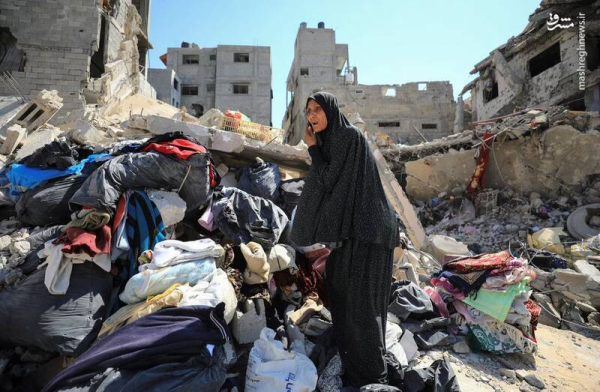
Gaza at a Stage When the World Is About to Get Tired
What is happening in Gaza today is no longer like wars that end in victory or defeat.
Gaza has entered a stage where the goal is not to end resistance, but to normalize suffering; a stage where the killing of children, the destruction of homes, and the starvation of people must be repeated until they are no longer “news.”
At this stage, the bombs are not just dropping to destroy buildings;
they are dropping to erode global memory.
There is no ceasefire to build hope,
no full-scale war to clarify the issue;
only sustained, calculated, and exhausting pressure
until the world tires, looks back, and says, “This is how it’s always been.”
In my view, Israel today in Gaza is not looking to “win”;
it is looking to stall for time.
Because:
Military victory did not bring legitimacy
Complete repression was not possible
And the official narrative has cracked
So the temporary solution is:
Neither end it, nor retreat;
Just continue until the pain becomes normal.
But the problem is that erosion is always two-way.
As bodies in Gaza get tired,
The legitimacy of the occupation in the world is also eroding.
And perhaps this is why:
They are afraid of the reporter
Of the simple image of a mobile phone
From the narrative of the mothers of Gaza
Because at this stage,
The most dangerous weapon is the repeated truth, not the rocket.
Gaza today is not a battlefield of armies;
It is a battlefield of people’s patience with imposed time.
And the main question is not: “Who is stronger?”
But it is:
“Who gets tired sooner: the people under the rubble or the conscience that watches from afar?”
By Arezu Zare Zadeh
The Role of Muslim Women in the Axis of Resistance Against the Enemies of Islam
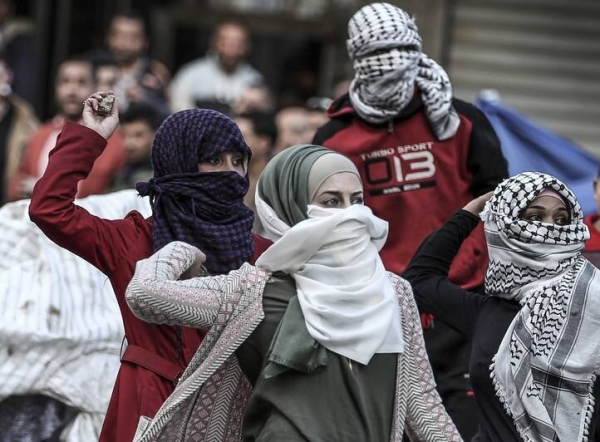
The “Axis of Resistance” is not merely a military phenomenon; it is a multi-layered ideological, cultural, social, and political front.
Within this framework, Muslim women play a central and decisive role, sometimes even more influential than armed struggle itself.
---
1️⃣ Identity and Faith-Based Role: Guardians of Belief Under Pressure
One of the most fundamental roles of Muslim women in resistance movements is preserving and transmitting religious identity and the spirit of steadfastness.
Raising generations that refuse submission
Giving meaning to suffering, sacrifice, and martyrdom
Preventing psychological and social collapse of families and communities during war and sanctions
? Historical experience shows:
If the women of a society break, the society collapses; if they stand firm, the society stands firm.
---
2️⃣ Cultural and Media Role: Confronting the War of Narratives
Today, the enemies of Islam rely more on media, imagery, narrative control, and distortion than on weapons.
In this battlefield, Muslim women play a key role:
Narrating oppression and resistance
Exposing the crimes of the enemy
Breaking false portrayals of the “passive Muslim woman”
? Many women of resistance have become the voice of the voiceless.
---
3️⃣ Social and Supportive Role: The Hidden Pillars of Resistance
Across resistance fronts (Palestine, Lebanon, Yemen, Iraq, and others):
Women manage social support systems
Sustain families during the absence of men engaged in struggle
Provide aid, education, and grassroots organization
Preserve cohesion in neighborhoods, camps, and communities
? Though often unseen, without these roles resistance would collapse.
---
4️⃣ Direct Activism and Political Engagement
In certain contexts, Muslim women have:
Engaged in direct political activism
Participated in protests, arrests, imprisonment, and martyrdom
Become symbols of a nation’s steadfastness
---
Examples of Successful Women in the Axis of Resistance
1️⃣ Lady Zaynab (SA) – The Foundational Model of Resistance
Crisis leadership after Karbala
Transforming apparent defeat into discursive victory
Founder of “narrative resistance” in Islamic history
? Without Lady Zaynab, Karbala would have been buried in history.
---
2️⃣ Palestinian Women (Example: Khansa’ of Palestine – Umm Nidal Farhat)
Mother of multiple martyrs
Conscious upbringing of children for resistance
Turning motherhood into religious–political agency
---
3️⃣ Lebanese Women in the Islamic Resistance
Essential role in sustaining Hezbollah during decades of conflict
Wives and mothers of martyrs who cultivated a culture of resilience
Extensive activity in media, education, and social services
---
4️⃣ Yemeni Women
Resistance under severe blockade
Active participation in grassroots organization
Preservation of religious dignity under extreme humanitarian conditions
---
5️⃣ Women Journalists and Media Activists of Resistance
Examples include:
Shireen Abu Akleh (Palestinian journalist, martyred)
Women journalists in Gaza standing on the front line of the war of narratives
? Their martyrdom proved that the enemy fears the truthful word more than bullets.
---
Final Summary
The role of Muslim women in the Axis of Resistance is:
? Identity-forming
? Narrative-shaping
? Cohesion-building
? And at times directly leading and advancing resistance
> Resistance without women is merely weaponry;
with women, it becomes civilization-building and future-making.
By Arezu Zare Zadeh
17 Palestinians die in Gaza amid extreme cold as Israel keeps blocking aid
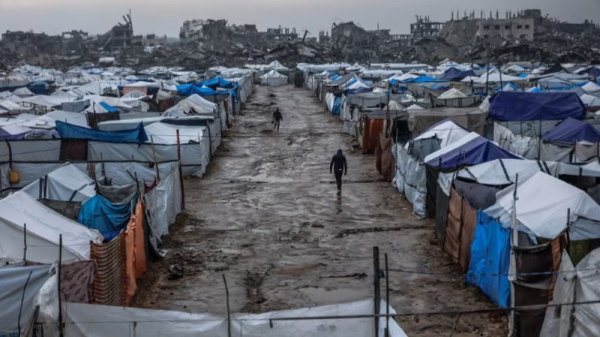
Winter storms and a biting cold snap have killed more than a dozen Palestinians in the Gaza Strip this month, according to local authorities, as Israel maintains tight restrictions on the entry of shelter materials and other humanitarian aid into the war-torn territory.
According to the Palestinian Civil Defense in Gaza, at least 17 people have already lost their lives in December as heavy rain, strong winds and freezing temperatures battered displacement shelters and caused walls, homes and tents, many already damaged by Israeli strikes, to collapse.
Medical sources said the fatalities included four children, who succumbed to freezing temperatures.
Civil Defense spokesman Mahmoud Bassal said in a statement that “temperatures drop significantly during the night hours,” warning that “bitter cold threatens the lives of young children in the absence of shelter and heating.”
He added, “What we are experiencing now in Gaza is a real humanitarian catastrophe. Save the children of Gaza before the cold claims them.”
During December, 17 residential buildings completely collapsed as intense rainfall and strong winds continued to hit the coastal sliver. About 90 percent of makeshift shelters for displaced people, whose homes were destroyed by Israeli attacks, were flooded with rainwater, according to Civil Defense.
This suffering comes as Israel continues to refrain from fulfilling all its obligations under the ceasefire agreement, which took effect on October 10.
Those obligations include adhering to its humanitarian protocol — most notably allowing in shelter materials and the 300,000 tents and mobile homes designated for the displaced — a point the Government Media Office in Gaza has repeatedly emphasized.
The United Nations Office for the Coordination of Humanitarian Affairs (OCHA) said in its daily report on Wednesday that “winterization supplies” remain “limited” in Gaza amid heavy rain and cold conditions.
The agency reported that 44 designated emergency shelters faced severe flooding this week due to blocked drainage channels. These included 21 shelters in Khan Younis in southern Gaza, 22 others in Gaza City, and one in the North Gaza governorate.
“This caused temporary disruptions in the delivery of drinking water and food, and some families were forced to relocate to bathrooms, administrative rooms, and temporary learning spaces due to damaged tents and soaked belongings,” OCHA said.
“In total, 4,721 displaced people were affected, and more than 691 tents were damaged or impacted by flooding” on Monday and Tuesday, the agency reported.
“Site management teams responded promptly by mobilizing residents to clean blocked manholes, rainfall gullies, rainwater discharge pipes and pump water from flooded areas into the drainage system.”
Red Cross warns of Gaza building‑collapse threat
Meanwhile, the International Committee of the Red Cross (ICRC) has warned about the significant risks posed by the collapse of damaged buildings in the Gaza Strip due to harsh weather conditions, emphasizing that the unstable structures endanger residents' lives directly and are amplifying the growing toll of casualties.
The Geneva-based humanitarian organization highlighted on Wednesday that thousands of civilians are compelled to stay inside unsafe homes and structures due to the absence of practical alternatives and insufficient shelter options, significantly escalating the humanitarian risks throughout the region.
The ICRC stressed the critical importance of boosting the delivery of humanitarian aid to Gaza and maintaining its continuity to address both immediate and longer-term needs.
This includes supplying food, shelter, and essential items, along with the tools required to restore vital infrastructure severely impacted by extensive damage.
It emphasized the need to ensure unhindered access for humanitarian aid and to guarantee its swift and secure delivery to all regions across the Gaza Strip, aiming to alleviate the population's suffering amid worsening humanitarian conditions.
Since October 2023, Israel has killed at least 70,667 Palestinians, the majority being women and children, with 171,151 others injured, in Gaza.
Press TV’s website
The Status of the Ahl al-Bayt of the Prophet (ﷺ) in Paradise

The Ahl al-Bayt: The Closest Servants to God in Paradise
In the Qur’anic and hadith-based worldview, Paradise is not merely a place of reward, but a realm of degrees of closeness to God. The position of the Ahl al-Bayt (AS) in Paradise represents the highest levels of divine proximity—not simply due to their familial relation to the Prophet, but because of their perfect faith, divinely granted purity, and sincere servitude.
? The Verse of Purification:
> “Indeed Allah only desires to remove all impurity from you, O Ahl al-Bayt, and to purify you with a thorough purification.”
(Qur’an 33:33)
This verse indicates a special divine purity granted to the Ahl al-Bayt, and such purity is the primary condition for attaining closeness in Paradise.
---
2️⃣ The Ahl al-Bayt: Inhabitants of the Highest Levels of Paradise and Intercessors
Numerous narrations state that the Ahl al-Bayt (AS) dwell in A‘lā ‘Illiyyīn, the loftiest ranks of Paradise. They are also among the greatest intercessors (shufa‘ā’) of the Ummah, through whom God grants forgiveness and elevation in rank to deserving believers.
? The Prophet Muhammad (ﷺ) said:
> “I, ‘Ali, Fatimah, Hasan, and Husayn are in Paradise at the same rank.”
This narration shows that the Ahl al-Bayt are not merely inhabitants of Paradise, but stand at its summit.
---
3️⃣ The Ahl al-Bayt: The محور of Spiritual Companionship in Paradise
One of the greatest blessings of Paradise is companionship with God’s chosen servants. Both Shi‘a and Sunni narrations affirm that love for and adherence to the Ahl al-Bayt results in nearness to them in Paradise.
? The Prophet (ﷺ) said:
> “Whoever loves my Ahl al-Bayt will be with me in Paradise.”
In this perspective, Paradise without closeness to the Ahl al-Bayt would be incomplete, for they are manifestations of divine mercy, light, and guidance.
---
4️⃣ The Ahl al-Bayt: Standard-Bearers of the People of Paradise
Some narrations describe the Ahl al-Bayt (AS) as the leaders and standard-bearers of the people of Paradise. Just as they guided humanity in this world, they will lead the believers in the Hereafter.
? Imam Ja‘far al-Sadiq (AS) said:
> “We are the leaders of the people of Paradise.”
---
5️⃣ The Criterion for Nearness to the Ahl al-Bayt in Paradise
A crucial point emphasized in the teachings of the Imams is that nearness to the Ahl al-Bayt in Paradise is not achieved by mere verbal claim or emotional attachment, but by practical obedience, moral conduct, and piety.
? Imam Muhammad al-Baqir (AS) said:
> “Our wilayah is not attained except through righteous action and piety.”
---
Conclusion
The Ahl al-Bayt (AS) occupy the highest ranks of Paradise
They are intercessors, leaders, and the spiritual axis of the people of Paradise
Love for the Ahl al-Bayt is necessary, but practical following completes it
Paradise reaches its perfection through closeness to the Ahl al-Bayt
---
Suggested Sources:
The Holy Qur’an (33:33; 4:69)
Al-Kulaynī, Al-Kāfī
Shaykh al-Saduq, Al-Khisāl and ‘Uyūn Akhbār al-Riḍā
Al-Tabarsi, Majma‘ al-Bayān
‘Allāmah al-Majlisī, Bihār al-Anwār
The Meaningful Silences of the Ahl al-Bayt

When Not Speaking Became the Most Powerful Message
Core Idea
The Ahl al-Bayt are usually known for their sermons, supplications, and explicit teachings. However, a far less examined dimension of their lives is that, in many critical moments, their conscious and deliberate silence was more powerful than speech.
This silence was neither fear nor weakness—it was a precise communicative and political instrument.
---
Key Analytical Examples
A) Imam ‘Ali’s Silence after the Saqifah
Imam ‘Ali (AS) possessed the ability to rise up, yet he chose a conditional and strategic silence
This silence:
Did not legitimize the outcome
Prevented the collapse of the newly formed Muslim community
Preserved a clear boundary between truth and social reality
? In contemporary terms, this can be described as minimal action to preserve macro-structure stability.
---
B) Imam Hasan’s Silence after the Peace Treaty
Following the peace treaty with Mu‘awiya, Imam Hasan (AS) avoided continuous public polemics
He allowed Mu‘awiya’s own behavior to expose the nature of his rule
As a result, the peace treaty became a mechanism for delegitimizing power, not reinforcing it
? This corresponds to what political theory refers to as strategic patience.
---
C) Imam Zayn al-‘Abidin’s Silence in Damascus
During certain moments of captivity, Imam Zayn al-‘Abidin (AS) intentionally refrained from speaking
This silence:
Created curiosity and cognitive dissonance among the audience
Prepared the ground for the semantic impact of his later sermon
? Here, silence functions as a prelude to meaning, not its absence.
---
D) Brevity and Silence during Periods of Extreme Repression
In eras of intense surveillance (such as the times of Imam al-Kazim and Imam al-Hadi), restrained speech was a strategy for survival and secure transmission of teachings
Careful selection of the audience became more crucial than the message itself
---
Why This Topic Matters Today
It reveals the Ahl al-Bayt not merely as great speakers, but as masters of human communication
It elevates silence from a sign of weakness to a conscious form of social and political action
It offers valuable insights for modern contexts such as media, politics, and social activism
---
Suggested Sources:
Nahj al-Balagha (especially Sermon al-Shaqshaqiyya and the letters)
Shaykh al-Mufid, Al-Irshad
Al-Sharif al-Murtada, Al-Shafi
Rasul Ja‘fariyan, Political History of Islam
Murtada Mutahhari, The Peace Treaty of Imam Hasan
Emotional Intelligence of the Ahl al-Bayt:

The Secret of Their Deep Social Influence and Historical Longevity
Core Idea
If the Ahl al-Bayt had merely spoken the truth without knowing how to reach human hearts, they would never have achieved such enduring influence. They did not suppress emotions—they mastered and guided them.
Analytical Examples
A) Turning Enemies into Allies
The famous encounter where a Syrian man insulted Imam Hasan (AS)
The Imam neither defended himself nor humiliated the man; instead, he showed empathy and dignity, leading to the man’s psychological disarmament and transformation.
? This aligns closely with what modern psychology calls “disarming empathy.”
B) The Purposeful Weeping of Imam Zayn al-‘Abidin (AS)
His tears were not mere expressions of grief
They prevented the normalization of the tragedy of Karbala
They created a collective memory of suffering within the Muslim community
C) Managing Anger and Power
The response of Imam Musa al-Kazim (AS) to a man who insulted him—followed by financial assistance
Result: the opponent openly acknowledged the Imam’s moral superiority
? These examples demonstrate that the Ahl al-Bayt possessed a deep understanding of individual and collective psychology, centuries ahead of modern emotional and social theories.
Suggested Sources:
Ibn Shu‘ba al-Harrani, Tuhaf al-‘Uqul
Al-Tabarsi, I‘lam al-Wara
Sayyid Ibn Tawus, Al-Luhuf
Al-Sahifa al-Sajjadiyya (with classical and contemporary commentaries)
Daniel Goleman, Emotional Intelligence (for conceptual comparison, not as a religious source)