zarezadeh
Birth of Imam Muhammad al-Baqir (AS)

Imam Muhammad al-Baqir (AS), the fifth Imam of the Shiites, was born on the first day of the month of Rajab in the year 57 AH in the city of Medina.
Lineage and Family
His noble father was Imam Zayn al-Abidin (AS), and his mother was Fatimah, daughter of Imam Hasan al-Mujtaba (AS). Therefore, Imam al-Baqir (AS) is descended from Imam Husayn (AS) through his father and from Imam Hasan (AS) through his mother. He is the first Imam whose lineage connects to Lady Fatimah al-Zahra (SA) from both sides.
Meaning of the Title “Al-Baqir”
The honored title “Al-Baqir” means “the one who splits open knowledge.” This title reflects his unique role in expanding and explaining Islamic sciences. During a period that allowed greater opportunity for teaching, he clearly explained the Qur’an, Islamic jurisprudence, and the teachings of the Ahl al-Bayt, laying strong scholarly foundations for Shiite thought.
Historical Context of His Birth
Imam al-Baqir (AS) was born during a time when the Muslim community, following the tragedy of Karbala, was facing severe political oppression and intellectual deviation. Nevertheless, his birth marked the beginning of a new era for reviving authentic Islamic knowledge and understanding.
The Blessings of His Birth
The birth of Imam al-Baqir (AS) initiated a great scientific and intellectual movement that later reached its peak during the time of his son, Imam Ja‘far al-Sadiq (AS). A significant portion of Shiite jurisprudential and theological teachings today is the result of Imam al-Baqir’s scholarly efforts.
May the birth of this noble Imam be blessed upon all lovers of the Ahl al-Bayt (AS).
The Role of Differences in Understanding in the Formation of Islamic Schools
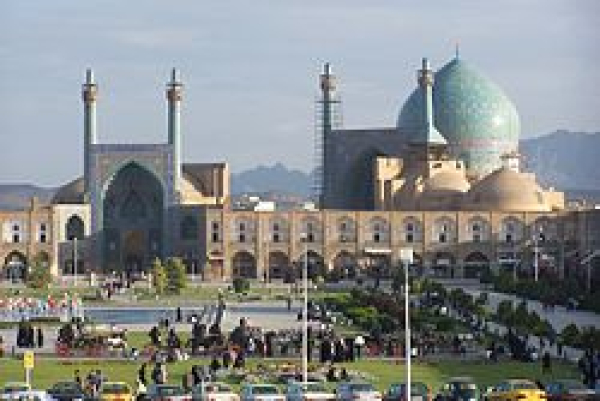
One of the most important factors in the formation of Islamic schools of thought is differences in understanding and interpreting religious texts. These differences do not arise from disagreement over the essence of Islam, but rather from variations in scholarly capacity, methodological approaches to interpretation (ijtihād), and historical and cultural contexts during the early centuries of Islam.
1. Differences in Understanding as a Natural Phenomenon
The Qur’an and the Sunnah contain:
General and specific expressions
Absolute and qualified rulings
Concise and detailed statements
Understanding these nuances depends on the scholarly abilities of jurists and scholars. Therefore, diversity in interpretation is natural and unavoidable.
2. Differences in Methodological Approaches
In interpreting religious texts:
Some scholars emphasized the literal meaning of the texts
Others gave greater weight to rational analysis and the objectives of Islamic law (maqāṣid al-sharīʿah)
These methodological differences led to the development of distinct legal schools.
3. The Influence of Time and Place
Living in different regions (such as Madinah, Kufa, and Syria):
Produced different legal and social challenges
Shaped scholars’ interpretations of religious rulings
As a result, legal opinions evolved in response to specific historical and geographical contexts.
4. Differences as a Source of Enrichment, Not Division
In Islamic thought:
Differences in understanding secondary issues are considered a source of mercy and flexibility
As long as they remain within the framework of the Qur’an and the Sunnah, they are not condemned
? The Prophet ﷺ is reported to have said:
“The differences among my community are a mercy” (reported in meaning).
5. Conclusion
Islamic schools of thought are the product of legitimate diversity in understanding the religion, not evidence of division in Islam itself. Differences in interpretation have contributed to the intellectual richness, adaptability, and enduring vitality of Islamic law.
The Concept of Ijtihād in Different Islamic Schools of Thought
Ijtihād in Islamic terminology means exerting one’s utmost scholarly effort to derive legal rulings from the recognized sources of Islamic law. It is considered one of the key elements that ensures the dynamism and adaptability of Islamic jurisprudence across all schools, although differences exist in its scope, conditions, and methodology.
---
1. A Shared Understanding of Ijtihād Among Islamic Schools
All Islamic schools agree that:
Ijtihād must be based on the Qur’an and the Sunnah
It applies only in cases where there is no explicit textual ruling (naṣṣ)
It requires high scholarly qualification and is not open to everyone
---
2. Ijtihād in the Jaʿfarī School (Twelver Shiʿism)
In Shiʿa jurisprudence:
Ijtihād is a continuous and permanent principle
Reason (ʿaql) plays a fundamental role as a source of legal derivation
The gate of ijtihād is always open
A mujtahid must meet strict conditions, including knowledge, justice, and piety
? As a result, Shiʿa fiqh maintains strong capacity to address new and emerging issues.
---
3. Ijtihād in Sunni Schools of Law
In Sunni jurisprudence:
Ijtihād was highly active in the early centuries of Islam
Each of the four Sunni schools (Ḥanafī, Mālikī, Shāfiʿī, Ḥanbalī) follows a distinct legal methodology
Tools such as qiyās (analogy), istiḥsān, and maṣāliḥ mursalah play a more prominent role in certain schools
In later periods, adherence to established schools became dominant, though ijtihād itself was never completely rejected
---
4. Key Differences in Perspective
Aspect Twelver Shiʿa Sunni Schools
Status of ijtihād Permanently open Historically limited at times
Role of reason Fundamental More restricted
Taqlīd (imitation) Of a living mujtahid Mostly of a school
Flexibility High School-dependent
---
5. Conclusion
Ijtihād serves as a shared mechanism for understanding and applying Islamic law across all schools. Differences do not lie in the legitimacy of ijtihād itself, but in methodological approaches and the extent to which legal tools are employed. This diversity reflects the intellectual richness of Islamic jurisprudence rather than doctrinal conflict.
The Status of the Qur’an and the Sunnah in All Islamic Schools
The Qur’an and the Sunnah of the Prophet Muhammad ﷺ are the two primary and universally accepted sources in all Islamic schools of thought—both Sunni and Shiʿa. There is no Islamic school that rejects the authority of these two sources; differences arise only in the methods of interpretation, transmission, and legal derivation, not in their fundamental legitimacy.
1. The Status of the Qur’an
In all Islamic schools, the Qur’an is:
The first and definitive source of Islam
The ultimate criterion for evaluating beliefs and legal rulings
Superior to all other sources
All schools agree that:
No legal ruling or doctrinal belief can contradict the Qur’an.
2. The Status of the Sunnah
The Sunnah, which consists of the sayings, actions, and approvals of the Prophet ﷺ, is regarded in all Islamic schools as:
The interpreter and explainer of the Qur’an
An independent source alongside the Qur’an
Essential for understanding the details of Islamic law
? Differences arise in transmission:
Shiʿa Islam considers the Sunnah to be transmitted through the Prophet ﷺ and the Ahl al-Bayt (the Prophet’s family)
Sunni Islam relies on the Prophet ﷺ and his Companions as transmitters
However, the authority of the Sunnah itself is unanimously accepted.
3. The Relationship Between the Qur’an and the Sunnah
According to all Islamic schools:
The Sunnah never contradicts the Qur’an
It explains, specifies, and clarifies Qur’anic teachings
A correct understanding of Islam is impossible without integrating both sources
4. Conclusion
The Qur’an and the Sunnah form the foundational pillars of Islamic law and belief. The unity of Islamic schools is most evident in their shared acceptance of these two sources, while differences stem from diverse scholarly methodologies in understanding and applying them, not from rejection of the Qur’an or the Sunnah.
The Difference Between a “Juristic School” and a “Theological School” in Islam
In Islamic studies, the term madhhab is used in two main contexts: one related to practice and law, and the other related to belief and theology. Understanding the distinction between these two is essential for properly grasping differences within Islam.
---
1. What Is a Juristic School (Fiqh Madhhab)?
A juristic school refers to a systematic body of opinions and methodologies used to derive practical Islamic rulings, such as prayer, fasting, pilgrimage, transactions, and other legal matters.
Key features:
Focus: Practical religious acts and laws
Sources: The Qur’an, Sunnah, consensus (ijmāʿ), and reason (with methodological differences)
Differences mainly occur in secondary rulings (furūʿ al-dīn)
Following a juristic school is necessary for correct religious practice
Examples:
Jaʿfarī
Ḥanafī
Shāfiʿī
Mālikī
Ḥanbalī
---
2. What Is a Theological School (Creedal Madhhab)?
A theological school refers to a structured set of beliefs concerning the fundamental principles of faith, such as monotheism (tawḥīd), prophethood, resurrection, divine justice, and leadership (imamate or caliphate).
Key features:
Focus: Beliefs and doctrines
Sources: The Qur’an, Sunnah, and rational theology
Differences occur in core doctrinal principles
Blind imitation (taqlīd) is not acceptable; belief must be based on conviction
Examples:
Twelver Shiʿism (Imāmī)
Ashʿarism
Māturīdism
Muʿtazilism
---
3. Key Differences at a Glance
Aspect Juristic School Theological School
Domain Practice Belief
Subject Legal rulings Doctrines
Nature of differences Secondary issues Foundational beliefs
Taqlīd (imitation) Permissible and required Not permissible
Goal Correct practice Correct belief
---
4. Conclusion
Differences between juristic and theological schools do not indicate division in Islam, but rather reflect diversity in interpreting and explaining the religion. All Islamic schools share the core principles of Islam, while differences lie mainly in methodology and interpretation.
The Emergence of Islamic Schools of Thought and Their Historical Factors
Islamic schools of thought (madhāhib) gradually emerged during the first centuries of Islam, after the passing of the Prophet Muhammad ﷺ. Their formation does not represent اختلاف in the core of Islam, but rather reflects differences in interpretation, legal methodology, and historical circumstances within the shared framework of the Qur’an and Sunnah.
Major Historical Factors Behind Their Emergence:
Rapid Expansion of the Islamic World
As Islam spread across vast regions, new legal and social issues arose, requiring scholarly reasoning (ijtihād).
Unequal Access to Prophetic Traditions
Different regions—such as Madinah, Kufa, and Syria—had access to different collections of hadith, leading to varying legal opinions.
Differences in Legal Methodology
Some scholars relied primarily on hadith (e.g., the Madinan school), while others emphasized rational methods such as analogy (qiyās), particularly in Iraq.
Political and Social Conditions
Changes in political authority and governing systems influenced which scholarly approaches flourished or declined.
Role of Students and Systematic Codification
The efforts of students in recording, teaching, and organizing the views of leading jurists played a crucial role in establishing and preserving distinct schools.
Conclusion:
Islamic schools of thought are the result of scholarly ijtihād grounded in the Qur’an and Sunnah, with differences mainly in secondary legal rulings rather than in the fundamentals of faith.
Suggested Academic Sources
Murtadha Motahhari, An Introduction to Islamic Sciences (Fiqh)
Rasul Ja‘fariyan, History of Shi‘ism in Islam
Ibn Khaldun, al-Muqaddimah
Wahbah al-Zuhayli, Islamic Jurisprudence and Its Evidences
Following Satan; and moving towards Hell
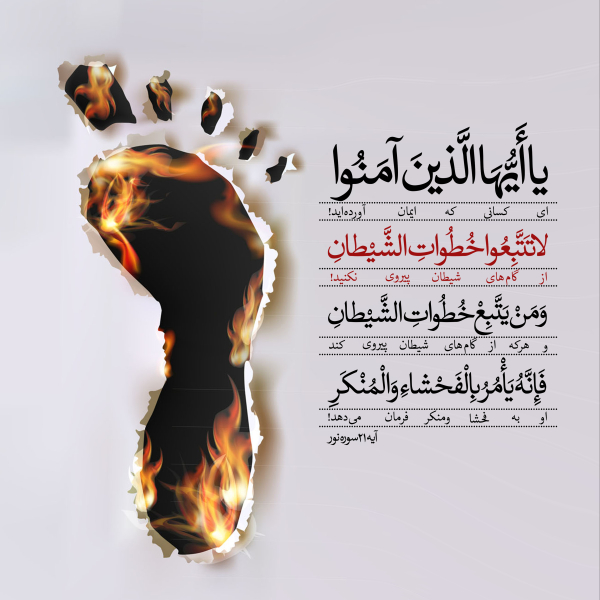
O you who have believed! Do not follow the footsteps of Satan! Whoever follows the footsteps of Satan, he commands indecency and evil!
(An-Nur: 21)
The word “steps” is the plural of خطوات meaning “step” and means the distance between the two feet of a person while walking.
Following the footsteps of Satan means walking on the path that Satan shows.
In the Holy Quran, Satan is introduced as the enemy of God and the enemy of man. It is very strange to trust the sworn enemy!!! And to move in the path that he shows!!!
The connection of this noble verse with the previous verses shows that one of Satan's important plans to drag human societies into the mud is the spread of immoral acts and to eliminate their ugliness. Let us be careful!!!
Every path except the right path is the path of Satan and ends in the displeasure of the Merciful God. Let us be careful!!!
Tafsir Ahlul Bayt (a.s.) Vol. 1, p. 788
A Joint Fatwa on the Obligation of Hajj
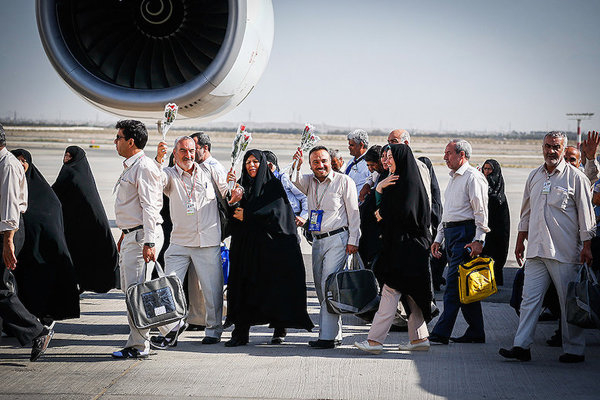
The Obligation of Performing Hajj Once in a Lifetime for Every Eligible Muslim
Text of the Fatwa
Based on the consensus (ijmāʿ) of all Islamic schools of jurisprudence—both Sunni and Shiʿa,
Hajj is an individual and obligatory duty (farḍ ʿayn) upon every Muslim who is adult, sane, and financially and physically capable (mustatīʿ), and it must be performed once in a lifetime.
Delaying it without a valid شرعی (legal) excuse is not permissible.
Qur’anic Evidence (Agreed Upon by All Schools)
Clear Qur’anic Verse
“And due to Allah from the people is a pilgrimage to the House—for whoever is able to find a way to it.”
(Qur’an 3:97)
This verse is the primary and undisputed foundation for the obligation of Hajj in all Islamic jurisprudence.
Hadith Evidence (Sunni and Shiʿa Sources)
1. Prophetic Hadith (Sunni Sources)
The Messenger of Allah ﷺ said:
“O people, Allah has made Hajj obligatory upon you, so perform Hajj.”
Source:
Ṣaḥīḥ Muslim, Book of Hajj
2. Narration from Imam ʿAlī (Shiʿa Sources)
Imam ʿAlī (peace be upon him) said:
“Allah has made obligatory upon you the pilgrimage to His Sacred House.”
Source:
Nahj al-Balāghah, Sermon 1
Juristic Consensus (Joint Ruling)
Scholars of the following schools unanimously agree on the obligation of Hajj:
Jaʿfarī (Shiʿa Imami)
Ḥanafī
Shāfiʿī
Mālikī
Ḥanbalī
This unanimous agreement is known in Islamic jurisprudence as Ijmaʿ al-Muslimīn (the consensus of Muslims).
Summary of the Joint Fatwa
Hajj is:
A definitive divine obligation
Individually obligatory (farḍ ʿayn)
Required once in a lifetime
Conditional upon financial ability, physical capability, and safety of travel
Final Juristic Conclusion:
Every Muslim who meets the conditions of ability is religiously obligated to perform Hajj, and abandoning it without a valid excuse is considered sinful.
Intercession in Islam: A Qur’anic and Hadith-Based

Abstract
Intercession (Shafāʿah) is one of the fundamental concepts in Islamic theology and has long been a subject of debate and misunderstanding. While some view it as contradictory to divine justice or pure monotheism, others recognize it as a manifestation of God’s vast mercy. This article reexamines intercession through the Qur’an and authentic prophetic traditions, demonstrating that Shafāʿah is neither irrational nor anti-tawḥīd, but rather an integral part of the divine system grounded in God’s absolute sovereignty, wisdom, and mercy.
1. Defining Intercession and Distinguishing It from Misconceptions
Linguistically, Shafāʿah means “to join one thing to another in order to reach a goal.”
In Qur’anic terminology, intercession refers to:
The mediation of divinely honored servants—by Allah’s permission—to convey mercy, forgiveness, or elevation in rank to other servants.
Key clarifications:
Intercession is not a replacement for divine justice
Nor does it imply independent power for anyone besides Allah
Rather, it is entirely dependent on Allah’s will and permission
2. Intercession in the Qur’an: Negation of Independence, Not of Reality
2.1 Verses That Negate Independent or False Intercession
The Qur’an states:
“So the intercession of intercessors will not benefit them.”
(Qur’an 74:48)
And:
“A Day when no soul shall avail another, nor will intercession be accepted from it.”
(Qur’an 2:48)
These verses address:
Disbelievers
Or the belief in intercession without Allah’s permission
They do not negate intercession altogether.
2.2 Verses That Explicitly Affirm Authorized Intercession
In contrast, the Qur’an clearly affirms conditional intercession:
“Who is it that can intercede with Him except by His permission?”
(Qur’an 2:255)
And:
“They do not intercede except for one whom He approves.”
(Qur’an 21:28)
These verses establish that:
Intercession is real
It is regulated, purposeful, and divinely sanctioned
3. Intercession in the Prophetic Traditions and the Teachings of Ahl al-Bayt
3.1 The Intercession of the Prophet Muhammad ﷺ
The Prophet ﷺ said:
“I was granted intercession, and I have saved it for my Ummah.”
(Ṣaḥīḥ Muslim)
This narration shows that:
Intercession is a divine gift
The Prophet ﷺ is authorized, not independent, in exercising it
3.2 The Intercession of Ahl al-Bayt (the Prophet’s Family)
Imam Jaʿfar al-Ṣādiq (peace be upon him) said:
“We are the intercessors on the Day of Resurrection.”
(al-Kāfī)
The intercession of Ahl al-Bayt:
Is not a justification for sin
But a means of salvation for those who maintain faith and spiritual connection
4. A Contemporary Analytical Perspective: Intercession as a Moral and Educational System
A common perception limits intercession to a purely eschatological phenomenon.
However, a deeper reading of the Qur’an and Hadith reveals that:
Intercession functions as a moral and spiritual system, not a blind privilege.
This is evident because:
Intercession is restricted to “those whom He approves”
It encourages attachment to righteous role models
It preserves hope without eliminating moral responsibility
Thus, intercession:
Complements repentance (tawbah)
Prevents despair (ya’s)
Strengthens ethical accountability
5. Addressing the Alleged Conflict Between Intercession and Divine Justice
Justice means:
Placing everything in its proper position.
Intercession:
Is not a violation of justice
It is part of divine law itself
Just as:
Forgiveness does not negate justice
Legal leniency under specific conditions is not injustice
Intercession represents:
Justice integrated with mercy, not justice denied.
6. Conclusion
Based on the Qur’anic verses and authentic narrations examined above, it is evident that:
✔ Intercession:
Has deep roots in the Qur’an
Is firmly established in the Sunnah of the Prophet ﷺ and the teachings of Ahl al-Bayt
Is strictly conditional upon Allah’s permission
Is fully compatible with tawḥīd and divine justice
Final Conclusion:
Intercession is not an escape from responsibility, but a path back to divine mercy;
not a weakening of monotheism, but a profound expression of Allah’s absolute sovereignty over the order of existence.
Do the Dead Hear? (According to the Qur’an and Sunnah)

1. The Islamic Position: Death Is Not Annihilation
In Islam, death is not non-existence, but a transition from one realm to another (from dunya to barzakh).
The soul remains alive, conscious, and aware by Allah’s permission.
2. Qur’anic Verses Often Misunderstood
Some cite verses such as:
“You cannot make the dead hear.”
(Qur’an 27:80; 30:52; 35:22)
Correct Interpretation
Classical scholars agree that these verses are metaphorical, not literal.
They compare disbelievers to the dead:
Just as a dead body does not respond,
Disbelievers do not respond to guidance.
These verses are not denying hearing in the barzakh.
Major scholars who affirmed this interpretation:
Ibn Kathīr
al-Qurṭubī
al-Ṭabarī
3. Explicit Hadith: The Dead Do Hear
a) The People of Badr (Ṣaḥīḥ al-Bukhārī)
After the Battle of Badr, the Prophet ﷺ stood over the bodies of slain Quraysh leaders and said:
“Have you found what your Lord promised to be true?”
ʿUmar ibn al-Khaṭṭāb said:
“O Messenger of Allah, how do you speak to bodies without souls?”
The Prophet ﷺ replied:
“By Him in Whose Hand is my soul, you do not hear what I say better than they do.”
Ṣaḥīḥ al-Bukhārī, Book of Funerals
Ṣaḥīḥ Muslim
This is an explicit, authentic statement that the dead can hear.
b) Hearing Footsteps After Burial
The Prophet ﷺ said:
“When a servant is placed in his grave and his companions leave, he hears the sound of their footsteps.”
Ṣaḥīḥ al-Bukhārī
Ṣaḥīḥ Muslim
This hadith proves:
Consciousness
Perception
Hearing immediately after death
4. The Prophets Are Alive in Their Graves
The Prophet ﷺ said:
“The Prophets are alive in their graves, praying.”
Reported by al-Bayhaqī
Classified authentic by many scholars
If ordinary believers hear, then the Prophets hearing is beyond doubt.
5. Sending Salām to the Prophet ﷺ
The Prophet ﷺ said:
“There is no one who sends peace upon me except that Allah returns my soul to me so that I may respond to his salām.”
Sunan Abī Dāwūd
Musnad Aḥmad
This proves:
The Prophet ﷺ hears salām
He responds, by Allah’s permission
6. Scholarly Consensus on Limited Hearing
Ahl al-Sunnah and Shiʿa scholars agree:
✔ The dead can hear,
✔ but not independently,
✔ only when Allah allows.
Ibn Taymiyyah himself stated:
“The dead can hear in certain situations, as established in authentic hadith.”
(Majmūʿ al-Fatāwā)
7. Logical Conclusion
If the dead hear footsteps,
hear speech at Badr,
hear salām sent from anywhere in the world,
then hearing duʿāʾ, salām, or words of Tawassul is not strange or impossible.
8. Final Conclusion
✔ The dead do hear, by Allah’s permission
✔ This is proven by explicit, authentic hadith
✔ Qur’anic verses denying hearing are metaphorical, not literal
✔ The Prophets and righteous are more aware, not less
Therefore:
Belief in the hearing of the dead—especially the Prophets and righteous—is firmly established in the Qur’an, Sunnah, and classical Islamic scholarship.