zarezadeh
Does menstruation invalidate ihram if it occurs during or after entering ihram?
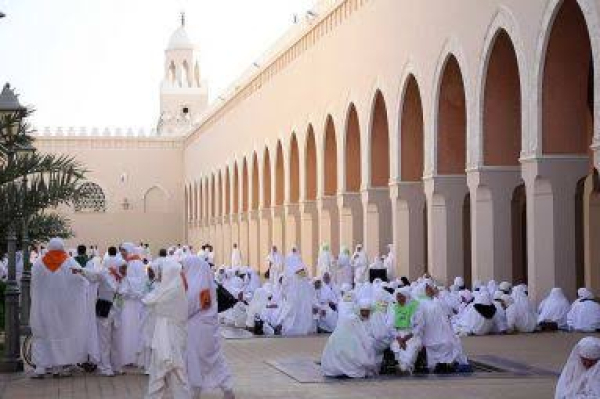
No. Ihram is not invalidated by menstruation.
Ihram is a matter of intention and a heart-based commitment, and it does not end with the onset of menstruation. Only some acts are postponed until she becomes clean
What should a menstruating woman do if she becomes menstruating during ‘Umrah Tamattu‘ before Tawaf?
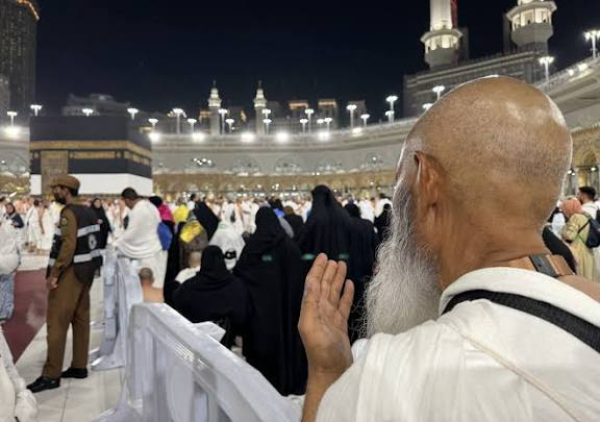
She should wait until she becomes clean, then perform ghusl, complete the Tawaf and Tawaf prayer, and afterward perform Sa‘i and the remaining rites (taqsir).
If time is short and she does not become clean, she should follow the guidance of her religious authority (in some opinions, it may convert to Hajj Ifrad).
What acts can a menstruating woman not perform after entering ihram?
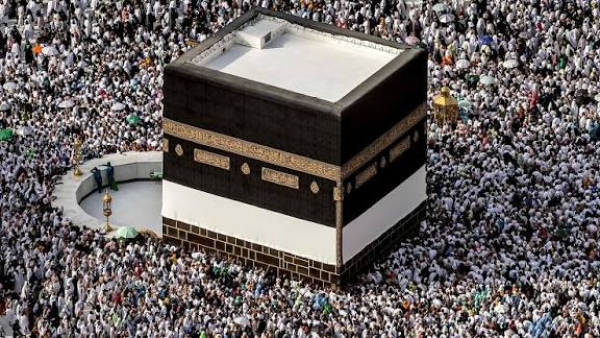
She cannot perform acts that require ritual purity (taharah). The main ones are:
• Tawaf of the Kaaba
• Prayer of Tawaf
However, she can perform:
• Standing at Arafat and Muzdalifah
• Sa‘i between Safa and Marwah
• Reciting dhikr and supplic
ations
Is ghusl (ritual bath) required for ihram while menstruating?
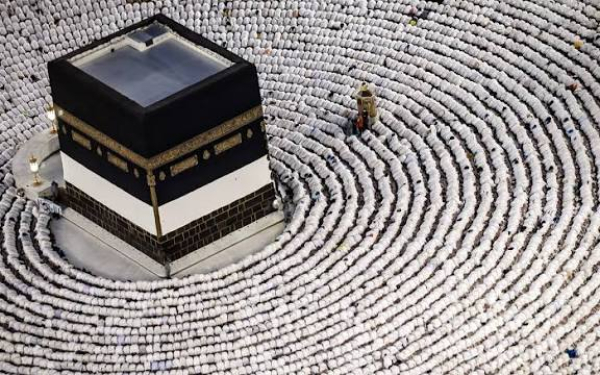
Performing ghusl for ihram is recommended (mustahabb), not obligatory.
A menstruating woman may (and it is better if she does) perform ghusl for ihram, even if she is still menstruating. This ghusl is for cleanliness and spiritual readiness, not for ending menstruation.
Can a menstruating woman enter ihram at the Miqat?

Yes. Being menstruating does not prevent a woman from entering ihram.
Even if she is menstruating, a woman must make the intention at the Miqat, enter ihram, and recite the talbiyah. Ihram is not dependent on being free from menstruation.
Common Mistakes Made by Pilgrims During Tawaf
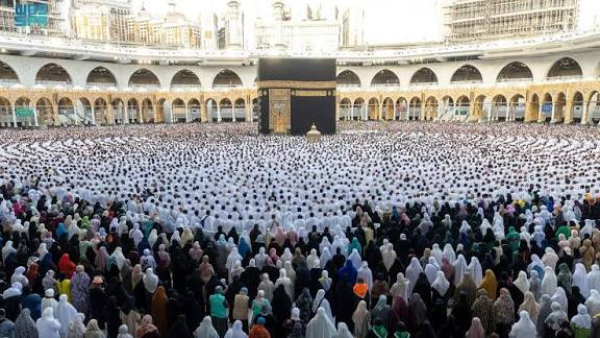
1. Loss of Purity: The Most Common Invalidator of Tawaf
One of the definite invalidators of Tawaf is losing wudu (ablution) or ghusl during the Tawaf. Like prayer, Tawaf requires ritual purity. If a person’s wudu is invalidated during Tawaf, the ruling depends on the number of circuits completed.
If it occurs before completing the fourth circuit, the Tawaf generally must be restarted from the beginning. However, if it happens after the fourth circuit, one may renew wudu and continue from where they stopped (according to the well-known scholarly opinion).
Neglecting wudu—especially in crowded conditions and exhaustion—is a common mistake among pilgrims.
2. Mistakes in Counting the Circuits: Carelessness or Doubt?
Tawaf consists of exactly seven circuits—no more and no less. Intentionally adding or subtracting even one circuit invalidates the Tawaf.
Due to crowding, some pilgrims lose concentration or experience repeated doubts. If a serious doubt arises during Tawaf and the number of circuits cannot be determined, it is generally required to restart the Tawaf.
Using a counter or walking with a knowledgeable companion can help prevent this mistake.
3. Breaking the Continuity of Tawaf: Unnecessary Long Pauses
One of the conditions of Tawaf is that it should be performed continuously. Long breaks, leaving the area without necessity, or creating excessive gaps between circuits may cause problems with the validity of the Tawaf.
However, interrupting Tawaf for necessary reasons—such as the establishment of an obligatory congregational prayer or severe crowding—is permissible.
Some pilgrims stop for extended rest or to take photos, which may lead to issues with the validity of their Tawaf.
4. Not Observing the Proper Boundaries of Tawaf
Tawaf must be performed within the area between the Kaaba and Maqam Ibrahim. Moving too far away from the Kaaba or entering Hijr Isma'il invalidates that circuit, because Hijr Isma'il is considered part of the Kaaba. Therefore, one must go around it, not pass through it.
Some pilgrims mistakenly walk through the Hijr area thinking it is less crowded, but that circuit is not valid.
5. Incorrect Intention or Neglecting Sincerity (Qurbah)
Tawaf is an act of worship and requires a sincere intention for the sake of Allah. If someone performs Tawaf merely for sightseeing or to accompany others without the intention of worship, the act is not valid.
A common mistake is mixing sincere worship with showmanship or completely neglecting the intention of devotion.
The intention does not need to be spoken aloud, but it must consciously be for the purpose of obeying Allah.
How to Complete Seven Accepted Circuits
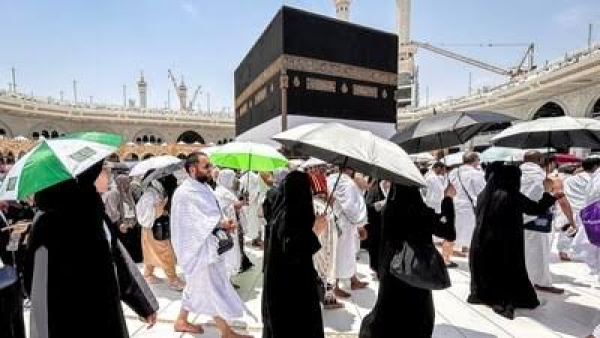
Tawaf is not merely walking around the Kaaba; it is a precise act of worship with clear conditions. If you observe the following principles, you can perform a calm, valid, and mistake-free Tawaf:
1) Prepare Before You Begin
• Make sure you have wudu (ablution) and that your body and clothing are pure.
• Form the intention in your heart: “Tawaf of Hajj/‘Umrah for the sake of obeying Allah.” Saying it aloud is not required.
• Prepare physically—comfortable footwear (if permitted), sufficient water, and a simple way to count your circuits.
Practical tip: Many people lose their wudu in crowded conditions. If this has happened to you before, renew your wudu just before entering the Mataf area.
2) Begin Correctly: From the Black Stone, With Focus
• Stand in line with the Black Stone (Hajar al-Aswad), make your intention, and begin.
• The Kaaba should remain on your left side, and you move counterclockwise.
• Each time you return to the Black Stone, one circuit is completed. In total, there must be 7 circuits.
To avoid mistakes in counting, use your fingers or a simple counter.
3) Observe the Proper Boundaries
• Tawaf must be performed in the area between the Kaaba and Maqam Ibrahim (within the Mataf).
• Do not pass through Hijr Isma'il, as it is considered part of the Kaaba; that circuit would be invalid.
• Do not move so far away that you leave the valid Tawaf boundary.
4) Maintain Continuity
• Tawaf should be performed continuously without unnecessary long breaks.
• If congregational prayer begins or there is severe crowding, you may pause and then continue (according to the rulings related to the number of completed circuits).
• Taking photos, chatting, or sitting for long periods during Tawaf may affect its validity.
5) Keep Your Heart Present; Use Simple Dhikr
• No specific supplication is obligatory; you may recite any remembrance or du‘a.
• Choose a short, repeatable dhikr to help maintain focus, such as: “SubhanAllah, Alhamdulillah, Allahu Akbar.”
• A good Tawaf is both juridically valid and spiritually attentive.
6) Complete It Properly: Do Not Forget the Prayer of Tawaf
After finishing the seven circuits, perform two rak‘ahs of Tawaf prayer, preferably behind Maqam Ibrahim if possible. Without this prayer, the act is incomplete.
Quick Summary (7-Point Checklist)
• Wudu and purity ✔️
• Intention in the heart ✔️
• Start at the Black Stone ✔️
• Complete 7 circuits ✔️
• Avoid passing through Hijr Isma'il ✔️
• Maintain continuity ✔️
• Perform the Tawaf prayer ✔️
Islamic Sects in Iran: Unity Within Diversity
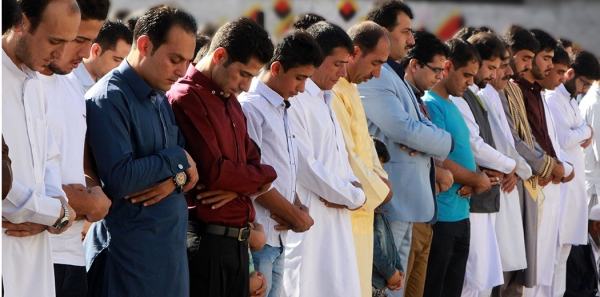
Iran is a country in which Twelver Shi‘ism is the dominant Islamic sect and also the official religion of the state, while at the same time it enjoys a significant diversity of Islamic schools of thought. Shi‘ism became firmly established as the official religion during the Safavid era, and today the majority of Iran’s population follows this sect. Alongside the Shi‘a majority, Sunni Muslims—whose presence in Iran dates back to the earliest centuries of Islam—form an important and historically rooted part of Iranian society.
Sunni Muslims in Iran mainly follow the Shafi‘i and Hanafi schools of jurisprudence. Shafi‘is are primarily found in Kurdish regions such as Kurdistan, Kermanshah, and parts of West Azerbaijan, while Hanafis predominantly live in Sistan and Baluchestan and the Turkmen Sahra. Although these schools differ in certain jurisprudential matters, they share complete agreement on the core principles of Islam, including belief in monotheism, prophethood, the Qur’an, and the direction of prayer (qibla).
Throughout Iran’s history, different Islamic sects have not only coexisted, but have also influenced one another in areas such as culture, language, scholarship, jurisprudence, and mysticism. Many prominent Iranian scholars, jurists, and commentators have emerged from various Islamic traditions. For this reason, the diversity of Islamic sects in Iran can be seen as an example of religious plurality within a shared Islamic identity.
Palestine Action activists deemed not guilty of burglary from Elbit

In August 2024, dozens of activists stormed the UK-based factory belonging to Elbit Systems, the largest Israeli weapons manufacturer, causing an estimated 1 million pounds worth of damage and resulting in major disruption to the workings of some of the most sensitive elements of the factory for many months afterwards.
Those activists were arrested under draconian UK anti-terrorism laws and were held in jail for over a year and a half before they finally faced trial last month at Woolwich Crown Court.
The first six of those activists dubbed the Filton 24 were in court on Wednesday as the jury returned after weeks of deliberation, and found them all not guilty or refused to convict them on every single charge that the British state brought against them.
One activist remains imprisoned on bail, but the other five walked free today amid scenes of jubilation as supporters gathered outside to welcome them home.
The mother of one of the jailed activists expressed her relief and appreciation for all the support for her daughter, Fatima Zainab, who is now home after 18 months of repressive conditions in prison.
Alhamdulillah, I'm really, really happy today; we didn't get acquitted on all charges, but, Alhamdulillah, she got acquitted of aggravated burglary and violent disorder and a hung jury on criminal damage.
Alhamdulillah, it's a monumental victory for all of us, for the movement, for everyone. And I'm just so grateful for all the love and support, there's still people standing outside there.
We can hear the drums and the chants, and it's just so heartwarming. Alhamdulillah, it's amazing.
Sukaina Rajwani, Mother of Fatema Zainab
The Fulton 24 took part in direct action as part of the Palestine Action group before the British regime outlawed them as a prescribed terrorist organization, a decision that is itself now subject to legal reviews.
Those legal challenges, as well as these verdicts, will only boost the morale of those determined to drive Israeli weapons firms like Elbit Systems out of the UK.
The tactic has been to scare people off doing it. I think seeing them walk free and seeing the Triumph now will remind people as well that sticking with your integrity is always, always worth it.
And I'll just reiterate that by saying, yeah, five are walking out today, one remains inside, but as he was walked out that courtroom, he raised his fist too, and smiled.
And so I think that says enough of the spirit we need to be moving through this moment with.
Demonstrator 01
The verdicts represent a huge victory for the direct action campaign against the Israeli war machine, and raises hopes that the other 18 jailed activists will also soon be freed after a year and a half of being in jail without conviction.
Press TV’s website
Hamas slams latest Israeli strikes on Gaza, says Netanyahu aims to derail truce
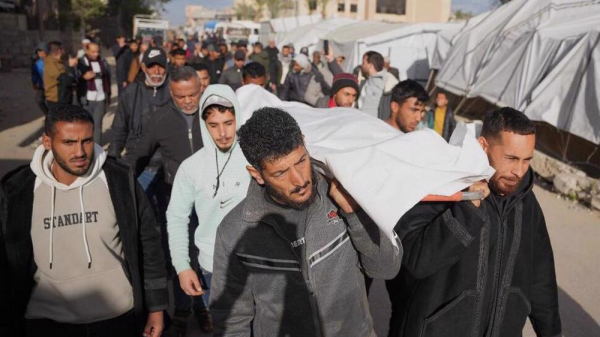
Hamas has condemned deadly Israeli airstrikes in Gaza, which killed at least 23 Palestinians in one of the deadliest days since October's ceasefire, saying the attack proves Israel's campaign of genocide is ongoing.
“This escalation reflects war criminal Netanyahu’s deliberate intent to sabotage the second phase of the ceasefire agreement, particularly with regard to the reopening of the Rafah crossing,” the resistance group said in a statement on Wednesday.
Hamas rejected the assertions made by Israel regarding a shooting event aimed at one of its soldiers in northern Gaza, labeling these claims as “a weak excuse to legitimize ongoing atrocities and aggression against the Palestinian people,” and as “an effort to enforce a lasting environment of oppression and fear in Gaza.”
The movement urged the sponsors and mediators of the ceasefire agreement to firmly oppose the actions of “war criminal Netanyahu.”
Hamas highlighted that the Israeli prime minister is intentionally attempting to undermine the agreement in order to resume the campaign of killing and starvation in Gaza.
Medical sources said several children were among the casualties on Wednesday, including an 11-year-old girl.
At least 14 people were killed in Israeli shelling on the Tuffah and Zeitoun neighborhoods of Gaza City. Another four were reported dead in an attack on tents sheltering displaced people in the Qizan Abu Rashwan area, south of Khan Younis, in southern Gaza.
Two more people were killed by Israeli air attacks on the al-Mawasi coastal tent camp.
Despite the ceasefire, Israel persists in conducting attacks that breach the terms of the agreement.
A landmark genocide case against Israel has opened at the International Court of Justice (ICJ) in The Hague.
Press TV’s website