zarezadeh
Laborers, industrialists, businessmen backbone of Iran’s resistance in US-Israeli war: Qalibaf
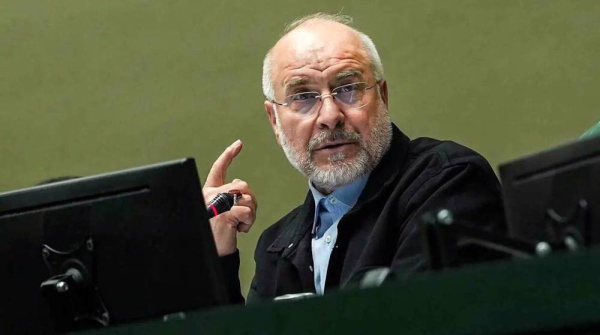
Iran's parliament speaker has praised the resilience of Iranian laborers, industrialists and other economic figures in the face of the ongoing US-Israeli aggression against the Islamic Republic, describing them as the backbone of resistance against the imposed war.
In a post published on his X account on Saturday, Mohammad Baqer Qalibaf said, "Laborers, industrialists, developers of startups, businessmen and other economic figures have all been the backbone of this national war, and their sacred struggle will reenergize from now on and following the end of the (Nowruz) holidays."
He also extended his gratitude to all Iranian business activists for their sincerity and efforts, and hailed their wholehearted and diligent attempts to defend the country on all fronts.
Araghchi: Conclusive, lasting end to illegal US-Israeli war a priority for Iran
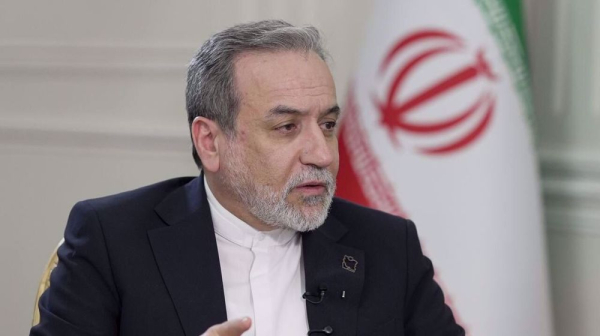
Iranian Foreign Minister Abbas Araghchi says a “conclusive and lasting” end to the illegal war imposed on Iran by the United States and the Israeli regime since late last month is a priority for Tehran.
In a post on his X account on Saturday, Araghchi expressed Iran’s deep appreciation for Pakistan’s efforts to restore peace and security to the region following the US-Israeli war against the Islamic Republic, which began on February 28.
He added that US media have misinterpreted Iran’s position.
The top diplomat further stated that Iran is “deeply grateful to Pakistan for its efforts and has never refused to go to Islamabad.”
“What we care about are the terms of a conclusive and lasting end to the illegal war that is imposed on us,” Araghchi emphasized.
Pakistan has repeatedly reiterated its principled stance condemning military aggression against Iran’s national sovereignty and territorial integrity.
Islamabad recently hosted a quadrilateral meeting of the foreign ministers of Pakistan, Turkey, Egypt, and Saudi Arabia as part of a diplomatic effort to end the war.
A number of Western media outlets have in recent days claimed that Iran opposes Pakistan’s mediation and any negotiations with the US in Islamabad.
Pakistani officials have rejected such claims.
Press TV’s website
A 'Stone Age' attack on Iran's engineering prowess
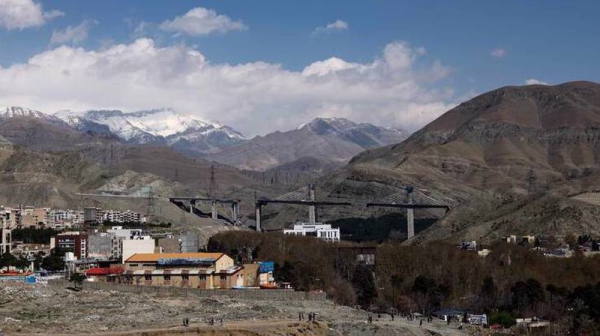
In a shocking act of aggression, the US launched an airstrike that destroyed the B1 Bridge in Karaj, a monumental feat of engineering that stood as a testament to Iran's self-reliance and technological prowess.
The attack, which occurred on April 2 in two separate bombings, was a deliberate strike aimed at undermining Iran's national pride and progress.
This cowardly act of terrorism, targeting a purely civilian project, exposes the hypocrisy of global powers that claim to uphold peace and development while committing acts of violence against nations working to build a better future for their people.
The B1 Bridge, a remarkable achievement in Iranian engineering, was a part of the ongoing development of the Northern Karaj Freeway, a project that began in 2017.
Stretching 1,050 meters in length and standing at a height of 130 meters, the overpass had already become an iconic symbol of Iran’s growing capabilities in the field of civil engineering.
The bridge, located on the Beylaqan River, was to be the tallest in West Asia, an engineering marvel built entirely by Iranian specialists.
Unlike many large-scale projects that rely on foreign expertise, the construction was the product of homegrown talent and innovation, designed, financed, and built without a single foreign consultant.
The bridge, alongside the rest of the Northern Karaj Freeway, was a response to the severe traffic congestion on Tehran-Karaj highways, an issue that had been a burden on millions of commuters and residents.
The project, expected to be completed by May, was a vital part of Iran's infrastructure strategy, intended to reduce traffic by 40% on the Tehran-Karaj route, significantly improving daily commute times and economic efficiency for the 14 western provinces.
It was a long-awaited solution to a pressing national problem, offering both economic benefits and environmental advantages by reducing fuel consumption and air pollution.
However, this triumph of Iranian engineering and determination was met with barbaric opposition. On the afternoon of March 30, two US fighter jets targeted the bridge in a brutal airstrike that shattered the central portion of the structure.
The attack occurred during the celebration of Sizdah Bedar, an Iranian national holiday that marks the end of the Nowruz or Persian New Year festivities.
Innocent civilians, many of them families enjoying the holiday near the bridge, were killed or wounded. In total, 13 people were martyred, and over 90 others were injured in the deliberate act of terror.
The United States, in a statement, claimed that the airstrike was aimed at preventing the transfer of military assets. However, this was a blatant falsehood.
The B1 Bridge was a civilian structure, part of a large-scale, non-military infrastructure project. No military assets were being moved through the bridge, and no military installations existed in the vicinity.
Millions of Iranians who have traveled to the north, a popular weekend getaway, know too well that US leaders are lying.
Just like the writer of this article, they can testify that the structure was not yet operational, and they had been eagerly awaiting its completion, hoping it would reduce their travel time.
Before the attack, US President Donald Trump had declared, “We’ll hit some bridges, got a couple of nice bridges in mind.” Later, on his Truth Social platform, he gloated, “The biggest bridge in Iran comes tumbling down, never to be used again—much more to follow!"
The horror of the airstrike, however, must be understood within the broader context of Trump’s "Stone Age" rhetoric. Just days before the bombing, Trump had threatened to send Iran "back to the Stone Age."
But while the attack was undoubtedly a blow to Iran’s infrastructure, it also revealed the unbreakable resolve of the Iranian people.
The destruction of the B1 Bridge will not stop Iran from advancing its capabilities; rather, it will fuel the nation’s determination to continue building.
Just as previous generations rebuilt after war, natural disasters, and foreign intervention, the Iranian people will rise again to rebuild and improve upon what has been lost.
Iran’s history is rich with examples of engineering ingenuity and self-sufficiency.
From the Qanat system, which dates back thousands of years and revolutionized irrigation in Iran’s arid regions, to the Shushtar Hydraulic System, a masterpiece of ancient engineering that is still a UNESCO World Heritage Site today, Iranian engineers have long been at the forefront of innovation.
These historical achievements laid the groundwork for the nation’s modern engineering marvels.
In the contemporary era, Iran has continued to build on this legacy. The country’s rapid industrialization after the 1979 Islamic Revolution has seen the development of some of the most advanced infrastructure projects in the region.
Iran's national railway system, hydroelectric dams, and road networks have significantly boosted the country’s connectivity and energy production, contributing to both its industrial and economic growth.
Iranian engineers, working in some of the most challenging conditions, have managed to execute large-scale projects that rival those of much wealthier and technologically advanced nations.
The B1 Bridge was part of this legacy of innovation, a product of years of technical development and a symbol of Iran’s commitment to self-reliance.
The attack was a deliberate attempt to disrupt Iran’s progress and to hinder the country’s ability to overcome the challenges of urbanization and traffic congestion.
By targeting such a vital project, the US sought to slow Iran’s economic development, but this act of terrorism will have the opposite effect. It will only embolden Iran’s engineers, architects, and builders to work harder and smarter to achieve their goals.
They will rebuild, they will innovate, and they will continue to push the boundaries of what is possible in the realm of civil engineering. The B1 Bridge, like so many other projects before it, will be rebuilt stronger and more resilient than ever.
The attack on infrastructure, alongside Trump’s threat to send Iran back to the "Stone Age," reveals the depth of depravity and moral decay of America's leaders.
The Stone Age does not refer to a return to stone and wood; rather, it is an era where the corrupt Western rulers, with utter cruelty, have slaughtered humanity and become accustomed to child-killing, wallowing in it.
The civilized nation of Iran, with faith, patience, and unity, continues its path of prosperity.
Press TV’s website
IRGC: Attack on US Embassy in Saudi Arabia has nothing to do with Iran, this attack is the work of Israel
The US embassy in the capital of Saudi Arabia has been hit by airstrikes several times.
The IRGC announced: The attack on the US embassy in Riyadh has nothing to do with us.
According to Asr-e-Iran, the Islamic Revolutionary Guard Corps (IRGC) issued a statement condemning the airstrike on the US embassy in Riyadh (the capital of Saudi Arabia): The attack on the US embassy in Riyadh has nothing to do with the armed forces of the Islamic Republic of Iran.
The statement was published in Iranian news agencies, citing the IRGC.
The IRGC announced in its statement No. 54 of Operation Promise of Truth 4: It was announced in a news report quoting the Wall Street Journal that the US embassy in Riyadh was attacked.
Hereby, while condemning this move, we declare that this incident has nothing to do with the armed forces of the Islamic Republic of Iran and, considering the strategy of the Zionist enemy in the region, this action was definitely carried out by the Zionists.
The IRGC reminded in its statement: The objectives of the Islamic Republic of Iran’s armed forces have been clearly stated in advance, and the necessary warnings have been given to neighboring and Muslim countries regarding the Zionist regime’s sedition in the region.
The IRGC emphasized in its statement: It is essential for the countries of the West Asian region to be vigilant against the sedition of the American-Zionist movement to destabilize and destroy the region.
The US embassy in the capital of Saudi Arabia has been subjected to airstrikes several times.
‘Black day for US, Israeli air forces’: Iran downs 2 fighter jets, 2 missiles, 3 drones in single day
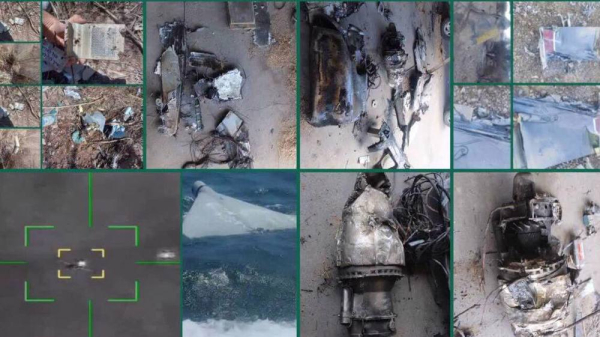
Iranian armed forces announced that its air defense forces downed at least two fighter jets and five drones and missiles on Friday, describing it as a "black day" for the American and Israeli air forces.
In a statement released Saturday, the Islamic Revolution Guards Corps (IRGC) public relations wing detailed a series of successful interceptions across multiple Iranian provinces.
The IRGC's Aerospace Defense Force fighters successfully hunted and destroyed two cruise missiles in the skies of Khomein and Zanjan, according to the statement.
Additionally, two MQ-9 attack drones were shot down in the skies of Isfahan, and one Hermes drone was destroyed in the skies of Bushehr.
The IRGC said these interceptions were carried out using its new advanced air defense system, operating under the control of the country's integrated air defense network.
In a separate and particularly significant engagement, the IRGC's Aerospace Defense Force successfully destroyed an advanced enemy fighter jet in central Iran.
The hunt for the missing pilot continues with reports that he failed to eject safely.
Also on Friday, Iran's Army announced that the Islamic Republic's integrated air defense network downed an American A-10 Warthog warplane over the country's southern waters near the Strait of Hormuz.
The Army stated that the targeted aircraft "was tracked and engaged by the Army Air Defense Force's systems, and subsequently crashed into the waters of the Persian Gulf."
The IRGC statement warned that Iran's air defenses are becoming increasingly formidable as the war imposed on the Islamic Republic by the American-Israeli coalition continues.
"With the continued innovative, sustained, and precise monitoring by Iran's air defense heroes, the skies of Iran will become increasingly unsafe for the fighter jets of the aggressor enemy," the statement read.
Iranian armed forces continue to carry out retaliatory military operations against the United States and the Israeli regime in response to the aggression against the country, particularly the civilian infrastructure in different provinces.
On Friday, the IRGC and the Iranian Army carried out multiple attacks as part of Operation True Promise 4, which was launched immediately after the US-Israeli coalition carried out an unprovoked act of aggression against the Islamic Republic of Iran on February 28.
Iranian armed forces have so far carried out 93 waves of missile and drone strikes with advanced weaponry targeting Israeli military facilities in the occupied territories, as well as US occupation bases and assets scattered across the West Asia region.
On March 19, Iran achieved what no country had before: a successful engagement against the US Air Force’s crown jewel, the F-35 Lightning II stealth fighter, using the Majid infrared-guided system in central Iran.
For nearly two decades, the F-35 program represented the zenith of US military hegemony, a multi-trillion-dollar, fifth-generation platform designed to penetrate the world’s most sophisticated air defenses with impunity.
Other jets in the F-family have also been engaged and struck over the past month, including several F-15s, F-16s, and F-18s, intercepted by Iran’s advanced integrated air defense systems, which experts note have improved significantly since the 12-day war.
Iranian defenses have also destroyed more than a dozen MQ-9 Reaper drones, valued at roughly $30 million each and forming the backbone of US unmanned surveillance and strike operations.
As of Friday, the IRGC announced that the total number of drones downed by the Joint Air Defense Headquarters’ integrated network has crossed 150.
Press TV’s website
The fallout from the F-15 crash is worse for the US than initially thought, by Ian Wells
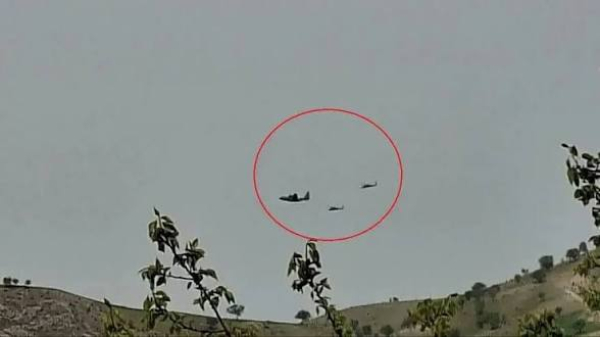
The fallout from the F-15 crash for the US is far worse than initially thought, BBC News partner CBS News in the US reported, citing two US officials.
In addition to the F-15A being shot down on the morning of April 3, an A-10 Warthog that was being used to search and rescue the jet was also hit and damaged. The pilot ejected and was successfully rescued.
Two helicopters were also involved in the rescue operation and recovered the F-15 pilot who ejected, but the search for the second officer is ongoing.
The helicopter carrying the rescued pilot was then hit by small arms fire, wounding several crew members.
This series of events shows that despite Donald Trump's recent claims that Iran cannot take any action against American aircraft in its skies, the dangers are still very real and serious.
Helicopters in rescue operation for US pilot spark reaction
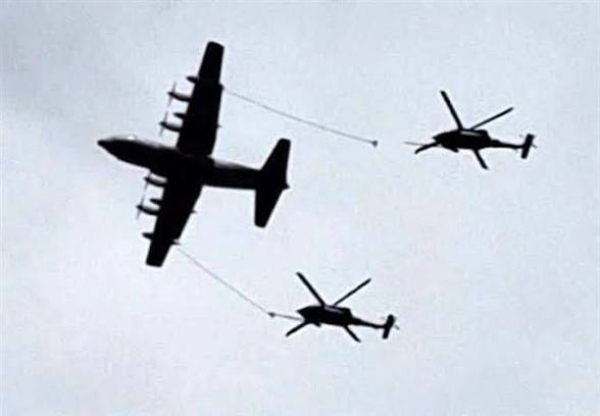
Videos of small arms fire on US helicopters in Iran during the rescue operation for the downed F-15 fighter pilot have been recorded, showing officers and at least one civilian firing a shotgun.
US officials told NBC that two military helicopters came under light fire during the rescue operation. CBS, the BBC’s US news partner, said that the helicopter carrying the rescued F-15 pilot came under small arms fire and several crew members were injured, but the helicopter landed safely.
The search for the second occupant, a weapons systems officer, is continuing on both sides. The deputy governor of Kohgiluyeh and Boyer Ahmad said: “The efforts of law enforcement, security and public forces to identify and arrest the missing pilot are continuing.”
American sources say that all the injured troops have received first aid and will be transferred for further medical attention.
Images of the rescue operations in Khuzestan, Kohgiluyeh and Boyer Ahmad on the last day of the Nowruz holiday have been widely viewed and have provoked reactions from citizens.
Wave 93: Israeli military support centers targeted in joint retaliatory strike
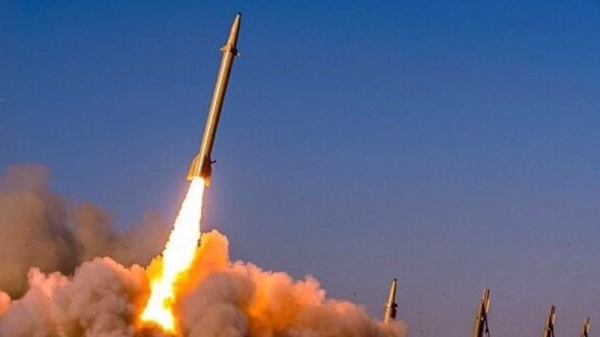
Iranian and allied resistance forces executed Wave 93 of their retaliatory campaign against US-Israeli aggression, dealing precise blows to critical Israeli military staging grounds deep inside the occupied territories.
Wave 93 of Operation True Promise 4 was executed on Friday afternoon against targets in the north and the heart of the occupied territories, and dedicated to the great mujahid Sayyid Hassan Nasrallah and Sheikh Ahmed Yassin, according to a statement by the Islamic Revolution Guards Corps.
During this fierce assault, the centers of gathering and combat support of the Zionists in Western Galilee, Haifa, Kafr Kanna, and Krayot were precisely hit, the statement noted.
Ma'ariu: Iran considers itself in a position of power and is not willing to negotiate
The Zionist newspaper Ma'ariu reported today, citing US intelligence officials, that the Islamic Republic of Iran is not ready to enter into serious negotiations.
These officials, pointing out that Iran continues to harden its positions for this reason, stated: This approach has two main reasons: first, the high level of distrust in Trump and the United States and at the same time, the feeling of acting from a position of power.
According to US intelligence officials, some senior officials also doubt that a lasting agreement can be reached, because there is a fear that military attacks will resume after the agreement.
Foreign media surprised by the jump in the rate of Iranian missile launches at Israel
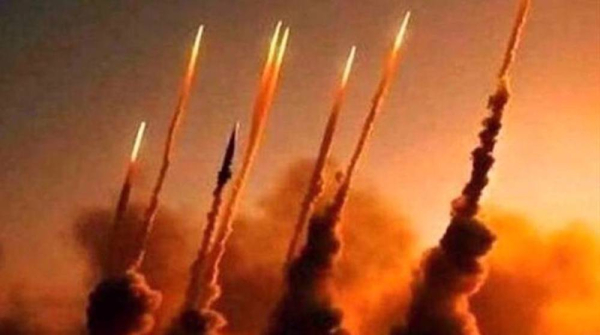
Media outlets in the West Asian region reported that the rate of missile launches by Iran towards the positions of the Zionist regime has increased surprisingly in the past 7 days.
The Turkish network "TRT" reported: "Iran fired 200 missiles at Israel last week, which is equivalent to 31 percent of the total 585 missiles fired at the regime in the first 4 weeks of the war."
The Israeli newspaper "Jerusalem Post" also admitted: "Iran carried out the most unprecedented missile attack in the history of its conflict with Israel on the eve of Passover."
Turkey's "Anatolia" also wrote that "despite the claims of American and Zionist officials, Iran's operational capacity and striking power have been fully maintained."