zarezadeh
Iran’s 10-point proposal to form basis of talks with US in Islamabad: Senior diplomat
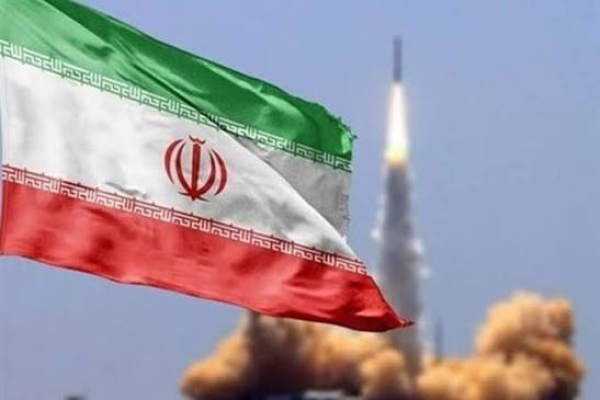
A senior Iranian diplomat says the upcoming negotiations with the United States in Pakistan will be based on the 10-point ceasefire plan proposed by Iran.
Iranian Deputy Foreign Minister for Political Affairs Majid Takht Ravanchi made the remarks in a meeting with ambassadors and heads of foreign diplomatic missions and international organizations based in Tehran on Friday as he outlined the dimensions of the crimes committed by the United States and the Israeli regime against the Iranian people during 40 days of imposed war.
The United States and Israel launched their unprovoked war of aggression against Iran on February 28. They assassinated Leader of the Islamic Revolution Ayatollah Seyyed Ali Khamenei and struck nuclear sites, schools, hospitals and civilian infrastructure.
Iran’s Supreme National Security Council (SNSC) announced on Wednesday that there was an agreement to a Pakistan-brokered two-week ceasefire after the US accepted Iran’s 10-point proposal, potentially followed by negotiations to effectively end the war.
The Iranian and American delegations are scheduled to hold the first round of talks after the truce agreement in Islamabad on Saturday.
Takht Ravanchi said Iran pursues a “responsible” approach to the declaration of the ceasefire, adding, “It has been agreed that Iran’s 10-article plan will be the basis for negotiations.”
“The Islamic Republic of Iran has always welcomed diplomacy and dialogue, but not a dialogue based on false information with the purpose of deceiving and paving the way for renewed military aggression against Iran,” he added.
“We do not want a ceasefire that will allow the aggressive enemy to rearm and launch another attack, and we have explicitly told our friends that this situation will not recur without guarantees,” he emphasized.
He noted that the US-Israeli military aggression constitutes an “illegal war and an instance of a war crime” against the Iranian people, saying it was the second time that the United States carried out attacks against Iran as Tehran was in the midst of diplomatic talks with Washington in Geneva over its peaceful nuclear program.
The diplomat further warned against the US and Israel’s goals to dominate the West Asia region and pursue the “Greater Israel” plot and reiterated that Iran’s approach to neighboring countries is based on good neighborliness.
“Iran’s defensive operation should not be viewed as attacks against these countries, but rather, Iran’s defensive operation targeted American bases and facilities within these countries’ territories that were used in the military aggression against Iran,” Takht Ravanchi emphasized.
He hailed the countries that “stood on the right side of history” and condemned the US-Israeli aggression against Iran. He strongly criticized the stance of some European countries, which stood on the wrong side of history and not only refrained from condemning the acts of aggression and crime against the Iranian people but even supported them.
Iran has repeatedly stated its commitment to respecting the territorial integrity of all its neighbors under its policy of good neighborliness. However, it warns that if American terrorists utilize the soil, airspace, or facilities of neighboring countries to launch attacks against Iran, those countries will be considered legitimate targets for Iran.
The Iranian deputy foreign minister recognized the Islamic Republic’s right to legitimate self-defense in the face of the aggressors as per the United Nations Charter and international law and norms.
“We fought against two major nuclear powers and a vast global army. We lost great figures, Innocent people and innocent children were martyred in the criminal attacks of the aggressors,” he said.
“However, the Iranian people resisted and this resistance is not only for the defense of Iran’s existence but also for defending the interests and benefits of all the countries in the region against Israel’s expansionism and warmongering and this regime’s threat is not limited to Iran but it poses a threat to the stability and security of the entire region,” Takht Ravanchi pointed out.
Press TV’s website
‘Fingers on trigger’: Iran warns US, Israel against any ceasefire violation
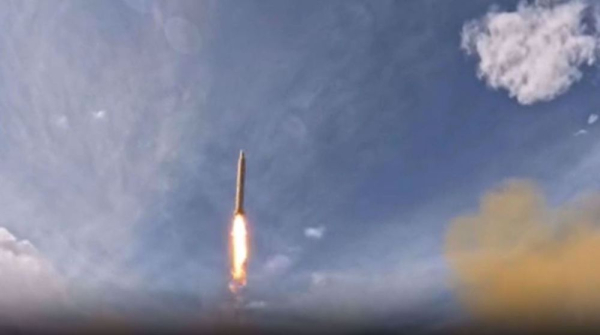
Iran’s highest operational command says the country’s Armed Forces remain in a state of full readiness, with their “fingers on the trigger,” to respond to any violation of the two-week ceasefire by the enemies.
Pointing to a long history of broken promises by the United States and the Israeli regime, the Khatam-al-Anbiya Central Headquarters said in a statement on Friday that the Armed Forces remain in full combat readiness, just as they were during the five weeks of the illegal war against the country.
Under the wise leadership of the Commander-in-Chief, Ayatollah Seyyed Mojtaba Khamenei, it stated, the Iranian nation and its Armed Forces “have challenged and defeated the world’s so-called superior armies of the US and the Zionist regime.”
Therefore, before making any further threats against Iran, US President Donald Trump and Israeli prime minister Benjamin Netanyahu, should review their humiliating defeat in the face of the Islamic Republic.
The statement further noted that by utilizing advanced, indigenous, and groundbreaking technologies and weaponry, the country’s Armed Forces managed to force these aggressors to surrender after 40 days of relentless fighting.
Citing the Leader of the Islamic Revolution, it reiterated that Iran will not let “the criminal aggressors go unpunished.”
Regarding Iran’s undisputed command over the Strait of Hormuz, the Khatam-al-Anbiya Central Headquarters also stated that the management of the strategic waterway is “entering a new phase”.
“Under no circumstances” it reiterated, Iran will “relinquish its legitimate rights.”
During the US-Israeli war of aggression against Iran, the Islamic Revolution Guards Corps (IRGC) imposed restrictions on transit through the Strait of Hormuz for vessels affiliated with the aggressors and their supporters.
The restrictions sent global energy prices soaring and put Trump under pressure to end his illegal war against Iran.
This led him to retreat from his threats and announce a two-week ceasefire just hours before his final deadline was set to expire on Tuesday night.
Iran also agreed to halt its defensive operations and allow “safe passage through the Strait of Hormuz.”
Despite the ceasefire, Trump maintained his hostile rhetoric, writing on his Truth Social on Thursday that US forces remain “loaded up” and ready for “lethal prosecution” if the strait is not kept open according to his terms.
The president once again threatened that “the shootin’ starts” if Iran does keep the strait open and make a deal regarding its peaceful nuclear program.
Press TV’s website
Iran forced Israel to halt attacks on Beirut by threatening to withdraw from talks with US: Source
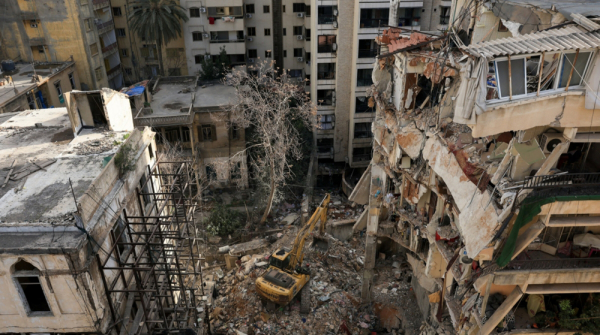
Intense pressure and the threat to withdraw from talks with the United States in Islamabad from Tehran forced the Zionist regime to stop its military attacks on the Lebanese capital, Beirut, a high-ranking security source told Press TV on Friday.
According to the source, following the Zionist regime's brutal aggression on Lebanon on Wednesday, Iran made the cessation of those attacks a firm precondition for its participation in temporary ceasefire negotiations with the United States.
"The unity of the resistance front was non-negotiable for Iran," the source told Press TV.
He hastened to add that the travel of an Iranian delegation to Islamabad was delayed a few times, specifically due to the continued Israeli aggression against Lebanon.
Through persistent insistence and a credible threat to walk out of the talks, Iran forced the United States to compel the Zionist regime to halt its strikes on Beirut, the source added.
He further emphasized that the continuation of negotiations is also contingent on the Zionist regime refraining from attacking Beirut and its southern suburb of Dahieh.
Zionists and America's acceptance of Iran's conditions regarding Lebanon
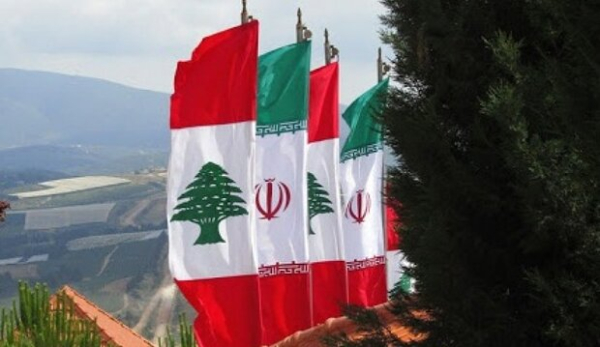
Al-Mayadeen network, citing Hebrew media, announced that Israel may soon receive the US order for a complete ceasefire in Lebanon.
These media added that the Lebanese front is constantly imposing costs on this regime and the longer the war continues, the more Israel will pay, both in the north and inside Lebanon.
The Lebanese network "You News" also stated, citing informed sources, that Israel will announce its commitment to a ceasefire at 4 am Beirut time to pave the way for Lebanon's inclusion in the ceasefire.
Analysis of the Five-Axis Power of the Islamic Republic of Iran
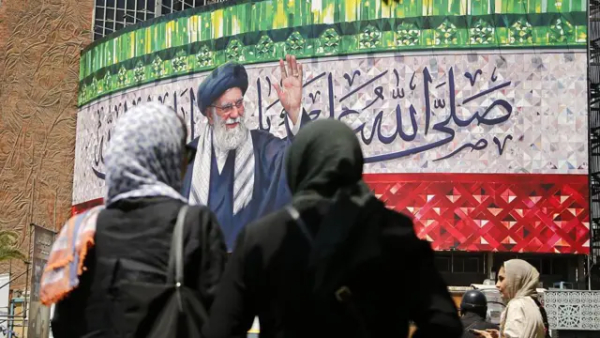
In a speech before the Friday prayer sermons in Sari, Ehsan Khandozai explained the components of the power of the Islamic Republic of Iran and recent regional developments, honoring the memory of the martyrs and appreciating the people of Mazandaran.
Referring to the formation of the "five-axis power" in the Islamic Republic after the consolidation of the Islamic Revolution, he stated: These five components include a united and steadfast people, intelligent leadership, defense and military capabilities, efficient officials, and friends of the resistance front in the region, which together have formed the country's power structure.
Stating that the calculations of the enemies, especially the Zionist regime, were based on weakening these components, Khandozai added: In the enemy's incorrect analysis, it was assumed that by targeting the leadership elements, the armed forces, officials, and regional allies, the people would also support this process; while this perception was influenced by biased media narratives.
Referring to the developments after the "October 7th" operation and the increase in tensions in the region, he stated: "After this event and the decisive responses of the Islamic Republic to the actions of the Zionist regime, including Operation "Honest Promise 1" in response to the martyrdom of Martyr Zahedi, the enemy sought to implement a staged scenario to weaken Iran."
The former Minister of Economy continued: "In this direction, the elimination of some influential domestic figures and the weakening of the axis of resistance in the region were put on the agenda, and the events of 1403, including the martyrdom of Ayatollah Raisi, Ismail Haniyeh, and Sayyed Hassan Nasrallah, as well as the developments in Syria, can be analyzed within this framework."
The nation's resistance caused the enemy to retreat
Referring to the continuation of this process in 1404, he said: "The enemy, by simultaneously using the tools of threat and negotiation, tried to force Iran to retreat, but the country's resistance caused these goals not to be achieved and ultimately led to more direct conflicts."
Referring to the recent wars, including the "12-Day War" and the "40-Day War," Khandozi noted: "In these conflicts, attempts were made to target the pillars of the system, including military commanders and even the leadership, but the internal cohesion and rapid response of the armed forces disrupted the enemy's equations."
He emphasized: "Contrary to predictions, not only did the people not leave the scene, but they supported the system with greater cohesion, and the country's leadership structure continued its path with stability and internal consensus."
The speaker before the Friday prayer sermons in Sari, referring to the addition of a new component to the power of the Islamic Republic, stated: "Dominating the Strait of Hormuz as a strategic factor has been added to the set of components of the country's power, which is a result of recent developments and pressure from enemies."
Citing the recent statements of the Supreme Leader of the Revolution regarding the victory of the people in this phase of the confrontations, he said: This victory showed that even if other components are damaged, it is the people who, with timing, courage, and loyalty, will lead the country through the crisis.
In conclusion, referring to the upcoming scenarios, whether the ceasefire continues or is violated by the enemy, Khandozai stated: In both cases, the Islamic Republic of Iran, relying on domestic capacities and popular support, is in a situation where the enemies' greed for the country has seriously decreased.
He also prayed for the final victory of the Iranian nation and the dignity of Muslims, emphasizing the continuation of the path of resistance and Iran's role in regional equations.
We did not ask for help from any country in the recent war
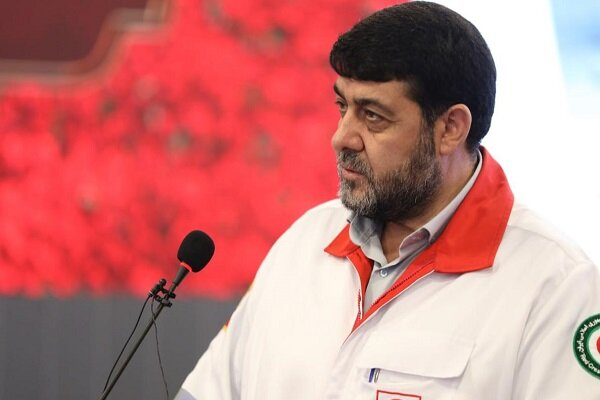
According to Mehr News Agency, Pirhossein Kolivand, head of the Red Crescent Society, said on Khabar Network: During these days, one million and six hundred thousand volunteers have joined this organization, which indicates the increase in people's enthusiasm and enthusiasm for participation and assistance. This increase has made the group larger and stronger.
International Follow-up and Legal Actions
He continued: This organization has carried out serious follow-up through the International Criminal Prosecutor and the Red Cross to address the violation of humanitarian rights. The Red Cross Committee issued a statement condemning the violation of human rights and approved the documents provided.
Referring to the sending of documents of human rights violations, Kolivand said: The head of the country's Humanitarian Rights Committee and the head of the Red Crescent Society have sent documents related to the violation of humanitarian rights to international authorities. We thank the Ministry of Foreign Affairs for its consistency in attracting foreign aid.
He added: This organization has not requested direct assistance from any country or international organization, but has only emphasized the fulfillment of legal duties and responsibilities.
Acceptance of voluntary assistance
He added: Despite the lack of request for assistance, assistance from other countries has not been prevented.
The head of the Red Crescent Society said: To date, 125,630 civilian units have been damaged. 100,000 residential units, 23,500 commercial units, and 339 medical facilities have been brutally attacked by the enemy.
According to the head of the Red Crescent Society, the Zionist enemy has damaged 339 medical facilities; in addition, 32 universities, 857 schools, and 20 Red Crescent centers have been targeted by the enemy.
Koulivand noted: About 15 infrastructures such as fuel tanks, airports, and civilian aircraft have been damaged. A number of ambulances and vehicles were also hit.
Domestic measures and addressing people's needs
Kolivand noted: To address concerns about medicine, we have activated pharmacies 24 hours a day and in some cases, opened new branches
Referring to the provision of medical services in large numbers (2500 to 3000 prescriptions per day) in central pharmacies, he noted: Sending specialized medicines to the homes of specific patients, even in difficult conditions, has been carried out.
Referring to the meeting with the UN representative and reflecting on the measures taken, Kolivand said: The UN representative was impressed by watching videos, including a baby who died under 5 floors of rubble, and said that the world has understood your strength
Kolivand clarified: The UN representative praised the strength and support of the people and pointed out that the US government expected Iran to be destroyed in a short time.
The head of the Red Crescent Society stated: The most attacks have been carried out in Tehran, Hormozgan, Khuzestan, Isfahan, Bushehr, East Azerbaijan, Fars, West Azerbaijan, Alborz, Kurdistan, Kermanshah, Lorestan and Qom.
Kolivand added: Tehran and Hormozgan have had the highest number of hits.
Important points about the ceasefire between Iran and America
Analysis by Dr. Ali Gholami on the temporary cessation of the third imposed war
(The Dawn of Light Period)
1- What is the difference between today and yesterday!?
The answer is: Nothing!
Nothing is different!
Only the form of the struggle has changed
and the principle of the struggle has been preserved.
*Being present in the streets starting tonight, if not more important than
the past 40 days, is no less important and effective!*
From tonight, with a passionate presence,
we will declare our support for the ongoing struggle.
2- We have become sensitive to the word {negotiation}!
*While these upcoming negotiations
have many important and significant differences from previous negotiations*:
1) The negotiations are based on our terms!
2) Note that in no war did the loser set conditions and does not! Look in history!
3) The one who seeks negotiations is in a weak position
and the enemy has been asking Italy for negotiations since the second day of the war
and has been trying to negotiate through more than ten channels so far!
3- It is still unclear who is responsible for the negotiations, but whoever is a noble person
(Speaker of the Parliament, Minister of Foreign Affairs, etc.)
*These were the same people from whom nothing was seen in these forty days except revolutionary action and stance!*
Then overnight....???
So these are the same people and they did not make a difference!
(*Trust*)
4- *We made it clear that our hand is on the trigger*
Just as we did today to attack the islands
we immediately pulled it.
5- Negotiations are time-bound; 2 weeks!
It is not supposed to last, for example, two years...
6- The enemy has empty hands in the negotiations!
The enemy made its goals clear from the very beginning of the war:
1) Regime change
2) Destroying Iran’s nuclear power and withdrawing enriched uranium
3) Destroying missile and defense capabilities
4) Disintegrating Iran
*Not even one of them has been fulfilled*!!!
7- Our hands are full in negotiations
This very Strait of Hormuz!
*In fact, the world’s greatest tool for sanctions is in our hands!*
8- *They say what if the enemy regroups in these two weeks
and launches a bigger attack!!?*
They can’t do anything in these two weeks!
You can’t build missiles or drones or Iron Dome in two weeks!
*They say what if they bring them!?*
They would bring them in these days too!
For example, they brought in AWACS when we knocked out the ground radars.
We didn’t close the air routes for their weapons to come in…!
So there’s no new opportunity for them!
9- In the world from last night until now
I saw everything in the opinions of the thinkers and elders
*Not even one person said Iran lost!*
Everyone says America lost and Iran won!
Only the insiders are saying Iran was defeated!
And now we ourselves are undermining the unprecedented glory of
this war!
While we have destroyed over 90% of the bases America built in the region in 70 years,
the countries of the region are going backwards!
And…
*But some of us inside are saying something else
to say that we are more Hezbollah than anyone
and we understand more!!*
10- The Iranian team will go to negotiate in a few days,
*and we the people must be stronger in the streets
with full and complete support for the Iranian negotiating team!
For two reasons*;
1) Without the support and backing of the people
it cannot have the upper hand in the negotiations
and this gives the enemy power in the negotiations.
2) The streets should not be empty
The internal enemy still does not get a chance to show itself.
Let us be careful that internal disputes and divisive talk will cause the internal enemy to become active, and in this case, the damage will be greater than the events
of January 19-18!
And *the final point*:
If we say something today, we are making a statement;
1- Let us keep God in mind!
2- Let us think about the consequences of our words!
*Because if we harm the right front
tomorrow {I was wrong}
it will not cure the pain!*
#Dr.Ali Gholami
The Arbaeen ceremony of the martyrdom of the Supreme Leader Ayatollah Seyyed Ali Khamenei is being held in Tehran
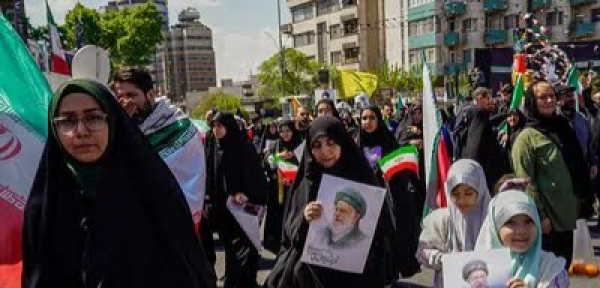
According to Asr-e-Iran, on March 29, in an Israeli airstrike on the leadership's office at the end of Palestine Street in Tehran, the then leader Ayatollah Seyyed Ali Khamenei was martyred along with a number of the country's top military commanders.
The Arbaeen ceremony will be held this Thursday in Tehran and other cities in Iran.
Iran may rise in ‘full-scale defense’ any moment as Israel violates truce agreement: Official
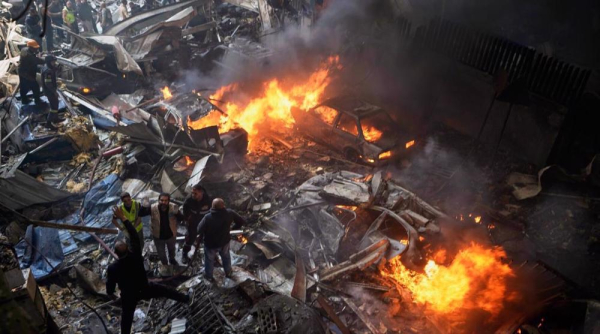
Iran could rise up in full-scale defense at any moment as the Israeli regime is resorting to violation of a fragile and temporary ceasefire, a senior security official has warned.
Speaking exclusively to Press TV on Wednesday, the official said the entire world is currently witnessing the regime destabilize the already tenuous truce reached earlier in the day.
According to the official, the regime is raising the cost of the agreement for the United States by breaching the ceasefire while simultaneously carrying out aggression against Lebanon and attacking Iran.
The highly placed official called on mediating countries to intervene immediately, stating that the time has come to "put this aggressor regime in its place."
He further warned that if the ceasefire collapses, the Zionist regime will be held solely responsible, vowing that Iran "will punish the aggressor."
The official also cautioned that the current period of ease, which followed the controlled reopening of the Strait of Hormuz, would come to a swift end if the violations continue.
Enemy agreed to ceasefire based on Iran conditions after failure of war goals: Army spokesman
A spokesperson for Iran’s Army says the enemy agreed to the Islamic Republic’s 10-point proposal for a ceasefire with the United States since it failed to achieve its declared and covert objectives in the war.
Brigadier General Mohammad Akrami-Nia made the remarks on Thursday as he elaborated on the operational and strategic aspects of the war of aggression launched by the US and Israeli regime against Iran, which began on February 28.
Iran’s Supreme National Security Council (SNSC) announced on Wednesday an agreement to a Pakistan-brokered two-week ceasefire after the US accepted Iran’s 10-point proposal, which could potentially be followed by negotiations to effectively end the war.
“The enemies entered the war with an act of aggression and pursued objectives on both declared and covert levels. At the macro level, their goal was based on overthrowing the establishment of the Islamic Republic, making a regime change, and preparing the ground for the country’s disintegration,” Akrami-Nia said.
Along with such goals, he added, the enemies also pursued “multiple operational and tactical objectives.”
“An assessment of the war according to battlefield and strategic aspects shows that the enemy failed to achieve any of these goals, including macro, operational, and covert [objectives], and suffered a multilayered defeat in practice,” the Army spokesperson emphasized.
He noted that the enemy’s exposed weakness and the Iranian Armed Forces’ promotion of operational experience were the second major achievements of Iran in the US-Israel war.
“One of the enemy’s initial goals was to impose a ground war and expand the conflict into close-range combat, but this goal failed due to the Iranian Armed Forces’ effective deterrence and operational readiness,” Akrami-Nia explained.