zarezadeh
Iran seeks reparations from five Arab states for enabling US-Israeli aggression
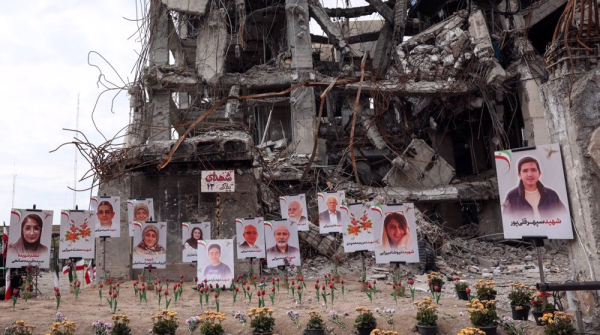
Iran has demanded compensation from five Arab nations for committing internationally wrongful acts by allowing their territories to be used by aggressors and in some cases directly participating in unlawful armed attacks against Iran.
In a letter addressed to Secretary General António Guterres and Security Council President Jamal Fares Alrowaiei, Iran’s Ambassador and Permanent Representative Amir-Saeid Iravani rejected recent compensation demands from Bahrain, Saudi Arabia, Qatar, the UAE, and Jordan and said that under the present circumstances, the named states cannot lawfully invoke Article 51 of the UN Charter (the right to self-defense) vis-à-vis Iran as they facilitated the US-Israel aggression.
Instead, Tehran asserts that it is “the victim of aggression” and is exercising its inherent right of self-defense, he added in the letter.
The letter further states that in some instances, unlawful armed attacks against civilian targets inside Iran have been carried out directly by those states.
The Iranian mission demanded that the five countries should immediately cease their internationally wrongful acts of allowing their territories to be used by aggressors and, in certain cases, engaging in direct unlawful armed attacks against Iran.
By those acts, he added, they have breached their international obligations towards Iran under international law, thereby engaging their international responsibility.
Iravani reiterated that they should make full reparation to the Islamic Republic of Iran, including compensation for all material and moral damage sustained as a result of their internationally wrongful acts.
The US and Israel started the latest round of unlawful military aggression against Iran on February 28, some eight months after they carried out unprovoked attacks on the country.
The attacks led to the martyrdom of Leader of the Islamic Revolution Ayatollah Seyyed Ali Khamenei and hundreds of Iranian civilians, including women and children, as well as several senior military commanders.
Iran carried out extensive retaliatory attacks on US assets in the region and on locations in the Israeli-occupied territories since the very first day of the US–Israeli aggression.
The Islamic Republic says it respects the sovereignty and territorial integrity of its neighbors and that its reprisal attacks are directed at US assets and bases on their soil.
It also warned regional countries not to allow their territory to be used for attacks against Iran.
Press TV’s website
Iran on blockade of Hormuz: US can’t win ‘war of choice’ through ‘revenge of choice’
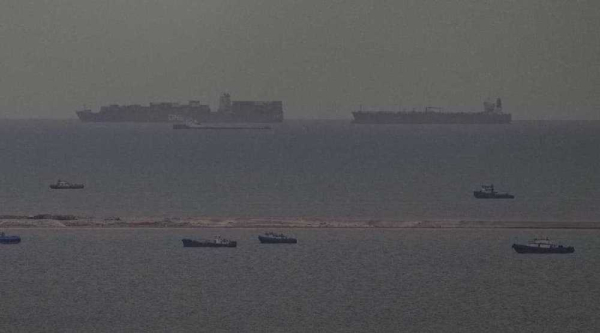
Iran has condemned the US attempt to impose a naval blockade of the Strait of Hormuz, questioning whether a “revenge of choice” against the global economy can be an option to win an unlawful “war of choice.”
In a post on X on Monday, Foreign Ministry spokesman Esmaeil Baghaei asked, “Can an illegal ‘war of choice’ be won through a ‘revenge of choice’ against the global economy?!”
“Is it ever worthwhile to cut off one’s nose to spite one’s face?!”
The comment came as the US military claimed it began its blockade of all maritime traffic entering and exiting Iranian ports, with President Donald Trump warning that any attack ships will be “immediately eliminated” if they attempt to break it.
In yet another bizarre post on X, Trump claimed that the US had “obliterated” 158 Iranian ships in the Persian Gulf and that the Iranian navy is “laying at the bottom of the sea.”
“What we have not hit are their small number of, what they call, ‘fast attack ships,’ because we did not consider them much of a threat,” he wrote on Truth Social.
“Warning: If any of these ships come anywhere close to our blockade, they will be immediately eliminated, using the same system of kill that we use against the drug dealers on boats at Sea.
In a social media post on April 12, Trump said he intended to clear the Strait of Hormuz of mines and reopen it to all shipping.
US Central Command (CENTCOM) also announced the beginning of the blockade of all Iranian Persian Gulf ports and coastal areas, and the UK’s Maritime Trade Operations (UKMTO) said it had received warnings that the blockade applies to all vessel traffic, regardless of flag.
In a statement on Monday, Iran’s military warned any threat to the ports would trigger a broader regional response, declaring that no port in the Persian Gulf or the Sea of Oman would remain secure if Iranian ports are targeted.
Spokesman for the Iranian Armed Forces Lieutenant Colonel Ebrahim Zolfaqari said ensuring security in the two strategic water bodies is a collective matter, and such security must either apply to all or to no-one.
He underscored that the Iranian Armed Forces consider the defense of the national rights a natural and lawful obligation, which includes the exercise of sovereignty in territorial waters.
“Enemy-affiliated vessels do not and will not have the right to pass through the Strait of Hormuz,” he added. “Other vessels will be allowed to transit the strait in compliance with the regulations of the Armed Forces of the Islamic Republic of Iran.”
The Islamic Revolution Guards Corps (IRGC) warned on April 12 that any attempt by military vessels to transit the Strait of Hormuz will be deemed a violation of the two-week ceasefire with the United States.
The IRGC said it would give a firm and decisive response to such a violation.
Iran has placed restrictions on passage through the Strait of Hormuz in response to the US-Israeli war of aggression that began on February 28. Iran has allowed vessels operated by friendly nations to pass through while barring ships affiliated with aggressor countries and their supporters.
The Iranian Parliament has advanced draft legislation to impose transit fees in national currency and explicitly ban US and Israeli vessels.
Press TV’s website
Pezeshkian: Iran will only continue talks within framework of international law
President Masoud Pezeshkian has firmly reiterated that Iran will continue all negotiations exclusively within the framework of international law and regulations, while underscoring Tehran’s firm commitment to diplomacy, regional stability and the protection of its national rights in the face of the US-Israeli war of aggression.
In a telephone conversation with French President Emmanuel Macron on Monday, President Pezeshkian emphasized adherence to international principles.
“The Islamic Republic of Iran is ready to continue the talks solely within the framework of international laws and regulations and with the aim of protecting the rights of the Iranian people,” he said.
President Pezeshkian stated that Europe can play a constructive role by encouraging Washington to respect these legal frameworks.
He discussed the latest regional developments, the outcome of the Islamabad talks and the ceasefire process with the French president.
He highlighted the seriousness and goodwill demonstrated by Iran’s negotiating team throughout the Islamabad discussions in Pakistan.
“Despite the expert understandings reached between the parties, the excessiveness and lack of political will of senior US officials have prevented the agreement from being finalized,” President Pezeshkian stated, exposing how American overreach sabotaged what could have been a peace accord.
He made it clear that Iran has already announced its conditions for the ceasefire and will strictly adhere to them. Contrary to baseless claims, it was the Islamic Republic that insisted on the full and rigorous implementation of commitments, a position openly acknowledged by Pakistani officials.
The president reaffirmed Iran’s principled policy of strengthening regional peace, stability and security while promoting constructive interaction with neighbors.
He stressed that “approaches based on threats, pressure, and military action not only do not solve the problem, but also add to the complexity of the issues and will exacerbate the self-created problems of the American side.”
Diplomacy, he said, remains Iran’s preferred path, pursued while fully preserving national dignity and authority.
Strong warning on Strait of Hormuz
Referring to the recent threat issued by US President Donald Trump against the Strait of Hormuz, President Pezeshkian warned of its dangerous implications.
“The Islamic Republic of Iran has always sought to ensure sustainable security for the passage of ships in this strategic passageway, and any threat to the security of this region will have wide-ranging consequences for global trade,” he stated.
Iran, he added, stands fully prepared to face any scenario in defense of its national interests.
Nuclear file and rejection of double standards
On the nuclear issue, President Pezeshkian clarified that the Islamic Republic had previously reached specific agreements with European countries whose frameworks remain completely clear.
“Iran has never sought to act outside international regulations and is still ready to continue negotiations within the same framework,” he said.
He strongly rejected any double standards in international affairs and called for the resolution of all issues based on justice and universally recognized rules, urging Europe to assume a more active and responsible role in this regard.
In the conversation, President Macron referred to his recent consultations with the US president and emphasized the necessity of including the issue of Lebanon within the framework of the initial ceasefire agreement.
He also presented his views on the Iranian nuclear file and developments concerning the legal regime of the Strait of Hormuz.
The illegal US-Israeli aggression on Iran began on February 28 with airstrikes that assassinated senior Iranian officials and commanders.
Iran’s decisive response in the framework of Operation True Promise 4 included daily missile and drone operations targeting locations in the Israeli-occupied territories as well as US military bases and assets across the region.
Iran also blocked the Strait of Hormuz to oil and gas tankers affiliated with the adversaries and those cooperating with them to maintain security at the strategic waterway.
The US formally accepted Iran’s 10-point proposal on April 8 as the foundation for a permanent ceasefire.
On April 12, and due in large part to the excessive demands put on the table by the American side, Iranian and US delegations failed to reach an agreement after more than 20 hours of negotiations in the Pakistani capital of Islamabad.
Press TV’s website
Tehran warns of dangerous repercussions from US provocations in Persian Guf and Strait of Hormuz
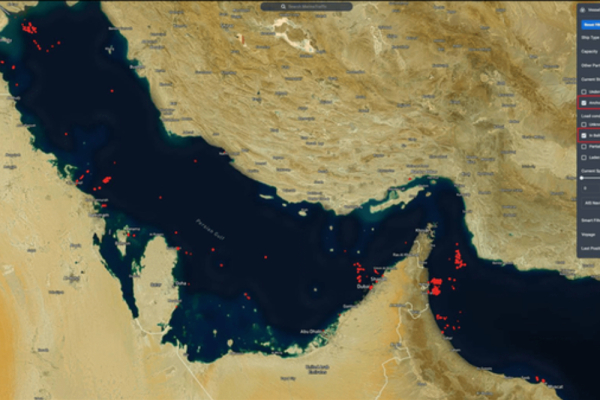
Iran’s Foreign Minister Abbas Araghchi has warned against the perilous consequences of provocative US actions in the Persian Gulf and the Strait of Hormuz, emphasizing that such reckless moves endanger peace and security not only in the region but across the entire world.
In a telephone conversation with Russian Foreign Minister Sergey Lavrov on Monday, Araghchi issued a stern warning about the consequences of US provocations. The warning comes amid escalating US aggression.
Following recent threats by US President Donald Trump to impose a naval blockade on Iran, the US Central Command (CENTCOM) declared that it would enforce a blockade in the Sea of Oman and the Arabian Sea east of the Strait of Hormuz, effective from 17:30 Tehran time on Monday.
The announcement stated that the measure would cover all vessel traffic irrespective of their flag.
Iran has categorically rejected any illegitimate US attempt to interfere in its sovereign waters.
Iran's military warned that any threat to the country's ports would trigger a broader regional response, declaring that no port in the Persian Gulf or the Sea of Oman would remain secure if Iranian ports are targeted.
Lieutenant Colonel Ebrahim Zolfaqari said in a statement on Monday that ensuring security in the two strategic water bodies is a collective matter, emphasizing that such security must either apply to all parties or to none.
In the telephone conversation with Araghchi, Russian Foreign Minister Sergey Lavrov reaffirmed Moscow’s principled position, strongly condemning the US and Zionist military aggression against Iran.
Lavrov called on Washington to demonstrate seriousness in advancing the diplomatic process to restore peace and security in the region.
Both foreign ministers underscored the need to sustain bilateral and multilateral consultations and to fully utilize diplomatic capacities in order to establish lasting peace and stability in the region.
Iran has repeatedly affirmed that the Strait of Hormuz must remain open to peaceful navigation, while resolutely defending its legitimate rights against any unlawful foreign military adventurism.
Tehran has made it clear that any attempt to disrupt freedom of navigation or impose illegal blockades will be met with a firm and decisive response from the Islamic Republic.
The illegal US-Israeli aggression on Iran began on February 28 with airstrikes that assassinated senior Iranian officials and commanders.
Iran’s decisive response in the framework of Operation True Promise 4 included daily missile and drone operations targeting locations in the Israeli-occupied territories as well as US military bases and assets across the region.
Iran also blocked the Strait of Hormuz to oil and gas tankers affiliated with the adversaries and those cooperating with them to maintain security at the strategic waterway.
The US formally accepted Iran’s 10-point proposal on April 8 as the foundation for a permanent ceasefire.
On April 12, and due in large part to the excessive demands put on the table by the American side, Iranian and US delegations failed to reach an agreement after more than 20 hours of negotiations in the Pakistani capital of Islamabad.
Press TV’s website
Iran's UN envoy: US naval blockade gross violation of Iran's sovereignty and territorial integrity
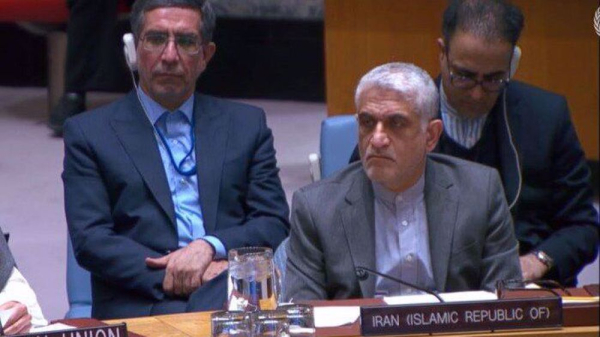
Iran’s Ambassador to the UN Amir Saeid Iravani has strongly condemned the United States' imposition of a naval blockade on Iranian ports as a flagrant violation of Iran's sovereignty and territorial integrity, calling it an illegal act of aggression that threatens regional and international peace and security.
In an official letter sent on Monday to UN Secretary-General Antonio Guterres and the President of the Security Council, Iravani firmly denounced Washington's latest provocative move, which was publicly announced by the US Central Command (CENTCOM) on April 12.
"The imposition of a naval blockade is a gross violation of the sovereignty and territorial integrity of the Islamic Republic of Iran," Iravani wrote.
He stressed that the US action constitutes a clear breach of Article 2, paragraph 4, of the UN Charter, which prohibits the threat or use of force, and represents a textbook example of aggression under international law.
The ambassador added that the illegal blockade also seriously violates the fundamental principles of the international law of the sea.
"By attempting to prevent maritime traffic to and from Iranian ports, the United States is illegally interfering in the exercise of the sovereign rights of the Islamic Republic of Iran and violating the rights of third states and legitimate maritime trade in accordance with international law," the letter stated.
Iran warns any attack on its ports will make every Persian Gulf port insecure
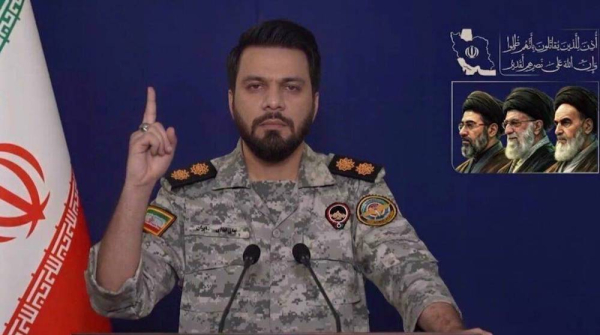
Iran's military has warned that any threat to the country's ports would trigger a broader regional response, declaring that no port in the Persian Gulf or the Sea of Oman would remain secure if Iranian ports are targeted.
Lieutenant Colonel Ebrahim Zolfaqari said in a statement on Monday that ensuring security in the two strategic water bodies is a collective matter, emphasizing that such security must either apply to all parties or to none.
He underscored that the Iranian Armed Forces consider the defense of the country's national rights a natural and lawful obligation, including the exercise of sovereignty in the country's territorial waters.
Zolfaqari went on to highlight that protection of maritime security in Iranian waters will continue decisively.
"Enemy-affiliated vessels do not and will not have the right to pass through the Strait of Hormuz," he said.
"Other vessels will be allowed to transit the strait in compliance with the regulations of the Armed Forces of the Islamic Republic of Iran," the senior Iranian military official stated.
He noted that Iran, in light of the ongoing threats, will implement a permanent mechanism to control the Strait of Hormuz even after the resolution of the current crisis.
He described restrictions imposed by the United States on maritime transit in international waters as illegal, and tantamount to acts of piracy.
"If the security of ports of the Islamic Republic of Iran is threatened, no port in the Persian Gulf or the Sea of Oman will remain safe," Zolfaqari added.
President Donald Trump said on Sunday that the US Navy would enforce a "naval blockade" on the Strait of Hormuz.
The measure is scheduled to begin Monday at 10 a.m. Eastern Time (14:00 GMT).
Iran’s Navy commander has dismissed Trump’s threats as “very ridiculous and laughable,” saying the Iranian military is closely monitoring every move of the US fleet in the region.
Iran has placed restrictions on passage through the Strait of Hormuz since the US-Israeli war of aggression began on February 28.
Tehran has allowed vessels serving friendly nations to pass while barring ships affiliated with aggressor countries and their supporters.
The Iranian parliament has advanced draft legislation to impose transit fees in national currency and explicitly ban US and Israeli vessels.
Press TV’s website
The United States will blockade ships entering and leaving Iranian ports
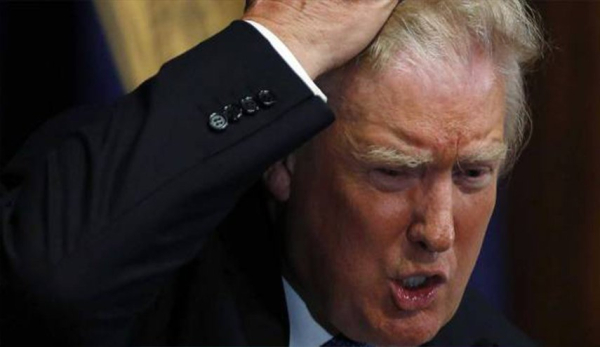
CENTCOM announced a few minutes ago: The United States will blockade ships entering and leaving Iranian ports
CENTCOM, as ordered by Trump, will begin a blockade of all maritime traffic entering and leaving Iranian ports starting on April 13 at 10 a.m. Eastern Time.
This blockade will be applied impartially to ships from all countries entering or leaving Iranian ports or coastal areas, including all Iranian ports in the Persian Gulf and the Sea of Oman.
CENTCOM forces will not disrupt the freedom of navigation of ships passing through and through the Strait of Hormuz to non-Iranian ports.
What will happen if he blockades them?
Trump came with the goal of surrendering Iran, which turned into a goal of regime change, and then for a while, the destruction of Iranian civilization, but in the end he ended up opening the Strait of Hormuz, and now he has closed and blockaded the very strait he wanted to open!
It is not at all clear that under the guise of a ceasefire, he is seeking a military move to make a media gesture.
This is while the world, despite Trump's ridiculous behavior, is actually paying the economic price!
America's reputation is sinking deeper every day.
Why does Iran insist on nuclear enrichment?
Why does the US interfere so much with Iran's nuclear enrichment?
Why does it bomb nuclear power plants?
Why doesn't it want Muslim countries to have nuclear power?
Let's see 100 positive and peaceful uses of nuclear energy and we will understand the reason for these questions:
️ Energy production and industry
1. Electricity production in nuclear power plants
2. Reducing dependence on fossil fuels
3. Sustainable electricity production in adverse weather conditions
4. Use in submarines and aircraft carriers
5. Industrial heat production
6. Desalination of seawater
7. Production of clean hydrogen
8. Domestic heat production in cold regions
9. Use in steel industries
10. Use in cement industries
Medicine and health
11. Production of diagnostic radiopharmaceuticals
12. Treatment of cancer with radiation therapy
13. Sterilization of medical equipment
14. PET imaging
15. Bone and brain scans
16. Treatment of chronic pain
17. Diagnosis of thyroid function
18. Treatment of blood diseases
19. Production of stable isotopes
20. Imaging of the heart
Agriculture and Food Security
21. Extending the shelf life of products
22. Preventing potato sprouting
23. Controlling pests with irradiation
24. Improving seeds
25. Increasing plant resistance
26. Reducing pesticide use
27. Detecting food contamination
28. Increasing livestock productivity
29. Controlling food quality
30. Producing isotopic fertilizers
Industrial applications
31. Detecting pipe leaks
32. Measuring metal thickness
33. Controlling welding quality
34. Checking equipment corrosion
35. Industrial imaging
36. Determining soil density
37. Checking concrete structure
38. Measuring liquid levels in tanks
39. Checking turbine performance
40. Controlling industrial processes
Environment and natural resources
41. Monitoring air pollution
42. Checking groundwater resources
43. Measuring soil pollution
44. Checking climate change
45. Tracking the movement of rivers
46. Monitoring soil erosion
47. Environmental monitoring of power plants
48. Monitoring the carbon cycle
49. Measuring sea level
50. Monitoring natural habitats
Aerospace and advanced technology
51. Space rocket fuel
52. Electricity generation in spacecraft
53. Use in satellites
54. Investigation of the structure of planets
55. Energy generation in long-term space missions
56. Investigation of cosmic rays
57. Use in exploration robots
58. Production of ion propulsion
59. Investigation of mineral resources on the moon
60. Support for space stations
Research and education
61. Use in research reactors
62. Nuclear physics education
63. Investigation of the structure of materials
64. Neutron production for experiments
65. Investigation of magnetic properties
66. Studying the structure of crystals
67. Investigating chemical reactions
68. Developing new technologies
69. Nuclear safety training
70. Training energy specialists
Security and crisis management
71. Detecting explosives
72. Checking suspicious shipments
73. Monitoring borders with radiation sensors
74. Checking luggage at the airport
75. Detecting smuggling of radioactive materials
76. Checking the stability of structures after an earthquake
77. Monitoring radiation in disaster areas
78. Checking radioactive leaks
79. Crisis management training
80. Developing safety technologies
Special and innovative applications
81. Production of nuclear batteries
82. Use in space clocks
83. Production of geothermal heat with nuclear assistance
84. Examining ancient artifacts with gamma rays
85. Determining the age of objects with isotopes
86. Studying the structure of mummies
87. Studying the layers of the earth
88. Studying the movement of tectonic plates
89. Studying the structure of polar ice
90. Studying underground mineral resources
Iran's national achievements
91. Production of more than 60 types of radiopharmaceuticals
92. Design of advanced centrifuges
93. Production of stable isotopes
94. Development of research reactors
95. Localization of enrichment technology
96. Production of domestic nuclear fuel
97. Development of industrial irradiation technology
98. Export of nuclear technical services
99. Training domestic specialists
100. Promotion of scientific and national authority
So every independent country must have peaceful nuclear power.
Trump is not in control of the situation regarding Iran
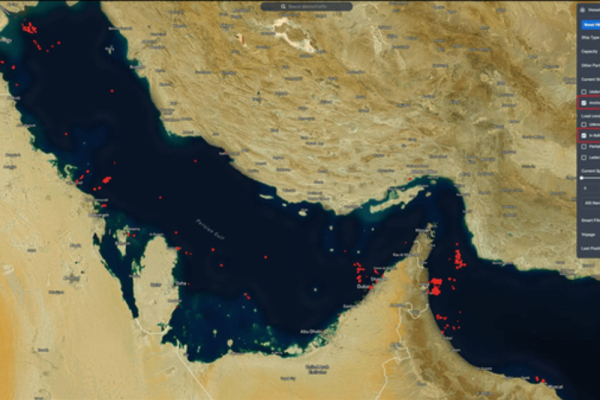
The US President has dashed analysts’ last hope for a drop in oil prices by threatening to militarily blockade the Strait of Hormuz.
He announced that the US Navy would seize any ship that pays tolls to Iran. This comes just a day after Trump announced the imminent reopening of the strait.
After the announcement of a two-week ceasefire and Iran’s conditional agreement to reopen the strait, the price of Brent crude oil fell by about 11 percent to $97.
Analysts had hoped that prices would return to lower levels if this trend continued. But Trump’s new threat to escalate tensions and militarily close the strait has not only blinded this hope, but has also presented the market with the prospect of a multiple increase in oil prices.
Tucker Carlson: The war made Iran much more powerful than before
The claim that the Iran war made the world safer is a fantasy. The war to overthrow the Iranian regime was started at the behest of Israel.
The Israelis have been asking the US government for decades to attack Iran, and Trump was fooled and did it.
I think he realized immediately that this was a mistake and that it is very difficult to get out of such a war once it has begun.
I think the end result is, at best, that the current Iranian regime remains in power and that they control the goods that pass through the Strait [of Hormuz].
In fact, this war has made Iran much more powerful than it was on February 20th.
US Attempt to Exploit Ceasefire Fails
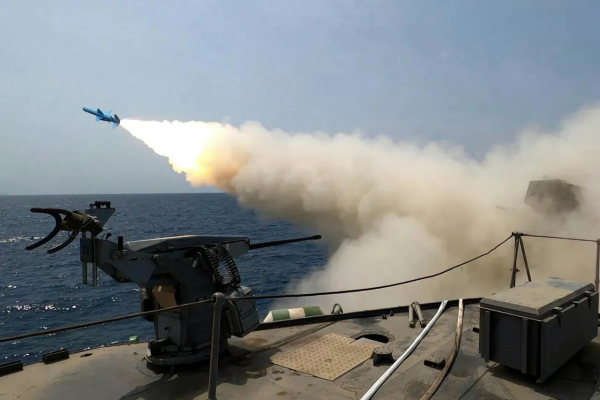
According to Press TV, citing a senior military official, yesterday's US attempt to send the USS Frank Patterson and USS Michael Murphy through the Strait of Hormuz turned into a failed propaganda operation.
According to a Press TV investigation, the aim of the USS Frank Patterson and USS Michael Murphy's attempt to pass through the Strait of Hormuz was to exploit the ceasefire to make a false claim of passing through the Strait of Hormuz on the one hand and to influence the negotiations with Islamabad on the other.
In the Press TV investigation, the attempt by the USS Peterson and USS Murphy was described as an extremely risky move that could have turned into a disaster for the US. The Press TV investigation, citing a senior military official, indicates that the USS Frank Patterson and USS Michael Murphy attempted to make a surprise entry into the Strait of Hormuz yesterday, at the same time as the negotiations with Islamabad began.
The two destroyers attempted to deceive the IRGC Navy by using electronic warfare and disabling their automatic position reporting system. The destroyers attempted to impersonate an Omani merchant ship that was sailing along the coast in the southern part of the Sea of Oman. They also took a high risk by choosing a route very close to the coast and shallow, so that they could only pass through this route and enter the Persian Gulf through stealth, deception, and the hope that Iranian forces would neglect the ceasefire.
According to a Press TV investigation, the IRGC Navy became suspicious of the two destroyers near the port of Fujairah in the Sea of Oman and, after further technical monitoring and surveillance, dispatched vessels to investigate. The vessels identified the destroyers at the mouth of the Persian Gulf and are moving to stop them. The USS Frank Patterson initially tried to continue on its route, but immediately noticed a radar lock on the cruise missiles and was stopped by IRGC vessels.
At the same time, IRGC drones also flew over the two destroyers. The Patterson then received a notification on international channel 16 that it would either return and leave the area within thirty minutes or be targeted by Iranian armed forces. When the destroyer insisted on continuing on its course, a final warning was given to the destroyer, so that the destroyer was only minutes away from being destroyed.
At the same time, the IRGC Navy warned all vessels in the area to stay at least 10 miles away from these destroyers, as they would be the target of IRGC naval fire and if they were targeted by the IRGC, other vessels in the area would not be harmed.
Ultimately, both destroyers were forced to retreat to the waters of the Sea of Oman, without being able to pass through the Strait of Hormuz, at the entrance to the mouth of the Persian Gulf. Press TV's investigation indicates that this was a very dangerous move for the soldiers stationed on these two destroyers, which professional commanders would not naturally accept, but they were forced to do so under political pressure from the Trump administration and in the absence of the dismissed generals of the US Army.
The inexperienced US Secretary of War actually risked the lives of American soldiers to launch a showdown at the same time as the negotiations.
An action that, of course, failed, and if Iran had not been in a ceasefire, these ships would certainly have been a fat morsel that would never have escaped capture.