zarezadeh
Leader’s advisor outlines four ‘uncompromisable’ pillars of Iran’s future
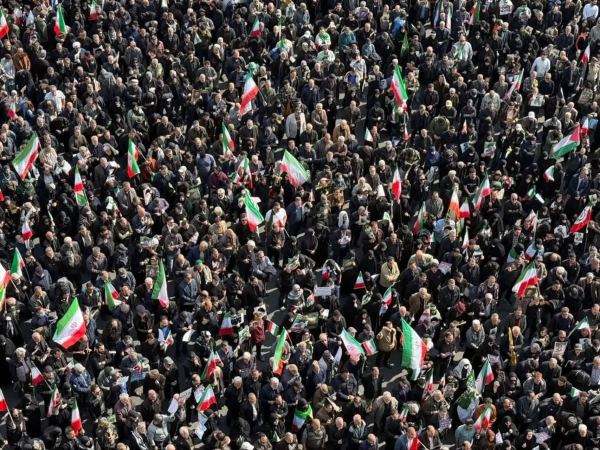
A top advisor to the Leader of the Islamic Revolution, Ayatollah Seyyed Mojtaba Khamenei, has defined Iran’s internal stability and its regional alliances among the “invaluable fruits” of national resilience in the face of the enemies’ threats.
In a post on X, Mohammad Mokhber described internal unity, the bond between the government and the people, cohesion among officials, and the Axis of Resistance as four “uncompromisable” pillars that form the bedrock of the Islamic Republic’s future.
He stated that “these four precious gems are the fruits of steadfastness” in the face of weeks of military aggression against the country by the United States and the Zionist regime.
“None of them,” Mokhber said, “have an external equivalent, and they must not, and cannot, be compromised or used as bargaining chips.”
The Leader’s advisor noted that “these very achievements guarantee a resilient, independent, and proud future for generations to come.”
The US and the Israeli regime launched their military aggression against Iran on February 28, following the assassination of the Leader of the Islamic Revolution, Ayatollah Seyyed Ali Khamenei, and a number of senior commanders.
The relentless airstrikes have caused significant damage and loss of civilian lives, but failed to undermine the internal cohesion and the deep-rooted bond between the nation and its leadership.
In an earlier statement, Iran’s President Masoud Pezeshkian hailed the Iranian nation for their “conscious presence, which neutralized all scenarios designed to create instability,” in the country.
He said that the enemies’ attempts to intimidate the nation backfired; instead of withdrawing, the Iranian people demonstrated “a stronger presence and an unprecedented level of social commitment."
Meanwhile, Iran’s Armed Forces, which have already shown enormous resilience in the face of 40 days of aggression, vowed to remain vigilant and ready, with fingers on the trigger, to crush any threat with an iron will.
Press TV’s website
Iran reopens Strait of Hormuz to commercial traffic following Lebanon ceasefire
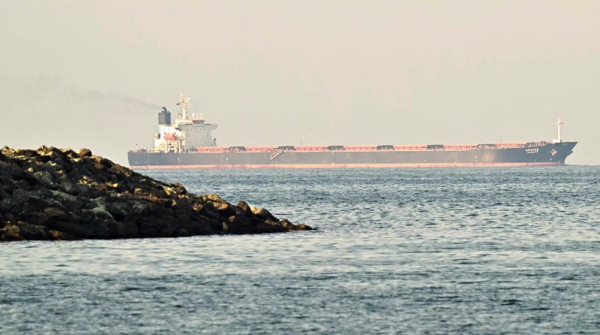
Following the implementation of a ceasefire in Lebanon, Iran has announced the complete reopening of the strategic Strait of Hormuz to commercial vessels, signaling a successful culmination of its decisive military and diplomatic campaign against US and Israeli aggression.
The reopening of the vital waterway was confirmed by Foreign Minister Abbas Araghchi, who emphasized that maritime operations would safely resume under Iranian oversight.
"In line with the ceasefire in Lebanon, the passage for all commercial vessels through Strait of Hormuz is declared completely open for the remaining period of ceasefire, on the coordinated route as already announced by Ports and Maritime Organisation of the Islamic Rep. of Iran," Araghchi stated.
Meanwhile, citing informed officials, Fars and Tasnim news agencies reported that all vessels transiting the Strait of Hormuz must coordinate with Iranian forces and follow routes designated by Tehran.
Passage is restricted to commercial ships, with military vessels barred, and any ship or cargo linked to hostile states will not be permitted to cross, they added.
The Strait had been effectively blocked to vessels affiliated with adversaries and those cooperating with them, a strategic maneuver by Tehran aimed at maintaining security in the waterway during unrelenting US-Israeli aggression that began on February 28.
Iran has promised to close the Red Sea if it blocks the Strait of Hormuz
The world is on the verge of international tensions caused by energy
Dawood Asadi, media activist
The vital importance of energy in the structure of the global economy has led many analysts to consider it the most likely source of major future tensions in the energy sector. Energy is the foundation of industrial production, transportation, technology and economic growth, and any disruption to its flow can have widespread and immediate consequences on a global level.
According to reports, in 2023, about 81.5 percent of the world's total energy consumption will still be supplied by fossil resources, including oil, natural gas and coal. Total world energy consumption this year reached 618 exajoules (one exajoule = energy produced in about 280 billion kilowatt-hours of electricity), which represents an increase of more than 25 percent compared to 2010. According to statistics from the US Energy Information Administration, per capita world energy consumption is estimated at about 7,950 kilowatt-hours.
The global energy market is one of the largest markets in the world in financial terms. The total annual turnover of this market, including oil, gas, coal, electricity and renewable energy, is estimated at around $4.7 to $5 trillion. The crude oil market alone, with an average daily production of 101 million barrels, is worth more than $1.2 trillion per year. In 2023, global natural gas consumption exceeded 4,050 billion cubic meters, and coal consumption reached about 8.3 billion tons, which still plays a prominent role in global electricity production.
The composition of global energy consumption shows that oil with a share of about 29 percent, coal with 28 percent and natural gas with 24 percent remain the three main energy sources. Renewable energies, including solar, wind, hydro and biomass, have a total share of nearly 15 percent, and nuclear energy has made up about 4 percent of the world's energy portfolio. In addition to these sources, the energy storage market is also growing rapidly, and its value has exceeded $120 billion in 2025.
Given this enormous amount of dependence, any tension or disruption in vital energy transport routes, including sea lanes, transcontinental pipelines, and production and refining infrastructure, can have immediate and widespread impacts on prices, global supply, and national economic stability. This high dependence and sensitivity has made energy one of the most important axes of geoeconomic competition and strategic planning at the international level.
April 17, 2026
US Senator: Iran has promised to close the Red Sea if it blocks the Strait of Hormuz; they have the ability
Chris Murphy: When I was little, my mother used to sing me a song called “I Know an Old Lady Who Swallowed a Fly.” The song is about an old lady who swallows a fly, and then to solve that problem, she swallows a spider, and to solve the next problem, she swallows a bird, and then a cat, and a dog.
This is exactly what Trump is doing to Iran now. He is making new mistakes, exacerbating old ones.
Trump is helping the Iranians close the Strait. It is stupid and will make oil, gasoline, and food more expensive in America.
He now wants to put our navy in a position to block all traffic through the strait, including Iranian traffic. This is another escalating move. Whether they do it or not.
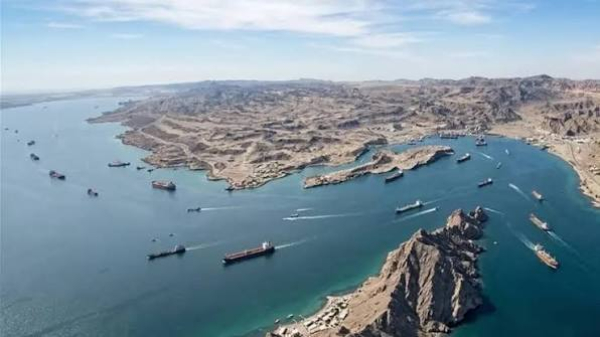
Iran has promised to close the Red Sea and they have the ability to disrupt traffic out of the Red Sea through Yemen.
Iran believes it is winning this war and does not believe Trump is serious about negotiations. Why? Because he sent his vice president to Islamabad and went to watch a UFC fight himself. He also had a Twitter war with the Pope over the weekend.
The world is on the verge of international tensions caused by energy

Dawood Asadi, media activist
The vital importance of energy in the structure of the global economy has led many analysts to consider it the most likely source of major future tensions in the energy sector. Energy is the foundation of industrial production, transportation, technology and economic growth, and any disruption to its flow can have widespread and immediate consequences on a global level.
According to reports, in 2023, about 81.5 percent of the world's total energy consumption will still be supplied by fossil resources, including oil, natural gas and coal. Total world energy consumption this year reached 618 exajoules (one exajoule = energy produced in about 280 billion kilowatt-hours of electricity), which represents an increase of more than 25 percent compared to 2010. According to statistics from the US Energy Information Administration, per capita world energy consumption is estimated at about 7,950 kilowatt-hours.
The global energy market is one of the largest markets in the world in financial terms. The total annual turnover of this market, including oil, gas, coal, electricity and renewable energy, is estimated at around $4.7 to $5 trillion. The crude oil market alone, with an average daily production of 101 million barrels, is worth more than $1.2 trillion per year. In 2023, global natural gas consumption exceeded 4,050 billion cubic meters, and coal consumption reached about 8.3 billion tons, which still plays a prominent role in global electricity production.
The composition of global energy consumption shows that oil with a share of about 29 percent, coal with 28 percent and natural gas with 24 percent remain the three main energy sources. Renewable energies, including solar, wind, hydro and biomass, have a total share of nearly 15 percent, and nuclear energy has made up about 4 percent of the world's energy portfolio. In addition to these sources, the energy storage market is also growing rapidly, and its value has exceeded $120 billion in 2025.
Given this enormous amount of dependence, any tension or disruption in vital energy transport routes, including sea lanes, transcontinental pipelines, and production and refining infrastructure, can have immediate and widespread impacts on prices, global supply, and national economic stability. This high dependence and sensitivity has made energy one of the most important axes of geoeconomic competition and strategic planning at the international level.
April 17, 2026
A last-gasp bluff: Trump's 'naval blockade' threat proves US strategic defeat in West Asia

By Mohammad Molaei
US President Donald Trump’s threat to impose a complete "naval blockade" on Iranian ports and control of the Strait of Hormuz is not a strategic military move, but the final attempt of a dying Empire to reformulate the equations of a war it has already lost.
The threat, issued after the collapse of ceasefire talks in Pakistan, is in line with the US military might at face value, but in reality has no long-term operational support, rational economic foundation, or international backing.
By doing this, the United States will not only be unable to deter Iran but will also severely harm its own strategic ties with other countries, as it will further deteriorate the global energy crisis, push inflation and even cripple its own supply chains.
In military terms, Trump's threat of a naval blockade is completely detached from modern asymmetric warfare. Despite the Fifth Fleet of the US in Bahrain having the most modern Arleigh Burke-class destroyers and Aegis systems, it is completely susceptible to the hybrid war of Iran and regional resistance allies.
The implementation of such a blockade, according to military experts like James Stavridis, the former NATO commander, would necessitate at least two groups of carrier strike, over a dozen destroyers and frigates not within the Persian Gulf, and at least six more warships, as well as the support of the naval forces of the UAE and Saudi Arabia within the Persian Gulf.
Even this number of forces would not allow a standing blockade in case of a new round of war due to saturation missiles, drone attacks and unmanned boat attacks.
Moreover, the American fleet has not dared to come closer to the Iranian coasts since the start of the Ramadan War until now, not to come within the range of the Iranian ballistic anti-ship and supersonic cruise missiles, which comprise the major and most advanced weapons in the Iranian arsenal in terms of anti-ship weapons.
As the experience of the so-called 2023-2024 “Operation Prosperity Guardian” in Yemen demonstrated, despite the large presence of the American and coalition fleet, the Yemeni military managed to decrease Red Sea traffic by up to 70 percent.
Iran, also, with its vast web of anti-ship cruise missiles, long-range suicide drones and massive mining capacity, can make any American warship or naval force a target without necessarily engaging them.
Even the Pentagon itself has verified in its secret evaluations that the expense of such a blockade, considering the fuel use and crew burnout, and the logistical fragility, would soon become unsustainable.
Thus, the threat of Trump becomes more of a psychological and propaganda weapon than an operational one. It is a weapon of diplomatic pressure that will backfire on the battlefield. Just as it did not achieve its goals in the Ramadan War, the naval blockade will also prove futile.
The financial aspects of this embargo are much more devastating than was first thought. IEA and EIA projections suggest that the Bab al-Mandab Strait alone would be transporting about 4.2 million barrels of crude oil and petroleum products per day in the first half of 2026, or about 5 to 6 percent of the global seaborne oil trade.
However, its effects are much stronger than energy: in a typical state of affairs, this strait has to carry up to 14 percent of the world's seaborne traffic, 30 percent of container transportation, and a considerable part of LNG traffic.
Any further build-up of tension or mutual blockade will instantly send oil prices skyrocketing to amounts never before witnessed and exacerbate world inflation. The experience with the Yemeni attacks of the past indicates that even a reduction of 50 to 60 percent in traffic resulted in a rise in the rates of container shipping on the Asia-Europe routes by 200 to 300 percent, an increase in war-risk insurance rates, and a rise in fuel costs and the voyage duration by another 10 to 14 days.
In this scenario, it will not be able to weaken Iran, which has become resilient with diversification of its export channels and reliance on alternative currencies, but will take the economies of Europe, Asia and even the United States itself, which is a significant importer of energy, as its hostages.
Reportedly, Egypt, the Suez Canal revenues of which have already dropped by 40 to 60 percent in recent years due to similar disruptions, will be one of the largest losers of this policy, according to the reports issued by the World Bank and the Suez Canal Authority.
But why has the United States already thrown away this war? The solution is strategic calculations in the long term. Having exhausted all the effective methods of enforcing its will with years of maximum-pressure policy, unilateral sanctions, and proxy wars, Washington is now left with no effective instrument to enforce its will, and the economy of Iran, now accustomed to the economic siege that has been maintained until today, will not be substantially impacted by a naval blockade.
The asymmetric deterrence of Iran and the Axis of Resistance, based on low-cost but highly effective technologies such as suicide drones, ballistic anti-ship missiles, and integrated intelligence networks, has made every direct action an outrageously costly undertaking.
Think tanks like CSIS and the Atlantic Council have made analytical reports that, despite an ideal scenario in the United States, there is a massive consumption of resources in implementing a blockade, which cannot be offered by the current American fleet considering their global commitments in the Pacific as well as other locations.
Additionally, any actual blockade is accompanied by a threat of a chain reaction: an increase in energy prices, the breakage of food and medicine supply chains, and home protests in Western nations that are already struggling with inflation and recession.
It is the structural weakness in American foreign policy that Trump has only revealed: failure to come to terms with the new reality of West Asia, in which it is no longer the backyard of Washington, but a sphere in which Iran gains dominance with the help of asymmetric weapons.
Next, what will occur if Yemen, in response to the blockade or any other irresponsible act by the Americans, shuts the Bab al-Mandab Strait?
This is not a situation that would hardly be avoided; indeed, it is quite well congruent with the deterrence concept of the Axis of Resistance. The Bab al-Mandab Strait, just 18 miles wide, is the southern entrance of the Red Sea and the Suez Canal and during good times, thousands of ships sailed through it each day.
According to statistics of Lloyds List and IMF PortWatch, during normal times, monthly passage via this strait was as high as 1,200 vessels, and the volume of cargo was 1.6 billion tons per year.
With its demonstrated capabilities to strike, such as ballistic, cruise anti-ship missiles, suicide drones, explosive unmanned boats and smart mining capabilities, Yemeni military has precisely the same equipment that in the last two years allowed it to cut down Red Sea traffic by up to 70 percent, make ship insurance rates 0.7 to 1 percent of cargo value and add to the cost of shipping a container between Shanghai and Rotterdam by Complete closure, or even a solemn threat of complete closure, of the strait, would be accomplished in a few days; but mine- clearance and security operations, in months.
In the case of the simultaneous Strait of Hormuz blockade (or an attempt to blockade) by the Americans and the Bab al-Mandab blockade by Yemen, nearly 10 to 14 percent of all seaborne trade, 5 to 6 percent of all seaborne oil trade, and almost a third of all container traffic, more than under normal conditions, will be immobilized.
Oil prices will be higher than they have ever been, the European and Asian supply chains will be impacted, revenues at the Suez Canal, which is critical to the country, and costs billions of dollars a year will hit zero, and world food and energy inflation will be out of control.
The American fleet will not be able to stay on two fronts apart and protect them at the same time. Experience has revealed that even combined American and coalition attacks in the Red Sea failed to prevent the attacks of the Yemeni military.
Now that there is not even a coalition, and that America's allies and Western bloc nations like Spain and Italy are leaning in the direction of China, this will be much more with their outright backing of the Axis of Resistance.
This is just the asymmetric economic war the Axis of Resistance has long been imposing on hostile powers, asymmetrically organizing unbearable costs to the opposing side without inciting outright war of attrition.
Hence, Trump will not alter the dynamics of the war by introducing the challenge of the naval blockade but will bring it to a new level to benefit Iran and the Axis of Resistance.
The geographic impossibility of attacking the Persian Gulf and the Red Sea, the indisputable superiority of asymmetric warfare and the resolute will of the forces put in countermeasure will turn any American deception to failure.
In case the US is, in fact, interested in ending tensions, it needs to abandon the language of threats and come to terms with the new reality: the vital straits of the world have ceased to be instruments of Western domination.
Any attempt to challenge this fact will only add to the global crisis and eventually lead to the widespread acknowledgment that America has suffered a decisive strategic defeat.
Mohammad Molaei is a Tehran-based military affairs analyst.
Press TV’s website
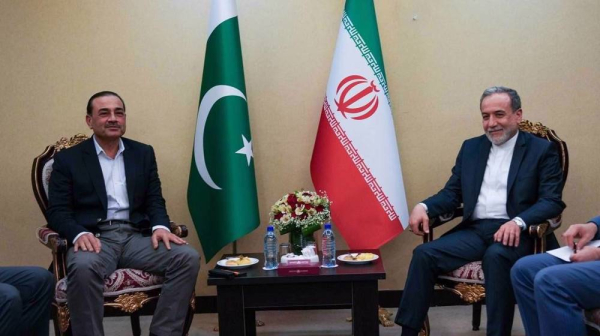
Araghchi thanks Pakistan for hosting Iran-US talks as he receives army chief Asim Munir
Iranian launchers ready to sink all US warships: Leader's advisor
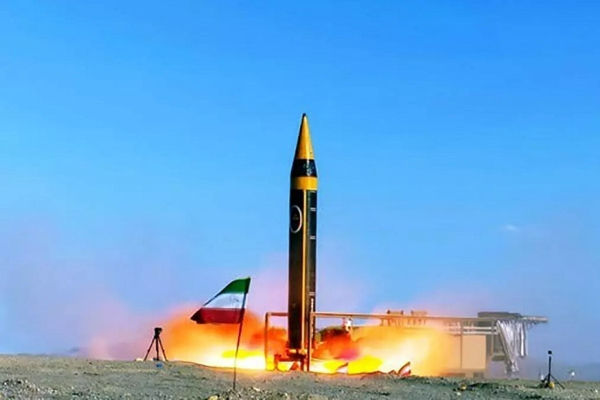
A military advisor to the Islamic Revolution Leader says Iranian Armed Forces’ launchers are ready to hit American warships and sink all of them.
Speaking in a televised interview on Wednesday, Mohsen Rezaei, who is also a member of Iran’s Expediency Discernment Council and a former commander of the Islamic Revolution Guards Corps (IRGC), stressed the need to exert more pressure on the enemies.
“Pressure must increase. Our launchers are now locked on the warships, and we will sink them all,” he said.
Pointing to the US efforts to impose a naval blockade on Iran, he added that the plan would definitely fail.
“Just as the United States suffered a historic defeat in trying to open the Strait of Hormuz, it is also doomed to fail in the naval blockade,” Rezaei emphasized.
He said the Iranian Armed Forces would never allow the US to achieve any success in proceeding with its naval blockade and are in possession of “major untapped leverage” to counter it.
The senior Iranian official reiterated that the Americans have no plan to end the war they jointly waged with the Israeli regime against the Islamic Republic late in February.
“In their latest plan, they (Americans) intended to deploy paratroopers in [the Iranian city of Isfahan] and seize our uranium to fabricate an achievement for themselves,” he added.
Iran imposed restrictions on the passage of vessels in the Strait following the illegal US-Israeli war of aggression on February 28.
The administration of Donald Trump said over the weekend it would impose a blockade on Iranian ports in the Persian Gulf and Sea of Oman. The US military claimed the blockade took effect on Monday.
In a post on his Truth Social on Sunday, Trump said the US Navy “will begin the process of blockading any and all ships trying to enter, or leave, the Strait of Hormuz.”
The IRGC warned that any military vessels approaching the Strait of Hormuz would breach a fragile two-week ceasefire reached between Iran and the US to halt 40 days of intense fighting which took effect last week. Iran’s central military command also warned of a broader regional response if Iranian ports come under attack.
On Wednesday, Iranian Foreign Minister Abbas Araghchi warned about the "dangerous consequences" of provocative US positions and actions targeting the Persian Gulf and the strategic Strait of Hormuz.
Iran envoy: Criminal US-Israeli war symbol of misuse of advanced tech against humanity
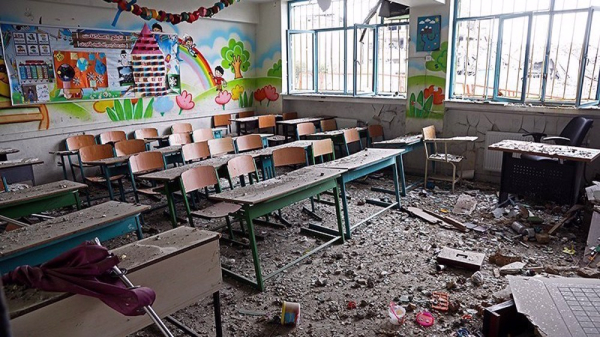
The Iranian representative to the UN Commission on Population and Development has condemned the recent illegal US-Israeli war of aggression against the Islamic Republic, saying it reflects misuse of advanced technology against mankind.
Speaking during the commission’s 59th session on Wednesday, the envoy denounced the attacks against Iran as a flagrant violation of the UN Charter that prohibits threats or the use of force against other countries.
Amounting to a war crime, the US-Israeli military assault is a symbol of the misuse of advanced technology against humanity, the diplomat said.
The unprovoked US-Israeli aggression on Iran began on February 28 with airstrikes that assassinated senior Iranian officials and commanders.
The Iranian armed forces launched 100 waves of successful retaliatory strikes against sensitive and strategic American and Israeli targets throughout the region.
After 40 days of unrelenting US-Israeli attacks, the US formally accepted Iran’s 10-point proposal on April 8 as the foundation for a ceasefire.
On April 12, Iranian and American delegations held talks in the Pakistani capital of Islamabad, but failed to reach an agreement due to excessive demands by the American side.
The two sides are now exchanging messages indirectly for a possible second round of negotiations before the expiry of the two-week truce on April 22.
Also in his remarks, the Iranian representative called on the UN member states and those of the Commission on Population and Development to document the abuse of technologies against civilians and help promote peace and morality as the foundation of sustainable development.
The diplomat also highlighted Israel’s crimes in different parts of the world over the past three years, saying the “rebellious regime is a war criminal that poses constant threat to international peace and security.”
Press TV’s website
Pakistani army chief meets Iranian parliament speaker in Tehran
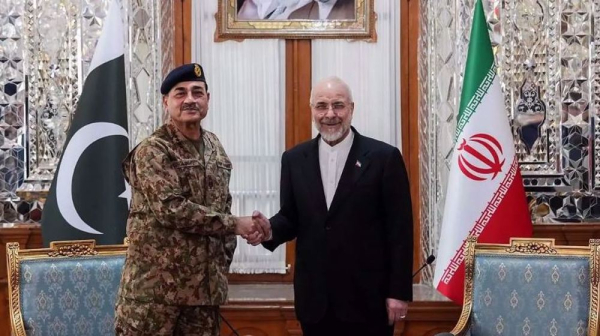
Pakistani Army Chief Field Marshal Asim Munir met with Iranian Parliament Speaker Mohammad Bagher Ghalibaf in Tehran on Thursday morning.
Field Marshal Munir, who arrived in the Iranian capital on Wednesday, is heading a high-level political-security delegation that includes representatives from Pakistan’s Foreign Ministry, security institutions, and technical experts.
The primary purpose of the delegation’s visit is to relay the US message and to plan the framework for a possible second round of negotiations between Tehran and Washington.
Islamabad is emerging as the likely venue for these future discussions, following the failure of the first round of talks in Islamabad to produce an agreement over the weekend.
Earlier on Wednesday, Iranian Foreign Ministry spokesman Esmaeil Baghaei confirmed that Tehran would host the Pakistani delegation, emphasizing that the indirect exchange of messages between Iran and the United States continues.
“Following the talks that took place in Islamabad, and also the discussions that the Pakistani side has had with the United States, our views have been conveyed and heard,” Baghaei said. “Naturally, during this visit, the two sides are expected to discuss their viewpoints in detail.”
This diplomatic push comes as a two-week ceasefire between Iran and the United States, successfully brokered by Pakistan, remains in effect. The truce was implemented after 40 days of fierce fighting that began on February 28, when the United States and Israel launched a war of aggression against Iran.
The aggression included the assassination of then-Leader of the Islamic Revolution, Ayatollah Seyyed Ali Khamenei, as well as strikes on nuclear facilities, schools, hospitals, and civilian infrastructure.
In response to the unprovoked attacks, Iran’s armed forces launched 100 waves of retaliatory strikes under Operation True Promise 4.
The operation saw the launch of hundreds of ballistic and hypersonic missiles, alongside drones, targeting American military bases across West Asia and Israeli positions throughout the occupied territories.
Press TV’s website
High-ranking Pakistani delegation on its way to Iran
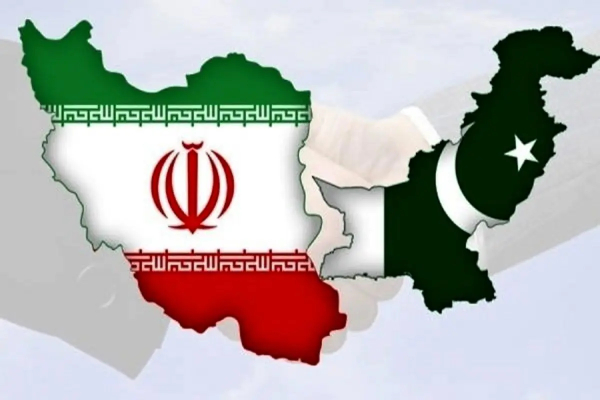
Field Marshal Asim Munir headed a high-ranking political-security delegation to Tehran to convey the US message and plan for the second round of talks.
According to the Islamic Republic News Agency (IRNA) from Islamabad, informed sources in Pakistan announced that a high-ranking political-security delegation from Pakistan, consisting of important Pakistani figures, left Islamabad for Tehran a few minutes ago.
This high-ranking delegation carries Washington's new message for Tehran and is scheduled to discuss the issue of upcoming talks in a meeting with Iranian officials.
Informed and media sources in Pakistan claimed that this delegation is scheduled to discuss issues related to the second round of talks, which is scheduled to be hosted by Islamabad in the coming days, with Iranian officials.
These statements come at a time when speculations about holding a second round of talks between Tehran and Washington in Islamabad have increased.
At the same time, Pakistani sources, citing Western media, have claimed that there is a possibility of these talks being held in Islamabad in the coming days. The delegation will be welcomed by Mr. Araqchi, the Foreign Minister of the Islamic Republic of Iran, in half an hour.