zarezadeh
Araghchi shares Iran’s ‘workable framework’ with Pakistani mediators on lasting end to war
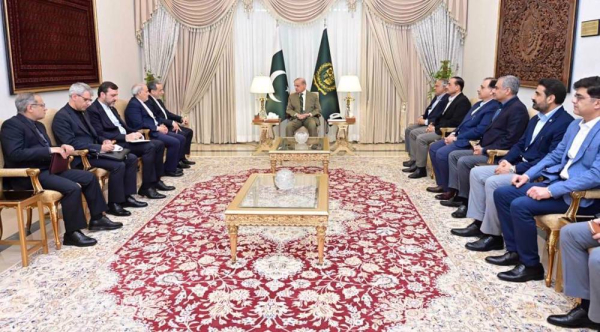
Iranian Foreign Minister Abbas Araghchi says he presented Tehran’s “a workable framework” to Pakistani mediators aimed at putting a lasting end to the US-Israeli war of aggression against the Islamic Republic during his “very fruitful visit” to Islamabad.
Araghchi made the remark in a post on his X account on Saturday after wrapping up a day-long visit to the Pakistani capital at the head of a diplomatic delegation.
He said Iran attaches “very much” value to Pakistan’s good offices and brotherly efforts to retore peace to the region.
“Shared Iran's position concerning workable framework to permanently end the war on Iran. Have yet to see if the U.S. is truly serious about diplomacy,” the top Iranian diplomat wrote.
Following discussions with senior Pakistani officials on regional security and a ceasefire with the United States, Araghchi left Islamabad and arrived in the Omani capital of Muscat on Saturday evening.
While in Islamabad, the first leg of his three-nation tour, Araghchi met with Pakistan’s Army chief Field Marshal Asim Munir, a key figure in the mediation effort, as well as Prime Minister Shehbaz Sharif and Foreign Minister Ishaq Dar.
The Iranian foreign minister is scheduled to pay a visit to the Russian capital of Moscow at the end of his tour.
Araghchi thanked Pakistan for its efforts to mediate the April 8 ceasefire between Tehran and Washington and the subsequent talks, and laid out Iran’s “principled positions” on the state of the truce and the complete end to the imposed war against Iran.
Prime Minister Sharif hailed the meeting with Araghchi as the “most warm, cordial exchange of views on the current regional situation.” “We also discussed matters of mutual interest, including the further strengthening of Pakistan–Iran bilateral relations,” he posted on X.
Following Araghchi’s departure for Muscat, US President Donald Trump said that he had canceled the visit by US envoys Steve Witkoff and Jared Kushner to the Pakistani capital to meet with mediators.
“I just cancelled the trip of my representatives going is Islamabad, Pakistan, to meet with the Iranians. Too much time wasted on traveling, too much work!” Trump wrote on his Truth Social platform.
Tehran had previously said that there was no plan for the Iranian delegation to meet with the American representatives in Islamabad.
In a post on X ahead of his trip to Islamabad, Araghchi said the purpose of the "timely tour" is to "closely coordinate with our partners on bilateral matters and consult on regional developments."
"Our neighbors are our priority," he wrote.
The United States and Israel launched their unprovoked war of aggression against Iran on February 28. They assassinated Leader of the Islamic Revolution Ayatollah Seyyed Ali Khamenei and struck nuclear facilities, schools, hospitals and civilian infrastructure.
Iran’s Armed Forces responded with 100 waves of retaliatory strikes under Operation True Promise 4, launching hundreds of ballistic and hypersonic missiles, as well as drones, against American military bases across West Asia and Israeli positions throughout the occupied territories.
On April 8, Iran’s Supreme National Security Council (SNSC) announced that there was an agreement to a Pakistan-brokered temporary ceasefire after the US accepted Iran’s 10-point proposal.
Senior Iranian and American negotiators held approximately 21 hours of talks in Islamabad on April 11 without an agreement, with Iranian officials blaming US excessive demands and shifting positions.
While Trump has unilaterally extended the truce and stated his administration will wait for an Iranian proposal for a second round of talks in Islamabad, Tehran has said it will not negotiate under threats.
Iranian authorities cite Washington’s excessive demands and an ongoing US naval blockade as the two main impediments to efforts to conclude the war.
Press TV’s website
Details of the new IRIB Research Center survey
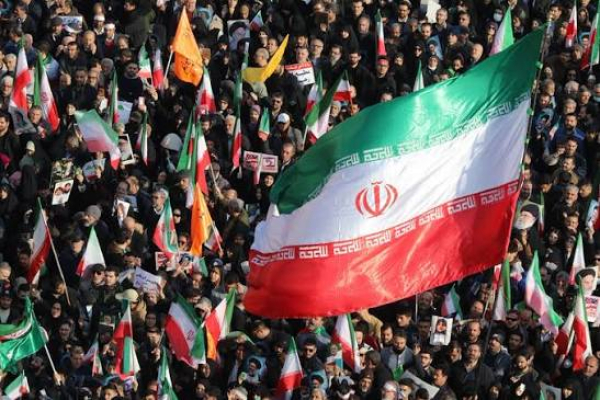
Nearly 72 percent of respondents to a nationwide survey by the IRIB Research Center believe that Iran’s future will be better after the war. According to the findings of the survey, which was conducted last week in person and in the field among citizens over the age of 15 in provincial centers, cities, and villages, 71.7 percent of Iranian citizens believe that Iran’s future will be better after the third imposed war.
64.2 percent of respondents have stated that they either do not agree with negotiations with the United States or agree to a lesser or very lesser extent. Also, 85.7 percent of respondents believe that if the United States makes the condition of an agreement and an end to the war limiting Iran’s missile industry, Iran should not accept this condition. 82.6 percent also oppose the US’s precondition of withdrawing enriched uranium for an agreement or an end to the war.
79.4 percent of respondents emphasized that if the United States conditions the end of the war and the agreement on the suspension of uranium enrichment, Iran should not accept this condition. 73.7 percent also opposed the unconditional freedom of ship traffic in the Strait of Hormuz as a condition of the United States for the end of the war and the agreement.
Also, 68.1 percent of the people rejected Iran’s termination of cooperation with the Resistance Front if the agreement and the end of the war were conditional.
According to 66 percent of respondents, Iran was the definitive winner of the war, while only 6.1 percent considered the United States and the Zionist regime to be the winners of the war.
87.2 percent of respondents considered the performance of our country’s armed forces to be strong or very strong in defending the country, and 57.7 percent of them believe that the United States needs a ceasefire more than Iran, compared to 9.8 percent who consider Iran to need a ceasefire more.
More than 80 percent of respondents assessed the government’s actions during the Third Imposed War to provide public needs and essential goods as completely appropriate or appropriate.
Also, 76.5 percent of respondents considered the performance of the national media in reporting on Iran’s attacks during the Third Imposed War to be completely appropriate or appropriate. 73.9 percent expressed satisfaction with the speed of reporting and 72.5 percent with the accuracy and precision of the national media’s news during the war.
Finally, 45.7 percent of respondents stated that they participate in nighttime gatherings in squares and streets, and 67.8 percent want these gatherings to continue.
Leader: Remarkable unity among Iranians shatters enemy ranks
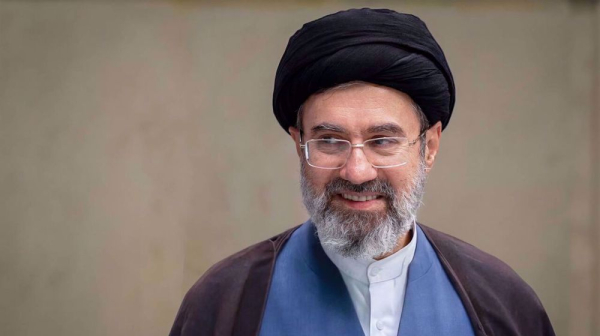
Leader of the Islamic Revolution Ayatollah Seyyed Mojtaba Khamenei has lauded the profound impact of the Iranian nation’s extraordinary unity, saying that it has inflicted a significant fracture on the enemy while urging practical gratitude to forge even stronger national cohesion.
"Due to the remarkable unity created among compatriots, a fracture has occurred in the enemy," the Leader stated in a message published on the X network on Thursday, highlighting how this unprecedented solidarity has disrupted the calculations of those seeking to undermine the Islamic Republic.
Ayatollah Khamenei emphasized the need to express gratitude for this divine blessing through concrete actions, affirming that such efforts will render national cohesion “greater and more steely,” while leaving the enemies “more wretched and diminished.”
The Leader also drew attention to the enemy’s ongoing psychological warfare, warning, “The enemy’s media operations, by targeting the minds and psyches of the people, intend to undermine national unity and security; may our negligence not allow this sinister intent to come to fruition.”
Ayatollah Khamenei’s message comes at a critical juncture as the Islamic Republic stands resilient against multifaceted aggressions, including sanctions, threats, and propaganda campaigns orchestrated by the United States, the Zionist regime and their Western allies.
This unity, born from the Iranian nation’s deep-rooted faith and revolutionary spirit, has repeatedly proven to be an invincible shield, turning every hostile plot into an opportunity for greater advancement.
Earlier on Thursday, the three heads of Iran's executive, legislative, and judicial branches issued a collective response to US President Donald Trump, denouncing his remarks about “divisions between extremists and moderates” in Iran as unwarranted provocations.
President Masoud Pezeshkian, Parliament Speaker Mohammad Baqer Qalibaf, and Judiciary Chief Gholam-Hossein Mohseni Ejei conveyed a powerful message to Trump, emphasizing a common theme of national unity and defiance.
On February 28, the United States and Israel initiated a large-scale and unprovoked war against Iran, assassinating Leader of the Islamic Revolution Ayatollah Seyyed Ali Khamenei and several high-ranking military commanders.
In response, Iranian Armed Forces carried out a series of retaliatory missile and drone operations against US and Israeli military assets for over 40 days, which resulted in significant damage.
A two-week ceasefire was brokered on April 8, followed by negotiations in Islamabad, where Iran proposed a ten-point plan seeking US troops' withdrawal and the lifting of sanctions.
Despite 21 hours of intensive discussions, the negotiations ended without an agreement, with Iran citing a lack of trust in US commitments.
Press TV’s website
Trump's attempt to create division
Trump's repeated nonsense and the message of unity between the heads of the armed forces and the IRGC Navy and Air Force
Today, Trump brought the same game of mind to the table and repeated it.
The game called mental polarization
The same version that has been complicated for different nations for years:
Division into extremists and moderates, good and bad, negotiable and non-negotiable, etc.
He creates a mental bubble and then writes a scenario in that bubble and gets the result.
But now let's pause for a moment and look more closely!
Who is really the audience for these words?
Is there really someone in Iran waiting to know who their leader is? Or are these sentences more for the domestic audience of America, whose government is stuck in a quagmire of failures?
Basically, when someone is forced to deny the reality of the scene, it means that something else has happened in the real field.
Trump claims that the Strait of Hormuz has been sealed by the United States...
But what happened in reality?
Iran, at the height of its power, has brought one of the world's most vital energy arteries to a point where even the passage of ships is regulated by Iranian rules.
The United States does not even dare to bring one of its warships to this strait or let one of its commercial ships pass through.
In other words, the equation of power has shifted, and this is what must be hidden.
Now, what are they doing to hide this shift?
They are starting to tell stories that there is a fight in Iran, and extremists and moderates and all that...
A fictional narrative, to escape a real defeat.
But the response inside Iran targeted exactly the same point that Trump is running away from: "national unity and cohesion."
The fact that the heads of the three branches of government, with a common language, give a single message, and my military commanders are united means that the image that the enemy wants to create basically does not exist.
In the hostility and destruction of America, there is no extremist in Iran, nor is there any moderate in the sense that he wants to instill.
Here is an identity:
A revolutionary nation that is vengeful and bloodthirsty.
Basically, where the enemy tries to create a rift from every difference of taste, turning the difference into "cohesion" is itself a victory.
What is Trump after?
He is after first creating a rift in minds, then achieving results in the field.
This is where the slogan of one God, one leader, one nation, one way is no longer a simple sentence but a roadmap.
It is a response to a hybrid war.
And now what is the reality?
On the one hand, a movement that is forced to fantasize and even fight its own media to justify its defeat.
On the other hand, a nation that has achieved cohesion in the midst of the fire and sees its path more clearly than before.
So it is clear that this nonsense is a sign of Trump's anxiety.
Anxiety about a nation that neither breaks with threats nor is deceived by narrative creation.
And this path, if it continues with this consistency, will end in regret and destruction and surrender and severe punishment of the aggressor.
The latest statistics on the martyrs and wounded in the Israeli attacks on Gaza
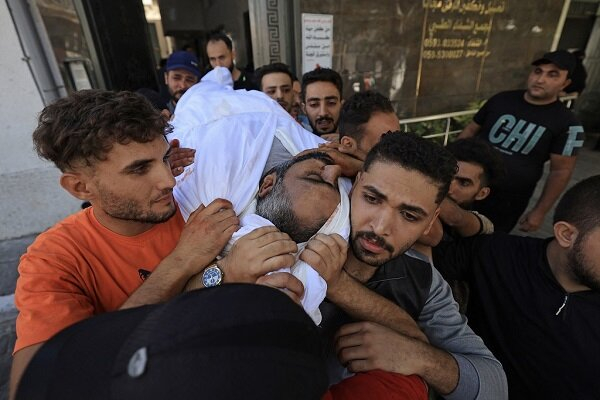
The Palestinian Ministry of Health in Gaza announced that 6 martyrs and 18 wounded have been transferred to hospitals following the attacks by the Israeli occupation army on this strip over the past 24 hours.
The report states that a number of victims are still under the rubble or on the streets, and it has not been possible to reach them due to the lack of equipment and the inability of the relief forces.
According to these statistics, since the ceasefire was announced on October 11, the total number of martyrs has reached 972, the number of wounded has reached 2,235, and 761 bodies have been recovered from the rubble.
Also, since the beginning of the Israeli genocidal war against Gaza on October 7, 2023, the total number of martyrs has increased to 72,568 and the number of wounded to 172,338.
Baqaei: The Zionists have used the formal ceasefire as a cover for continuing the genocide
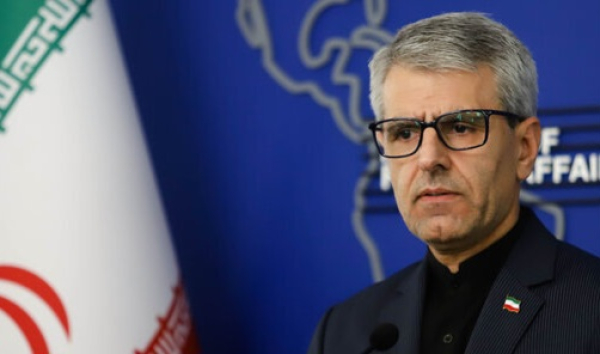
According to Mehr News Agency, Ismail Baqaei, spokesman for the Ministry of Foreign Affairs, strongly condemned the continuation of the Zionist regime's crimes in the Gaza Strip, including the regime's criminal actions in recent days in killing civilians and assassinating Palestinian activists.
Pointing out that since the ceasefire was announced in the Gaza Strip, about 800 Palestinians, many of whom are women and children, have been martyred in the Zionist regime's attacks, he added: "The occupying regime, in coordination with the United States, has turned the formal ceasefire into a cover for continuing the genocide and advancing the colonial plan of annihilation of Palestine."
Referring to the direct responsibility of the US government for the crimes committed by the Zionist regime due to its continued military and political support for this regime, the spokesman for the Ministry of Foreign Affairs emphasized the legal and moral obligation of all governments, the United Nations and human rights institutions, as well as the Organization of Islamic Cooperation, to take decisive and responsible action to stop these crimes and hold the criminals accountable.
VP: Iran to pursue US-Israel attack on scientific centers in international forums
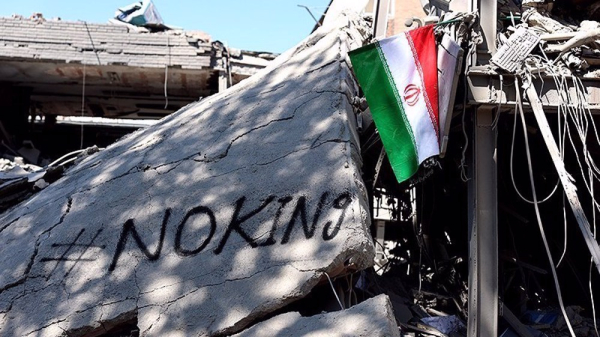
An Iranian vice president says the country will pursue in international forums the attacks on scientific centers by the United States and the Israeli regime.
Iranian Vice President for Science, Technology and Knowledge-Based Economy Affairs Hossein Afshin said on Wednesday that detailed documentation of the legal and international aspects of the attack on the country's scientific centers has been placed on the government's agenda.
He added that the Presidential Office has started the process of official follow-up to the strikes in international forums.
He slammed attacks on Iran’s scientific and academic infrastructure as an aggression against property, equipment, foundations of knowledge production, training of specialized human resources, and future of the country's development.
“Therefore, all technical documentation, expert reports, and field evidence are being collected and compiled to be presented to relevant international bodies through the existing legal channels,” Afshin said.
He noted that Iran’s scientific bodies expect international circles to show a “clear and explicit reaction in condemnation of attacks on universities and research centers.”
The vice president emphasized that the world must be aware of such “crimes” and noted that recording these events in international legal forums is an “undeniable necessity.”
“Silence or lackluster responses to attacks on non-military centers, especially universities, are in clear contradiction to accepted principles of international law and claims to support science and education,” Afshin pointed out.
The United States and Israel launched their unprovoked war of aggression against Iran on February 28. They assassinated then-Leader of the Islamic Revolution Ayatollah Seyyed Ali Khamenei and struck nuclear facilities, schools, hospitals and civilian infrastructure.
On April 6, Sharif University of Technology was attacked, causing severe damage to the Faculty of Civil Engineering, the Department of Philosophy of Science, the Nano and Environmental Research Institutes, the Convergent Research Institute building, and the Faculty of Electrical Engineering, among other facilities.
The attack on Sharif University follows another war crime perpetrated on April 3, when parts of Shahid Beheshti University in Tehran—including the Laser and Plasma Research Institute—were also severely damaged.
University of Science and Technology, the Faculty of Pharmacy at Shiraz University, Isfahan University of Technology, parts of the Science and Technology Campus and the Veterinary Specialized Hospital Campus at Urmia University have been also hit throughout the unlawful aggression.
Press TV’s website
Tehran protests to UN over US misuse of Arab states’ soil for anti-Iran attacks
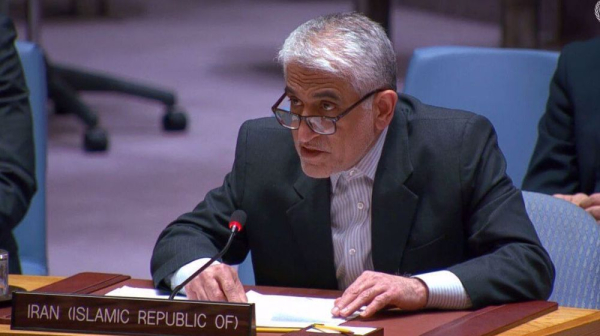
The Iranian ambassador and permanent representative to the United Nations has strongly protested to the world body over the United States’ misuse of the airspace and territory of five Persian Gulf Arab countries for illegal strikes on the Islamic Republic during the imposed war.
Amir-Saeid Iravani made the remarks in a statement in letters addressed to the UN chief and the Security Council president on Wednesday.
He stressed that countries bear international responsibility not to allow others to use their territory for committing acts of aggression and armed attacks against a third state.
Iran, he added, calls on the governments of Qatar, Kuwait, Bahrain, the UAE, and Saudi Arabia to honor the principles of good neighborliness and prevent the continued exploitation of their territory for attacks against the Islamic Republic.
The American MQ-9 and MQ-4C drones, as well as P-8A and AWACS, and maritime patrol aircraft, B-1 bombers and F-22, F-15, F-16, F-35 fighter jets, used the aforesaid Persian Gulf Arab countries’ territory to target Iran, Iravani said.
The unprovoked US-Israeli aggression on Iran began on February 28 with airstrikes that assassinated senior Iranian officials and commanders.
The Persian Gulf Arab countries allowed the aggressor regimes to use their soil and airspace to launch anti-Iran attacks.
IRGC speedboats, UUVs waiting for intruding US vessels: Judiciary chief
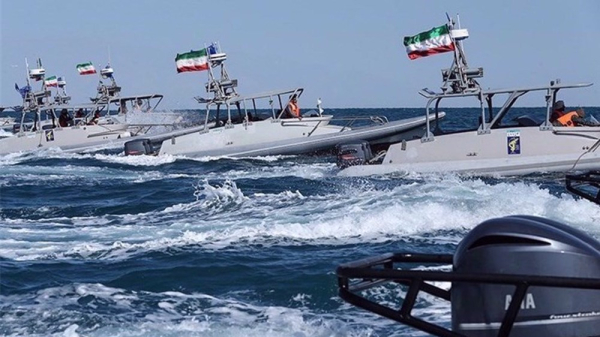
Iran’s Judiciary Chief Gholam-Hossein Mohseni-Eje’i says the speedboats and Unmanned Underwater Vehicles (UUVs) of the Islamic Revolution Guards Corps (IRGC) are waiting for intruding US vessels to fully destroy them.
“The IRGC’s swarm fleet, with its fast boats and UUVs, is waiting from inside the sea caves of [Iranian southern] Farur Island for intruding American warships to overwhelm their defenses and inflict severe consequences on the aggressors,” Mohseni-Eje’i said on Thursday.
He added that the Americans do not even dare approach the Strait of Hormuz as they witnessed what happened to their supposedly ultra-advanced destroyers – the USS Michael Murphy (DDG 112) and the USS Frank E. Peterson (DDG 121).
The Judiciary chief emphasized that three intruding vessels in the strategic Strait of Hormuz had been subjected to legal action.
Press TV learned on Friday that the IRGC Navy locked more than a dozen cruise missiles onto aggressive US warships moments before they hastily retreated.
According to Press TV's findings, after the American warships – the USS Michael Murphy and the USS Frank E. Peterson – failed to heed initial warnings from Iranian naval forces, the IRGC Navy locked 16 cruise missiles onto the vessels.
The enemy was then warned that if they did not withdraw from the Strait of Hormuz within minutes, the missiles would be fired.
With American forces reportedly certain that an attack was imminent, they requested a 15-minute delay from the IRGC naval forces.
According to the new information obtained by Press TV, US military personnel sought to use that time to communicate the dire situation back to their command and receive further orders.
Violations, threats, blockade main obstacle to genuine talks: President Pezeshkian
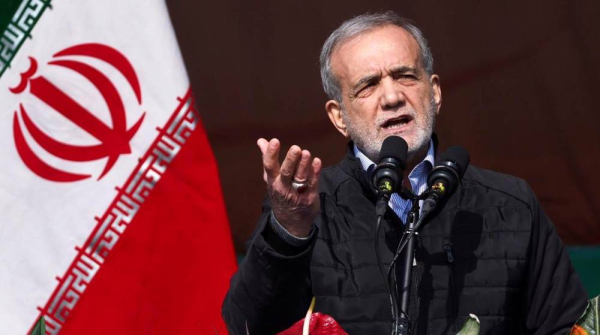
The Islamic Republic of Iran has invariably welcomed dialogue and agreement, but Washington’s constant breach of commitments, naval blockade and military threats remain the main obstacles to genuine negotiations, President Masoud Pezeshkian said on Wednesday.
In a post on X, the president reiterated Tehran’s openness to diplomacy while calling out Washington’s contradictory behavior.
“The Islamic Republic of Iran has welcomed dialogue and agreement and continues to do so,” Pezeshkian wrote.
“Breach of commitments, blockade and threats are the main obstacles to genuine negotiations. The world sees your endless hypocritical rhetoric and contradiction between claims and actions,” he added.