zarezadeh
A Positive View of Suffering: Steps to Evolution and Progress

Suffering is not always a flaw or error in creation, but an integral part of the human experience that can play important roles:
1. Stimulus for growth and learning:
Suffering and hardship, like pain that warns us, can force us to change. Overcoming challenges increases our capacity for problem-solving, resilience, and flexibility. Without facing hardship, we may never have reached the most complete version of ourselves. This is why human survival has lasted.
2. Promotes a deeper understanding of values:
When we lose something or suffer, we appreciate what we have and better understand health and comfort. This experience makes us feel the true values of life, relationships, and good moments with all our being. And this difference, that life has ups and downs, makes it break out of that monotony and find meaning for life for humans.
3. Search for meaning:
Perhaps suffering leads us to a deeper search for meaning in life. As noted psychologist Viktor Frankl suggests, we can find meaning even in suffering. This meaning can be in personal growth, helping others, or a deeper understanding of the human condition.
4. Connection and empathy:
Enduring shared pain is one of the most powerful ways to build connection and empathy between humans. When we see others suffering or have similar experiences ourselves, we are more likely to come together and support each other.
5. Emphasis on pleasure:
Perhaps one reason suffering exists is to show us the value of joy, peace, and pleasure. Without experiencing sorrow, how could we experience the height of joy?
So, instead of seeing suffering simply as a law of human creation, we can see it as an opportunity to learn, grow, find meaning, and gain a deeper understanding of life and connection with others.
Although excessive and unnecessary suffering is certainly devastating and affects a person's life and functioning, it is no longer normal suffering, such as depression and obsessive-compulsive disorder, for which a person can seek help from specialists and psychologists. Psychology always focuses on helping people to deal with it constructively and reduce unnecessary suffering.
Hezbollah's Rocket and Drone Response to the Zionists
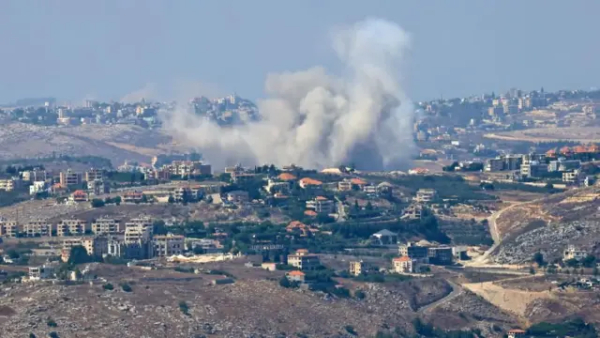
The Lebanese Islamic Resistance crushed the occupation positions in 9 operations:
Rocket barrage on Zionist settlements:
Firing dozens of rockets on Kiryat Shmona, Nahariya, Shlomi, Al-Mutla and 7 other settlements.
Drone and defensive operations:
Drone attack on the Metat barracks and driving away an enemy fighter in the sky of Debaal with a surface-to-air missile.
Crushing military gatherings:
Directly targeting Israeli infantry and vehicles in Al-Khayyam and Bint Jbeil.
Iran reiterates firm support for Lebanese resistance; Turkey warns of Israeli schemes targeting region
Foreign Minister Abbas Araghchi has reiterated Iran's firm support for legitimate resistance in Lebanon in the face of Israeli aggression and occupation.
The top diplomat made the remarks in a telephone conversation with his Turkish counterpart Hakan Fidan on Tuesday.
Araghchi made the remarks in the context of the Israeli regime's intensified aggression targeting Lebanon that has claimed the lives of hundreds of people, including women and children, over consecutive days starting on Wednesday.
Lebanon's Hezbollah resistance movement has responded decisively to the attacks by launching scores of retaliatory strikes against Israeli military targets and illegal settlements lying on the northern side of the occupied territories.
Iranian academic jailed in France over anti-genocide stance returns home
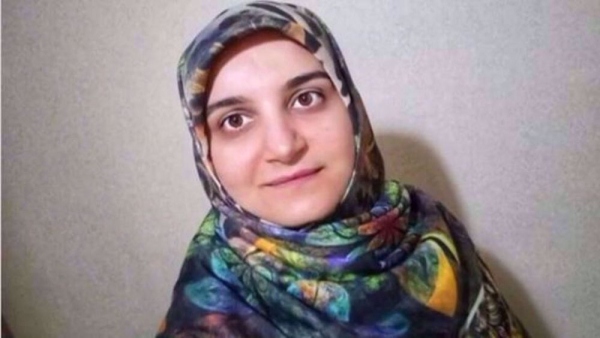
An Iranian academic, charged and jailed in France over her condemnation of the Israeli regime's genocide in the Gaza Strip, has returned home.
Mahdieh Esfandiari arrived in the country on Wednesday upon pursuance of her freedom by relevant Iranian authorities.
On February 26, a court in France had sentenced the 39-year-old to four years in prison after she protested the genocide that has claimed the lives of more than 72,000 Palestinians, including women and children, since its onset in October 2023.
The court, however, sentenced the Lumière University graduate, who used to work as a professor, translator, and interpreter at the higher education institute, on alleged charges of "public defense of terrorism." The court also permanently barred Esfandiari from entering French territory.
She had previously spent eight months in pretrial detention before being released under conditional terms.
'Free speech in France a lie'
Upon arrival, Esfandiari said, “I think it is now clear and evident to everyone that, at least in France, where I was present, there is no freedom of expression." "The court’s ruling was very unjust," she added.
"They imposed restrictions on me and held me hostage until their two spies were brought [back] to France, and on the same day those restrictions were lifted and we were able to arrange the travel preparations,” she said. Esfandiari was able to travel back to Iran upon the return to France of two French citizens, who had been held in the Islamic Republic for espionage.
The academic also expressed her condolences over the martyrdom of Leader of the Islamic Revolution Ayatollah Seyyed Ali Khamenei and others targeted during the latest bout of unprovoked Israeli-American aggression against the Islamic Republic.
Press TV’s website
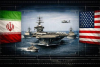
Iran's UN envoy: US naval blockade gross violation of Iran's sovereignty and territorial integrity
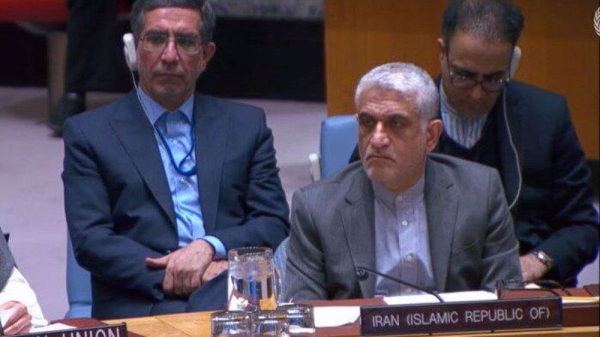
Iran’s Ambassador to the UN Amir Saeid Iravani has strongly condemned the United States' imposition of a naval blockade on Iranian ports as a flagrant violation of Iran's sovereignty and territorial integrity, calling it an illegal act of aggression that threatens regional and international peace and security.
In an official letter sent on Monday to UN Secretary-General Antonio Guterres and the President of the Security Council, Iravani firmly denounced Washington's latest provocative move, which was publicly announced by the US Central Command (CENTCOM) on April 12.
"The imposition of a naval blockade is a gross violation of the sovereignty and territorial integrity of the Islamic Republic of Iran," Iravani wrote.
He stressed that the US action constitutes a clear breach of Article 2, paragraph 4, of the UN Charter, which prohibits the threat or use of force, and represents a textbook example of aggression under international law.
The ambassador added that the illegal blockade also seriously violates the fundamental principles of the international law of the sea.
"By attempting to prevent maritime traffic to and from Iranian ports, the United States is illegally interfering in the exercise of the sovereign rights of the Islamic Republic of Iran and violating the rights of third states and legitimate maritime trade in accordance with international law," the letter stated.
Iravani emphasized that Iran "firmly and in the strongest possible terms rejects and condemns the illegal action of the United States.”
He affirmed that Tehran "reserves its inherent right, within the framework of international law, to take all necessary and proportionate measures to protect its sovereignty, territorial integrity and national interests."
The Iranian envoy held Washington fully accountable, saying: "The United States bears full responsibility for this internationally wrongful act and all its consequences, including its effects on regional and international peace and security."
Noting the dangerous escalation in an already volatile region, Iravani urged the UN Secretary-General and the Security Council to fulfill their Charter responsibilities by unequivocally condemning the US blockade, taking immediate and effective steps to halt further escalation, and compelling Washington to immediately cease its unlawful acts against Iran.
"Given that the said illegal action constitutes a serious threat to international peace and security and clearly increases the risk of escalating tensions in an already highly unstable region, the Islamic Republic of Iran calls on the Secretary-General and the Security Council... to oblige the United States to immediately cease its internationally wrongful acts against the Islamic Republic of Iran," he wrote.
Iravani began the letter by informing the UN that he was acting on instructions from the Iranian government to highlight "the continuing internationally wrongful acts of the United States of America against the Islamic Republic of Iran."
He also requested that the letter be circulated as an official document of the UN Security Council.
The US move comes amid heightened tensions and is widely seen as an aggressive attempt to strangle Iran's economy by targeting its legitimate maritime trade and oil exports — a blatant display of economic terrorism that violates the sovereign rights of the Islamic Republic and endangers global shipping lanes.
Iran has repeatedly warned that such provocative actions by the United States will only lead to greater instability, while reaffirming its commitment to defending its national interests through all legitimate means under international law.
The illegal US-Israeli aggression on Iran began on February 28 with airstrikes that assassinated senior Iranian officials and commanders.
Iran’s decisive response in the framework of Operation True Promise 4 included daily missile and drone operations targeting locations in the Israeli-occupied territories as well as US military bases and assets across the region.
Iran also blocked the Strait of Hormuz to oil and gas tankers affiliated with the adversaries and those cooperating with them to maintain security at the strategic waterway.
The US formally accepted Iran’s 10-point proposal on April 8 as the foundation for a permanent ceasefire.
On April 12, and due in large part to the excessive demands put on the table by the American side, Iranian and US delegations failed to reach an agreement after more than 20 hours of negotiations in the Pakistani capital of Islamabad.
Press TV’s website
Ships leave Iranian ports in Persian Gulf despite US ‘naval blockade’: Data
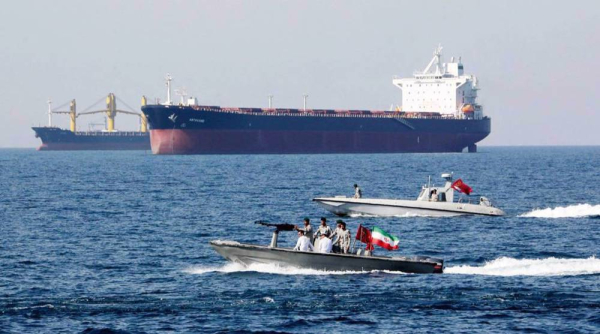
At least two ships sailing from Iranian ports crossed the Strait of Hormuz despite a blockade threat by the US military, maritime tracking reports have indicated.
The ships were among at least four Iran-linked vessels that used the route after Washington's threat, according to maritime data provider Kpler.
The Liberia-flagged bulk carrier Christianna crossed after unloading 74,000 tons of corn at the Iranian port of Bandar Imam Khomeini, passing Iran's Larak Island in the strait around 1600 GMT on April 13, Kpler data showed.
A second ship, the Comoros-flagged tanker Elpis, was near Larak Island around 1100 GMT and cleared the strait about 1600 GMT. It was loaded with 31,000 tons of methanol, having left the Iranian port of Bushehr on March 31, Kpler data showed.
The US Central Command (CENTCOM) had threatened the blockade would target "vessels of all nations entering or departing Iranian ports and coastal areas".
A Chinese tanker, the Rich Starry, also crossed the Strait overnight via the Iranian-approved vetting route south of Larak Island.
Maritime analysts have cautioned that signals from ships in the region have been disrupted and manipulated, making precise tracking difficult.
Iran imposed restrictions on the passage of vessels in the Strait following the illegal US-Israeli war of aggression on February 28.
The administration of Donald Trump said over the weekend it would impose a blockade on Iranian ports in the Persian Gulf and Sea of Oman. The US military claimed the blockade took effect on Monday.
The IRGC warned that any military vessels approaching the Strait of Hormuz would breach a fragile ceasefire that halted 40 days of intense fighting last week. Iran’s central military command also warned of a broader regional response if Iranian ports come under attack.
Press TV’s website
Russia backs Iran’s ‘inalienable right’ to uranium enrichment: Lavrov
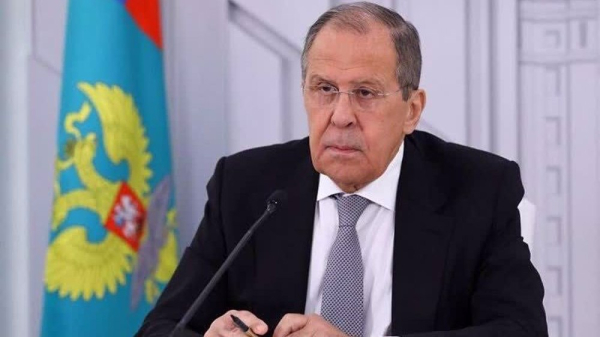
Russian Foreign Minister Sergey Lavrov has defended Iran’s inalienable right to enrich uranium for peaceful purposes, saying that Russia accepts any decision that suits the Iranian side.
Speaking at a press conference in Beijing on Wednesday, following talks with Chinese President Xi Jinping, Lavrov asserted that Moscow is prepared to assist in resolving issues surrounding Iran’s nuclear program.
He was echoing the stance that “every country has the right to enrich uranium exclusively for peaceful purposes,” a right he affirmed extends to the Islamic Republic.
“Russia will accept any decision that suits the Iranian side” within these “legitimate rights,” Lavrov stated, highlighting Moscow’s readiness to play a role in any potential resolution concerning enriched uranium.
He outlined possible contributions, including reprocessing highly enriched uranium into fuel for nuclear power plants or transferring specified amounts to Russia for storage, all while respecting Iran’s right to civilian nuclear energy.
Lavrov said Russia will accept any decision by Iran regarding enriched uranium, noting he has discussed the issue with Iranian Foreign Minister Abbas Araghchi and with US, Israeli, and Iranian representatives, and that the topic has arisen repeatedly in contacts involving Russian President Vladimir Putin.
The top Russian diplomat emphasized that Iran has never sought to militarize its nuclear program and that the International Atomic Energy Agency (IAEA) has found no evidence of diversion for military objectives.
He recalled Moscow’s active role in the 2015 nuclear deal, particularly in managing Iran’s enriched uranium.
He also criticized European nations for failing to condemn Washington’s withdrawal from the pact while demanding Tehran’s continued adherence.
The remarks come amid significant regional tensions, including a recent US blockade of Iranian ports and claims by US President Donald Trump that a resolution is imminent.
The core dispute over uranium enrichment persists, with the US demanding “zero enrichment” while Iran maintains its right to enrichment for civilian use.
Lavrov also characterized the situation in West Asia as a complex “crisis knot” that is difficult to resolve through simple means.
He argued that Iran’s actions, such as blocking the Strait of Hormuz, are a direct consequence of perceived aggression from the United States and Israel.
“My friends from the Arab states of the [Persian] Gulf and I have been talking regularly… and they cannot object to the thesis… that Iran would have taken some steps… if not for Washington and Israel’s aggression,” Lavrov stated, adding that Arab counterparts agree with this assessment.
He further noted that Russia is prepared to supply energy resources to China and other nations affected by the crisis, recalling prior discussions on the matter.
Lavrov criticized an aggressive campaign by certain countries aiming for Iran’s destruction, referencing a past hostile statement by Trump.
Underscoring Russia’s diplomatic approach, Lavrov insisted that Iran-US negotiations, which began in Pakistan, should continue.
He confirmed that Moscow and Beijing support realistic and lawful objectives and are ready to assist these talks in various external formats.
On February 28, the United States and Israel initiated a large-scale and unprovoked war against Iran, assassinating Leader of the Islamic Revolution Ayatollah Seyyed Ali Khamenei and several high-ranking military commanders.
In response, the Iranian Armed Forces carried out a series of retaliatory missile and drone operations against US and Israeli military assets for over 40 days, which resulted in significant damage.
A two-week ceasefire was brokered on April 8, followed by negotiations in Islamabad, where Iran proposed a ten-point plan seeking US troops’ withdrawal and the lifting of sanctions.
Despite 21 hours of intensive discussions, the negotiations ended without an agreement, with Iran citing a lack of trust in US commitments.
Trump later announced a naval blockade of the Strait of Hormuz, aimed at intercepting vessels that had paid tolls to Iran. The US military said that the blockade would begin on Monday at 1400 GMT, escalating the situation further.
Press TV’s website
US Navy Confirms 'mishap' to $250 million spy drone downed by Iran
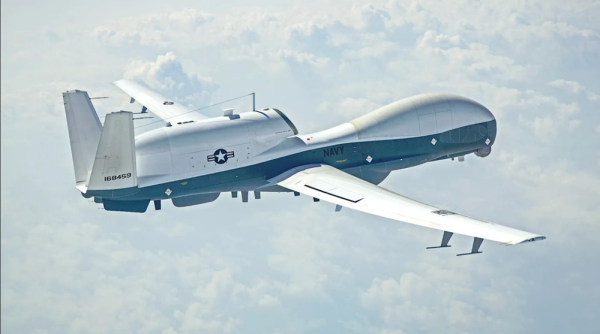
The US Navy has confirmed that an MQ-4C Triton unmanned surveillance aircraft crashed in the Persian Gulf region on April 9, with the incident now described as a mishap, although little was revealed regarding the circumstance under which it was lost.
After the aircraft had vanished unexpectedly from online flight tracking sites while flying over the Persian Gulf, multiple sources reported that it had been shot down by Iranian air defenses.
The MQ-4C is a significantly rarer and higher value aircraft than the F-15E strike fighter, MQ-9 drone, and other aircraft that have been shot down by Iranian forces, with only the US Air Force E-3 Sentry AWACS destroyed on the ground in Saudi Arabia being more valuable.
Where the E-3 is an ageing aircraft that was scheduled for retirement within the next 15 years, the MQ-4C is a cutting edge platform that is still being produced for the Navy.
Each MQ-4C is estimated to have a value of $235-250 million, with its extreme cost meaning only 20 have been brought into service.
The destruction of one of the aircraft by Iranian air defenses would not be wholly unprecedented, with the closely related RQ-4A Global Hawk developed for the US Air Force having been shot down by the Islamic Revolution Guards Corps on June 20, 2019.
Iran’s ambassador to the United Nations Majid Takht Ravanchi reported at the time that the aircraft “conducted an overflight through the Strait of Hormuz to Chabahar port in a full stealth mode as it had turned off its identification equipment and engaged in a clear spying operation.. When the [US] aircraft was returning towards the western parts of the region near the Strait of Hormuz, despite repeated radio warnings, it entered into the Iranian airspace.”
Iranian forces have more recently from late February shot down an estimated 17 MQ-9 drones, and multiple drones of other types such as the Israeli Heron.
The Triton is a derivative of the MQ-4 Global Hawk, and is specialized in maritime surveillance. The aircraft have ranges of over 13,000 kilometers, which are necessary for persistent wide-area surveillance, and have reinforced airframes for harsh ocean weather allowing them to stay on station over oceans in all conditions.
Each integrates the AN/ZPY-3 Multi-Function Active Sensor radar, which was designed for 360° maritime surveillance and can track ships over vast areas. They also integrate electro-optical / infrared sensors, as well as electronic support measures for signals detection.
Real-time data links via satellite communications allow them to serve as nodes in wider surveillance networks, sharing data with naval, air and ground assets. The aircraft are particularly heavily relied on in the Pacific theatre, although their survivability has repeatedly been questioned.
Before its sudden disappearance from flight tracking systems, the Iranian-downed MQ-4C Triton reportedly exhibited a dramatic loss of altitude, plunging from its typical cruising height of around 50,000 feet to below 10,000 feet.
At the time, the drone appeared to be returning to its base at Naval Air Station Sigonella in Italy after completing a surveillance mission in the Persian Gulf and the Strait of Hormuz, the US Navy said.
At the time of its descent, the drone’s transponder was broadcasting a distress signal, commonly known as “squawking.” Initially, it transmitted the code 7400, indicating a loss of communication with ground controllers, and later switched to the emergency code 7700.
While the latter is a general declaration of an in-flight emergency, it does not divulge the specifics of the situation.
In 2019, Iran successfully shot down a Navy RQ-4 Broad Area Maritime Surveillance-Demonstrator (BAMS-D) drone over the Sea of Oman and showcased the remains of the uncrewed aircraft.
Another MQ-4C was detected conducting a routine mission over the Persian Gulf on Wednesday.
Last week, defense publication TWZ noted that Tritons are likely to be crucial for monitoring the Persian Gulf and the Strait of Hormuz, especially during the fragile ceasefire between the United States and Iran.
Press TV’s website
China calls US war policies a cause of insecurity in the Strait of Hormuz
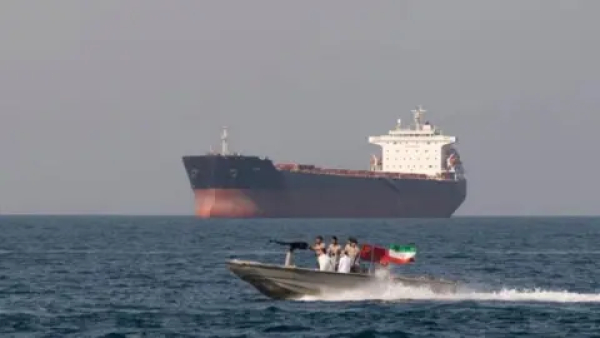
In response to Donald Trump's new rhetoric, the Chinese Foreign Ministry spokesman emphasized that the source of insecurity in the Strait of Hormuz is the issue of war against Iran.
These statements were published while Trump spoke yesterday in an interview with Fox News about the possibility of blocking the Strait of Hormuz and warned that if negotiations fail, tougher options against Iran will be on the agenda.
Referring to the strategic importance of the Strait of Hormuz for global energy trade, he announced that the United States could block this vital passage if necessary; although he added that implementing such a decision requires time and planning. These statements implicitly reveal the examination of high-risk scenarios at the levels of American decision-making.
Netanyahu’s defeats one after another!
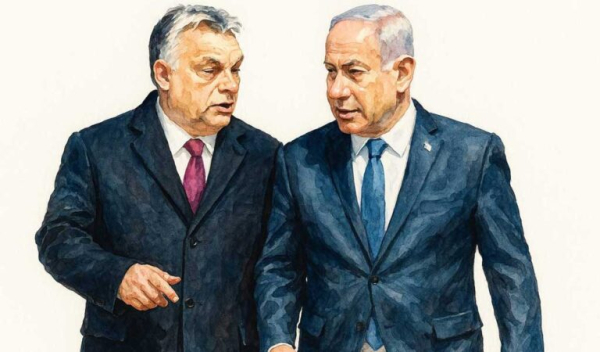
Netanyahu sent his son Yair to Hungary to help Orban in the election! He also sent a personal video to Orban’s rally. What was the result?
Orban lost by 14 points; and was ousted from power after 16 years; the biggest landslide defeat in Hungary’s democratic history.
You might ask why Orban’s victory was so important to Netanyahu? Because Orban was the only EU member to veto sanctions against Israel every time. Headline in Israel’s Ynet News, two days ago:
“If Orban falls, Israel may lose its EU shield.” He didn’t just fall—he was buried.