zarezadeh
Don't bluff someone who can't fold
Arnaud Bertrand
The war on Iran isn’t over yet, but it looks like we might in fact be staring at the one of the single biggest losses in the U.S. and Israel’s history.
As Ben Rhodes, the US’s former Deputy National Security Advisor, put it: “It’s hard to lose a war this short this comprehensively.” Yair Lapid, Israel’s former Prime Minister and Head of the Opposition, said there had “never been such a political disaster in all our history” and called it a “strategic collapse.”
Rhodes and Lapid are right. The amount of damage that the U.S. and Israel have done to themselves in such a short time - and the amount Iran gained - is genuinely stunning.
I mean, how crazy is this: JP Morgan calculated that, as per the new Hormuz toll arrangement (which Gulf states have confirmed is allowed in the ceasefire plan), Iran may get $70-90 billion in additional annual revenue, representing a stunning 20% of its GDP, in extra revenue. Hilariously, Trump commented on Truth Social that the arrangement means “big money will be made” and “Iran can start the reconstruction process.” Damn right: they gained the single most valuable geographic rent on earth, by a huge margin. For comparison, the Suez Canal earns Egypt “only” $9-10B/year, and the Panama Canal about $5B.
Stunning.
Stunning too is the sequence of events. On Tuesday night Trump was - seemingly - on the edge of nuking Iran, posting that “a whole civilization will die tonight”, only to essentially surrender a few hours afterwards, agreeing to negotiate peace on the basis of Iran’s 10-point plan (which he called a “workable basis”) - a plan which makes just about zero concession to the U.S. and represents near-total victory for Iran. To be fair, this being Trump, it’s unclear if he even understood what Iran’s 10-point plan is but he has since confirmed that he accepts the principle of an Iranian toll on Hormuz (although he now says he’d rather it be a "joint venture" with the U.S.).
What led from that to this is anyone’s guess - mine being that he tried one last massive bluff, and Iran still didn't blink. The why doesn’t matter much though, what matters more is the message this sends: as Jennifer Kavanagh, the former director of RAND's Army Strategy program (the most influential defense Think Tank in the U.S.), puts it: by “raising the stakes so high beforehand, he maximized the damage to […] global perceptions of U.S. power.” She added: “this is a clear strategic defeat for the U.S.”
There is a famous poker saying: “Don't bluff someone who can't fold.” Yet it’s exactly what Trump did. Iran literally couldn't fold. Their very survival as a state depended on not capitulating. So Trump's threat was the worst possible kind of bluff - maximum stakes, against an opponent with no exit. When it didn't work, he found himself - foolishly, entirely through his own doing - stuck between two impossible options: carry out the threat and become the most reviled figure in modern history (even more than he already is), or fold. He folded.
The geopolitical implications are almost too large to contemplate.
Global scholars, ex-officials support Iran's terms for ending aggression
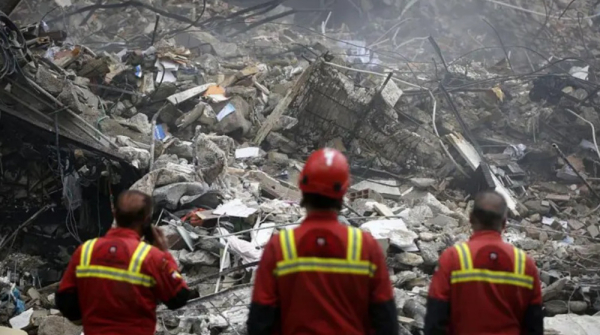
A broad international coalition of academics, former officials, diplomats, and public figures from multiple countries has released an open letter, voicing support for the terms set out by Iran for bringing about a conclusive end to aggression against the country.
The letter, titled "A Declaration to the Conscience of Humanity," that was released on Saturday, was presented as a collective appeal signed by more than 170 individuals from 30 countries. Those included the United States, United Kingdom, Germany, France, Russia, China, India, Iran, and several other nations across Asia, Africa, Europe, and Latin America.
The document came more than 40 days after the United States and the Israeli regime began their latest round of unprovoked aggression against the country, targeting its military and civilian infrastructure alike with numerous deadly and destructive strikes.
Proposed terms for ending hostilities
The signatories expressed outright support for the conditions determined by the Islamic Republic aimed at ending the aggression against it in a binding and definitive manner, calling the terms "non-negotiable."
They reiterated the conditions, including provision of guarantees against repetition of the aggression, a binding international commitment ensuring no future aggression, and immediate dismantling of all US military installations in the region.
The undersigned also urged formal admission of aggression, international condemnation of the aggressors, and full reparations for life and property as outlined by the Islamic Republic.
Realization of an immediate end to war on all regional fronts, establishment of a new legal regime for the Strait of Hormuz, recognizing Iran’s sovereignty, and prosecution and extradition of operatives in anti-Iranian media, who have incited this bloodshed, were among the other terms stipulated by Tehran, they stated.
The document also called for international condemnation of violations of the international law and urged civil society, scholars, and institutions worldwide to take action against systems of domination and military intervention.
'Iran final frontier of plunder'
The signatories noted the United States' interest in appropriating Iran's resources in the context of its interventionist foreign policy and aggrandizement.
They said strategic interest in Iran was linked to its natural resources consisting of "over 7% of the world’s mineral and energy wealth," that had rendered the country into "the final frontier of plunder."
'Trump embodiment of Western moral collapse'
They criticized current political leadership in the United States, stating that the "moral collapse of the West finds its embodiment in the pathetic figure of Mr. Trump," under whose orders the US joined the Israeli regime in the aggression.
It underlined that the United States' foreign policy attitude, including under Trump, was characterized by the slogan of "everything for us, nothing for others."
'US a predatory empire built on corpses on nations'
The letter described the United States as a "predatory empire erected on the corpses of nations."
It cited the US's history of deadly interventions, stating, "For 249 years—spanning the entirety of its existence since 1776—the United States built a record of atrocity that belonged to a darker, pre-civilized age."
The document referenced several American wars and conflicts, including in Vietnam, Cambodia, Korea, Iraq, Libya, Syria, and Afghanistan.
"From the genocidal horror of Vietnam, with over 3 million dead; to the annihilation of Cambodia, where 2 million perished under US-backed terror; to the systematic slaughter of Koreans, with more than 4 million Korean lives extinguished; to the destruction of Iraq, Libya, Syria, and Afghanistan, where one million Iraqis and tens of thousands of Libyans were consumed by US fire."
The document, however, insisted that "predatory power," a phenomenon it denounced as "a specter [that] now haunts the conscience of humanity" shall no longer "go unchallenged."
Press TV’s website
Iran, US end third round of Pakistan-mediated negotiations; talks extended for another day
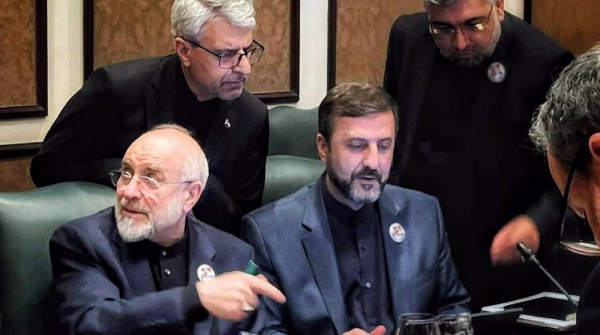
Iran and the United States have ended the third round of Pakistan-mediated ceasefire negotiations in Islamabad pending fresh resumption of the talks on Sunday.
Following the conclusion of the third round, the two sides began to engage in fresh exchange of written texts aimed at reaching a framework on the topics in discussion.
Reports across the Iranian media, meanwhile, showed that the talks have been extended for another day.
Sources have confirmed that Iranian Parliament Speaker and delegation head Mohammad-Baqer Qalibaf, Foreign Minister Abbas Araghchi, and Deputy Head of the Supreme National Security Council Ali Bagheri-Kani participated in the third round.
Prior to the third round, the two sides had similarly exchanged written texts towards arriving at the framework and ensuring that there was no room for ambiguity in the draft proposals.
The Iranian delegation participated in the talks following a decision by the United States to release frozen Iranian assets and force the Israeli regime to end its aggression on Lebanon.
This was one of Iran’s demands in its 10-point plan, which Tehran had previously presented to Washington through intermediaries as part of its response to a US proposal for a ceasefire.
According to the statement issued by Iran's top security body on Wednesday, the United States agreed to a 10-point proposal that calls for no new aggression against Iran, continued Iranian control over the Strait of Hormuz, acceptance of uranium enrichment, removal of all primary and secondary sanctions, termination of all anti-Iran UN Security Council resolutions as well as IAEA Board of Governors resolutions, payment of compensation to Iran, withdrawal of US combat forces from the region and cessation of war on all fronts, including against the Islamic Resistance of Lebanon (Hezbollah).
US President Donald Trump called the plan "a workable basis on which to negotiate."
The 10-point proposal was also submitted to Islamabad ahead of the talks as the basis for negotiations between the two sides.
Iran and the US agreed to a two-week ceasefire on Tuesday, 40 days after the US and Israel launched attacks against the Islamic Republic as Tehran was negotiating with Washington over its nuclear program.
Iran responded forcefully to the aggression, targeting US and Israeli assets across the region and enforcing a near-total blockade on the Strait of Hormuz. The transit through the vital waterway is one of the main topics of discussion in the negotiations in Islamabad, which focus on a potential agreement to permanently end the war.
The cessation of Israeli attacks on Lebanon was another precondition Iran had set for the talks. The issue was part of Iran’s proposal that led to the ceasefire, but the US and Israel later said the Lebanese front was not included. Pakistan also confirmed that it was.
Reports suggested that Israel had ceased attacking the Lebanese capital Beirut and restricted its attacks to areas in southern Lebanon.
The Iranian negotiating team met with Pakistani Prime Minister Shehbaz Sharif in Islamabad earlier in the day ahead of talks with the United States.
Other Iranian officials on the delegation include Secretary of the Supreme National Defense Council, Ali-Akbar Ahmadian, and Governor of the Central Bank, Abdolnasser Hemmati, as well as some members of the Parliament.
US Vice President JD Vance also met with the Pakistani prime minister in Islamabad. Vance was joined for the bilateral meeting by special envoy Steve Witkoff and President Donald Trump’s son-in-law, Jared Kushner.
The Iranian delegation will assess the US positions and a decision would follow regarding the talks.
Press TV’s website
The result of the Iran-US talks in Pakistan
The Strait of Hormuz is solely and exclusively in the will of Iran, with Iran's financial management!
This is an integral part of the story, which was also mentioned in the recent message of the dear Iranian leadership.
What was not achieved through war should never be included in the negotiations.
We and the Strait of Hormuz, along with a part of Oman, are its sole owners and decision-makers.
Neither the US nor any other country in the region or the world has the right to comment or enter into its management.
In principle, the discussion of management or participation in management or even cooperation in the Strait of Hormuz should not be given not only to the US but also to any other country.
This is the red line of the entire Iranian nation.
CNN from Pakistani sources: The results of the negotiations are positive, but the stalemate situation regarding control of the Strait of Hormuz remains.
What was not achieved in war will not be achieved in negotiations.
Either they must accept this new order or further destroy the enemy's already collapsing economy.
️Vance: We have not yet reached an agreement that is acceptable to the Iranian side
️The US Vice President claimed: We have negotiated for several hours and we have not yet reached an agreement that is satisfactory to both parties.
We have not yet reached an agreement that is acceptable to the Iranian side.
Iran's nuclear facilities were destroyed, but the Iranian side did not commit to stopping its program.
Vice President Trump: The Iranians did not accept our terms; we did not reach an agreement
J.D. Vance claimed: The bad news is that we did not reach an agreement. And I think this news is much worse for Iran than for the United States. So, we are returning to the United States while there is no agreement... They chose not to accept our terms.
Iran-US talks in Islamabad, Pakistan ended
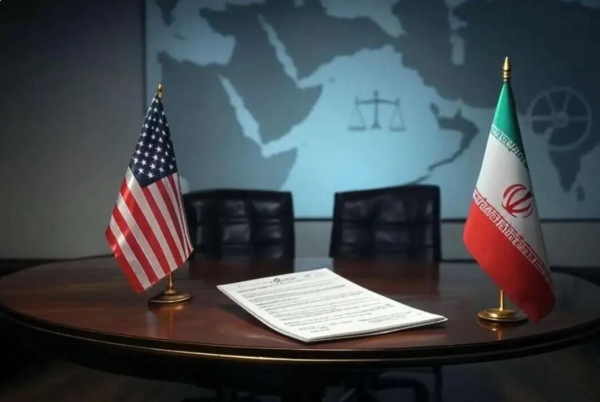
US overreach prevented a common framework and agreement
️The talks between the Iranian and American teams ended a few minutes ago, and the two sides have not reached an agreement yet due to US overreach and ambition.
️ Spokesperson for the Ministry of Foreign Affairs: We reached understandings on a number of issues, but there were differences on 2 or 3 important issues and ultimately no agreement was reached
Begaei:
This round of talks was the longest round of talks in a year, lasting a total of 24 or 25 hours.
️We talked about a range of issues that were both in our 10-point proposal and the proposals of the other side.
️Diplomacy never ends, it is a tool to protect national interests, diplomats must do their duty both in times of war and peace.
️These negotiations were held after 40 days of the imposed war and were held in an atmosphere of mistrust and suspicion; it is natural that we should not have expected to reach an agreement in one meeting from the beginning. No one expected that either.
️Another point was the complexity of the issues and conditions.
️Some new issues, such as the issue of the Strait of Hormuz, were added to these negotiations, and each of these has its own complexity.
️In any situation, we in the diplomatic apparatus must pursue the rights and interests of the Iranian people.
The latest situation in the Strait of Hormuz on the day of the Iran-US talks
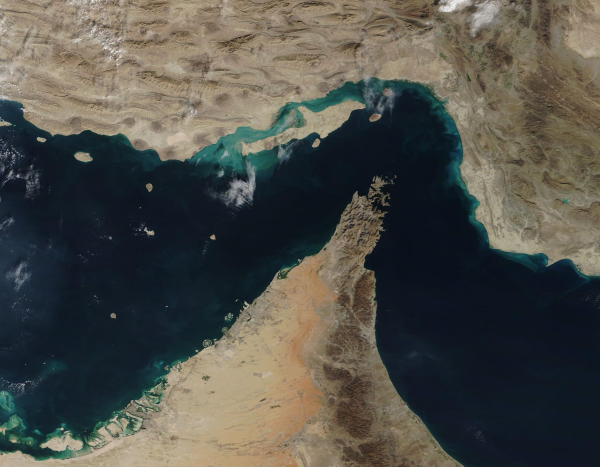
The ship tracking site shows that the passage through the Strait of Hormuz is still very limited and under the supervision of Iran.
Fars News Agency Economic Group; Data from the Marine Traffic ship tracking site shows that the passage through the Strait of Hormuz is still very limited and the traffic is under the direct supervision of Iran. It is worth mentioning that one of the provisions of the 10-point agreement between Iran and the US was the continuation of Iran's control over the Strait of Hormuz, which the US accepted as Iran's conditions for a ceasefire and the start of negotiations. Hours ago, Bloomberg claimed that two Chinese tankers and a Greek tanker were seen passing through the Strait of Hormuz. Since the beginning of the war, 70 percent of the tankers passing through the Strait of Hormuz have been related to Iran, and the rest have been done directly with Iran's permission.
European media accounts of the challenges of the US team against the superior hand of the Iranian team

According to Mehr News Agency, the British media The Guardian announced in a report that JD Vance, Trump's vice president and the head of the American negotiating team, participated in the negotiations while the Iranian team, after withstanding the attacks of the US and the Zionist regime and the developments in the Strait of Hormuz, sees itself in a superior position.
According to the media, this issue has caused the balance of negotiations to change to Washington's disadvantage.
In another part of the Guardian report, it is stated that some former US negotiators believe that the recent developments in the Strait of Hormuz have provided Tehran with an important lever of pressure in a way that could have widespread economic consequences for global markets.
On the other hand, the Financial Times described the ongoing consultation in Pakistan as one of the most important political contacts between Tehran and Washington in recent decades, but at the same time emphasized the distance between the positions of the two sides and the uncertainty regarding the outcome of the talks.
The Spanish media outlet El País emphasized in its report that the ongoing negotiations are uncertain and that the talks are taking place in an atmosphere of deep distrust between the two sides. France's Le Monde also assessed the US position in these negotiations as precarious, writing that Washington is facing challenges in managing the consequences of the war and setting the diplomatic path, because developments in the Strait of Hormuz are considered one of the determining factors in the negotiation equations in strengthening Iran's bargaining position.
Lebanese Ministry of Health Statistics on the Number of Martyrs and Injured in Tel Aviv Attacks
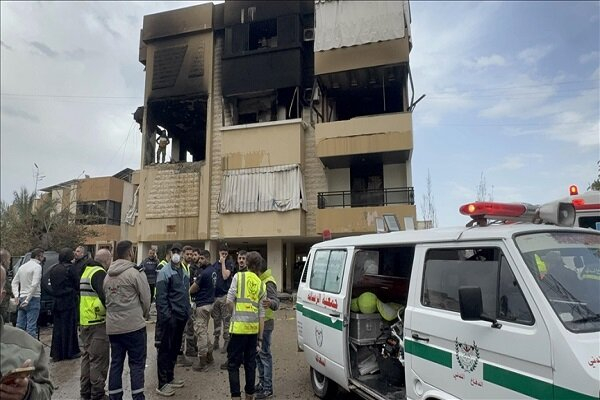
According to Mehr News Agency, citing Al-Mayadeen, the Lebanese Ministry of Health announced statistics on the number of martyrs and injured in the Israeli regime's attacks.
The Lebanese Ministry of Health announced 2020 martyrs and 6,436 injured since the beginning of the Israeli regime's attacks.
The Israeli regime, which has significantly intensified its attacks on Lebanon in recent days, has so far killed thousands of innocent people in the country and is increasing the number of civilian victims day by day.
The regime directly attacks residential buildings and their civilian residents with prior planning and in a completely targeted manner. The clear goal of this brutal tactic is to inflict the greatest possible human casualties on the Lebanese people.
This is while the Lebanese resistance continues its attacks on the occupiers in response to the Israeli regime's violation of the ceasefire.
The Islamic Resistance announced that it had targeted Camp 100 north of the town of "Illit Hashahir" with several rockets. The Islamic Resistance also fired rockets at the town of Nahariya.
Iran protests US breach of promise in meeting with Pakistani army chief
The Iranian delegation strongly protested the US breach of promise to the Pakistani army chief at this stage of the negotiations.
According to a Fars News Agency political correspondent, the Iranian delegation headed by Qalibaf and attended by our country's foreign minister met and discussed with the Pakistani army chief last night after arriving in Islamabad. In this meeting, the Iranian delegation strongly protested the US breach of promise at this stage of the negotiations. After the Americans requested a ceasefire, Iran had presented conditions in this regard for the start of talks. The release of Iranian assets and a ceasefire in Lebanon were part of these conditions. The Pakistani mediator had announced that the US agreed to these conditions. However, they have not been implemented so far. Of course, Iran has not been idle in response to the US breach of promise and has maintained the passage of oil tankers through the Strait of Hormuz as before.
Iranian delegation arrives in Islamabad for truce talks, insists on preconditions being met
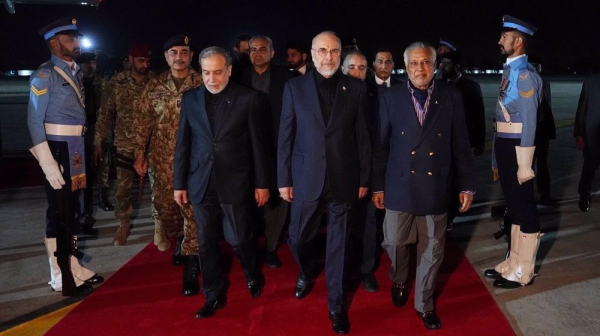
A high-ranking Iranian delegation has arrived in the Pakistani capital Islamabad for talks with US representatives, as Tehran warns that any failure to meet its preconditions will derail the process.
Headed by Parliament Speaker Mohammad-Bagher Qalibaf, the delegation, which includes security, political, military, economic, and legal committees, arrived in Islamabad on Friday night.
Other Iranian officials on the delegation include Foreign Minister Abbas Araghchi, Secretary of the Supreme National Defense Council Ali-Akbar Ahmadian, Central Bank Governor Abdolnasser Hemmati, as well as several members of parliament.
US Vice President JD Vance, Washington's regional envoy Steve Witkoff, and President Donald Trump's advisor and son-in-law Jared Kushner have also reached Islamabad.
Trump announced a two-week lull in US attacks on Iran on Tuesday, 40 days after the country joined the Israeli regime in the duo's latest bout of unprovoked aggression towards Iran.
The announcement came after Iran's Armed Forces unleashed at least 99 waves of determined and successful retaliatory strikes against sensitive and strategic American and Israeli targets throughout the region.
Earlier on Friday, Qalibaf said a ceasefire in Lebanon and the release of Iran’s blocked assets were the prerequisites to be met before the commencement of negotiations with the United States.
A 10-point proposal forwarded by Iran, which Trump has referred to as a "workable basis on which to negotiate and the main framework for these talks," explicitly conditions a ceasefire on the cessation of aggression on all fronts, including against Lebanon.
Since Trump's announcement, however, the Israeli regime has markedly escalated its attacks on Lebanon, claiming the lives of hundreds of people, including women and children.
'Iran has good will, but distrusts US'
Upon deplaning, Qalibaf reminded Iran's past experience of invariable American betrayal, including twice during diplomatic procedures.
"Twice within less than a year, in the middle of negotiations, and despite the Iranian side’s good faith, they attacked us and committed numerous war crimes," he said.
Both the latest aggression and the previous imposed American-Israeli war on the Islamic Republic in June took place after Washington had begun engaging in diplomatic processes with Tehran.
"We have goodwill, but we do not have trust [in the opposite party]," the top legislator added.
He noted that the American side would only witness readiness on the part of the Islamic Republic towards arriving at an agreement "if it is ready for a genuine agreement and to grant the rights of the Iranian nation."
'US warned against renewed deception'
However, should Washington seek to use negotiation as "futile performance" and a "deception operation," Tehran is prepared to secure the Iranian nation's rights by relying on its own capabilities, Qalibaf said.
He cited the country's successful and determined defensive and retaliatory strikes throughout the latest aggression as proof of its preparedness to resolutely secure its national interests and protect its sovereignty.
Press TV’s website