zarezadeh
Why did the Israeli army fail strategically?
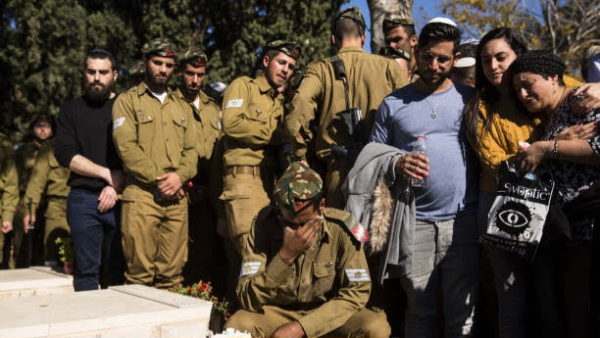
Listen to the Israeli general's analysis. According to Tasnim News Agency, Report No. 225 of the Tasnim News Agency's War Commentary Group on the 38th day of the war discussed the reasons for the strategic failure of the Israeli army in the recent war:
A new analysis by Israeli General Isaac Barik has been published on the current situation in Israel, tracing its roots to a gradual process spanning almost three decades. He believes that this path began after the Yom Kippur War, but has intensified significantly in the last three decades and has ultimately led to the current situation.
The decline of the strategic approach
Barik believes that the Israeli army has been reduced from a "strategic-oriented army" to a "crisis manager" as a result of the policies adopted. According to him, this army no longer has a grand strategic vision and acts only in a reactive manner; That is, instead of planning and conducting war on a regional and global scale, it only responds to the epicenters of crisis—like a firefighter who goes from incident to incident without a comprehensive plan.
Replacing the classical structure with a technology-based air force
The analysis emphasizes that about two-thirds of the traditional capacity of the Israeli army has been weakened, and instead, the main focus has been on developing a technology-based air force. This shift, according to Brick, although it has created advantages, has also weakened the strategic foundations of the army and transformed it from a comprehensive force into a one-dimensional tool.
Consequences: Erosion of the home front
One of the most important consequences of this process is the sharp decrease in the resilience of Israel’s “home front.” Brik distinguishes between different fronts:
The classic fronts (such as the north against Hezbollah or the south against Gaza) and a new front called the “back of the front” or the internal space of society
According to him, in previous conflicts - even in recent crises - the level of conflict within Israeli society was limited:
In the events of October 7, the internal conflict was largely confined to the first day or two and the areas around Gaza.
In the conflict with Hezbollah, the conflict was also largely confined to the northern border strip (about 10 kilometers).
The difference in the current war
However, in the current situation, according to Brik, for the first time, the “back of the front” has been continuously and extensively involved. He emphasizes that:
For 37 consecutive days, the internal front has been involved, the conflict has included casualties, disruptions and insecurity in the cities, and this has significantly reduced social resilience and the ability to continue the war.
Iran War: What Future Holds for the Gulf Arab States?
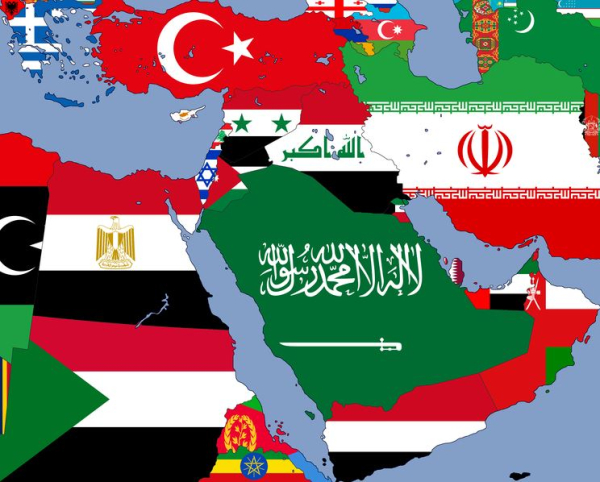
Long seen as oases of stability and ambition, the Gulf Arab states of Saudi Arabia, the United Arab Emirates, Kuwait, Qatar, Oman and Bahrain have attracted a flurry of investors, big companies and skilled workers. Their airports have become global hubs and their cities financial and tourist hubs.
But the US-Israeli war with Iran has tarnished that image, as Iranian missiles and drones target not only US military bases in the region but also civilian infrastructure and energy.
Governments have tried to return to normalcy as quickly as possible: Qatar, for example, has ended teleworking and resumed university classes. But some experts say that while the Gulf states may be able to weather the shock, the war has forced them to rethink their strategies.
“You can’t stop Iran from attacking because it’s about geographic proximity,” says Alex Vatankhah of the Middle East Institute, a think tank in Washington. “These countries are now caught in the middle of this conflict, on the front lines of a war that is not theirs, but they are paying a very high economic price for it.”
“Even if they spend all their money on defense, what we’ve seen so far is that these countries are very easy targets for Iran, and their billions of dollars of investments are at risk with Iranian drones that cost a few thousand dollars.”
This imbalance, Mr. Watankhah said, increases insurance costs, complicates logistics processes and may force companies to reconsider their presence and risk-taking in the Gulf.
As Gulf states struggle to balance their relations with the United States and Iran, one immediate consequence is a re-alignment of their security with Washington, said Ebtesam Kotbi, head of the Emirates Policy Center think tank in the United Arab Emirates.
The Gulf states are “moving closer to the United States because of their urgent security needs, while at the same time, quietly and practically, they are moving closer to Israel,” he said. But he stressed that this cooperation is based on expediency, not ideology. “They remain concerned about being drawn into more wars, becoming prime targets, and losing their strategic autonomy.”
UK police arrest activists protesting US aggression on Iran near RAF base
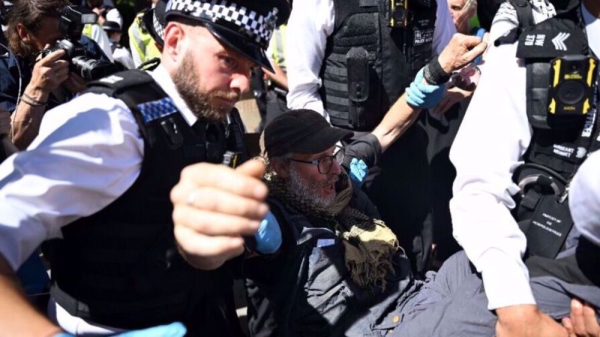
The British police have arrested seven people over supporting the banned group Palestine Action at an anti-war protest near a Royal Air Force (RAF) air base in eastern England used by US armed forces for aggression on Iran.
The five men and two women arrested at a peace encampment just outside the Lakenheath airbase had gathered with other activists on Sunday to protest the use of the base as a departure point for US aircraft involved in the US-Israeli war of aggression on Iran.
The Lakenheath Alliance for Peace, which organized the protest, said the seven had been arrested wearing clothing with the message saying, “We oppose genocide, we support Palestine Action.”
Police said the protesters had been arrested “on suspicion of supporting a proscribed organization.”
Prime Minister Keir Starmer’s Labour government banned Palestine Action as a “terrorist” organization last year, making it a criminal offence to belong to or support the group.
In February, a court ruled that the ban was “disproportionate” and interfered with the right to free speech. But the government has appealed, and the ban remains in effect.
More than 2,700 people have been arrested and hundreds charged over rallies in support of the group, according to protest organizers Defend Our Juries.
Two protesters were also arrested on Saturday at Lakenheath and charged with obstructing public thoroughfares, police said.
US President Donald Trump has railed against Starmer for what he calls insufficient support in the US-Israel war on Iran, straining the countries’ longtime alliance.
This is while the UK has authorized the US to use British military bases to carry out “defensive” operations against Iran and protect the vital Strait of Hormuz, through which about 20 percent of the world’s oil passes in peacetime.
During a phone conversation on March 20 with British Foreign Secretary Yvette Cooper, Iranian Foreign Minister Abbas Araghchi condemned the UK for allowing the US to use it military bases against Iran.
“These actions will certainly be regarded as participation in aggression and will be recorded in the history of relations between our two countries,” he said.
Araghchi also called on UK officials to refrain from any cooperation with the US and the Israeli regime, including providing platforms for “terrorist” TV channels supporting hostile actions against Iranians.
The US and Israel started a fresh round of aerial aggression on Iran on February 28, eight months after they carried out unprovoked attacks on the country.
Iran began to swiftly retaliate against the strikes by launching waves of missile and drone attacks on the Israeli-occupied territories as well as on US bases and interests in regional countries.
Press TV’s website
Mentally unbalanced’: US politicians condemn Trump’s ‘evil’ threats against Iran
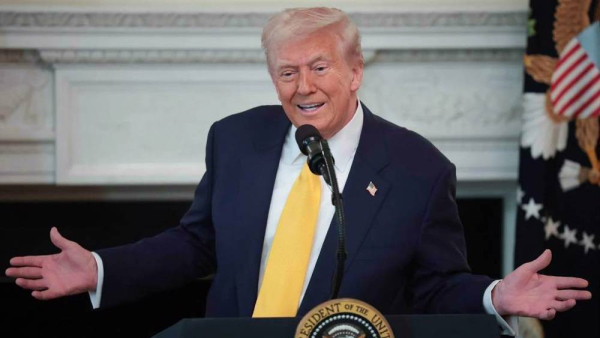
Many US political figures have sharply criticized President Donald Trump following his expletive-laden threats aimed at trying to force Iran to reopen the Strait of Hormuz, casting his mental stability into doubt and highlighting the risks posed to American troops, with some even calling for his removal.
On Sunday, Trump threatened to strike Iran's power plants and bridges unless the Islamic Republic submissively reopened the strategic waterway that it has closed to enemies and their allies in retaliation for the United States' and the Israeli regime's latest bout of unprovoked aggression targeting the country. "There will be nothing like it!!!" he wrote, while addressing the Islamic Republic and its officials in an idiosyncratically indecent manner.
Officials in Washington warned that such rhetoric signaled a dangerous escalation in the aggression.
'Stop Trump's madness'
Former US representative Marjorie Taylor Greene, previously an ally of Trump, issued one of the most forceful criticisms. She wrote on X, "I know all of you and him, and he has gone insane, and all of you are complicit… This is not making America great again, this is evil." Greene stressed that the war was initiated by the US and the Israeli regime, arguing that Washington was forcing Americans to pay the price of a war that results in civilian casualties and destruction.
"Everyone in his administration that claims to be a Christian needs to fall on their knees and beg forgiveness from God and stop worshipping the President and intervene in Trump’s madness."
'Unhinged'
Senate Minority Leader Chuck Schumer described Trump’s statements as those of “an unhinged madman,” warning that such rhetoric alienated allies and undermined the US's credibility.
He wrote on X, "As you celebrate with your families, the President of the United States is ranting like an unhinged madman… threatening possible war crimes." Schumer described Trump’s rant as "rambling, disjointed, and pathetic," calling it "one of the greatest policy blunders in the history of our country."
Senator Bernie Sanders also condemned the remarks, calling them "dangerous and mentally unbalanced." "One month after starting the war in Iran… these are the ravings of a dangerous and mentally unbalanced individual. Congress has got to act NOW. End this war."
Calls to remove, curb Trump
Senator Chris Murphy suggested that Trump’s behavior raised serious constitutional concerns, including the potential invocation of the 25th Amendment.
"If I were in Trump’s Cabinet, I would spend Easter calling constitutional lawyers… This is completely, utterly unhinged," he wrote.
The amendment, proposed by Congress and ratified by the states in the aftermath of the assassination of President John F. Kennedy, provides the procedures for replacing the president or vice president in the event of death, removal, resignation, or incapacitation.
US Representative Melanie Stansbury added, "The emperor has no clothes. Time for the 25th Amendment. Congress and the Cabinet must act."
Lawmakers warn of risks to troops, civilians
US Representative Ro Khanna criticized Trump for escalating threats, while failing to protect US troops in West Asia, emphasizing how US troops remain under fire as he is "cursing out and threatening war crimes."
Senator Tim Kaine called on Trump to “dial back the rhetoric,” describing it as "embarrassing and juvenile," and similarly warning that it increases risks for US troops.
US Representative Jake Auchincloss highlighted broader failures in the war, stating, "Strategically, this war has been a failure," noting that Iran retains a decisive advantage through its control of the Strait of Hormuz.
Senator Elissa Slotkin warned that Trump’s threats could violate the US's own military doctrine as well as international law, including the Geneva Conventions on the rules of engagement.
She wrote, "It is both irresponsible and wrong to indiscriminately kill civilians in Iran and destroy civilian infrastructure."
Press TV’s website
Iran slams US-Israeli attack on heavy water facility as ‘crime against human health’
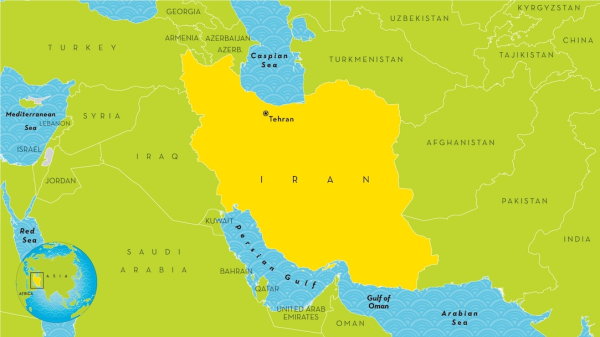
The Atomic Energy Organization of Iran (AEOI) says US-Israeli attack on Iran’s heavy water facility is a crime against science and human health, vowing to continue the path of scientific progress despite the aggression.
"Our scientific progress will not be halted, nor will our resolve to serve global peace/health," the body wrote in a post on X on Monday.
This determination, it noted, is immune to the aggressors' February 28-present atrocities against Iran's peaceful nuclear energy facilities, including the sites used towards advancing nuclear medicine, such as the country's heavy water facilities.
The AEOI, meanwhile, highlighted the gravity of the attacks targeting such installations, stating, "Heavy water & its derivatives are vital for medicine, disease treatment & advanced industries. US-Israeli attack on Iran’s heavy water facility is a crime against science & human health."
So far throughout their imposed aggression, the United States and the Israeli regime have struck such facilities as the Bushehr Nuclear Power Plant in southern Iran, the Khondab heavy water complex in the central Iranian city of Arak, and a yellowcake production facility in Ardakan, Yazd, which is similarly located in the country's central areas.
The AEOI has denounced the strikes as instances of "war crimes."
Earlier, Foreign Minister Abbas Araghchi wrote to United Nations secretary general, highlighting the environmental hazards.
He pointed to the attacks targeting the Bushehr plant, which have reportedly triggered evacuations of personnel belonging to Russia that has helped build the plant.
"The aggressors’ repeated strikes in the vicinity of the active nuclear power plant in Bushehr is extremely alarming; their proximity to an active nuclear facility constitutes an intolerable escalation entailing a grave risk of radiological release," the top diplomat cautioned.
Press TV’s website
Dozens killed, including 6 children, in overnight US-Israeli air raids across Iran
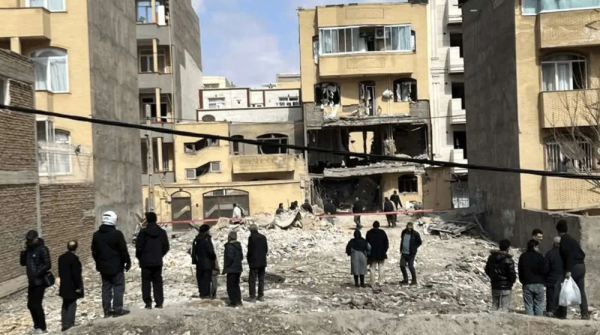
Following overnight US-Israeli air raids across Iran, dozens of civilians, including six children, have been martyred.
The Public Relations Office of Tehran EMS reported early Monday that four girls and two boys under the age of ten were among the victims — children who, the agency stated, “fell victim to violence that had no connection to their innocent and childlike lives.”
The agency added that further details — including the precise location of the incident, the number of possible injured, and the status of rescue operations — would be announced later.
Earlier, Baharestan county’s governor said residential areas in the county were targeted in the early hours of the morning in US-Israeli strikes.
He stated that two residential units in the Qaleh Mir housing complex were destroyed, with 13 people confirmed dead and 20 injured so far, all transferred to medical facilities.
Search and rescue teams remain on site, he added, and operations are continuing to locate any additional victims.
Meanwhile, Morteza Heydari, Deputy Governor for Political and Security Affairs in Qom Province, who visited the scene, reported that a strike on a residential area in the city of Qom at around 1:00 a.m. has so far killed nine residents and injured 19 others.
The US and Israel started a fresh round of military aggression against Iran on February 28, some eight months after they carried out unprovoked attacks on the country.
The US-Israeli aggression led to the martyrdom of the Leader of the Islamic Revolution, Ayatollah Seyyed Ali Khamenei, and hundreds of Iranian civilians, including women and children, as well as several senior military commanders.
Iran began to swiftly retaliate against the strikes by launching barrages of missiles and drone attacks on Israeli-occupied territories as well as on US bases and interests in regional countries.
Press TV’s website
US-Israeli attack targets Iran's Sharif University of Technology, causing damage
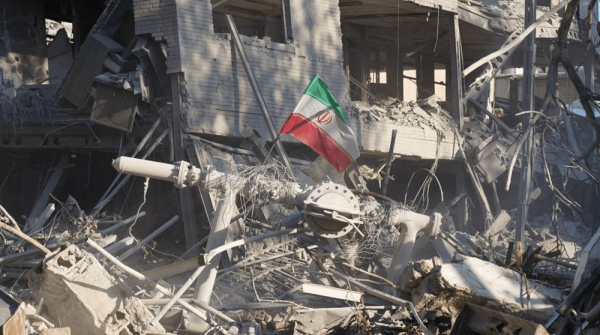
The US-Israeli war coalition has conducted an attack on Sharif University of Technology in Tehran, in recurring strikes against Iran's academic and civilian infrastructure.
According to reports, the building of the university’s mosque was damaged in the early Monday airstrike.
Meanwhile, the mayor of Tehran’s district 9, Mohsen Dodangeh, said the university’s gas post was also hit in the attack, which led to an explosion.
He added that the gas supply has been cut off temporarily.
He noted that the explosion caused fear among people living in the area and a number of homes were evacuated to prevent any incident.
Head of Sharif University of Technology, Masoud Tajrishi, also told IRNA that the brutal US-Israel attack targeted one of the buildings of the scientific and cultural center, causing damage to nearby buildings as well.
“Sharif University is a scientific institution that works on the development of culture and science. It was damaged following the brutality of the enemies of this land,” he added.
He emphasized that the reconstruction of the university’s damaged parts would start soon to prepare the ground for the country to emerge as a “big scientific power in the world.”
Tajrishi noted that the strike left no casualties, saying investigations have started to examine the aspects of the incident.
He condemned such “cowardly” acts, which demonstrate the enemy’s desperation to achieve their ominous goals.
The United States and Israel launched their criminal aggression against Iran on February 28 by assassinating Leader of the Islamic Revolution Seyyed Ali Khamenei, along with senior military commanders.
The enemies have deliberately targeted Iran’s civilian infrastructure and energy facilities, killing hundreds of Iranian people.
Sharif University of Technology is not the first university to be targeted by the invading coalition in the past month.
Tehran’s Shahid Beheshti University and University of Science and Technology, the Faculty of Pharmacy at Shiraz University, Isfahan University of Technology, parts of the Science and Technology Campus and the Veterinary Specialized Hospital Campus at Urmia University have been hit throughout the unlawful aggression.
Press TV’s website
The defeated US president is escaping defeat by projection
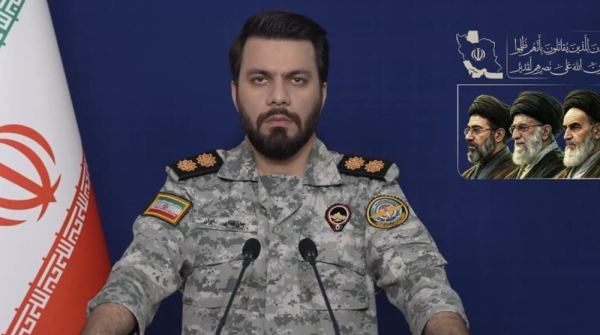
Spoken of the Central Headquarters of the Holy Prophet (PBUH):
In the name of Allah, the Most High, the Most Merciful
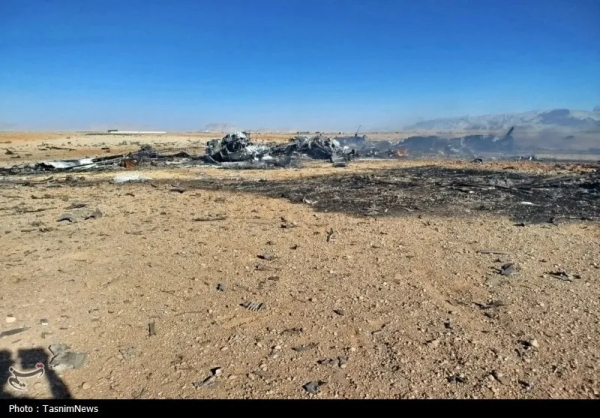
The so-called rescue operation of the US army, which was planned as a deception and immediate escape operation, under the pretext of rescuing the pilot of its downed plane, at an abandoned airport in the south of Isfahan, ended in complete failure with the timely presence of the armed forces of the Islamic Republic of Iran.
Following previous information, in additional investigations by experts present at the scene, it was determined that two 31-sedos military transport planes and two Black Hawk helicopters of the US army were destroyed, with the fulfillment of the divine promise, the help of God Almighty, and the holy fire of anger of the armies of Islam in the powerful armed forces, which increased the level of successive failures of the US army. It was proven to everyone that the weak and bankrupt US army is not considered a dominant and superior force in this imposed war against the divine will of the armed forces of the Islamic Republic of Iran.
Following this proud and victorious operation, the defeated American president, with confusion and lies, is trying to escape the battle of defeat through psychological warfare and, as in the past, continues with his nonsense and projections, although the reality of the field itself speaks of the superior hand of the powerful armed forces of the Islamic Republic of Iran.
And there is no victory except from Allah, the Almighty, the Wise.
American plane wreckage in the plains of Iran
According to a Mehr reporter, as the war enters its 37th day, signs of a strategic and fundamental transformation in the nature of the conflict have become clearly evident; from the geographical expansion of the battle and the operational entry of resistance-based actors to a significant leap in the level of strategic threats. The developments this morning show that the deterrence equation between the Islamic Republic of Iran, the United States, and the Zionist regime has reached an unprecedented stage of erosion and collapse, and the region is now on the verge of a historic and decisive turn.
On the 37th day of the war, which can no longer be considered a limited confrontation or even a purely regional conflict, the battlefield has become more complex, multilayered, and unpredictable than ever before. Joint and coordinated operations on several fronts, from southern occupied Palestine to the depths of Iranian skies, are evidence of the full activation of the "resistance axis" against the American-Zionist coalition; An axis that has come to the fore today, not only at the level of statements and stances, but also in the field of action, in an integrated and simultaneous manner.
Precise missile and drone attacks on sensitive and vital targets of the Zionist regime, the sounding of alarm sirens in hundreds of points from the north to the center of the occupied territories, and the taking refuge of millions of Zionists in shelters, are only a small part of the new reality on the field; a reality that indicates a change in the psychological balance of war in favor of the resistance front. In contrast, the destruction of advanced aggressor drones and the significant increase in the efficiency of Iran's integrated air defense network are a clear symbol of the significant improvement in the operational capacity and defense depth of the Islamic Republic, which has completely disrupted the enemy's equations.
Meanwhile, the threat literature has also undergone a qualitative and unprecedented leap. The clear and firm warnings of the senior commanders of the Islamic Republic’s armed forces to target the enemy’s vital and economic infrastructure without any restrictions or considerations convey a clear message: the era of “limited and controlled responses” is over, and any miscalculation by the enemy could lead to an unprecedented expansion of the scope of the war and an uncontrollable phase.
Now, on the eve of entering the sixth week of this fateful confrontation, the central question is no longer whether the war will continue or not; rather, it is at what point and at what cost to the Zionist regime and its American backers, will this major conflict result in a profound and lasting strategic change in the security order of the region.
Iran slams US strikes on B1 bridge, Mahshahr petrochemical plants as ‘blatant acts of state terrorism’
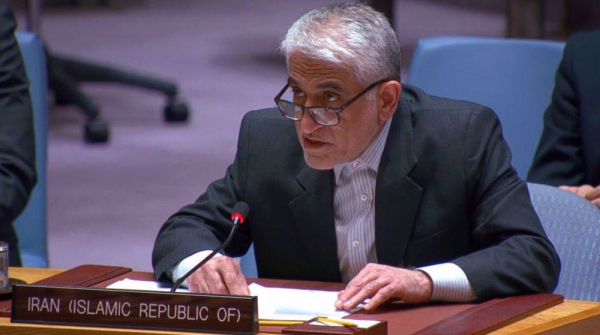
Iran’s Ambassador and Permanent Representative to the United Nations, Amir Saeid Iravani, has called on the UN to denounce the US-Israeli strikes on the B1 bridge and the Mahshahr petrochemical plants as blatant acts of "state terrorism" and"war crimes."
“I wish to bring to the attention the grave breaches of international humanitarian law, acts of terrorism and war crimes perpetrated by the United States and the Israeli regime through the deliberate and indiscriminate targeting of civilian and critical infrastructure in Iran,” Iravani wrote in a letter addressed to Secretary-General of United Nations, António Guterres, and the President of the United Nations Security Council (UNSC), Jamal Fares Alrowaiei.
On Wednesday, the US airstrikes deliberately targeted the Karaj-Tehran Bl Bridge, a major civilian transportation artery connecting Tehran to its western suburbs.
This critical infrastructure was struck in multiple waves, resulting in its partial destruction and causing significant civilian casualties.
This heinous crime, openly acknowledged by US President Donald Trump in a public social media statement, was followed, on Saturday, by deliberate strikes on the Mahshahr Petrochemical Special Economic Zone in Khuzestan, a hub of Iran's industrial and energy infrastructure employing a large civilian workforce, he continued.
These unlawful attacks were neither incidental nor spontaneous, according to Iravani.
They were preceded and accompanied by repeated, explicit and public threats made by Trump to deliberately target Iran's civilian and critical infrastructure, he added.
On Wednesday, Trump brazenly threatened to "bring Iran back to the Slone Age" and to strike "each and every one of their electric generating plants very hard and probably simultaneously."
These statements followed earlier threats on Monday to "blow up and completely obliterate" Iran's critical infrastructure, including power plants, oil facilities, Kharg Island and desalination installations, as well as statements on March 21 threatening to "hit and obliterate" Iran's power plants, he noted.
“The explicit, deliberate and systematic targeting of civilians and civilian objects, as well as the destruction of infrastructure essential to the survival of the civilian population, including electricity, water and energy systems, and other critical civilian facilities, constitutes a war crime and a blatant act of State terrorism, intended to terrorize and severely harm civilians,” Iravani emphasized.
Iran calls upon the Secretary-General of the United Nations, the Security Council, the United Nations High Commissioner for Human Rights, the International Committee of the Red Cross and all Member States of the United Nations to fulfil their legal and moral obligations by “Unreservedly and unequivocally condemn these deliberate and atrocious acts constituting war crimes and State terrorism, and take immediate, decisive and concrete measures to halt the ongoing criminal and unlawful acts of the US and the Israeli regime,” he stated.
Iravani demanded that the international community ensure that all those responsible are held fully accountable under international law, including Trump and the Prime Minister of the Israeli regime, Benjamin Netanyahu, for deliberately pursuing policies that result in war crimes and acts of state terrorism.
Press TV’s website