zarezadeh
Boosting ties with neighboring, Muslim states a priority for Iran: Parliament speaker
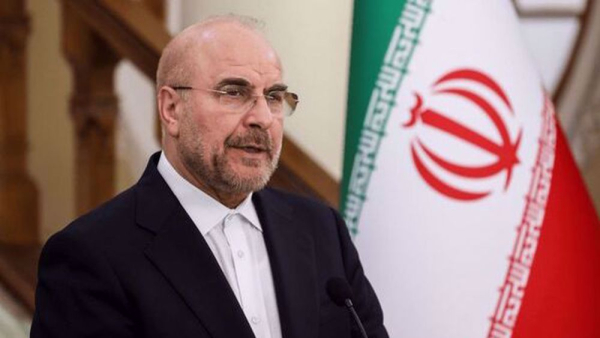
Parliament Speaker Mohammad-Baqer Qalibaf says Iran has always prioritized the development of its relations with neighboring and Muslim countries despite US-Israeli plots against regional security.
He made the remarks in a message addressed to the Islamic countries of the region and carried by Qatar-based Al Jazeera news network on Saturday, as the illegal US-Israeli war of aggression against Iran entered its sixth week.
“Strengthening ties with neighboring countries and the Islamic world has always been a priority for the Islamic Republic,” he said.
“Iran poses no threat to the region and has constantly extended its hands of friendship and brotherhood to its neighbors and other Muslim nations.”
Qalibaf cited a China-brokered reconciliation deal signed between Iran and Saudi Arabia in March 2023 and a meeting between the martyred Leader of the Islamic Revolution Ayatollah Seyyed Ali Khamenei and Saudi Defense Minister Khalid bin Salman Al Saud in April 2025 as examples of Iran’s commitment to the principles of Muslim fraternity and unity, as well as distrust in arrogant powers.
He also noted that the ongoing US-Israeli war, which has not been chosen and initiated by Iran, has turned into a symbol of the endurance of those opposing the global arrogance and seeking freedom and independence.
“This war is being waged by the United States and the Zionist regime not only against Iran, but also against the security of the region and the idea of Islamic unity and brotherhood,” he added.
The US and Israel launched their criminal act of aggression against Iran on February 28 by assassinating Ayatollah Khamenei, along with senior military commanders, in flagrant breach of the country’s sovereignty.
The Iranian armed forces have responded by launching almost daily missile and drone operations targeting locations in the Israeli‑occupied territories as well as US military bases and assets in regional countries, which have allowed the use of their territory and airspace for anti-Iran attacks.
The war came eight months after a 12-day US-Israeli aggression, which came to a halt due to Iran’s successful reprisal attacks.
The Parliament speaker said that during the war between June 13 and 24, 2025, Iran was capable of imposing high costs on the US, but declined to enter a regional war in a bid to prevent the escalation of the conflict and preserve the unity of the Islamic world.
Tehran, he went on, has always stressed that sustainable security is possible through relying on self-sufficiency and strategic independence.
Press TV’s website
In letter to UN chief, Araghchi warns of dire consequences of US-Israeli attacks on Iran’s nuclear facilities
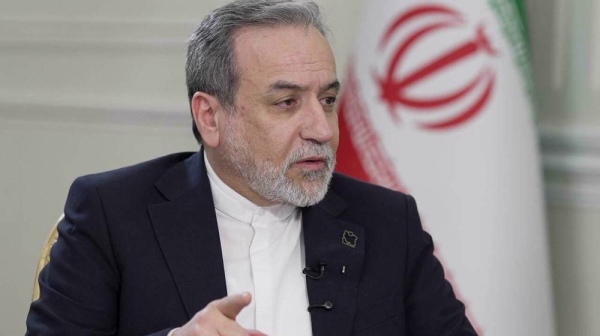
Iran’s foreign minister has raised serious concerns over the adverse consequences of US-Israeli airstrikes on the Iranian civilian nuclear facilities, notably the Bushehr nuclear power plant, emphasizing that such attacks expose the region to the risk of radioactive contamination.
In identical letters addressed to the UN Secretary General Antonio Guterres and the members of the Security Council on Saturday, Abbas Araghchi said that the US-Israeli assaults on Iranian nuclear installations happen regardless of the fact that these facilities are devoted exclusively to peaceful purposes and are operating under the IAEA’s comprehensive safeguards regime.
“These unlawful attacks expose the entire region to the risk of radioactive contamination with grave humanitarian and environmental consequences, and as such shall not be left unattended,” the letters read.
Araghchi pointed out that Iran has experienced two wars of aggression within the span of nine months, imposed by the US, a depository of the Treaty of the Non-Proliferation of Nuclear Weapons (NPT), and Israel, an outlaw regime that remains outside the framework of the NPT.
He noted that Iran’s peaceful nuclear facilities were attacked and bombed in both instances, and with grave disappointment, the United Nations Security Council, the IAEA Board of Governors and its director general have flatly failed even to condemn the illegal attacks, let alone undertake effective measures within their mandate to prevent their recurrence.
“Now the US Senior officials, who label international humanitarian law as ‘stupid,’ have gained the audacity to state that nuclear facilities are among their targets,” the Iranian foreign minister wrote.
He stated that the US permanent representative to the United Nations has openly expressed that attacks against the Bushehr nuclear power plant are “not off the table.”
“Such recklessness is the direct consequence of the inaction of the United Nations and the agency regarding the manifest acts of aggression by the United States and the Israeli regimes, which have only emboldened the aggressors. This course of unlawful attacks inflicted an irreparable blow upon the credibility of the United Nations, the Security Council, the IAEA, and its safeguards system,” Araghchi stated.
The top Iranian diplomat said it is disturbing that since the beginning of the ongoing war on February 28, attacks on Iranian civilian nuclear facilities have been carried out without any outright condemnation being heard from relevant international bodies.
“The aggressors’ repeated strikes in the vicinity of the active nuclear power plant in Bushehr is extremely alarming; their proximity to an active nuclear facility constitutes an intolerable escalation entailing a grave risk of radiological release,” Araghchi said.
The Iranian foreign minister finally highlighted that should the Security Council and the Board of Governors of the IAEA remain indifferent in the face of a manifest illegal attack against Iran’s safeguarded nuclear facilities, the member states may lose confidence in the United Nations, the agency, and the broader non-proliferation regime will be further eroded. “The consequences of such inaction would not be confined to Iran,” he added.
The United States and Israel initiated a large-scale and unprovoked military campaign against Iran on February 28, assassinating Leader of the Islamic Revolution Ayatollah Seyyed Ali Khamenei and several high-ranking military commanders and civilians.
The aggression has comprised a series of intensive strikes on both military installations and civilian facilities throughout Iran, leading to considerable loss of life and widespread damage to infrastructure.
In response, the Iranian Armed Forces have carried out waves of massive missile and drone operations against US interests across West Asia and Israeli positions in the occupied territories.
Press TV’s website
‘Humiliating defeat’: Iran destroys several US warplanes on mission to retrieve missing pilot
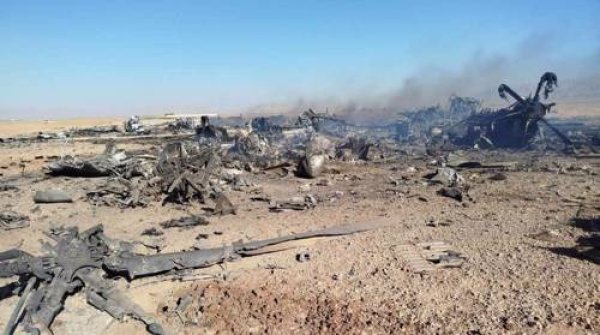
The Islamic Revolution Guards Corps (IRGC) says Iranian forces have managed to destroy several US warplanes that were conducting a mission to retrieve the pilot of a downed American fighter jet.
“Following desperate US moves to rescue the pilot of the downed fighter jet and the entry of flying objects to the country’s central parts, the enemy’s flying objects were destroyed and the US once again suffered a humiliating defeat during a joint operation (involving Aerospace, Ground forces as well as public, Basij and police units),” the IRGC’s Public relations Department said on Sunday.
The announcement came after US President Donald Trump claimed in a social media post that his country’s military “got” the pilot during an operation, one day after rescuing another pilot.
Enemy ‘failed’ to rescue pilot in Iran
Meanwhile, the spokesman for the Khatam al-Anbiya Central Headquarters said that the enemy’s desperate efforts to rescue the pilot of the downed jet “failed” with the grace of God, divine providence, as well as the timing measures and the joint operation of the fighters of the IRGC, the Army, Basij and police.
He added that the enemy flying objects, including two Black Hawk helicopters and a C-130 transport plane, are burning in fire.
Additionally on Sunday, two intruding drones, including an MQ-9 and a Hermers-900, were destroyed in the skies over Isfahan Province by Iran’s air defense systems operating under the country’s integrated air defense network.
The criminal US-Israeli aggression on Iran began on February 28 with airstrikes that assassinated senior Iranian officials and commanders.
The Iranian armed forces have responded by launching almost daily missile and drone operations targeting locations in the Israeli occupied territories as well as US military bases and assets across the region.
They have also shot down several hostile fighter jets, missiles and drones, reflecting Iran's readiness to defend its airspace.
Press TV’s website
US-Israeli war with Iran; experts express concern over ‘violations of international law’
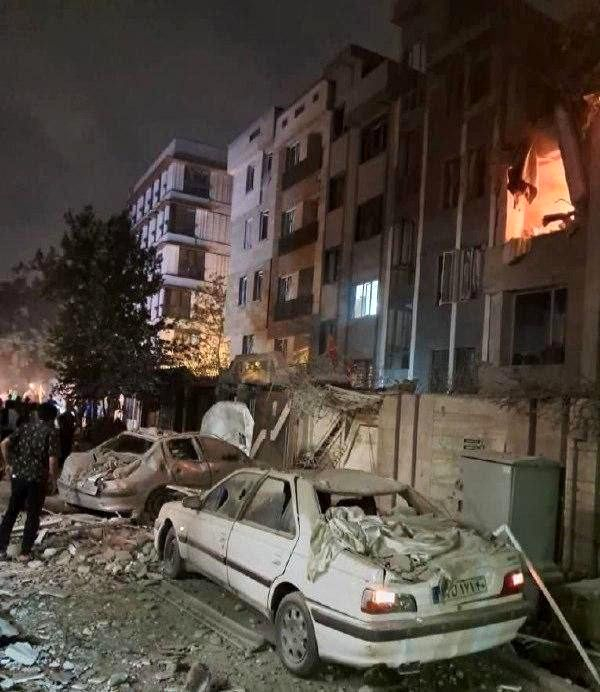
More than 100 international law experts have expressed “deep concern” in an open letter about what they called serious violations of international law by the US and Israel in the Middle East war.
They say the US and Israeli decision to attack Iran was a clear violation of the UN Charter, which allows the use of force only in self-defense or with the authorization of the UN Security Council.
The experts cited “disturbing rhetoric” from the countries’ leaders, including threats by US President Donald Trump to “destroy” Iran’s power plants.
In response, the White House said Mr Trump was making the entire region safer, calling the individuals “so-called experts” and rejecting their statements.
The experts in the letter also objected to statements by US Defense Secretary Pete Hegsett that enemies should not be “spared.”
“Spared” in war means refusing to spare anyone, even those who have surrendered or are wounded.
The experts said that declaring “no one should be spared in any way” is “specifically prohibited” in international law and is even enshrined in the US Department of Defense’s own guidelines.
The letter’s signatories include Jonathan Tracy, a former US Army judge-martial; Harold Honchokko, a former US State Department legal adviser; and Oona Hathaway, a professor of international law at Yale Law School and president-elect of the American International Law Society.
“We are deeply concerned that the actions and threats outlined here are causing serious harm to civilians… and risk undermining the rule of law and the fundamental principles that protect civilians in all countries,” the letter’s signatories said.
In one of the most recent cases, Ali Jafarian, Iran’s deputy health minister, told Al Jazeera on Thursday that at least 1,937 people have been killed so far in the war.
He added that 240 of the victims were women and 212 were children. At least 24,800 people have also been injured, he said, including about 4,000 women and 1,621 children.
The experts’ letter also mentions an attack on an elementary school in the Iranian city of Minab on the first day of the war, which reportedly killed at least 168 people, including 110 children.
The US Department of Defense said it was investigating the attack, and that there was growing evidence that the US was likely behind it. One theory is that the school, which was located next to an IRGC base, was mistakenly targeted based on outdated intelligence. This claim appears to be just an excuse or justification. The US appears to have targeted the school deliberately.
The letter states that the attack “likely constitutes a violation of international humanitarian law and, if proven to have been reckless, could amount to a war crime.”
The letter was published on the website of Just Security, an online publication affiliated with New York University Law School.
The Impact of the Strait of Hormuz Crisis on Energy in the Global Economy
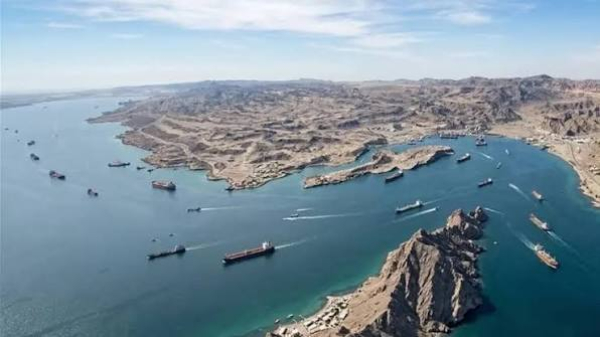
World Economic Forum: The Strait of Hormuz Crisis Isn’t Just About Oil. There Are 9 Other Commodities Too
The war in the Middle East has caused serious damage to energy infrastructure and the closure of the Strait of Hormuz, which has pushed up oil prices, but its impact goes beyond energy, disrupting the region’s non-oil exports. These commodities include methanol, aluminum, sulfur, graphite, and other critical industrial materials that are impacting global supply chains and the transition to green energy.
The impact of these disruptions on global supply chains is quickly becoming apparent; from agricultural fertilizers for future harvests to minerals needed by high-tech industries:
- 1. Fertilizers (urea and ammonia)
- 2. Sulfur
- 3. Methanol
- 4. Graphite
- 5. Aluminum
- 6. Helium
- 7. Glycol (MEG)
- 8. Iron ore and steel pellets
- 9. Green hydrogen infrastructure
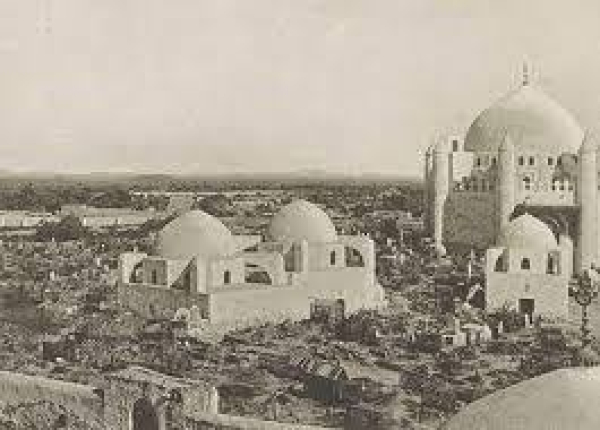
Condolences on the death anniversary of Hazrat Abdul Azim Al-Husani (AS)
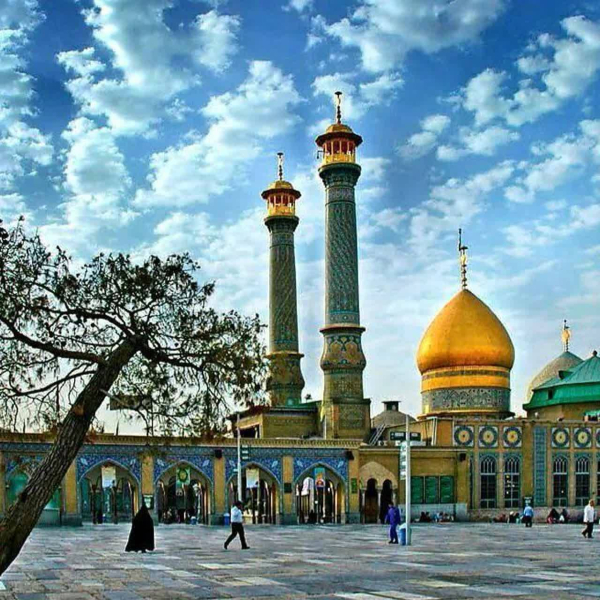
Hadrrat Abdul Azim Al-Husani was born on the 4th of Rabi’ Al-Thani, 173 AH, in the city of Medina. He was the son of Abdullah bin Ali, a descendant of Imam Hassan Mujtaba (AS), who was related to him through four intermediaries.
Abdul Azim was a Shiite scholar and a narrator of the hadiths of the infallible Imams (AS), and was also considered a very beloved and trusted figure by the Ahlul Bayt of Infallibility and Purity (AS). Although his era was the era of Abbasid rule and the creation of oppression and strictness towards Shiites, the defenders of religion and the preservers of the school who recorded and transmitted the narrations of the Imams played a major role in protecting and preserving the noble culture of the Ahl al-Bayt (a.s.). This noble man is also considered one of the guardians of the bright Shiite belief, who was diligent in preserving and disseminating the words of the pure Imams, and the numerous praises of the Imams (a.s.) for him indicate his noble scientific and spiritual personality.
Politeness towards the Imams (AS)
"Sheikh Muhammad Sharif Razi" writes in his book about the courtesy of Hazrat Abdul Azim towards the courtesy of the Infallible Imams (AS): "The behavior and generous habit of Hazrat Abdul Azim (AS) was that whenever he entered the assembly of Hazrat Imam Jawad (AS) or Imam Hadi (AS), with complete courtesy, humility and utmost modesty and modesty, while taking his hands out of his robe, he would greet those Imams with complete courtesy. After returning the greeting, the Imam would invite him close to him and make him sit next to him; to the extent that his blessed knee would touch the sacred knee of the Imam, and the Imam would ask him about his well-being, which would cause regret and envy among others."
Muhammad Sharif Razi further writes: “One of the aspects of the respect and veneration shown by Imam Jawad (AS) and Imam Hadi (AS) to His Eminence Abdul Azim Al-Hasani was that they never called him by name and always addressed him by his nickname – which was “Abul-Qasim” – and scholars of literature say that the nickname was established for the purpose of veneration, honor and respect; (2) Therefore, it is well understood to what extent the Infallible Imams (AS) respected His Eminence Abdul Azim, and this is nothing other than the fact that Abdul Azim’s piety, piety and knowledge combined with his actions have made him particularly popular with the Infallible Imams.”
IRGC Navy targets Israeli vessel near Strait of Hormuz, sets it ablaze
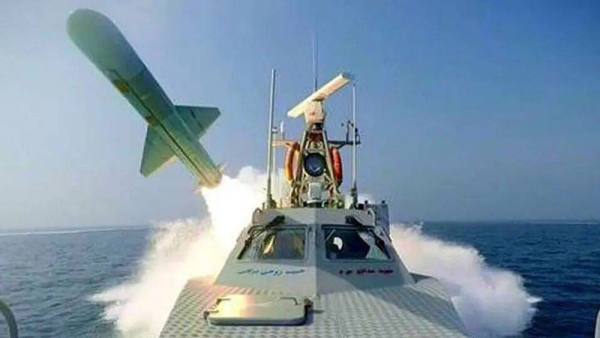
The naval units of Iran's Islamic Revolution Guards Corps (IRGC) have carried out a drone strike against an Israeli-owned merchant vessel close to the Strait of Hormuz in retaliation for the war of aggression imposed by Washington and the Tel Aviv regime against the Islamic Republic.
According to a statement issued by the Command Headquarters of the IRGC Navy on Saturday, the MSC Ishika was struck with an unmanned aerial vehicle. The ship was ablaze following the attack.
Earlier in the day, the IRGC announced that various military and industrial centers as well as locations of commanders and units of the Israeli army in the southern, central, and northern parts of the occupied territories, including Tel Aviv, were targeted with solid and liquid-fueled ballistic missiles, including Khorramshahr, Khaybarshekan and Emad, equipped with guided warheads and multiple projectiles and destructive drones.
Locations in Dimona, Negev, Be'er Sheva, and Ramat Gan were targeted as part of the deep fire-to-fire tactic and amid continuous strikes, following the failure of the advanced systems of the Israeli regime to intercept the powerful Iranian missiles, the IRGC said.
The US and the Israeli regime launched a large-scale unprovoked military aggression against Iran following the assassination of then-Leader of the Islamic Revolution Ayatollah Seyed Ali Khamenei, along with several senior military commanders and civilians, on February 28.
The attacks have involved extensive aerial strikes on both military and civilian locations across Iran, causing significant casualties and widespread damage to infrastructure.
In response, the Iranian Armed Forces have carried out retaliatory operations, targeting American and Israeli positions in the occupied territories and at regional bases with waves of missiles and drones strikes.
Press TV’s website
At least 1,900 civilians killed in Iran due to US-Israeli aggression: Official
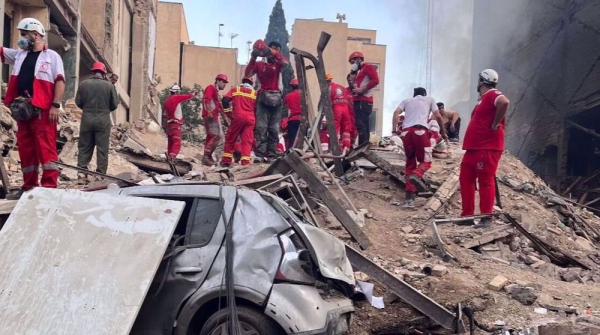
Since the start of US-Israeli aggression against Iran, more than 1,900 civilians, including women and children, have been killed, and at least 20,000 others have been wounded, according to the Secretary General of the International Federation of Red Cross and Red Crescent Societies (IFRC).
In a post published on X on Saturday, Jagan Chapagain said: “In Iran, the human rights situation is rapidly deteriorating.”
He praised the Iranian Red Crescent Society’s staff, stating that despite the worsening condition, they continue to “respond with remarkable courage, providing emergency care and health services across the country.”
The IFRC continues to support the IRCS through operational support and international procurement of critical supplies, he emphasized.
“I call on the international community to show solidarity and support our emergency appeal, and the operation in Iran,” he noted.
In a statement released Wednesday, the IRCS said that the US-Israeli airstrikes had damaged or destroyed more than 115,000 civilian structures across the country over the previous five weeks.
All US terrorists will ultimately flee region like USS Gerald R. Ford commander: IRGC Quds Force chief
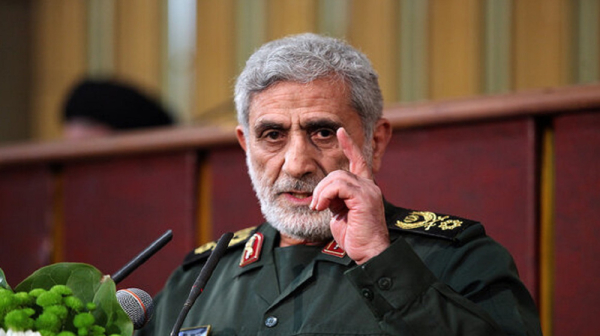
Chief Commander of the Islamic Revolution Guards Corps (IRGC) Quds Force Brigadier General Esmaeil Qaani says “all American terrorists” will ultimately flee the region in the same way the USS Gerald R. Ford commander fled the Red Sea in the face of Iranian retaliatory strikes.
In a post on his X account on Saturday, Qaani said that the aircraft carrier USS Gerald R. Ford was forced to retreat from the Red Sea due to fear of Yemeni forces.
“The criminal Trump should apparently fire the commander of the USS Gerald R. Ford too,” Qaani said.
He noted that the US warship, after weeks of “wandering” in the region, ultimately withdrew without transiting the Bab al-Mandab Strait.
“Fearing Yemen’s heroic Mujahedeen and steadfast people, he didn’t dare cross the Bab al-Mandab strait,” Qaani asserted, referring to the strategic chokepoint between the Arabian Peninsula and the Horn of Africa.
“After two weeks of wandering and a fabricated story, he fled the Red Sea and the region,” he added.
Qaani reiterated that the “ultimate fate of all American terrorist forces is to flee the region.”
Laborers, industrialists, businessmen backbone of Iran’s resistance in US-Israeli war: Qalibaf
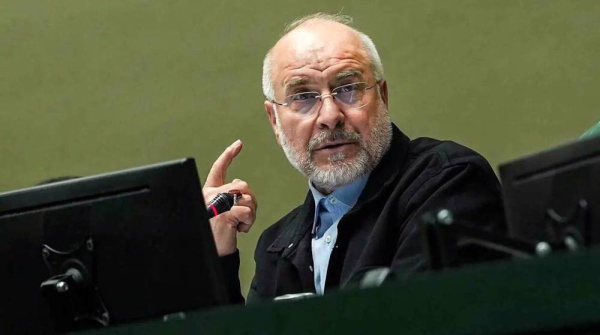
Iran's parliament speaker has praised the resilience of Iranian laborers, industrialists and other economic figures in the face of the ongoing US-Israeli aggression against the Islamic Republic, describing them as the backbone of resistance against the imposed war.
In a post published on his X account on Saturday, Mohammad Baqer Qalibaf said, "Laborers, industrialists, developers of startups, businessmen and other economic figures have all been the backbone of this national war, and their sacred struggle will reenergize from now on and following the end of the (Nowruz) holidays."
He also extended his gratitude to all Iranian business activists for their sincerity and efforts, and hailed their wholehearted and diligent attempts to defend the country on all fronts.