zarezadeh
US-Israeli aggression against Iran has set entire region ‘on fire’: Kremlin

The Kremlin has warned that the ongoing US-Israeli war of aggression against Iran has engulfed the entire Persian Gulf and West Asia, setting the region “on fire” with dangerous and far-reaching consequences.
Speaking to reporters on Monday, Kremlin spokesman Dmitry Peskov stated that the aggression is rapidly escalating both in geography and economic impact.
“In fact, the entire region is on fire. These are all very dangerous and negative consequences of the aggression that was unleashed against Iran,” Peskov said.
“The geography of this conflict has expanded, and now we are all aware of the consequences that we have, including very, very negative consequences for the global economy.”
Peskov further noted: “We note that the level of tension in the region is growing and continues to grow.”
The remarks come as US President Donald Trump recently threatened on social media to strike Iranian civilian infrastructure, including power plants and bridges, as early as Tuesday.
‘Heavy bombs’ won’t halt nuclear tech progress: Iran atomic agency
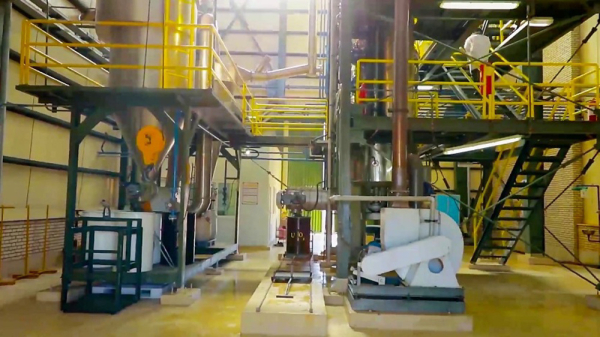
The US-Israeli attack on Iran's yellowcake plant in Ardakan is a flagrant violation of international law, but it will never stop the Islamic Republic's peaceful nuclear program, the Atomic Energy Organization of Iran (AEOI) said in a statement.
The strike targeted the uranium ore concentrate facility in Yazd province, a key part of the country's nuclear fuel supply chain.
“US-Israeli attack on Ardakan yellowcake plant in Yazd is a blatant violation of the immunity of peaceful nuclear facilities, targeting the reactor fuel supply chain & nuclear medicine,” the AEOI said in a post on X.
“Iran’s nuclear tech serves global peace & human health, a path heavy bombs will never halt.”
An aerial assault on the facility took place on March 27.
The yellowcake plant converts raw uranium ore into a concentrated powder used for reactor fuel and medical isotope production.
By striking the facility, Washington and Tel Aviv have violated the immunity of nuclear sites protected under international treaties, Iran said.
The attack on the Ardakan facility is not an isolated incident.
Since the US and Israel launched their unprovoked war on Iran on February 28, the country's nuclear infrastructure has come under repeated assault.
Bushehr nuclear power plant, the nation's only operational reactor, has been hit four times.
The latest strike on April 4 killed a security staff member and wounded others.
The International Atomic Energy Agency said a projectile landed just 75 meters from the plant.
Natanz, Iran's main uranium enrichment facility, has been hit twice.
The first attack occurred on March 2, damaging the entrance buildings of the underground plant.
A second strike on March 21 targeted the enrichment complex itself.
Isfahan's nuclear facilities have also been repeatedly targeted.
On March 9, the Gamma radiation sterilization facility was damaged in an aerial assault.
The heavy water complex in Arak has been attacked twice, once during the 12-day war in June, and again on March 27.
Washington and Tel Aviv have also bombed the Fordow fuel enrichment plant.
The strikes have drawn warnings of catastrophic consequences.
Iranian Foreign Minister Abbas Araghchi has cautioned that continued attacks on nuclear sites could expose the entire region to radioactive contamination.
The head of the World Health Organization has also expressed grave concern over the safety of Iran's nuclear facilities.
Iran's atomic energy agency has formally protested the Bushehr attack to the IAEA.
It described the act as a flagrant violation of the Non-Proliferation Treaty and a clear war crime.
Press TV’s website
US-Israeli aggression on Iran: What happened on 38th day of the imposed war
By Press TV Website Staff
Thirty-eight days into the US-Israeli war on Iran, which began on February 28 with the assassination of the Leader of the Islamic Revolution, Ayatollah Seyyed Ali Khamenei, and top-ranking commanders, the US and Israel continue to target civilian, academic, and industrial infrastructure across the country.
On day 38, Tehran's Sharif University of Technology was hit by US-Israeli airstrikes. Civilian sites in Tehran, Shiraz, and Qom were also attacked, and dozens of civilians, including six children, were martyred during overnight aggression by America and the Israeli regime.
Iran's health, oil, and pharmaceutical sectors also reported extensive damage, while the Islamic Revolution Guards Corps (IRGC) stated that the Strait of Hormuz "will never return to its previous state" for the United States and Israel.
US President Donald Trump publicly threatened that the entire nation of Iran "can be taken out in one night," a declaration widely condemned as a clear war crime and a moral atrocity.
American lawmakers, experts, and media described his rhetoric as "deranged," "dangerous," and proof of a reckless push toward unprovoked conflict.
Amid proposals for a temporary ceasefire, Iran firmly rejected any pause that would allow adversaries to regroup, warning that such moves would only prolong and intensify the war.
Global markets and aviation continued to feel the fallout, with rising oil prices, disrupted trade, and mounting international concern over the human and economic costs of a military aggression launched by the US and Israel against Iran.
Key developments from Day 38 of the imposed war:
The US-Israeli war coalition carried out an attack on Sharif University of Technology in Tehran, in recurring strikes against Iran's academic and civilian infrastructure. The attack caused temporary gas outages in the university neighborhood.
The US and Israel hit various places across the country, including civilian sites in Tehran, Shiraz, and Qom.
During the overnight US-Israeli aerial aggression across Iran, dozens of civilians, including at least 10 children, were martyred.
The Iranian Health Ministry said 54 emergency bases, 46 clinics, 216 health centers, and 41 ambulances have so far been damaged in US-Israeli aggression on Iran.
Iran's Oil Ministry said US-Israeli attacks targeted petrochemical complexes in the southern Iranian province of Bushehr, just days after similar plants came under attack in the southwestern province of Khuzestan.
Iran's Food and Drug Administration (IFDA) said 24 pharmaceutical and medical-equipment facilities across multiple provinces have been damaged in US-Israeli aggression.
The head of the IRGC Intelligence Organisation, Brigadier General Seyed Majid Khademi, was assassinated in an Israeli airstrike on Tehran.
The Leader of the Islamic Revolution, Ayatollah Seyyed Mojtaba Khamenei, and other officials extended condolences over the martyrdom of General Khademi.
The IRGC Navy's official X account, responding to Trump's latest threats, declared that the Strait of Hormuz "will never return to its previous state, especially for the United States and Israel."
In a Truth Social post on Sunday, Trump threatened to attack Iran's civilian infrastructure, including bridges and power plants, if the Strait of Hormuz is not "reopened."
Iran's Deputy Foreign Minister Kazem Gharibabadi cited UN Charter Article 2(4) and Article 51, reminding that Trump has publicly threatened war crimes, which incur individual criminal responsibility under international law.
Axios reported that Pakistani, Turkish, and Egyptian intermediaries, along with text exchanges between US envoy Steve Witkoff and Iranian Foreign Minister Abbas Araghchi, are pursuing a last-chance two-stage plan: a 45-day ceasefire followed by a permanent end to the war. Full reopening of Hormuz and a solution for Iran's enriched uranium would only come with a final deal.
The Iranian Foreign Ministry said that it has rejected the US's self-proclaimed proposals for a ceasefire, warning that any pauses resulting from such a ceasefire would only allow adversaries to regroup and commit further crimes against the Iranian nation.
Iran also rejected the proposal of "reopening" the Strait of Hormuz in exchange for a temporary truce and has also refused to meet US officials.
Iranian media reported that 15 vessels passed the Strait of Hormuz in the past 24 hours with authorization from Iran. Traffic remains 90% lower than before the US-Israeli strikes on Iran.
Threatening Iran, Trump said on Monday that the entire nation of Iran "can be taken out in one night, and that night may be tomorrow night."
A growing number of lawmakers, experts, and commentators have called for Trump's immediate removal from office by invoking the 25th Amendment, denouncing him for launching an unprovoked war against the Islamic Republic of Iran.
Numerous US lawmakers, including Patty Murray, Jim McGovern, Bernie Sanders, Joe Courtney, and Katherine Clark, condemned Trump's "deranged, dangerous" rhetoric and warned of escalating global crises.
US lawmaker Chuck Schumer said Trump is "ranting like a deranged madman," condemning the US president's threats of committing war crimes against Iranian civilians.
US Senator Bernie Sanders called Trump a "mentally unbalanced individual."
The Economist wrote that European allies have "lost hope" in keeping the US within NATO, a situation perhaps beyond repair.
US oil prices surged past $115 per barrel amid the closure of Strait of Hormuz
The Kobeissi Letter reported that if prices persist for seven more weeks, US CPI inflation could rise to 3.7%.
Since the US-Israeli war on Iran began on February 28, Americans have spent an additional $8.6 billion on fuel.
South Korea plans to dispatch envoys to Saudi Arabia, Oman, and Algeria, and prepare five Korean-flagged tankers. South Korea imports 70% of its oil from West Asia.
The Japan Times reported that the Iran war is reshaping global aviation. It said longer flight routes, soaring ticket prices, and the possible collapse of major airlines are the consequences of the ongoing war.
The Atomic Energy Organisation of Iran (AEOI) condemned a US-Israeli attack on its heavy water facility as a "crime against science and human health." Iran's Khondab heavy water production plant was hit on March 27.
American media commentator Tucker Carlson criticized Trump's push toward the Iran war: "You cannot kill innocents. You cannot kill children and women. It's a war crime, and more importantly, a moral crime. They're not praying in the White House to restrain themselves; they're praying to justify killing civilians. How do you do that?"
Press TV’s website
Two pharmacists killed as US-Israeli aggression targets 25 Iranian pharma units in 40 days
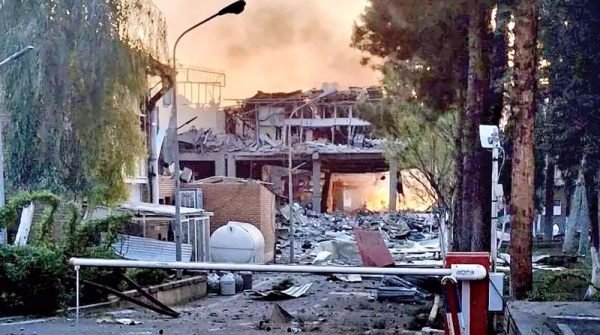
American and Zionist aggressors have so far attacked 25 pharmaceutical companies and units across Iran, killing at least two pharmacists, as nearly 40 days have passed since a US-Israeli military coalition waged an unprovoked war of aggression against the Islamic Republic.
Hadi Ahmadi, head of the Public Relations Office of Iranian Association of Pharmacists, provided the figures in a statement on Tuesday, noting that two major companies, namely Tofigh Daru and Iran’s Pasteur Institute, were directly struck by US and Israeli missiles.
The Tofigh Daru pharmaceutical research and production facility as well as the Pasteur Institute of Iran, which is the oldest and most prestigious research and public health center in Iran and the entire West Asia founded in 1920, were heavily damaged earlier this month.
310 students and teachers killed, over 750 schools damaged in US-Israeli war on Iran
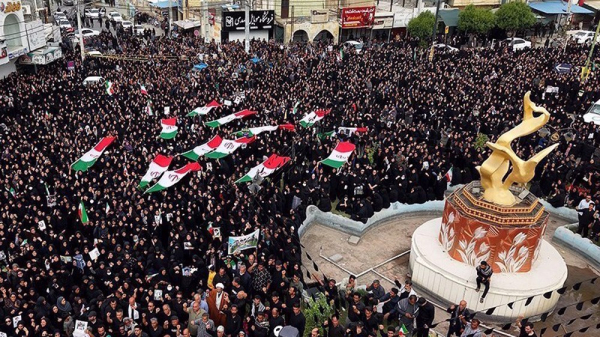
Iran’s minister of education says 310 students and teachers have been killed and over 750 schools have sustained damage so far in the ongoing war of aggression launched by the invading US-Israeli coalition against the Islamic Republic since late February.
Alireza Kazemi provided the grim figures during a televised interview on Monday night, adding that more than 210 students and teachers were also wounded during this period.
The United States and Israel launched their latest unprovoked war on Iran on February 28, assassinating Leader of the Islamic Revolution Ayatollah Seyyed Ali Khamenei, senior military officials and targeting nuclear facilities, schools and hospitals.
Referring to the infrastructural damage inflicted on the country’s education, Kazemi said, “Some 900 educational and administrative units as well as camping and sporting facilities have been either damaged or demolished.”
He stressed that of these, 750 schools sustained damage.
According to the minister, provinces of Hormozgan, Markazi, Tehran and East Azarbaijan bore the brunt of the attacks on the educational infrastructure.
“Iran’s Foreign Ministry has already communicated with a number of international organizations, including UNITED Nations Educational, Scientific and Cultural Organization (UNESCO) and United Nations International Children’s Emergency Fund (UNICEF), to legally pursue justice for Iranian students,” Kazemi stressed.
The enemies have deliberately targeted Iran’s civilian infrastructure and energy facilities, killing hundreds of Iranian civilians, including some 170 children at an elementary school in Minab on the first day of war.
Iran's armed forces have responded with nearly 100 waves of retaliatory strikes, codenamed Operation True Promise 4. Hundreds of ballistic and hypersonic missiles, along with drone attacks, have hit American and Israeli targets across the region.
Press TV’s website
Iranian strike injures 15 US troops in Kuwait, report says amid Washington’s ‘cover-up’ drive
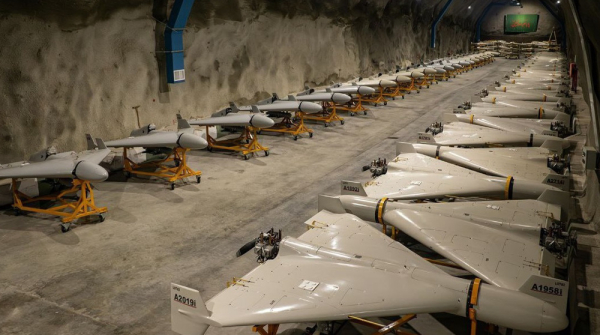
An Iranian retaliatory drone strike at an American airbase in Kuwait has injured 15 American personnel, a report says, amid Washington’s attempts at understating the extent of the American casualties resulting from Tehran’s retaliatory operations.
CBS News carried the report on Monday, citing two US officials, who identified the target as the Ali al-Salem Airbase, a key hub for US operations in the West Asia region.
Also on Monday, the Islamic Revolution Guards Corps (IRGC) announced carrying out the 98th wave of Operation True Promise 4, as part of which it struck several military aircraft stationed at the base, using missiles and drones.
The retaliatory operation began immediately after the United States and the Israeli regime began their latest bout of unprovoked aggression targeting the Islamic Republic on February 28.
‘Such barbarism is unprecedented in modern history’: Iran condemns US-Israeli attacks on universities
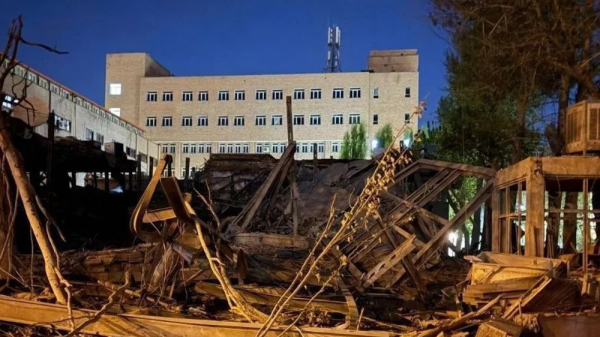
Iran has condemned the US-Israeli attacks on universities, stating that such “barbarism” is unprecedented in modern history.
In a letter circulated to the United Nations Security Council on Monday, Iran’s Permanent Representative and Ambassador to the UN, Amir Saeid Iravani, referred to the “grave breaches of international humanitarian law, acts of terrorism and war crimes being perpetrated through the deliberate and indiscriminate targeting of civilian objects” in Iran.
According to the letter, Sharif University of Technology was attacked in the early hours of Monday, causing severe damage to the Faculty of Civil Engineering, the Department of Philosophy of Science, the Nano and Environmental Research Institutes, the Convergent Research Institute building, and the Faculty of Electrical Engineering, among other facilities.
The attack on Sharif University follows another war crime perpetrated on 3 April 2026, when parts of Shahid Beheshti University in Tehran—including the Laser and Plasma Research Institute—were also severely damaged.
He noted that “the intentional targeting of scientific institutions and universities constitutes a clear violation of international humanitarian law and amounts to a war crime.”
Ambassador Iravani called upon UN Secretary-General António Guterres and the Security Council to unequivocally condemn the attacks as “state terrorism directed against civilian objects and infrastructure.”
He further demanded that the Security Council take “immediate, decisive and concrete measures” to halt the ongoing criminal acts of the United States and the Israeli regime, and to ensure full accountability under international law for those responsible.
Sharif University of Technology is not the first university to be targeted by the invading coalition in the past month.
Tehran’s Shahid Beheshti University and University of Science and Technology, the Faculty of Pharmacy at Shiraz University, Isfahan University of Technology, parts of the Science and Technology Campus and the Veterinary Specialized Hospital Campus at Urmia University have been hit throughout the unlawful aggression.
The United States and Israel launched their criminal aggression against Iran on February 28 by assassinating Leader of the Islamic Revolution Seyyed Ali Khamenei, along with senior military commanders.
Press TV’s website
Iran urges southern neighbors to deny US military use of airspace, territory
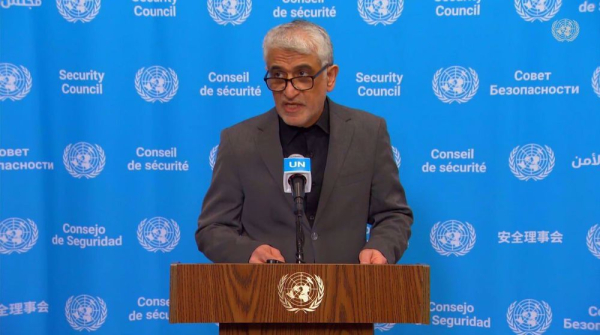
Iran has advised Saudi Arabia and the United Arab Emirates against allowing the United States to use their territory and airspace to launch military strikes against the Islamic Republic, reminding both nations about their "international responsibility" not to facilitate acts of aggression.
In two separate letters addressed to UN Secretary General Antonio Guterres and the president of the Security Council on Monday, Iran's UN Ambassador Amir Saeid Iravani detailed multiple instances of US warplanes operating from or transiting through Saudi and Emirati airspace to carry out bombing raids on Iranian targets.
According to the letters, the attacks occurred primarily on March 23, 24, and 28, 2026.
In his letter concerning Saudi Arabia, Iravani listed over a dozen specific incidents, including a US F-16SV fighter jet conducting bombing raids on Iranian targets, an F-35 and F-15E jets carrying out additional strikes.
A separate letter detailed similar activity originating from the United Arab Emirates, including a US U-2S reconnaissance aircraft operating over Emirati airspace on March 23.
"In light of the international responsibility of States arising from placing their territory at the disposal of others for the commission of acts of aggression," Iravani wrote, Iran "expresses its strong and unequivocal objection" to the actions and "strictly calls upon" both Saudi Arabia and the UAE to observe good neighborliness and prevent further use of their territory against Iran.
The ambassador emphasized that while Iran remains committed to respecting the sovereignty of both nations, it "reserves its inherent right to take all necessary and appropriate measures, including the exercise of its right of self-defense, to safeguard its sovereignty, territorial integrity, and political independence."
The United States and Israel launched their latest unprovoked war on Iran on February 28, assassinating Leader of the Islamic Revolution Ayatollah Seyyed Ali Khamenei and targeting nuclear facilities, schools and hospitals.
Iran's armed forces have responded with more than 100 waves of retaliatory strikes, codenamed Operation True Promise 4. Hundreds of ballistic and hypersonic missiles, along with drone attacks, have hit American and Israeli targets across the region.
Press TV’s website
Trump's 'delusional' threats will not make up for US humiliation in West Asia: Iran military
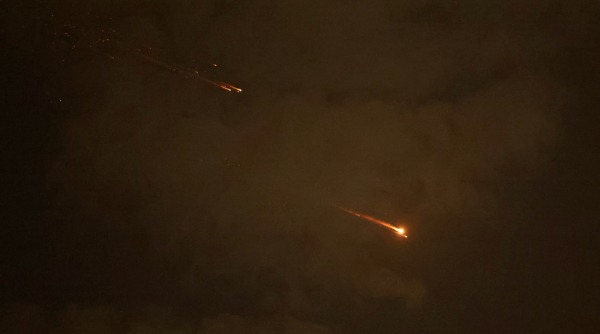
US President Donald Trump's "baseless threats" cannot erase Washington's humiliation in West Asia, Iran's senior military spokesman said, dismissing the latest American ultimatum as a sign of deadlock and desperation.
The spokesman for the Khatam al-Anbiya Central Headquarters, the unified command of the Iranian armed forces, made the remarks in a video statement detailing retaliatory operations on day 38 of the US-Israeli war on Iran.
"America has been humiliated in West Asia," the spokesman said, adding that threats cannot erase the United States' disgrace in West Asia.
Trump has threatened to attack Iran's power plants, bridges, and other infrastructure if Tehran does not accept US demands. Washington has also suggested a ground invasion.
"The rude, arrogant, and baseless threats of the delusional US president, which stem from being trapped in a dead end and from attempts to justify the consecutive defeats of the US military, will have no effect on the continuation of the crushing offensive operations of the fighters of Islam against American and Zionist enemies," he said.
The spokesman warned that each American action would be met with a fresh defeat.
"With each of your actions, another defeat will be added to your previous defeats, by the grace of Almighty God," he said.
In his video statement, the spokesman detailed the latest wave of Iranian retaliatory strikes, which included a direct attack on a US base in Kuwait that had played a key role in a failed American-Israeli operation in Isfahan.
The US Al-Adairi Base in Kuwait was hit with missiles and drones, destroying helicopter storage facilities and US troop accommodations, the spokesman said.
The base had been used to support a US military operation in Isfahan province that ended in disaster for American forces, he said.
On April 3, a US F-15E fighter jet was shot down over central Iran near Isfahan.
The US on Monday claimed it had rescued two pilots in a rescue mission.
Iran said it downed four additional US aircraft: two C-130 Hercules transport planes and two Black Hawk helicopters, during a US operation in central Iran.
Media reports have suggested that the US rescue operation may have been a "deception operation" aimed at stealing Iran's stockpile of enriched uranium.
The United States and Israel launched their latest unprovoked war on Iran on February 28, assassinating the Leader of the Islamic Revolution and targeting nuclear facilities, schools, and hospitals.
Iran's armed forces have responded with nearly 100 waves of retaliatory strikes, codenamed Operation True Promise 4.
Hundreds of ballistic and hypersonic missiles, along with drone attacks, have hit American and Israeli targets across the region.
The war of aggression has triggered soaring inflation in the United States, with gas prices jumping 34 percent in a month as Iran effectively restricted access to the Strait of Hormuz.
Trump has given Tehran an ultimatum to strike a deal by 8:00 PM Eastern Time on Tuesday, warning that after that there will be "no bridges, no power plants."
Iran has slammed the threats as war crimes in their own right and warned it would reciprocate any US-Israeli attack by targeting US-linked assets in the region.
Press TV’s website
Army Spokesperson: The goal of continuing the war is to bring the enemy to a point of regret
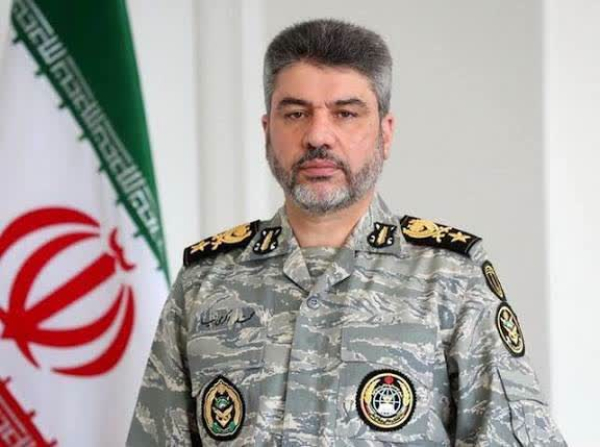
Amir Brigadier General Akraminia:
It can be said with certainty that the other side has failed to achieve its goals so far in the war and has actually faced defeat.
The goal of continuing the war is to bring the enemy to a point of real regret; an issue that may be perceived by some as an emotional approach; but in fact, it is completely based on strategic rationality.
Bringing the enemy to this point is a necessity to prevent a repeat of the war in the future; because if this goal is achieved, the level of deterrence will increase to such an extent that the enemy will no longer dare to take action against the country again.