zarezadeh
Why and how was the Mossad chief dismissed in the midst of a war with Iran?
1. The general context of the changes at the head of Mossad
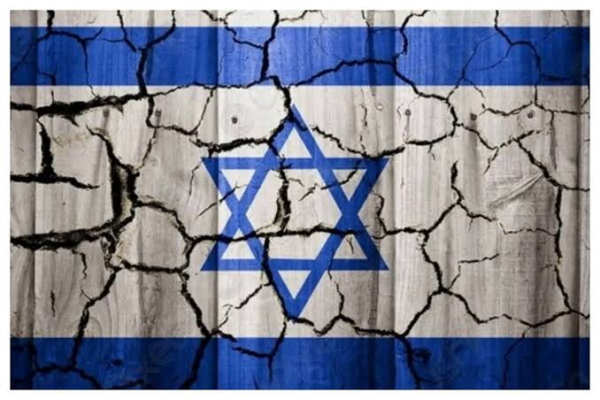
The appointment of Roman Goffman as the new Mossad chief is a continuation of the changes after the failure of October 7, 2023.
2. The wound of October 7 and the collapse of intelligence credibility
Israeli intelligence agencies failed to predict the Al-Aqsa storm.
3. The process of victimizing intelligence directors
Netanyahu blamed the heads of security agencies to escape responsibility.
4. Strategic errors in assessing Iran and the resistance
Mossad's estimates of Iran's internal collapse and the support of the people were completely incorrect.
5. Linking the changes to Netanyahu's political goals
The changes at the head of Mossad are part of a project to concentrate power in the hands of the prime minister.
6. Goffman's appointment; a symbol of the politicization of intelligence
Goffman lacks intelligence experience and is close to Netanyahu's circle.
7. Strategic consequences
Weakening the intelligence structure and increasing politicization in the Israeli security apparatus.
8. Conclusion
The change of the Mossad chief is not a corrective measure, but Netanyahu's political project to control the security institutions.
UAE slams Trump for Iran war fallout, warns of shift to yuan amid dollar shortages: Report
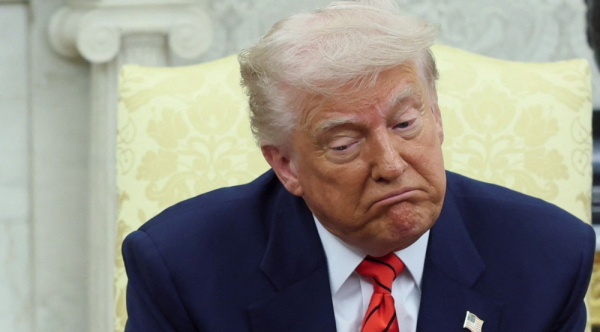
The United Arab Emirates (UAE) has blamed US President Donald Trump for the economic fallout from the US-Israeli war on Iran, warning that it will conduct financial transactions in yuan if the Federal Reserve does not establish a currency swap line with the Emirati central bank.
The United Arab Emirates has initiated negotiations with the US regarding a potential financial safety net to protect its economy if the ongoing aggression on Iran deepens the crisis in the Persian Gulf, The Wall Street Journal reported on Monday, citing US officials.
UAE Central Bank Governor Khaled Mohamed Balama raised the idea of establishing a currency-swap line during meetings in Washington last week with Treasury Secretary Scott Bessent as well as officials from the US Treasury and the Federal Reserve.
US officials said the Emirati side presented the proposal as a precautionary measure, noting that while the country has thus far avoided the most severe economic consequences of the US-Israeli aggression against Iran, it may still require financial support if conditions deteriorate.
The negotiations reflect growing concern in the UAE that the US-Israeli aggression against Iran could significantly harm its economy and undermine its status as a global financial hub.
The US-Israeli aggression against Iran has already damaged Emirati oil and gas infrastructure and disrupted tanker traffic through the Strait of Hormuz, cutting off a crucial stream of dollar-denominated oil revenues.
US officials also said Emirati representatives indicated that Trump’s decision to attack Iran had drawn their country deeper into the conflict, creating economic risks whose impact may not yet be fully known.
UAE conducting financial transactions in Yuan could pose an challenge to the US dollar’s dominance in global trade, particularly because oil transactions are overwhelmingly conducted in dollars.
The criminal US-Israeli aggression against Iran began on February 28 with airstrikes that assassinated senior Iranian officials and commanders, including the Leader of the Islamic Revolution Ayatollah Seyyed Ali Khamenei.
Iranian armed forces responded by launching almost daily missile and drone operations targeting locations in the Israeli-occupied territories as well as US military bases and assets across the region.
Furthermore, Iran retaliated against the strikes by closing the Strait of Hormuz, which resulted in a significant increase in oil prices and its by-products.
On April 8, Iran’s Supreme National Security Council (SNSC) announced that there was an agreement to a Pakistan-brokered temporary ceasefire after the US accepted Iran’s 10-point proposal.
A high-ranking delegation from Iran led by Parliament Speaker Mohammad Baqer Qalibaf participated in the negotiations in Islamabad with the US delegation led by Vice President JD Vance.
Despite 21 hours of intensive discussions, the negotiations ended without an agreement, with Iran citing “excessive demands” from the US side.
Press TV’s website
‘War benefits no one’: Pezeshkian urges unity among Muslim nations to foil foreign plots
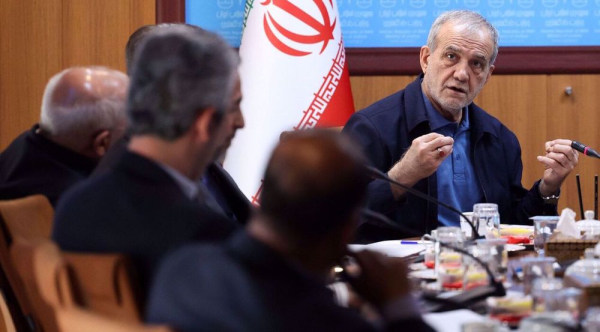
Iran’s President Masoud Pezeshkian says strengthening unity among Islamic countries is the most important way to counter conspiracies and prevent foreign powers from taking advantage.
Speaking during a supervisory visit to the Ministry of Justice on Monday, Pezeshkian received a comprehensive report on the ministry's actions and missions under the special circumstances resulting from the recent US-Israeli aggression.
Pezeshkian noted that through “empathy, honesty, and collective participation, we can get past this stage and continue the country's path toward dignity and progress.”
He highlighted the need for a rational approach toward regional and international developments, adding, "War benefits no one. While standing firm against threats, we must use every rational and diplomatic path to reduce tensions."
He further noted that distrust toward the enemy and vigilance in interactions remain an undeniable necessity.
Following the US and Israel’s recent aerial strikes on Iran launched on February 28, Iran retaliated with barrages of missile and drone attacks on Israeli-occupied territories and US bases and interests in the region.
The president noted that passing through the battlefield does not mean the end of the road. Rather, it marks the beginning of a more important phase: the 'Greater Jihad.'"
He described this as a struggle in which all people must play a role through patience, tolerance, cooperation, and active participation in rebuilding the country and solving its problems.
"This phase requires greater mental and social readiness than the war era," he added.
Referring to the decisive role of the guidance of the Leader of the Islamic Revolution Ayatollah Seyyed Mojtaba Khamenei and martyr Leader of the Islamic Revolution Ayatollah Seyyed Ali Khamenei, Pezeshkian stated, "The support and directives of the great and martyred Leader of the Revolution have been a solid pillar for the government since the very beginning of its work.
“It was the coordination formed in the light of these guidelines that today makes effective decision-making and overcoming challenges possible,” he highlighted.
Press TV’s website
Iran's military vows 'decisive action' against US army after attack on Iranian vessel
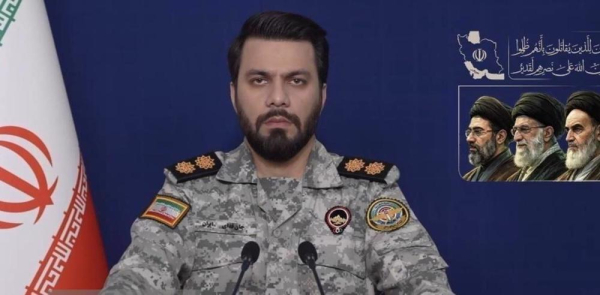
Iran's military has vowed to take decisive action against the "terrorist US Army," following an American attack on an Iranian commercial vessel.
Lieutenant-Colonel Ebrahim Zolfaghari, spokesperson for the Khatam al-Anbiya Central Headquarters, stated that after the blatant aggression by US terrorist commandos against an Iranian commercial ship in the waters of the Sea of Oman, the armed forces of the Islamic Republic of Iran were ready to deal decisively with the American aggressor forces.
However, he added that due to the presence of several family members of the ship's crew — whose lives and safety were at constant risk — they faced certain limitations.
"Given the current situation, once the safety of the families and crew of the vessel targeted by American aggression is ensured, the powerful armed forces of the Islamic Republic of Iran will take the necessary action against the terrorist US Army," Zolfaghari said.
His remarks came after the United States carried out a flagrant act of aggression on an Iranian merchant vessel in the waters of the Sea of Oman, deploying its terrorist marines onto the ship’s deck and disabling its navigation systems.
In immediate response, Iranian forces struck back, targeting several American military vessels in the area with drone attacks.
On Friday, Iran had declared the Strait was open to commercial shipping, weeks after it was shut down to vessels associated with the US, Israel and their allies following the launch of an unprovoked war of aggression against the Islamic Republic on February 28.
However, the IRGC Navy said in a statement on Saturday that Iran has closed down the Strait of Hormuz after the United States chose to retain its blockade of Iranian ports in violation of the conditions of a two-week ceasefire announced by US President Donald Trump.
Press TV’s website
Iran: US not serious about talks, will face decisive response if it repeats past mistakes
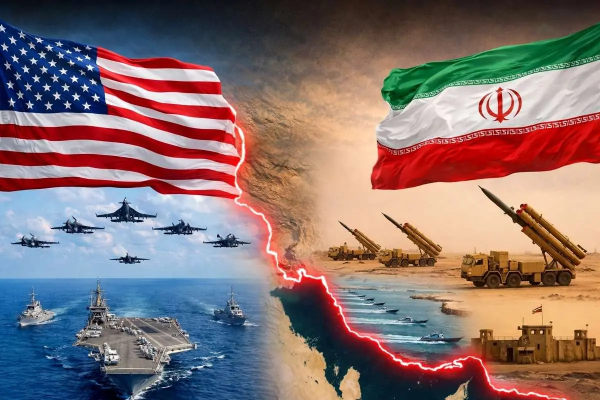
The Iranian Foreign Ministry says the United States is not serious about negotiations with Iran, asserting that Washington will face the Islamic Republic's decisive retaliation if it repeats its past mistakes concerning the country.
Spokesman Esmail Baghaei made the remarks at a press conference on Monday, citing contradictions between Washington's words and actions as a case in point regarding the latter's indecisive attitude towards the issue of the talks.
"[Their] words and actions are not consistent, and Iran will make the appropriate decision with careful consideration of its interests and national priorities," he stated.
The remarks came after the United States said it would continue blockading Iran's ports and vessels, despite the announcement of a two-week lull in aggression targeting the Islamic Republic by President Donald Trump on April 7.
Iran subsequently declared the strategic Strait of Hormuz closed to all traffic in retaliation, citing the continuation of the blockade as a violation of ceasefire conditions.
The Islamic Republic has vowed to retain the closure while the blockade is still in place. It has also refused to join any fresh talks with the American side unless a framework of understanding is reached between the two sides.
"From the early days of the ceasefire, we were faced with the US's bad faith, contradictory statements, followed by a naval blockade," Baghaei said.
He also referred to a recent American attack on an Iranian vessel that was faced with a decisive response on the part of the Islamic Republic, forcing US troops in the Sea of Oman to retreat. The spokesman identified the attack as "a violation of maritime agreements and an act of aggression."
Guardian: Iran war has pushed Trump to the brink
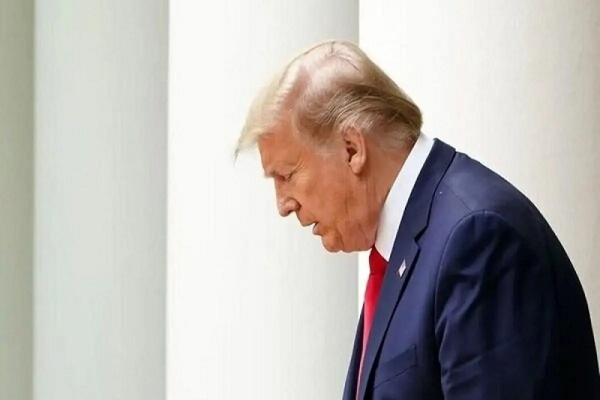
The Guardian: The US president has created a gap in his base by taking actions such as starting an unfinished war against Iran, fueling inflation and insulting Christians.
Many Trump supporters are unhappy with their vote. Lance Johnson is one of them. He voted for Donald Trump three times, but now feels regret. The 47-year-old contractor said that “we were not supposed to start another war. Prices were supposed to come down. We were made a lot of promises that we are not going to keep.”
Lance Johnson is not the only voter who is unhappy with the performance of his country’s president. A number of other Americans have also expressed their dissatisfaction with Trump. Trump has made things even more difficult for himself over the past two weeks with his comments against the Pope.
The past two weeks have been the most damaging period of Trump’s presidency; He has insulted the Pope in the past two weeks and posted an AI-generated image of himself as Jesus Christ on social media.
Trump also lost a court case against the Wall Street Journal over the Jeffrey Epstein case, and his bid to endorse Hungarian politician Viktor Orbán for president was blocked.
Trump is now grappling with rising fuel prices after starting an unpopular war with Iran and is looking for a way out.
A Democratic majority in either chamber could launch an investigation into the Trump administration, stripping him of many of his legal powers.
Iranian armed forces turn back two oil tankers in Strait of Hormuz: Report
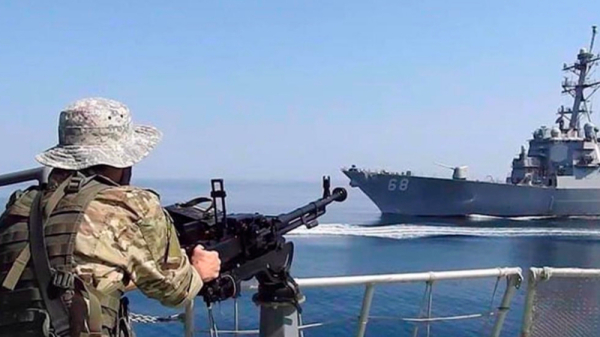
Iranian armed forces have turned back two more oil tankers sailing under the flags of Botswana and Angola in the Strait of Hormuz, after Iran declared the strategic waterway closed again.
Iran's armed forces intercepted the two oil tankers attempting to navigate through the Strait on Sunday, forcing them to alter their routes and retreat from the region, Tasnim news agency reported.
The latest development comes a day after the Islamic Revolution Guards Corps (IRGC) Navy said it was closing the strategic waterway after the United States chose to maintain its illegal blockade of Iranian ports in violation of the terms of a ceasefire.
In a statement on Saturday, the IRGC Navy noted the Islamic Republic had decided to allow non-military vessels to transit through the Strait along a certain corridor designated by Tehran after the ceasefire was announced.
‘Myth of US stealth fighters over’: Iranian hunter of US F-35 jet declares
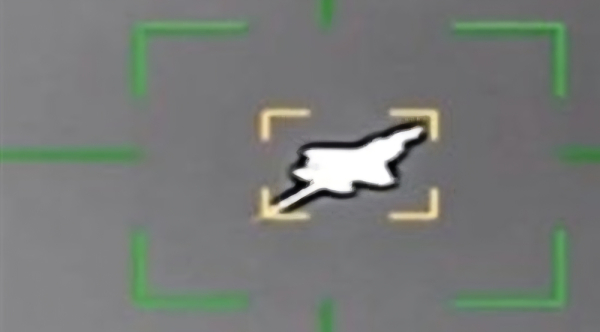
The senior Iranian officer, who downed an intruding American F-35 fighter jet, says the myth of warplanes that are designed to evade radar detection is over.
Speaking on Sunday, the officer described as “truly indescribable” the excitement of his colleagues when they hit the F-35.
“We completely destroyed a Lockheed Martin technology,” he added. “The myth of stealth fighters is over.”
He also noted that his colleagues are present on the battlefield round-the-clock, hunting down enemy targets.
Iran’s modern air defense systems can easily strike hostile flying objects, cruise missiles, and small aircraft in most cases.
The illegal US-Israeli aggression on Iran began on February 28 with airstrikes that assassinated senior Iranian officials and commanders.
The Iranian armed forces unleashed 100 waves of successful retaliatory strikes against sensitive and strategic American and Israeli targets throughout the region.
They managed to intercept and shoot down several hostile fighter jets, missiles and drones, reflecting Iran's readiness to defend its airspace.
Some 170 enemy drones were destroyed by the country’s integrated air defense network.
On April 8, forty days into the war, a Pakistan-brokered two-week ceasefire went into effect, but Washington-Tehran negotiations failed to reach a deal.
Press TV’s website
Pezeshkian: Iran does not seek expansion of war
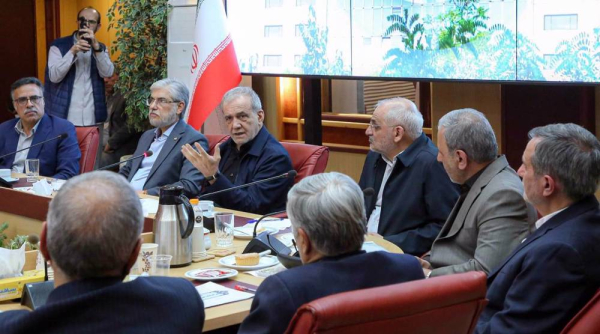
Iranian President Masoud Pezeshkian says the Islamic Republic does not seek to expand war as the continuation of conflicts will not be beneficial to any country.
Pezeshkian made the remarks during a visit to Iran’s Ministry of Science, Research and Technology on Sunday as he outlined the latest regional and international developments in light of the unprovoked war waged by the United States and the Israeli regime that began late in February.
He added that problems would not be solved through tensions but it is necessary to pursue wisdom and dialogue and avoid more destruction.
The Iranian president stressed the importance of strengthening convergence among regional countries.
President Pezeshkian says Trump ‘in no place’ to oppose Iran’s inalienable nuclear rights
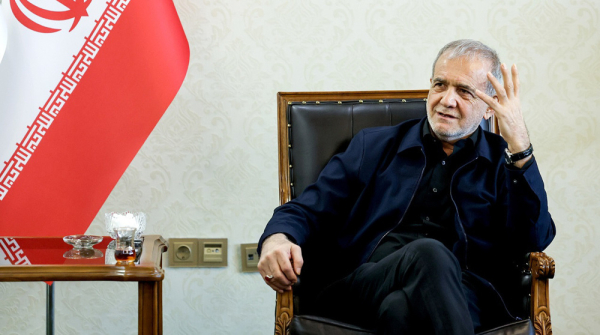
Iran’s President Masoud Pezeshkian has hit out at his US counterpart Donald Trump over his threats, saying he is not in a position to deprive the Iranian nation of its inalienable right to a peaceful nuclear program.
He made the remarks on Sunday, two days after Trump threatened that the US would secure Iran’s enriched uranium “in a much more unfriendly form” if no deal is reached.
“The US president declares that Iran should not use its nuclear rights, but he does not say for what crime? Basically, what position does he have in the world to deprive a nation of its legal rights?” Pezeshkian asked.
“From the perspective of human principles, every free person, regardless of his religion, faith, race, or ethnicity, should enjoy his inalienable rights,” he added.
The Iranian chief executive also slammed self-proclaimed human rights organizations and the United Nations for remaining silent on criminal US-Israeli strikes on Iran that assassinated scientists and targeted civilians and residential areas.
He further denounced the adversaries’ war crimes as a sign of their desperation and failure.
Highlighting Iran’s principled approach to regional peace, stability, and security, he stressed that the Islamic Republic is not seeking to spread war and it has not been and will never be the initiator of any conflict.
“We are pacifists and what we are doing is legitimate self-defense,” he asserted.
Meanwhile, Pezeshkian appreciated the Iranian Armed Forces, including members of the Basij volunteer force, the Army, and Islamic Revolution Guards Corps (IRGC), for remaining steadfast in the face of the illegal US-Israeli military assault and delivering a decisive response to the enemies.
The performance of the armed forces in defiance of pressure and threats has stunned many analysts, he said.
“Despite problems, the country was capable of standing against the great powers that enjoy extensive support. On the contrary, having failed to achieve their goals, the enemies attacked civilian infrastructure, including schools, hospitals, universities, and public places, in flagrant violation of international law.”
The unprovoked US-Israeli aggression on Iran began on February 28 with airstrikes that assassinated senior Iranian officials and commanders.
The Iranian armed forces unleashed 100 waves of successful retaliatory strikes against sensitive and strategic American and Israeli targets throughout the region.
On April 8, forty days into the war, a Pakistan-brokered two-week ceasefire went into effect but Washington-Tehran negotiations failed to reach an agreement.
Press TV’s website